Easy Classic Israeli Shakshuka is the classic Middle Eastern dish of sunny-side-up eggs nestled in a rich, savory tomato and red pepper sauce.
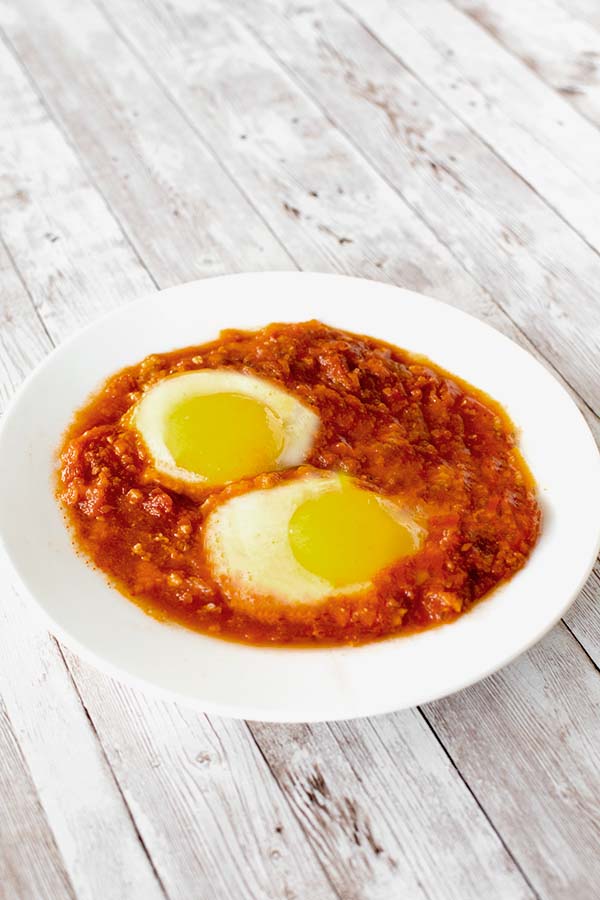
It seems that nowadays, anything with sauce and sunnyside eggs on top is called shakshuka. But that's just people being creative with their food.
It's not the original, classic Middle Eastern dish that is a part of Israeli food culture. This recipe is the original basic and has no personal or made-up twists or specialty ingredients.
However, it's completely adaptable, and you can certainly make this dish your own with whatever add-ins you want.
It's a simple, budget-friendly one-pan recipe and a healthy way to use tomatoes that have gone soft!
And it's dairy-free, vegetarian, and gluten-free!
This recipe is for 3 servings, so if you want to make a single serving, individual "shakshuka for one," you can just make one third of the sauce and use only two eggs.
A little about shakshuka
There are MANY suppositions as to where shakshuka originated, but all agree that it originated somewhere in the Middle East or North Africa.
Shakshuka is very popular in Israel. It was brought by Jews who took refuge after the establishment of the State of Israel, fleeing Muslim countries.
While this dish is no stranger to Middle Eastern ethnic restaurants, in more recent years it has become a welcome addition to menus in some of the hip restaurants in the United States and Europe as well.
Shakshuka is a vegetarian, tasty, healthy breakfast dish. However, it obviously can be eaten at any time of the day.
Why do I see variations of shakshuka online?
The recipe I have posted is in its simplest and original form, but many people add red and/or green pepper (one or two of either or both, depending on how much you like peppers), mushrooms, chili powder or paprika (sweet and/or hot), cumin, turmeric, pepper, etc.
You certainly can have any, all, or none of the above to taste.
You do not need garnish at all unless you want to impress. It is shown that way in pictures because the dish itself doesn't photograph well, so the green helps to detract.
I have yet to actually have seen the dish served garnished.
Tips for making Easy Israeli Shakshuka
I use canned tomatoes rather than fresh whenever possible, just to save time, and one 28-ounce can is equal to approximately 2 pounds or 3 cups of fresh diced tomatoes.
If you have tomatoes or onions that are still good but are going soft, feel free to use them. I am a big proponent of using what you have and saving what you can.
If you want your shakshuka more saucy, feel free to use more tomatoes. Just make sure to adjust the herbs/spices so that you don't lose flavor, and, of course, feel free to add all of the flavoring embellishments you like to your own taste.
Tomato sauce helps to give a little stronger tomato flavor. This can be left out if need be, but if you want more of the flavor, add.
Cook the eggs uncovered, without a lid over the pan. However, if you prefer your eggs basted (with the white film over the yokes), then do cover the pan.
The longer you leave the eggs on the heat, the more cooked they will be. If you want runny eggs, make sure not to overcook. However, if you like your eggs more on the cooked side, just make sure that the sauce doesn't dry out (add a little water while cooking).
I find that using powdered chicken consommé for sides and main dishes just adds a little more flavor than salt, and I use the non-meat or vegan variety (any store that carries kosher items may have some by Osem or another such brand).
What type of skillet should I use?
Photos in many recipes show cast-iron skillets, but you can use any type you like. I don't normally use cast iron. Just make sure it's large enough.
Serving sizes
I wrote that this serves 3, two eggs per person. However, there certainly is no obligation to actually eat two eggs, so if you have only one or if you choose to have three, it's entirely up to you.
You can also make this for one person!
Eating suggestions
One can eat shakshuka alone on a plate or with its own or with bread, toast, or pita (pronounced "peeta," not "pitta," by the way).
Frequently Asked Questions (FAQs) for Israeli Shakshuka
1. Can I freeze Israeli shakshuka?
It is not recommended to freeze finished shakshuka. The texture of the eggs becomes rubbery and unpleasant when thawed, and the tomato-based sauce can separate or become watery.
For the best flavor, enjoy it freshly prepared; however, you can prepare the tomato base (the sauce) ahead of time and freeze it, then simply reheat it and add the fresh eggs when you are ready to serve.
2. Is this dish spicy?
Shakshuka can be as mild or as spicy as you prefer. This dish is completely adaptable, so you can add whichever spices you like.
3. What can I serve with shakshuka?
Shakshuka is best served with crusty bread, such as challah, pita, or a baguette, which is perfect for soaking up the flavorful tomato sauce and runny yolks.
It is also delicious accompanied by a fresh Israeli salad.
4. Is this recipe customizable?
Absolutely! While this recipe is basic, without personal twists, you can feel free to add whatever herbs and spices you like.
A little about Israeli cuisine
Some people complain about cultural appropriation in cuisine when food from one country is attributed to another country.
When people move from country to country, they will take their cultures with them, and their descendants may adapt their traditional cuisine with that of their new home, and if they don't, others might.
When one lives in a melting pot, such as the US or Israel, it is just unrealistic to expect that food from a particular culture won't mingle with that of other cultures.
That being said, "Israeli cuisine" is basically Middle Eastern (as opposed to Eastern European food) that was brought to Israel by Jews when they fled or were expelled from Muslim countries and moved to Israel mostly after the declaration of the State of Israel (collectively known as Mizrahi Jews).
And this dish has nutritional value!
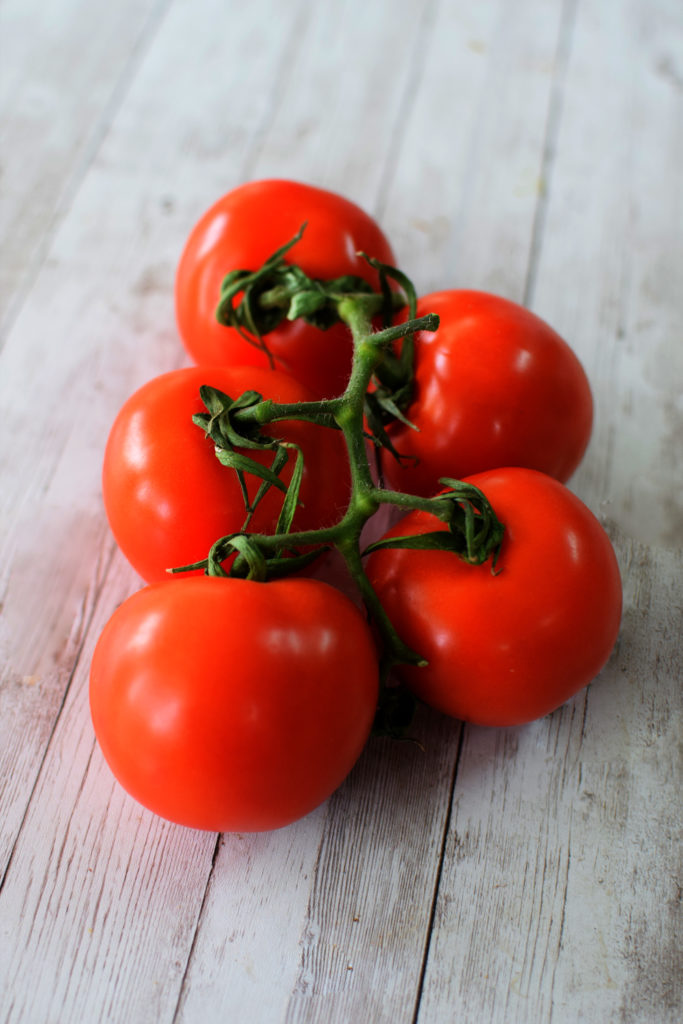
Like the tomatoes!
And the eggs!
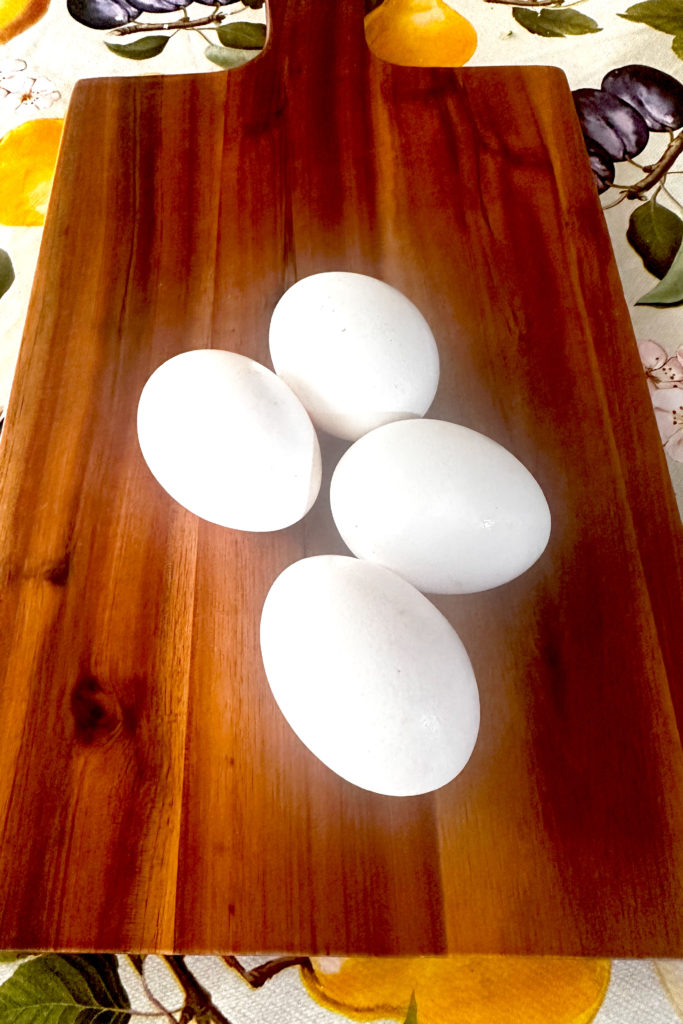
For many years, eggs were considered a source of high cholesterol and a possible cause of heart disease, and people were warned against them and recommended to have only a few per week in their diets.
It is true that one large egg yolk has 200 mg of cholesterol. However, the additional nutrients that eggs contain may actually help LOWER the risk of heart disease by raising the "good" cholesterol in one's body.
Eggs are high in protein and filling but low in calories. They have nutritional value and contain a large variety of vitamins as well as some antioxidants.
The color of the yolk depends on the diet of the hen, and different types of chickens may lay different colored eggs, white or brownish.
Egg white consists primarily of approximately 90 percent water and contains almost no fat or carbohydrates.
The yolk of a new egg is firm, but then it absorbs water from the egg white, which causes it to increase in size and become loose.
You may be surprised to know that raw egg white is sometimes used in the preparation of vaccines.
Many people believe that since eggs are found in the refrigerated section of the supermarket and very frequently near the dairy section, they are also dairy.
Nonetheless, eggs are NOT DAIRY. You CANNOT milk a chicken!
And the bell peppers!
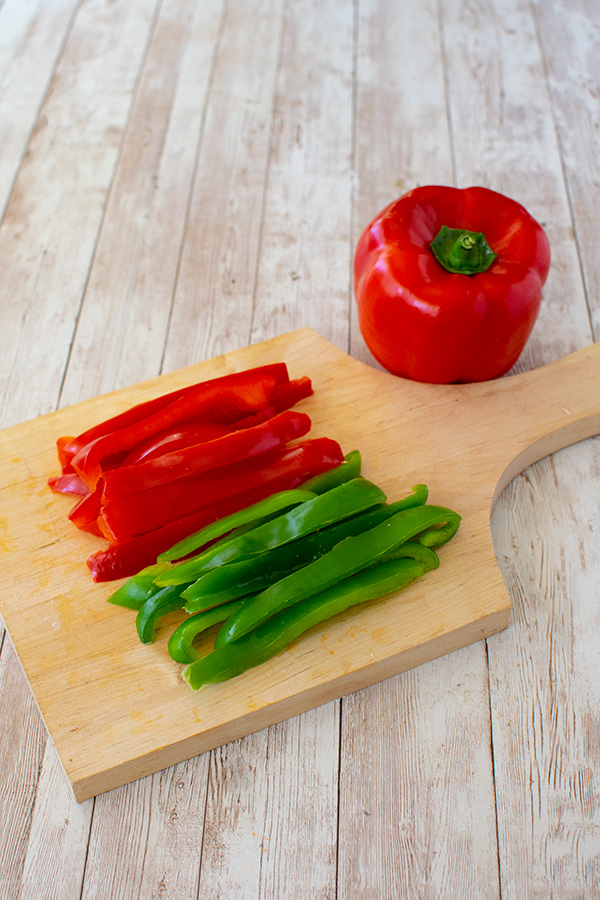
Bell peppers come in different colors, such as green, red, orange, and yellow (the most common)...and, believe it or not, white, brown, striped, and purple.
Red peppers are actually ripened green peppers, and because they do so gradually, you may see peppers that are both green and red at the same time. Red peppers are sweeter in flavor than the green ones, which are more acidic and a little bitter. Red peppers can be used in the production of paprika.
"Permagreen" doesn't turn red but rather stays green even after it ripens.
Orange and yellow peppers are their own varieties and have a gentle, sweet taste.
Bell peppers contain almost no protein at all and are almost entirely made of water, with a small percentage of carbohydrates. They are rich in vitamins C, B6, K, A, and E as well as some minerals and antioxidants. The different colored peppers contain different vitamins and nutrients, and they are all very low in fat.
Some cooking terms
What are the different oils used in cooking?
"High-heat" oils have neutral flavors and have been processed in order to handle high temperatures and are good for sautéing, searing, and frying. These include canola oil, vegetable oil, avocado oil, and grapeseed oil, each with its own "best for" among chefs.
Some oils have their own flavor and are good for sautéing and roasting and add a little extra to the dish. These include extra virgin olive oil, coconut oil, and peanut oil. Extra virgin olive oil works well with roasting or sautéing but not for deep frying.
Coconut oil is good in dishes where a slightly coconut flavor enhances the dish, and peanut oil is good for deep frying and will add a subtle nutty taste and smell. Many Asian dishes call for peanut oil in the ingredients.
Then there are oils that are not used with heat but rather for dressing up foods, such as sesame oil, flaxseed oil, and walnut oil, among others.
What does it mean when recipes say "to taste" about an ingredient?
When recipes say "to taste," it means that you can put in as little or as much as you like to your own taste. Some recipes have many ingredients that a cook can adjust to their own taste when cooking (not so much when baking, though).
The best way to calculate what your taste is with a recipe that you are not yet familiar with is to first taste the dish and then add the "to taste" ingredient GRADUALLY, a little at a time-a splash of this or a pinch of that-until the dish is just the way you like it.
Make sure to stir the ingredient after each time you add it so that the flavor will distribute evenly and become part of the dish. Then taste again. Repeat until you reach your personal preference.
Note: If you plan on using the recipe again, it is highly recommended to make a note of what and how much you added so that you can refer to it next time.
What does it mean when a recipe says that an ingredient is "optional"?
If an ingredient is "optional," it means that you can add it in or not based on your own preference. An optional ingredient can be flavor-related (i.e., salty, sweet, spicy, etc.), appearance-related (garnish), or even something like nuts or chocolate chips in baking.
What does "savory" mean?
"Savory" refers to foods that are not sweet, such as foods that taste salty, spicy, or herbal.
What is needed to make Israeli-style shakshuka?
I hardly ever meal plan, so I like to keep a cupboard full of seasonings, spices, veggies, and canned goods in my kitchen to use whenever the mood strikes.
But these are all you need to have on hand to make this recipe even last minute!
diced tomatoes (canned or fresh)
red bell pepper
onion
eggs
tomato paste
vegetarian chicken bouillon powder or salt
granulated garlic or garlic cloves
pepper or to taste
oil for frying
Or you can cheat and use Israeli-style matbucha for the base and just add the eggs!
Easy Classic Israeli Shakshuka Recipe
This shakshuka recipe is the classic Israeli version, without personal ingredient twists. It's dairy-free, gluten-free, and vegetarian.
Ingredients
- One 28-ounce can of diced tomatoes (or three cups of fresh, diced tomatoes)
- 1 large red bell pepper, diced (optional)*
- 1 large onion, diced
- 6 eggs
- 3 tablespoons tomato paste
- 2 tablespoons vegetarian chicken bouillon powder (or use salt to taste)
- 1 teaspoon granulated garlic or 4 cloves garlic, minced, or to taste
- ½ teaspoon ground black or white pepper or to taste
- paprika, regular or hot, optional to taste**
- cumin, optional to taste**
- water
- oil
Instructions
- Pour oil to just cover the bottom of a large skillet.
- On a medium heat, sauté onions (and garlic if using cloves), and peppers (if desired) until they soften (they don't have to brown).*
- Add tomatoes, tomato paste, bouillon powder, and water to cover the mixture, and mix.
- Lower the heat to low, and simmer, mixing occasionally, until the mixture becomes a thick sauce.
- Create six openings or craters in the sauce and drop a raw egg into each.
- Continue simmering until the whites of the egg are cooked, but the yolk is still runny.
Notes
*Not everyone adds peppers to their shakshuka. Also, while this is the classic shakshuka recipe, you CAN feel free to add your own personal twists.
**Add whichever herbs and spices you like to make it your own.
Nutrition Information:
Yield:
3Serving Size:
1Amount Per Serving: Calories: 295Total Fat: 16gSaturated Fat: 4gTrans Fat: 0gUnsaturated Fat: 11gCholesterol: 372mgSodium: 706mgCarbohydrates: 22gFiber: 7gSugar: 13gProtein: 18g