Deli-Style Egg Salad is an easy recipe for the creamy egg salad sold in popular New York delis and Jewish bagel shops!
This simple, 3-ingredient, dairy-free recipe is a staple at parties and catered events.
Made with hard-boiled eggs, small crispy pieces of celery, and your favorite mayo—that’s it!
It’s perfect on a roll, on a fresh bagel, or served as a side on a deli plate or with a green, leafy salad!
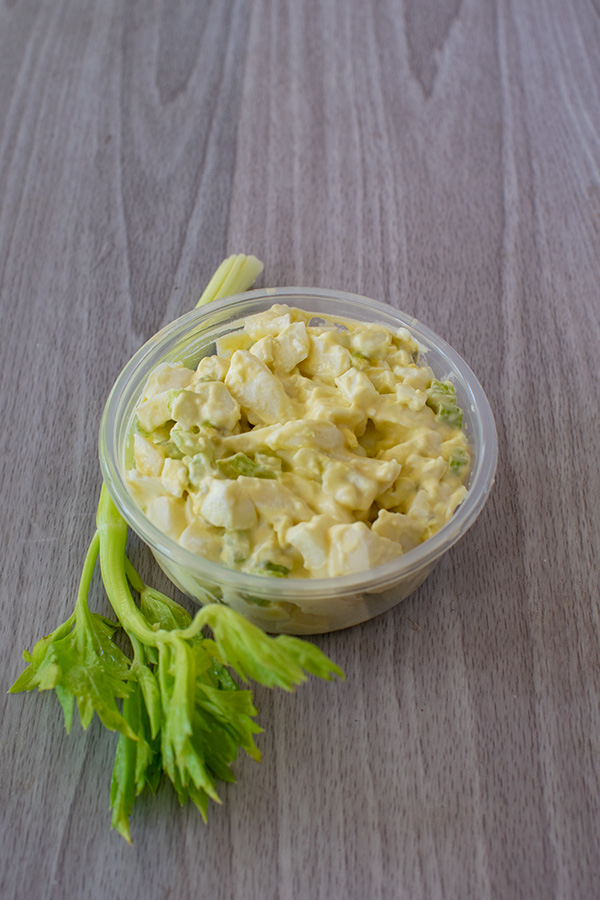
In NYC and Long Island, a trip to the bagel shop for some delicious salad to eat out or bring home is a common occurrance for many people.
But if you want some delicious deli egg salad and don’t want to wait in line or spend a lot of money then make it at home! It’s so simple and budget friendly!
It also refrigerates well and can be made ahead to bring to a picnic or BBQ or even an event or a party!
It’s perfect to put on a bagel or a roll to take to work or school so you can save your lunch money!
It takes little effort, and everyone loves it.
It’s great anytime for a light, quick, and easy-to-make meal. Eat it alone on a plate, in a sandwich, or with a leafy salad.
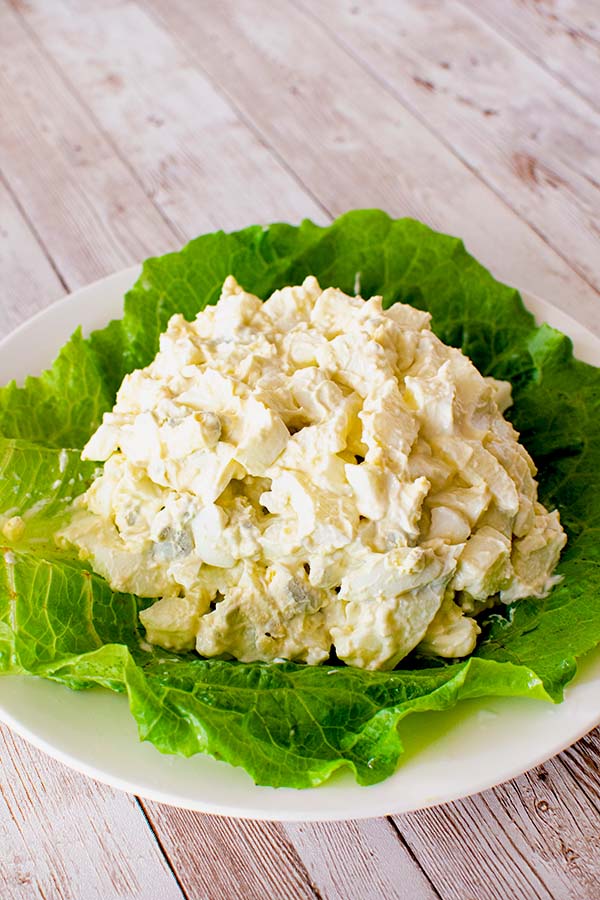
It’s terrific on rye bread, white bread, in a roll, in a pita, in a bagel…you name it. It’s also inexpensive, so save your lunch money for something else!
While I like to keep it basic and simple, there are several additional diced vegetables that can be added to this simple recipe besides the celery.
Some people spice up their tuna salad with salt, pepper, onion powder, garlic powder, etc. or add lemon juice, mustard, or minced garlic for flavoring. All to taste.
Deli-style egg salad is simple, delicious, and versitile.
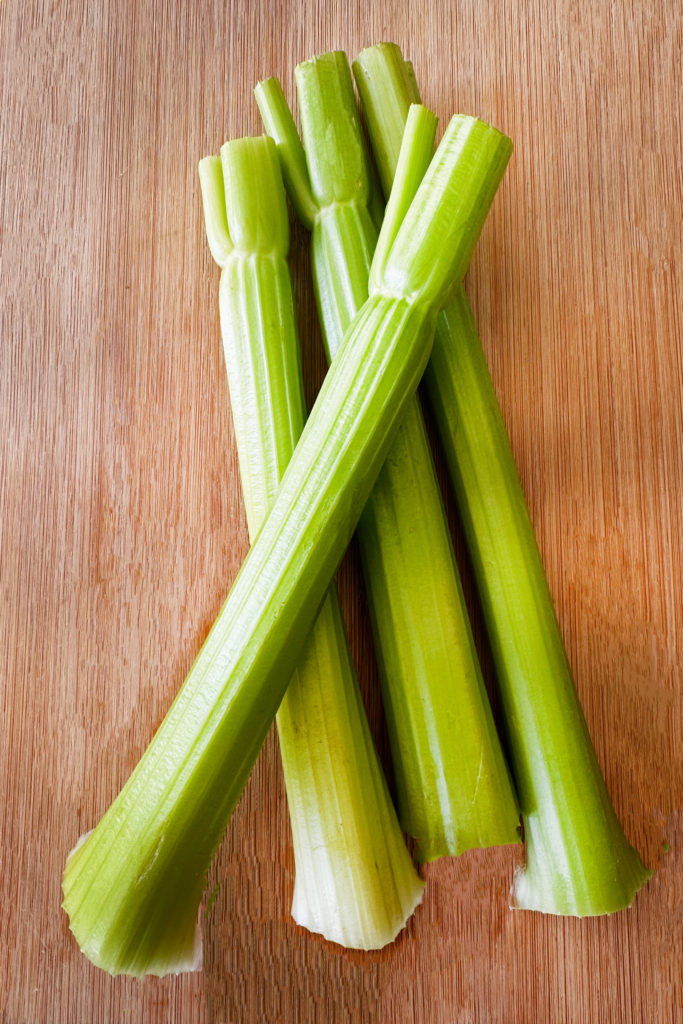
And celery has nutritional benefits!
And so do eggs!
A little about eggs
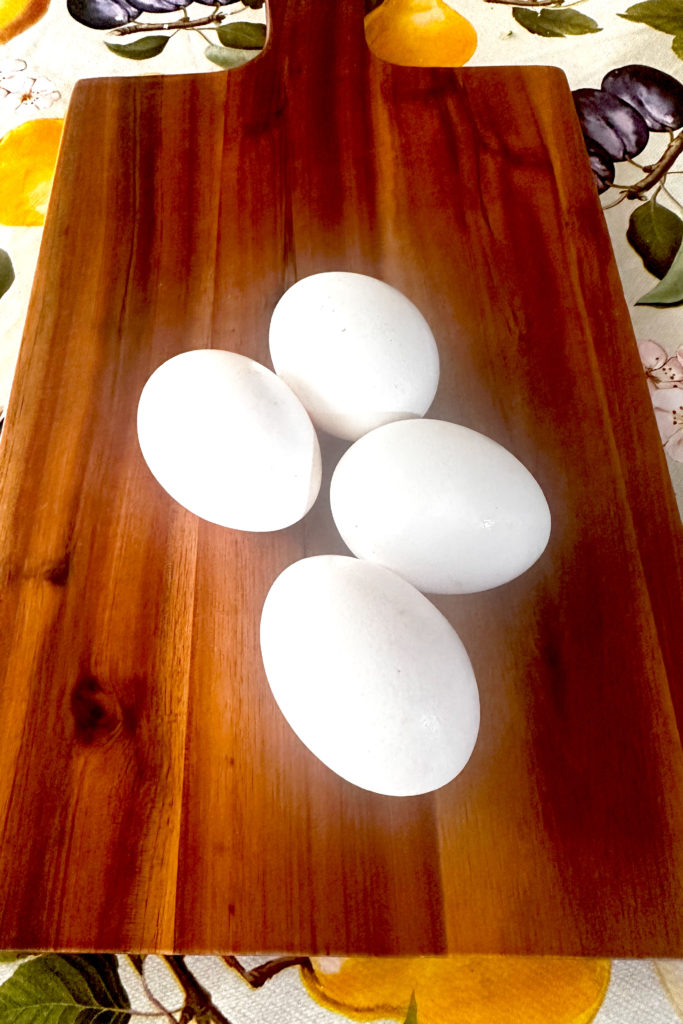
For many years eggs were considered a source of high cholesterol and a possible cause of heart disease, and people were warned against them and recommended to have only a few per week in their diets.
It is true that one large egg yolk has 200 mg of cholesterol. However, the additional nutrients that eggs contain may actually help LOWER the risk of heart disease by raising the “good” cholesterol in one’s body.
Eggs are high in protein and filling but low in calories. They have nutritional value and contain a large variety of vitamins as well as some antioxidants.
The color of the yolk depends on the diet of the hen, and different types of chickens may lay different colored eggs; white or brownish.
Egg white consists primarily of approximately 90 percent water and contains almost no fat or carbohydrates.
The yolk of a new egg is firm, but then it absorbs water from the egg white, which causes it to increase in size and become loose.
You may be surprised to know that raw egg white is sometimes used in the preparation of vaccines.
Many people believe that since eggs are found in the refrigerated section of the supermarket, and very frequently near the dairy section, they are also dairy.
Nonetheless, eggs are NOT DAIRY. You CANNOT milk a chicken!
FAQs
What does it mean when recipes say “to taste” about an ingredient?
When recipes say “to taste,” it means that you can put in as little or as much as you like to your own taste. Some recipes have many ingredients that a cook can adjust to their own taste when cooking (not so much when baking though).
The best way to calculate what your taste is with a recipe that you are not yet familiar with is to first taste the dish and then add the “to taste” ingredient GRADUALLY, a little at a time—a splash of this or a pinch of that—until the dish is just the way you like it. Make sure to stir the ingredient after each time you add it so that the flavor will distribute evenly and become part of the dish. Then taste again. Repeat until you reach your personal preference.
Note: If you plan on using the recipe again, it is highly recommended to make a note of what and how much you added so that you can refer to it next time.
What does it mean when a recipe says that an ingredient is “optional”?
If an ingredient is “optional,” it means that you can add it in or not based on your own preference. An optional ingredient can be flavor related (i.e., salty, sweet, spicy, etc.), appearance related (garnish), or even something like nuts or chocolate chips in baking.
What is needed for this recipe?
I hardly ever meal plan, so I like to keep a cupboard full of seasonings, spices, veggies, and canned goods in my kitchen to use whenever the mood strikes.
But these are all you need to have on hand to make this recipe even last minute!
a dozen hard boiled eggs
mayonnaise (preferrably Best Foods/Hellman’s)
celery stick
(salt and pepper optional)
What other deli salad recipes do you have?
Just put “deli-style” in the search bar to find several delicious easy to make deli-style salads. In the meantime, try these!
Easy Deli-Style Egg Salad
Delicious, easy, and creamy egg salad like the one in NY delis and bagel shops.
Ingredients
- 12 hard boiled eggs
- 1/2 cup mayonnaise*
- 1/4 cup celery
- salt and pepper to taste (optional)
- 1/2 teaspoon mustard or vinegar or to taste (optional for tang)**
Instructions
- Mash or dice eggs into a bowl.
- Add mayonnaise and mix well.
- Mix in the diced celery.
- Mix in salt and/or pepper, mustard or vinegar, IF you are adding.
- If you want to serve cold, chill for a little while before serving.
Notes
*The best mayonnaise to use is Best Foods or Hellman's (they are the same, just with different names depending on where you live in the US).
**ONLY add if you want your egg salad to have a little tang. Otherwise, leave it out.
Nutrition Information:
Yield:
4Serving Size:
1Amount Per Serving: Calories: 255Total Fat: 21gSaturated Fat: 5gTrans Fat: 0gUnsaturated Fat: 14gCholesterol: 379mgSodium: 371mgCarbohydrates: 2gFiber: 1gSugar: 1gProtein: 13g