Easy Homemade Chicken Schmaltz is rendered chicken fat that's used in traditional Jewish Ashkenazi roasting, cooking, frying, and as a savory seasoned spread for bread or crackers. It's a simple, budget-free recipe.
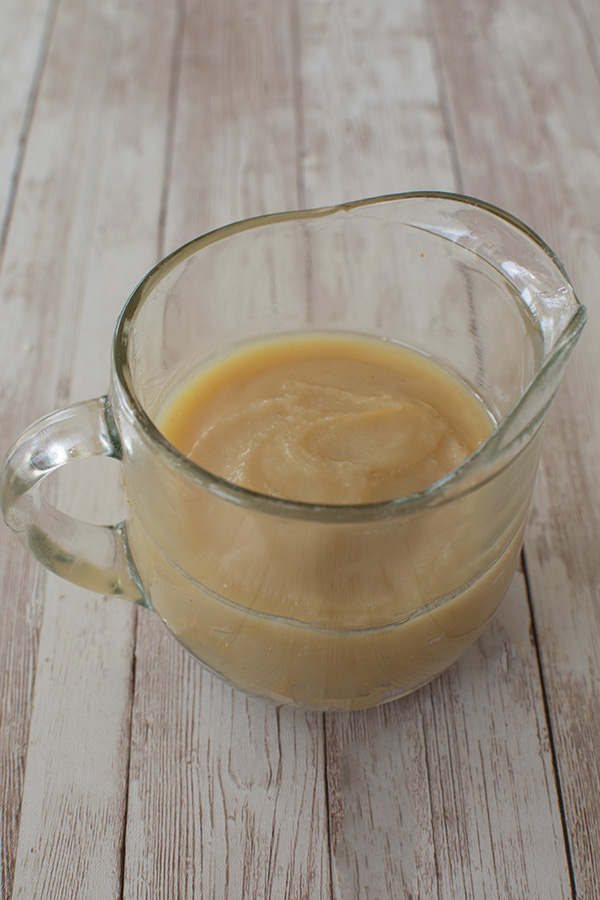
Schmaltz is rendered (melted) chicken or goose fat that was used as a grease by Eastern European Jews, as they could not use lard (from pigs) and they couldn't use butter with meat (mixing meat and milk).
Schmaltz was introduced to the US by Eastern European Yiddish-speaking Jews when they ran from European anti-Semitism and immigrated to the US, bringing their cuisine with them.
The term "schmaltz" is derived from the German verb meaning "to melt" and is used in Yiddish as well.
The term is commonly used in English when referring to chicken fat as it relates to cooking. However, schmaltz also came to refer to drippy, over-the-top dramatization of events in shows or mushy sentimentality.
Today, schmaltz is used much less in cooking than it was in previous generations, but is still best to enhance some dishes, as it adds a little extra delicious greasiness to recipes that need it.
I personally use schmaltz with Homemade Chicken Shawarma and Homemade Turkey Shawarma, because, when making these at home, fat is missing, so the schmaltz helps.
It can be used plain, with only the one ingredient, or you can make it flavored by seasoning it with onions, garlic, salt, and/or herbs.
In cooking, schmaltz is used for everything from frying to roasting.
And it's often used as a seasoned spread for crackers and bread.
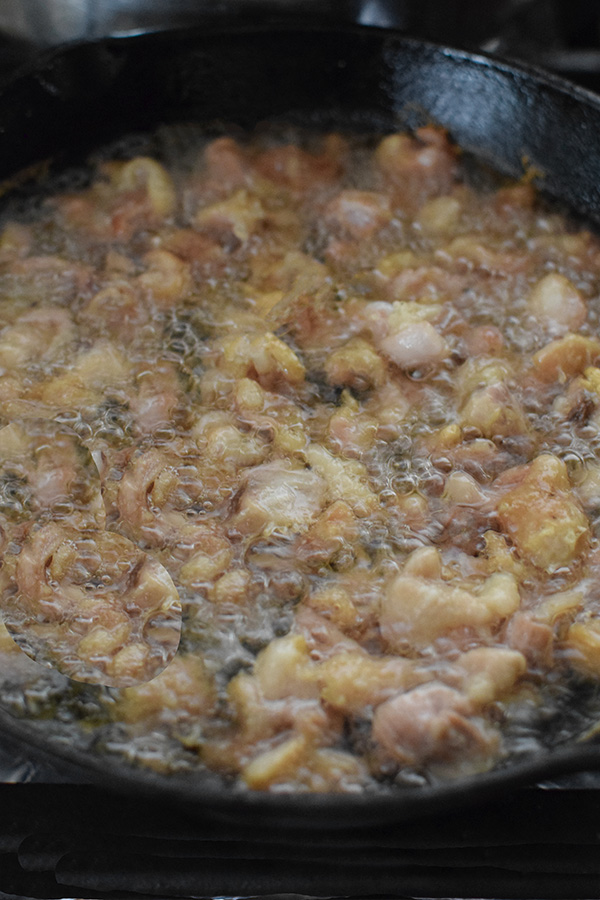
A byproduct of the fat-rendering product is "gribenes," which are the leftover crispy pieces of chicken skin after the melting process is done. My grandmother used to take gribenes and chop them in when she made chopped liver.
It's especially flavorful when the chicken fat is rendered with onions.
Chicken schmaltz is simple to make but does take a little time on the stove. And it can last in the refrigerator for quite a while (I've kept it for months) and even longer in the freezer.
Useful cooking terms:
What does it mean to render fat?
Rendering fat is the process of slowly melting raw animal fat and separating the liquid fat from the solid.
What does it mean when recipes say "to taste" about an ingredient?
When recipes say "to taste," it means that you can put in as little or as much as you like to your own taste. Some recipes have many ingredients that a cook can adjust to their own taste when cooking (not so much when baking, though).
The best way to calculate what your taste is with a recipe that you are not yet familiar with is to first taste the dish and then add the "to taste" ingredient GRADUALLY, a little at a time-a splash of this or a pinch of that-until the dish is just the way you like it.
Make sure to stir the ingredient after each time you add it so that the flavor will distribute evenly and become part of the dish. Then taste again. Repeat until you reach your personal preference.
Note: If you plan on using the recipe again, it is highly recommended to make a note of what and how much you added so that you can refer to it next time.
What does it mean when a recipe says that an ingredient is "optional"?
If an ingredient is "optional," it means that you can add it in or not based on your own preference. An optional ingredient can be flavor-related (i.e., salty, sweet, spicy, etc.), appearance-related (garnish), or even something like nuts or chocolate chips in baking.
What does "savory" mean?
"Savory" refers to foods that are not sweet, such as foods that taste salty, spicy, or herbal.
What cooking measurement expressions mean:
Drop - ¹/₆₄ teaspoon (or less-it's however a literal drop comes out)
Smidgen - ¹/₃₂ teaspoon
Pinch - ¹⁄₁₆ teaspoon (what you can grab between your finger and thumb)
Dash - ⅛ teaspoon (what comes out when you shake it out of a shaker or bottle)
Tad - ¼ teaspoon
Dollop-a glob on a spoon (like with mayonnaise or ice cream)
Scant-a scant cup is almost a cup, just below the line.
Heaping-above the line of the spoon (teaspoon, tablespoon)
Frequently Asked Questions (FAQs)
How do I store homemade chicken schmaltz?
You can safely store strained chicken schmaltz in an airtight glass jar in the refrigerator for several weeks or freeze it for up to 6 months or longer storage.
What is schmaltz traditionally used for?
Eastern Europeans have traditionally used shmaltz for roasting, cooking, sauteing, and frying, and as a spread. They have also used it for matzo balls for a richer flavor, and chopped liver as a binding fat.
Some also used it when one would normally use vegetable oil or butter, such as when frying matzo brei or latkes.
What are gribenes, and how do you use them?
Gribenes are the crispy, golden-brown chicken skin left behind after rendering schmaltz. They are traditionally used in making chopped liver or salted and enjoyed as a savory snack or sprinkled over other food.
They are especially flavorful if the fat was rendered with onion
Making schmaltz with onion:
Ingredients:
1 pound of chicken skin and fat
1 medium-large onion
1 tablespoon water to prevent fat from initially sticking to the pan
salt to taste (if you are going to use it as a spread)
Instructions:
- Chop chicken skin and fat into small pieces. pieces.
- Also, chop onion into small pieces.
- Add the skin, fat, and water to a frying pan that has not been heated and place it on medium heat.
- Cook on medium heat until the skin begins to turn a golden brown and then add the chopped onion.
- Fry, stirring frequently until the onion has lightly browned (approximately 10 minutes or so) and the skin is a golden brown.
- Remove from heat and strain the mixture into a container to separate skin and onion pieces from the schmaltz.
- Let cool.
Note: the golden-brown skin makes gribenes, as mentioned above.
Easy Homemade Chicken Schmaltz Recipe
Easy homemade rendered chicken fat for Jewish cooking, frying, or roasting or spreading on bread or crackers.
Ingredients
- 1 pound chicken skin with fat
- 1 tablespoon water to prevent fat from initially sticking to pan
- salt, granulated garlic, onion powder, herbs (if you are going to use as a spread—all optional and all to taste)
Instructions
- Chop chicken skin and fat into small pieces. pieces.
- Also, chop onion into small pieces.
- Add the skin, fat, and water to a frying pan that has not been heated and place on medium heat.
- Cook on medium heat, stirring occasionally until the skin turns a crispy golden brown. *
- Remove the mixture from heat and strain it into a container to separate the skin from the schmaltz.
- Let it cool.
Notes
*This is gribenes that you can use for chopped liver, etc. (See post)
Nutrition Information:
Yield:
8Serving Size:
1Amount Per Serving: Calories: 257Total Fat: 23gSaturated Fat: 6gTrans Fat: 0gUnsaturated Fat: 15gCholesterol: 47mgSodium: 37mgCarbohydrates: 0gFiber: 0gSugar: 0gProtein: 12g