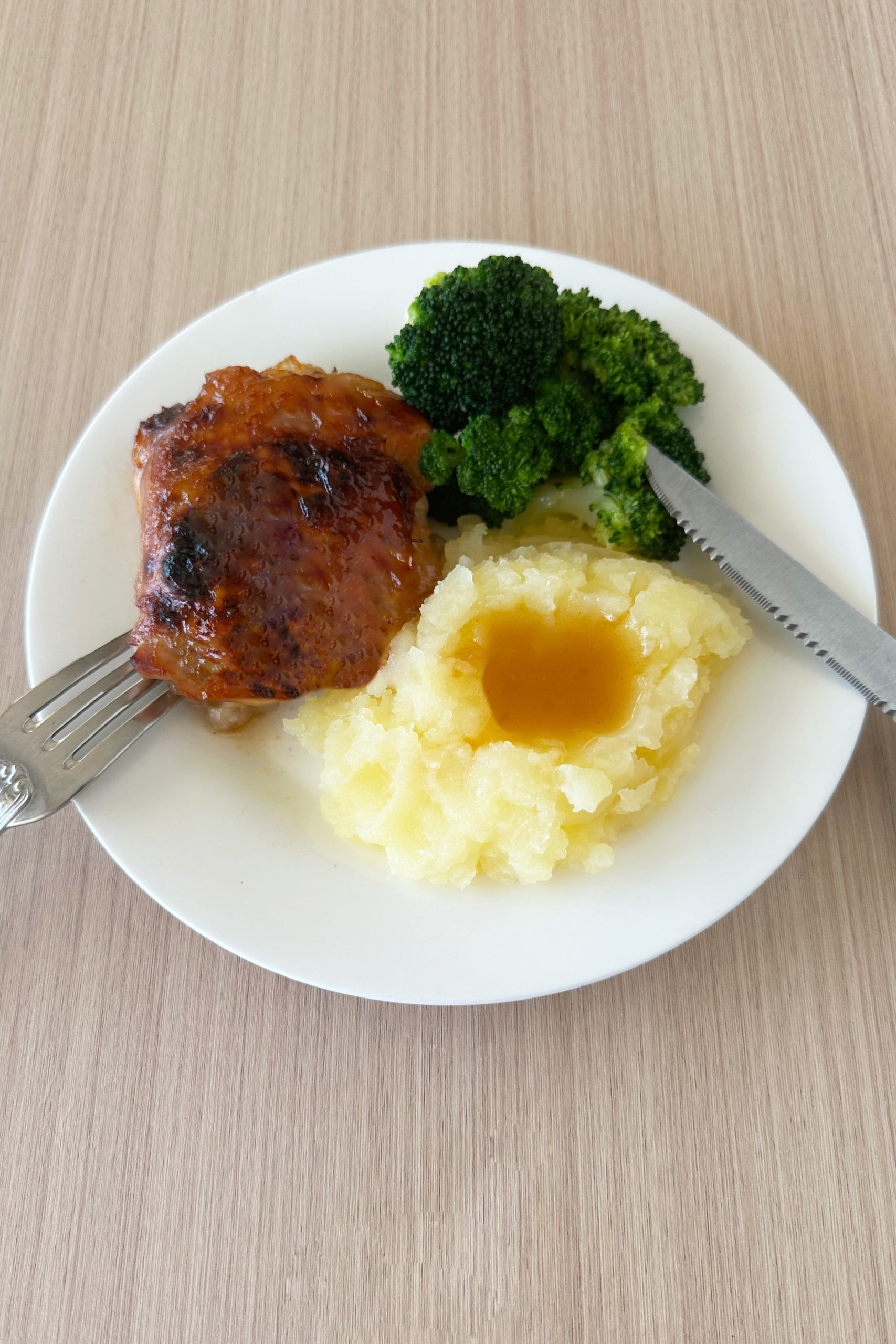
Duck Sauce Chicken for Passover is chicken smothered in duck sauce, a sweet and tangy condiment made from fruit that is frequently used as a glaze.
This dish is delicious any time during the Passover holiday—even for the Seder meal!
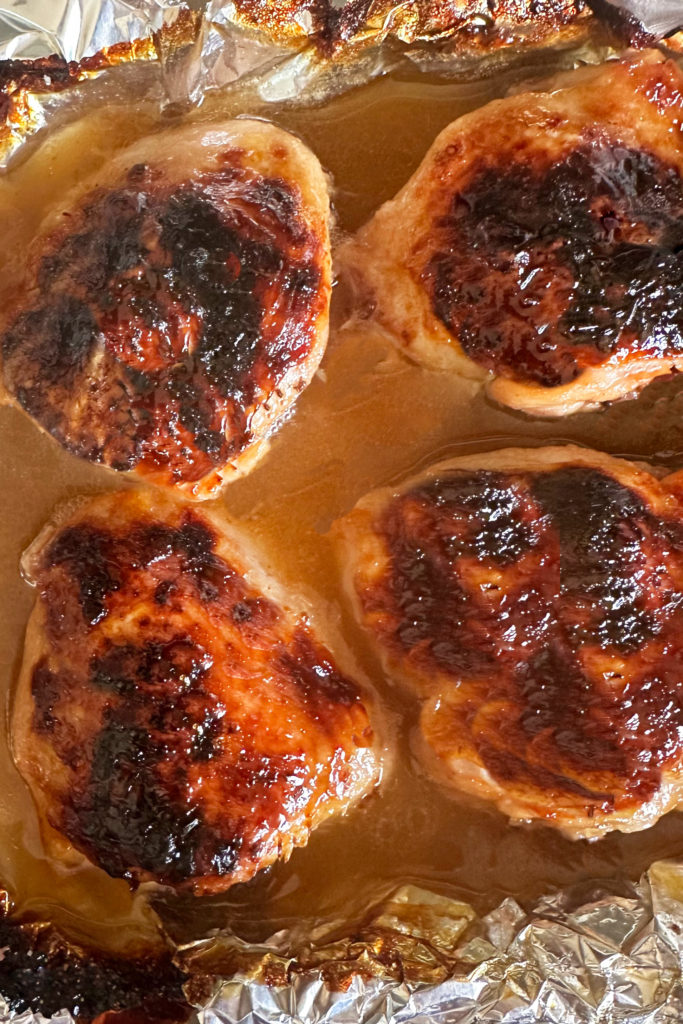
It’s only 2 ingredients, so all you do is pour the duck sauce on the chicken and pop it in the oven.
Pour and bake! That’s it!
(And the sauce with the drippings make an incredible gravy!)
Tired of the same old Passover recipes? Need a quick dinner?
Guests popping over within the hour?
Want something different for the Seder meal or for shabbat?
You really can’t go wrong with Duck Sauce Chicken for Passover.
It’s a simple 2-ingredient recipe. Just pour and bake!
And it refrigerates well, so you can make ahead and have it ready to warm when you get home from school or work!
And chicken has health benefits!
Also, since this dish contains no matzo, you can also have it on the day of the seder!
Eating on the day of the seder
Jews who keep the laws of Passover do not eat matzo or any foods that contain anything from matzo (such as matzo meal or matzo cake meal) the entire day before the seder, which is in the evening.
Some people even have the custom of not eating such foods for two weeks before, beginning on Rosh Chodesh Nissan or even as far back as Purim, which is a month before.
Food on Passover
Torah-observant Jews do not eat chametz (the fermented products of five grains: wheat, spelt, barley, oats, and rye).
In addition, Torah-observant Ashkenazi Jews do not eat kitniyot (or kitniyos as pronounced in Ashkenazi Hebrew). These include legumes, corn, rice, and similar foods that were deemed forbidden to eat by rabbis in the medieval period and are still not eaten today. Sephardi and Mizrachi Jews do not follow this tradition.
Many observant Ashkenazi Jews will not even eat the derivatives of these kitniyot, while others do (each family holds their own traditions regarding this).
Then, there are Ashkenazim who don’t eat “gebrokts” (or gebrochts).
Gebrokts (gebrochts) means “broken” in Yiddish, and in this case refers to matzo that has absorbed liquid. Not eating gebrokts is observed by many in the Hasidic Jewish community and Ashkenazim who have taken on this tradition, where they basically don’t mix anything wet with matzo.
So, things like matzo sandwiches, fried matzo, and even matzo balls are a no-no for them.
There is a joke that sums it all up:
On Passover, we should remember people who have little to eat on this holiday. They are called Ashkenazim.
Over the years, I have learned to adapt “normal” food for Passover so that my family won’t complain about boring, tasteless, or repetitive meals.
I find that having good food and variety makes the week of Passover a very pleasant experience, and I hope this recipe will help make yours just that!
Can’t find duck sauce for Passover? Make Easy Homemade Duck Sauce for Passover!
What does it mean when recipes say “to taste” about an ingredient?
When recipes say “to taste,” it means that you can put in as little or as much as you like to your own taste. Some recipes have many ingredients that a cook can adjust to their own taste when cooking (not so much when baking though).
The best way to calculate what your taste is with a recipe that you are not yet familiar with is to first taste the dish and then add the “to taste” ingredient GRADUALLY, a little at a time—a splash of this or a pinch of that—until the dish is just the way you like it.
Make sure to stir the ingredient after each time you add it so that the flavor will distribute evenly and become part of the dish. Then taste again. Repeat until you reach your personal preference.
Note: If you plan on using the recipe again, it is highly recommended to make a note of what and how much you added so that you can refer to it next time.
How Chinese American food became popular within the Jewish community
It is well known that Jews (especially those with ties to New York) love Chinese food. You can find at least one and, more often than not, several kosher Chinese restaurants in predominantly Jewish neighborhoods. In the town of Cedarhurst, New York, for example, there are two within a couple of blocks – both excellent…and don’t even get me started on Brooklyn.
There is a popular joke, which has been passed around for many years, that describes the Jewish dependency on Chinese food: “According to the Jewish calendar, the year is 5749. According to the Chinese calendar, the year is 4687. That means for 1,062 years, the Jews went without Chinese food.” That was back in 1989, and who knows when the joke even started?
Jews as a group were probably first introduced to Chinese food in the Lower East Side of Manhattan, where immigrants of various cultures settled in their own neighborhoods in the late 1800s and early 1900s.
By the early 1900s, approximately one million Jews from Eastern Europe and half a million Italians from Southern Italy shared the Lower East Side of Manhattan with only approximately 7,000 Cantonese Chinese, most of whom had moved from California.
Due to anti-Chinese laws and acts, which prevented them from competing with whites, many Chinese opened restaurants.
The majority of Jewish immigrants at that time were observant in their religion and ate only kosher food when they arrived in New York. But, over time, many assimilated, and their children, who were less interested in keeping “the old ways” and more interested in other cultural experiences, even more so.
Some continued keeping kosher at home while allowing themselves to stray while out. Sunday was a favorite time for eating out, and Chinese food was not only reasonably priced, but their restaurants were open on Sundays.
Not only that, but Chinese food didn’t use milk, and while excuses may be made for eating non-kosher meat outside of the home, there was still the forbidden mixing of meat and milk to consider.
Having been raised with what is forbidden, these Jews seemed to feel that if they couldn’t tell it was non-kosher, it wasn’t that bad (or wasn’t repulsive), even if it contained pork or non-kosher seafood. The attitude seemed to be, if I can’t see it, it won’t kill me.
But what about Jews who did keep kosher? It took decades, but finally one enlightened Jewish, kosher deli owner found a solution. Using Cantonese Chinese recipes and substituting kosher veal, beef, and chicken livers for pork, he began selling the first kosher Chinese food. This was Sol Bernstein, the eldest son of Schmulka Bernstein.
Schmulka Bernstein ran a kosher butcher store and smokehouse on the Lower East Side of Manhattan near Essex St. for approximately 30 years, from the 1930s until the mid-1960s.
In 1959, Sol opened a delicatessen on Essex Street and called it Bernstein-on-Essex. His slogan was “Where kashrut is king and quality reigns” (kashrut = kosher).
Although the deli was separate from Schmulka’s butcher shop and belonged to Sol, everyone still called it Schmulka Bernstein’s, and anyone who is still around and remembers still does so to this day. In fact, I doubt that many people even know that the deli belonged to Sol or that it was Sol who was the originator of kosher Chinese food in the US.
Sol continued to sell deli while he incorporated Chinese foods into the menu and did very well. The restaurant continued to prosper until he died in 1992, when it was sold.
Here are some terrific kosher for Passover sides to have with your duck sauce chicken:
Potato salad
Coleslaw
Red cabbage salad
Duck Sauce Chicken for Passover
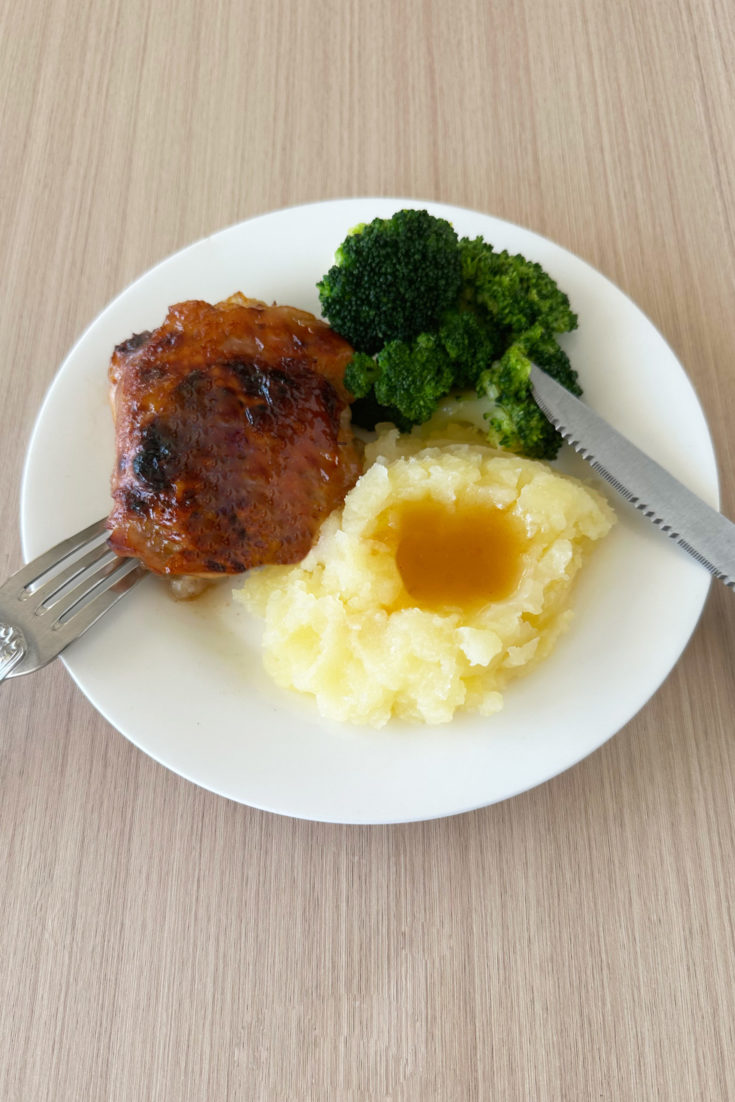
Delicious chicken dish with the Chinese-American sweet and sour fruit condiment, kosher for Passover.
Ingredients
- 8 pieces of chicken
- 1 - 1 1/4 cups duck sauce, kosher for Passover*
Instructions
- Place chicken pieces in a suitable size baking pan.
- Generously pour the duck sauce over the chicken pieces and spread evenly.
- Place in oven that has been pre-heated to 375°F and bake uncovered for approximately 45 minutes or until the skin turns darker (approximate an hour if you want crispy skin).
Notes
*If you can't find duck sauce in the store, Homemade Duck Sauce for Passover is delicious and very easy make.
Nutrition Information:
Yield:
4Serving Size:
1Amount Per Serving: Calories: 576Total Fat: 22gSaturated Fat: 6gTrans Fat: 0gUnsaturated Fat: 14gCholesterol: 160mgSodium: 496mgCarbohydrates: 50gFiber: 1gSugar: 25gProtein: 41g