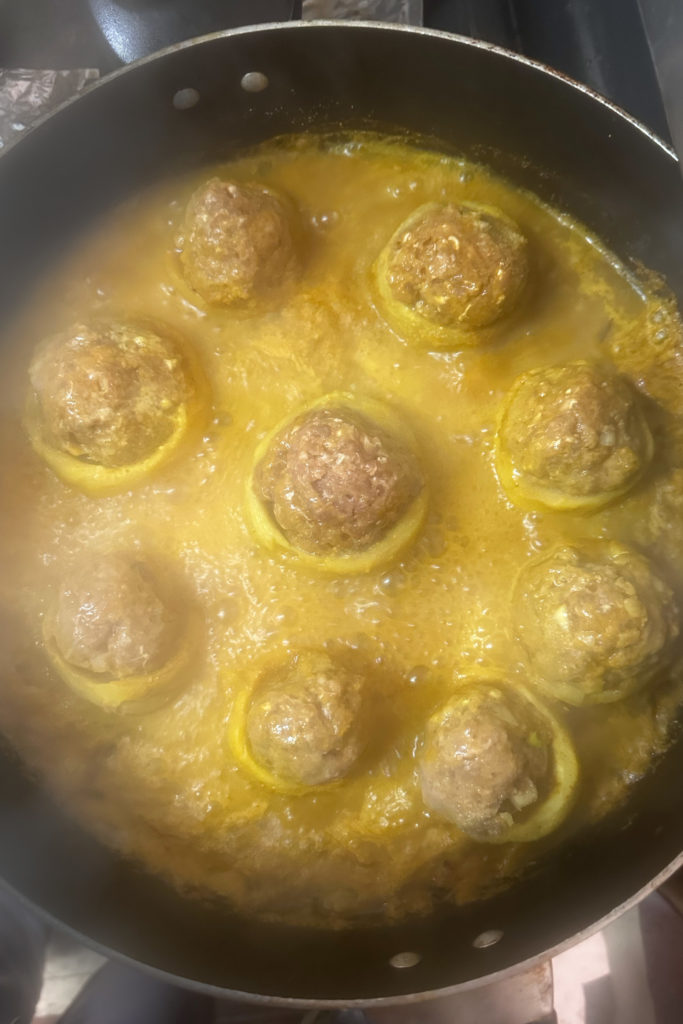
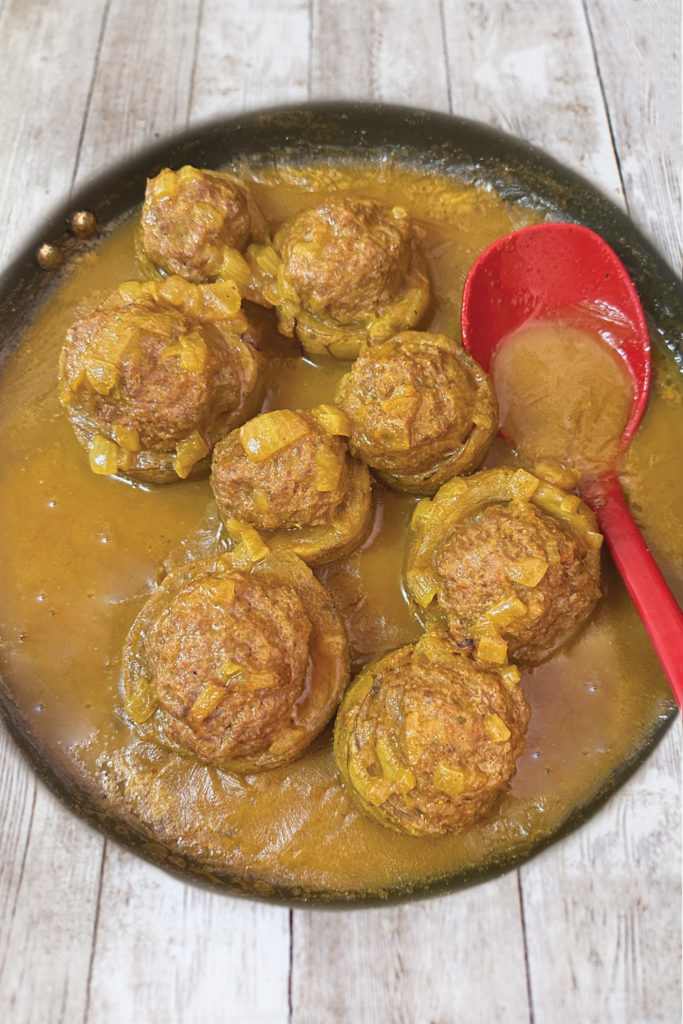
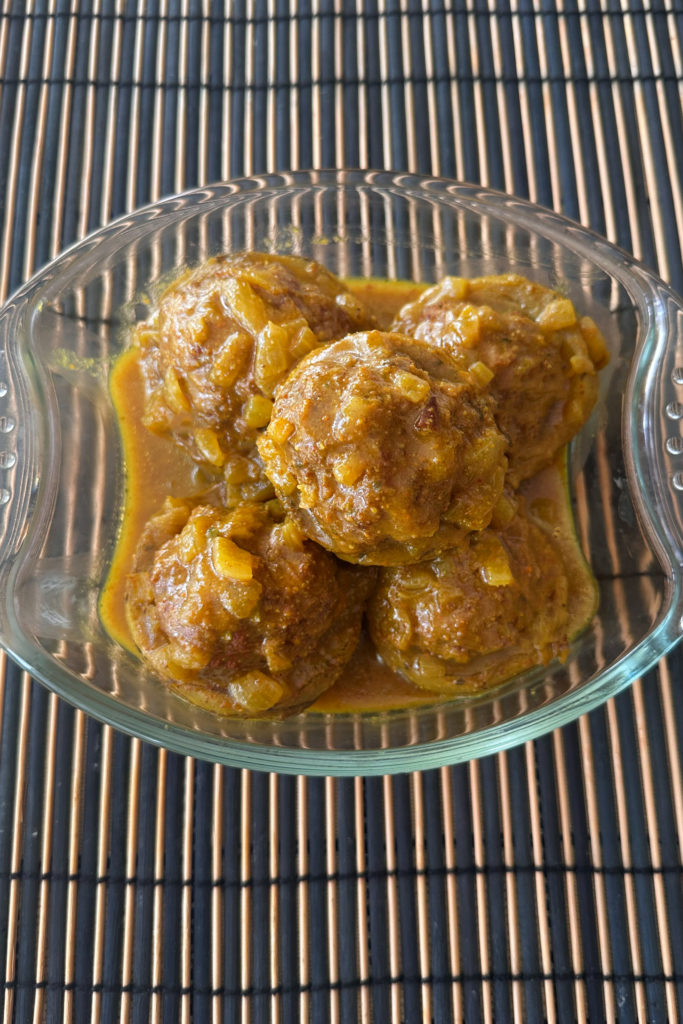
Easy Israeli-Style Stuffed Artichoke Bottoms is a classic, savory Mediterranean dish of tender artichoke bottoms filled with a delicious ground-beef filling and cooked in an earthy, cumin-seasoned sauce.
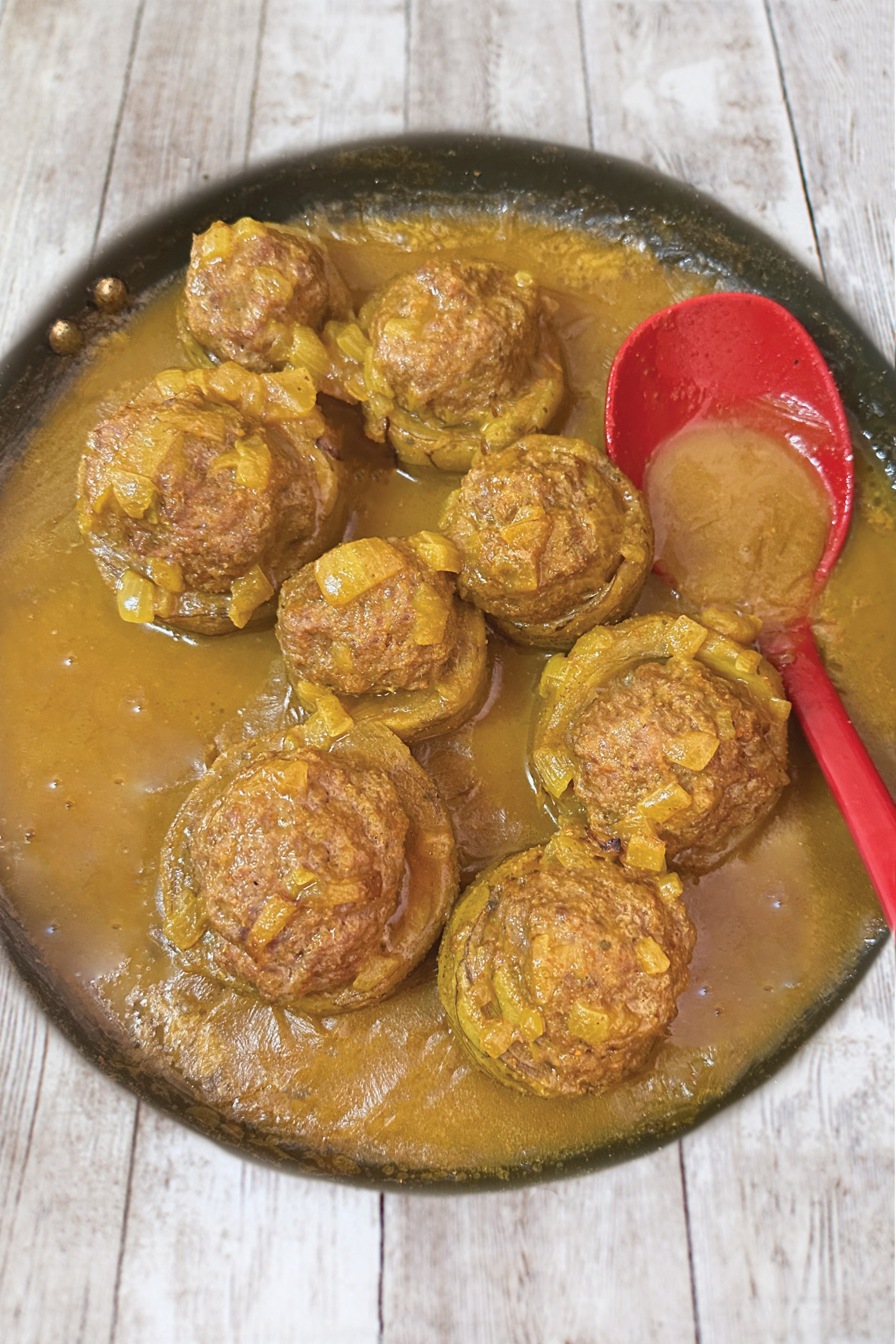
Artichoke bottoms are used in several Middle Eastern and Mediterranean dishes.
Stuffed artichoke bottoms is a classic dish, but there are a variety of recipes-made with peas, without peas, cooked in a tomato sauce, or in a delicious cumin sauce, like with this recipe, giving it a warm, earthy Middle Eastern flavor.
While the dish originally originated in North Africa, it was brought to Israel by Mizrahi Jews when they immigrated from Morocco, Tunisia, and Libya and became a popular Mizrahi meal in Israeli food culture.
This Israeli-style dish is made without pork, which is traditional for Israeli recipes, and is made without milk, which is also typical with meat recipes.
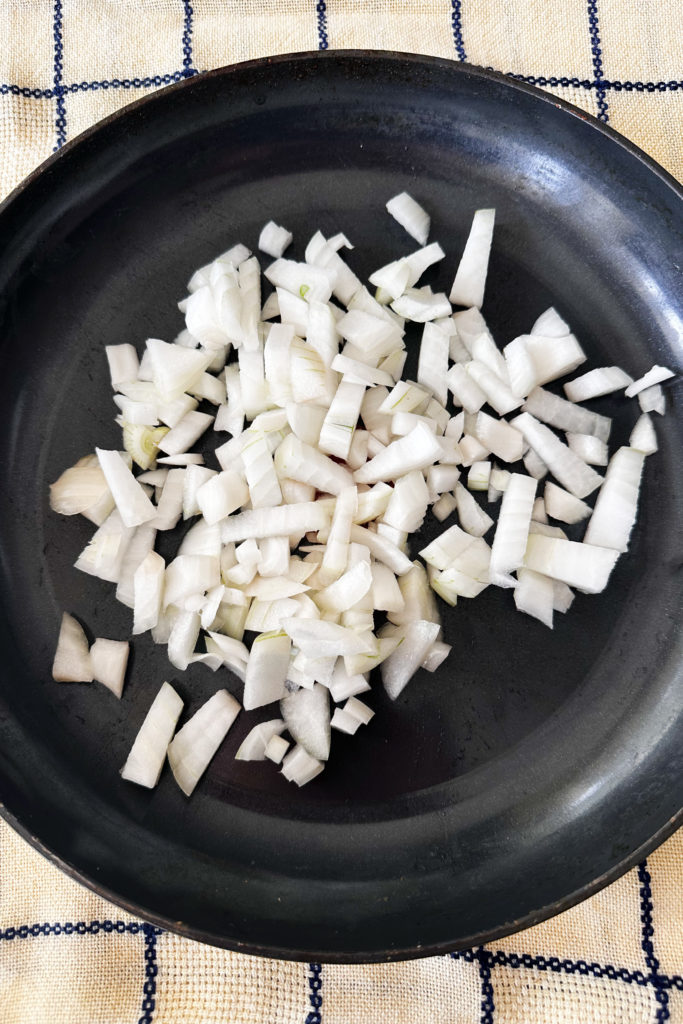
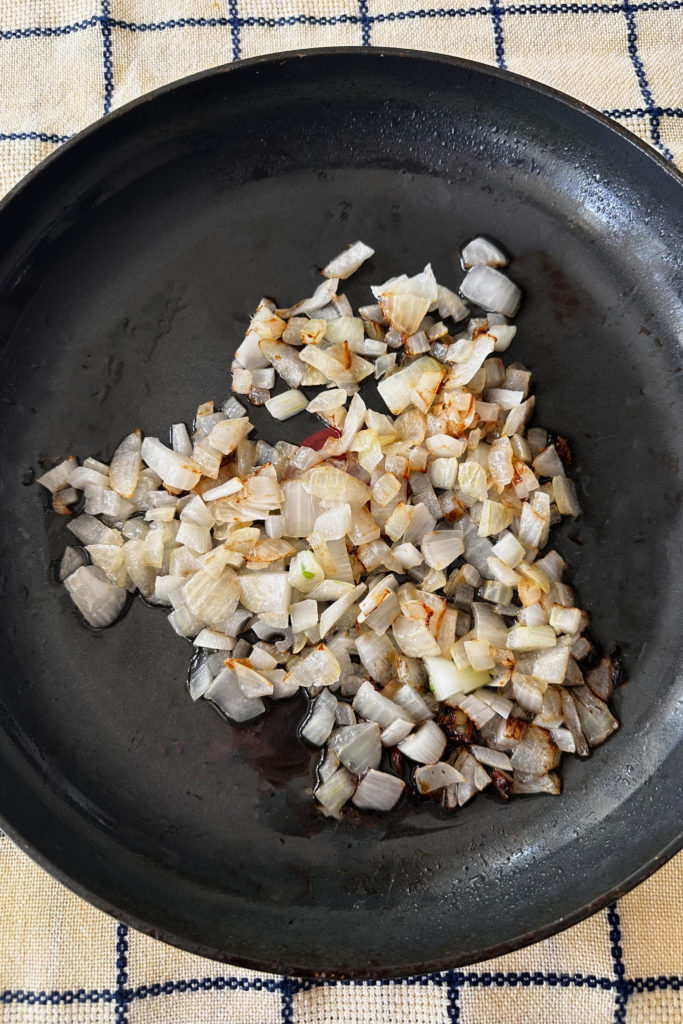
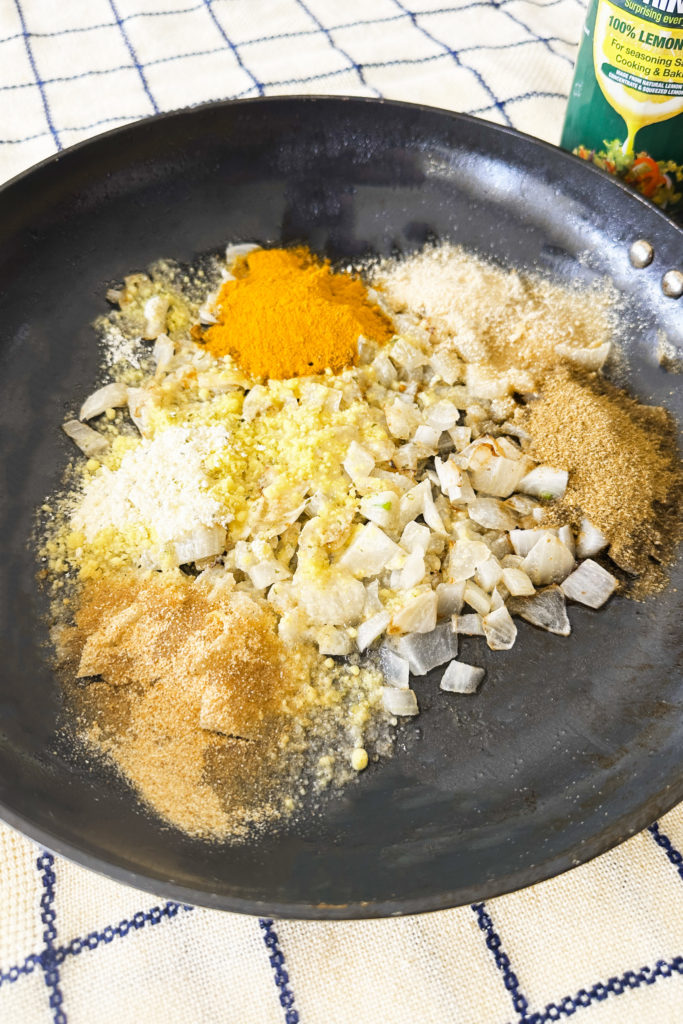
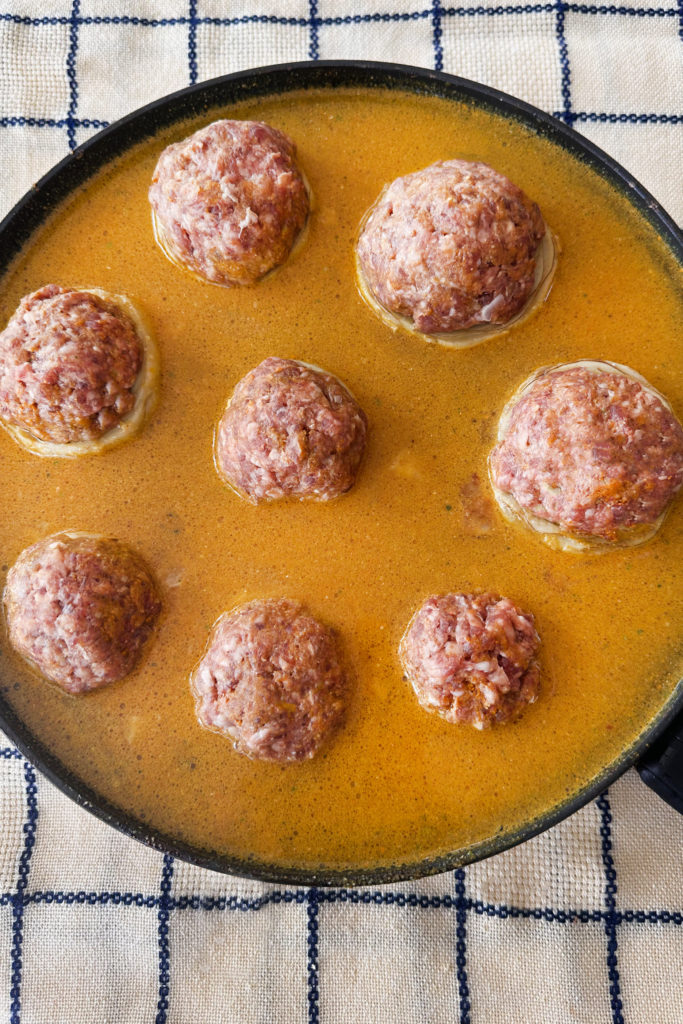
While this recipe has several ingredients, it is so easy to make. Just fry the onions in a pan, add the spices and water, place the stuffed artichokes into the pan, cover, and simmer.
A little about this dish
This dish originated in North Africa and was brought to Israel by Jewish immigrants from Libya, Morocco, and Tunisia.
Since the Muslims in the Middle East were against the establishment of the State of Israel, after the declaration of the State in 1948, life for Jews in other Middle Eastern countries became significantly more difficult because of hostility and attacks by Muslims.
This brought about a wave of immigration from those countries to Israel in the 1950s, and the Jews brought their delicious recipes and flavorful spices with them. Which, in turn, created the Mizrahi cuisine in Israel. Recipes were quite often shared and adapted and are now considered part of Israeli cuisine.
The cumin in this stuffed artichoke bottoms recipe gives the recipe its Middle Eastern flavor, and the turmeric gives it its color.
And both cumin and turmeric have nutritional value!
Frequently Asked Questions (FAQs): Easy Israeli-Style Stuffed Artichoke Bottoms with Beef
1. What is the easiest way to prepare the artichoke bottoms?
Use high-quality frozen artichoke bottoms. They are already trimmed and ready to use. If using frozen, it's preferable to thaw them completely so they hold the meat filling well without becoming soggy during the cooking process.
2. Can I make this ahead of time?
Yes, this dish is excellent for prep work. You can stuff the artichoke bottoms with the raw meat mixture and keep them in the refrigerator for around a day before cooking. When you are ready to eat, simply cook them according to the recipe instructions.
3. How do I keep the meat moist while baking?
Since artichoke bottoms have a relatively small surface area, the meat can dry out if overcooked. To prevent this, make sure that the pan is covered most of the time and baste the stuffed artichokes occasionally until done.
4. Can I use other types of ground meat?
Absolutely. While ground beef is traditional, ground turkey or even a mixture of lamb and beef works wonderfully.
6. What side dishes pair best with this?
Because this dish is hearty, it pairs beautifully with a side of fluffy couscous or rice (white or yellow) with the savory juices from the baking dish pour on top.
Stuffed Artichoke Bottoms with Peas
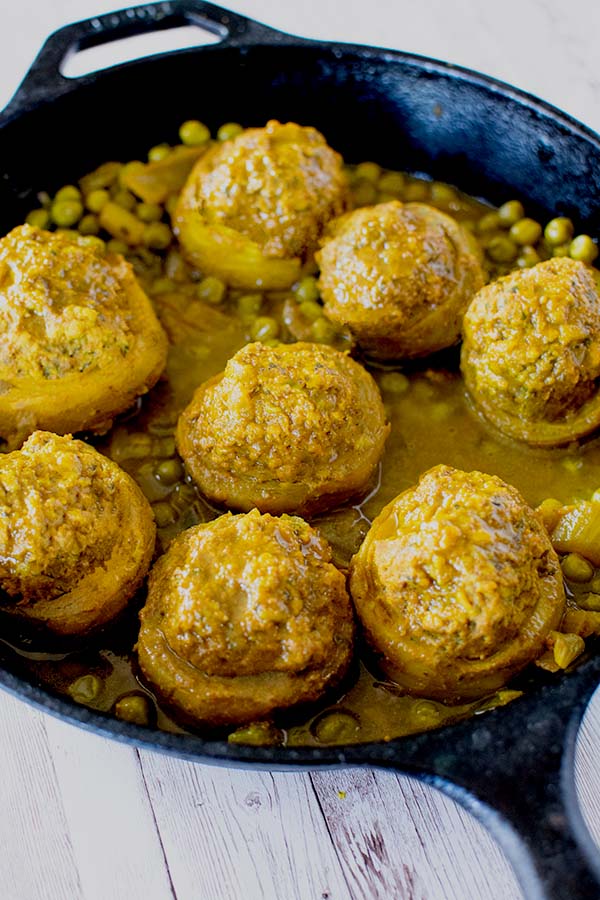
Another popular way to prepare this dish is with peas. So, if you would prefer this version, then just add 12 ounces canned or cooked peas (more or less, as desired) to the recipe at the end and continue cooking for a few minutes so that they absorb the flavors.
If you prefer to use frozen peas, add them sooner and let them cook in the sauce until ready.
A little about artichokes
The artichoke was first found in the Mediterranean growing wild, as it still does in some places today.
The artichoke (scientific name: Cynara Cardunculus) has a long history in the Mediterranean, and stories have even been made up about the plant.
For example, there is a Greek myth that describes how the artichoke came into being.
Zeus, king of the Greek gods, who was known for his weakness with women, went to visit his brother, Poseidon, god of the seas.
The brothers met on the shores of the island of Zinari, where there was a young local girl, Cynara, collecting shells along the beach (some versions say she was bathing).
Zeus immediately fell in love with her and seduced her, won her heart, and brought her back with him to Mt. Olympus, home of the Greek gods.
Zeus granted her the status of a goddess on the condition that she would give up her life with mortals, including her parents.
Cynara at first loved the status that being a goddess afforded her, but before long, her yearning for her parents became unbearable, so she snuck home to see her family.
When Zeus found out what she had done, he threw Cynara off Mt. Olympus and turned the poor girl into a thorny and ugly bush-the artichoke.
The Greeks and Romans believed the artichoke was good luck for the birth of a son.
There is more than one idea for how the artichoke spread through Europe and to North America.
One of these is that the Arabs brought the plant to Spain, and then Spanish settlers brought the plant to North America in the 17th century.
Another is that Catherine de Medici brought artichokes to France when she was 14 and married off to Henry II, and from there it spread to other European countries, and later the French brought the plant to North America.
The plant found a permanent home in Castroville, California, which is located 19 miles northeast of Monterey and nicknamed "The Artichoke Capital of the World." The town currently provides the largest supply of artichokes in the United States.
Artichokes have health benefits, such as being rich in fiber, vitamins (such as vitamin C and vitamin K), minerals (such as magnesium, potassium, phosphorus, and iron), and antioxidants (which are believed to help reduce the risk of cancer, diabetes, stroke, and heart disease), but are low in fat.
What does it mean when recipes say "to taste" about an ingredient?
When recipes say "to taste," it means that you can put in as little or as much as you like to your own taste. Some recipes have many ingredients that a cook can adjust to their own taste when cooking (not so much when baking, though).
The best way to calculate what your taste is with a recipe that you are not yet familiar with is to first taste the dish and then add the "to taste" ingredient GRADUALLY, a little at a time-a splash of this or a pinch of that-until the dish is just the way you like it. Make sure to stir the ingredient after each time you add it so that the flavor will distribute evenly and become part of the dish. Then taste again. Repeat until you reach your personal preference.
Note: If you plan on using the recipe again, it is highly recommended to make a note of what and how much you added so that you can refer to it next time.
What does "savory" mean?
"Savory" refers to foods that are not sweet, such as foods that taste salty, spicy, or herbal.
A little about Israeli cuisine
National cuisine is simply a mingling of food from a variety of cultures, often due to a change of ruling countries and a shifting of borders.
And when one lives in a melting pot, such as the US or Israel, it is just unrealistic to expect that food from a particular culture won't mingle with that of other cultures.
That being said, "Israeli cuisine" is basically Middle Eastern (as opposed to Eastern European food) that was brought to Israel by Jews when they fled or were expelled from Muslim countries and moved to Israel mostly after the declaration of the State of Israel (collectively known as Mizrahi Jews).
Recipes were passed from generation to generation, and although decades have passed, the foods are still known by the culture they came from, and everyone seems to have their own way of making them.
There are many variations of pretty much any "Israeli" recipe because of background, custom, or even just taste. When choosing a recipe, one has to know what actually constitutes a main ingredient-what makes the dish what it is-and what is left up to individual taste.
What is needed to prepare Israeli-style stuffed artichoke bottoms with beef?
I hardly ever meal plan, so I like to keep a cupboard full of seasonings, spices, veggies, and canned goods in my kitchen to use whenever the mood strikes.
But these are what you need to have on hand to make this recipe even last minute!
frozen artichoke bottoms
ground beef
chicken consommé powder (parve is fine)
ground turmeric
onion powder
ground cumin
granulated garlic
ground black pepper (optional)
dried or fresh cilantro (optional)
onion
splash lemon juice (optional for a tangy taste)
cooking oil
Want to try some more recipes that are popular in the Middle East and Mediterranean?
Easy Israeli-Style Stuffed Artichoke Bottoms with Beef Recipe
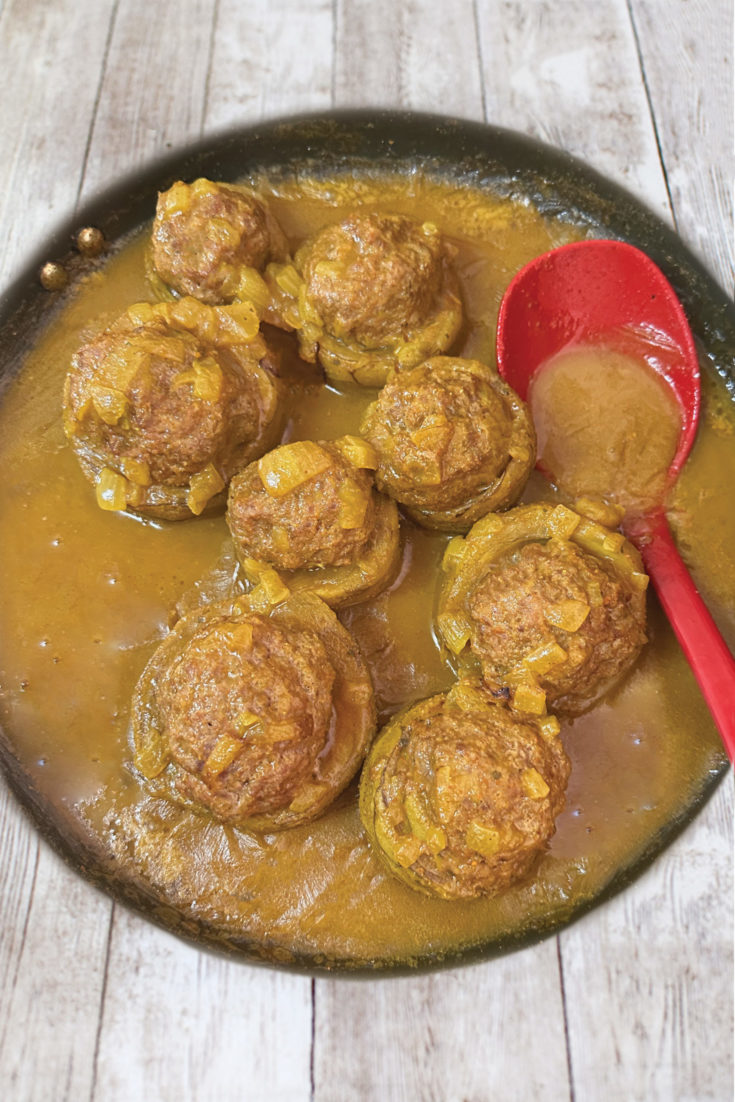
A delicious Middle Eastern dish of stuffed artichoke bottoms with flavorful ground beef in an amazing sauce.
Ingredients
Artichokes
- 8 frozen artichoke bottoms (medium, on average)*
- 1 pound ground beef**
- 1 tablespoon chicken consommé powder
- 1 teaspoon ground turmeric
- 2 teaspoons onion powder
- 1 teaspoon ground cumin
- ¾ teaspoon granulated garlic
- ½ teaspoon ground black pepper or to taste (optional)
- 2 teaspoons dried cilatro or 4 teaspoons fresh cilantro (optional)
Sauce
- 1 onion (medium or large, as desired), chopped or diced
- 2 tablespoons chicken consommé powder (parve is ok)
- 2 teaspoons ground turmeric
- 2 teaspoons onion powder
- 2 teaspoons ground cumin
- ¾ teaspoons granulated garlic
- splash lemon juice (optional for a tangy taste)
- a little cooking oil for frying onions
- water
Instructions
- In a mixing bowl, combine the ground beef, consommé powder, turmeric, onion powder, ground cumin, granulated garlic, pepper (if using), and cilantro (if using).
- Shape balls to fit inside the artichoke bottoms and push in so they stick. Set aside or put in refrigerator to chill.
- Lightly fry the onion with minimal oil in a pot or pan that will be large enough for all of the artichoke bottoms and not be on top of one another.
- Drain excess oil if there is any.
- Add the consommé powder, turmeric, onion powder, ground cumin, and pepper, if desired. If you like this dish a little tangy, add the splash of lemon juice to taste. Mix well.
- Place artichoke bottoms in pan so they are not on top of one another.
- Fill the pot so with enough water to reach the tops of the artichoke bottoms.
- Cover the pan and cook on medium-low heat for 30 minutes or until you can slide a fork easily through the largest arichoke bottom and the meat is solid. Baste occasionally so the tops don't dry out as the water will somewhat evaporate as it becomes sauce. If you feel that too much has evaporated, add a little water being careful not to dilute the sauce.
Artichokes
Sauce
Notes
*Sometimes, there are small artichoke bottoms in the package. That's fine as long as there are some larger ones to balance out the meat filling.
**A little more meat is OK too if you want to stuff them higher.
Tip 1:The flavor for this dish is completely adaptable, so you can adjust the spices to your taste, including using more or less consommé powder for desired saltiness. Be careful with the turmeric, because too much turmeric will probably make the dish taste like soap.
Tip 2: If you want this dish to take less time, you can cook the arichoke bottoms separately ahead of time and then do the rest, cooking and basting until the meat becomes solid.
Nutrition Information:
Yield:
4Serving Size:
1Amount Per Serving: Calories: 554Total Fat: 27gSaturated Fat: 9gTrans Fat: 1gUnsaturated Fat: 15gCholesterol: 121mgSodium: 1328mgCarbohydrates: 38gFiber: 16gSugar: 5gProtein: 44g