Easy Vegetarian Eggplant Parmesan is a 5-ingredient recipe for a cozy, meatless eggplant dish that's packed with savory flavor and gooey cheese.
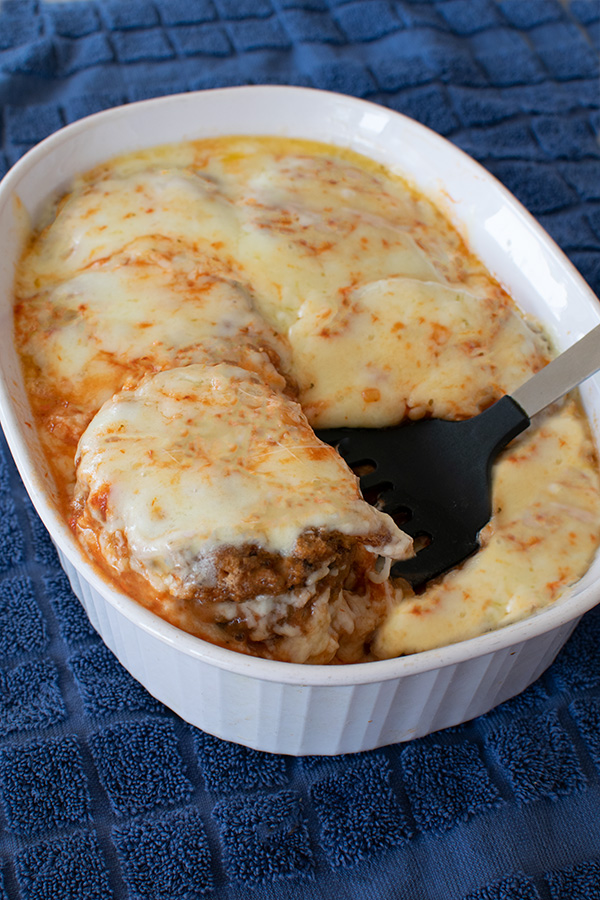
This vegetarian eggplant Parmesan features crispy, golden-brown fried eggplant cutlets layered with your favorite pasta sauce and gooey, melty cheese, then baked until hot and bubbly.
Using just five ingredients plus oil, this recipe comes together effortlessly, delivering all the classic, comforting flavors of eggplant parmesan without the stress.
Why make this dish?
Eggplant Parmesan always sounded complicated to me, so I never bothered to take it on as a challenge.
While traditional versions may require a lot of effort, I don't do complicated meals.
Ironically, I don't even eat eggplant myself, but when I saw how much my family loved it at restaurants, I decided that it was worth the effort.
At their instructions, I made a version that they loved, and it was not difficult in the least. In fact, I started making sure that I kept the 5 ingredients (plus oil) at hand because it was frequently requested.
While it does require a bit of time from start to finish, the process is easy and well worth the effort.
Plus, the leftovers heat up easily and well, and it looks and tastes impressive enough for guests or potluck dinners.
A little history
There is a dispute about where Eggplant Parmesan (Parmigiana di Melanzane) originated (some say Naples, some say Sicily), but it became popular throughout Italy in the 19th century and was brought to the US by Italian immigrants in the late 1800s and early 1900s.
The dish always had variations, which included layers of eggplant, tomatoes or tomato sauce, and variations of cheeses, and a lot of recipes include ham or other meat.
Tip:
This recipe calls to dip the eggplant slices in egg twice-once before the breadcrumbs and once after. If you choose to only dip once before the breadcrumbs, you can use fewer eggs, so start with less and add if you need to.
Some info about cooking:
What does it mean when a recipe says that an ingredient is "optional"?
If an ingredient is "optional," it means that you can add it in or not based on your own preference. An optional ingredient can be flavor-related (i.e., salty, sweet, spicy, etc.), appearance-related (garnish), or even something like nuts or chocolate chips in baking.
What does "savory" mean?
"Savory" refers to foods that are not sweet, such as foods that taste salty, spicy, or herbal.
Frequently Asked Questions (FAQs)
Can I make this eggplant parmesan ahead of time?
Yes, this recipe is great for meal prep. You can assemble it, cover it well with plastic wrap, and keep it in the refrigerator for up to 24 hours before baking, possibly more
What should I serve with this vegetarian dish?
This meal pairs perfectly with a fresh side salad, garlic bread, or your favorite pasta.
Is this recipe freezer-friendly?
Yes. You can freeze the assembled, unbaked eggplant parmesan for up to 2 months. Thaw it in the refrigerator overnight before baking as directed. Cooked eggplant parmesan freezes well also.
How long does this keep in the refrigerator?
Store any leftovers in an airtight container for up to 3 or 4 days.
Can I reheat the leftovers?
Yes. This dish reheats well in an oven or microwave.
A little about eggplants
The eggplant is native to India and Asia, where it can be found growing wild, and it is believed that eggplants were brought to Europe sometime during the 7th or 8th century.
Australians and Americans call the vegetable eggplant, while in England it is called an aubergine, from the French word for this vegetable.
Because of its meaty texture, eggplant is used instead of meat in some vegetarian versions of meat recipes.
While there are a variety of types of eggplants, the one for this recipe is the large, egg-shaped (or teardrop-shaped), blackish-purple one with the meaty inside.
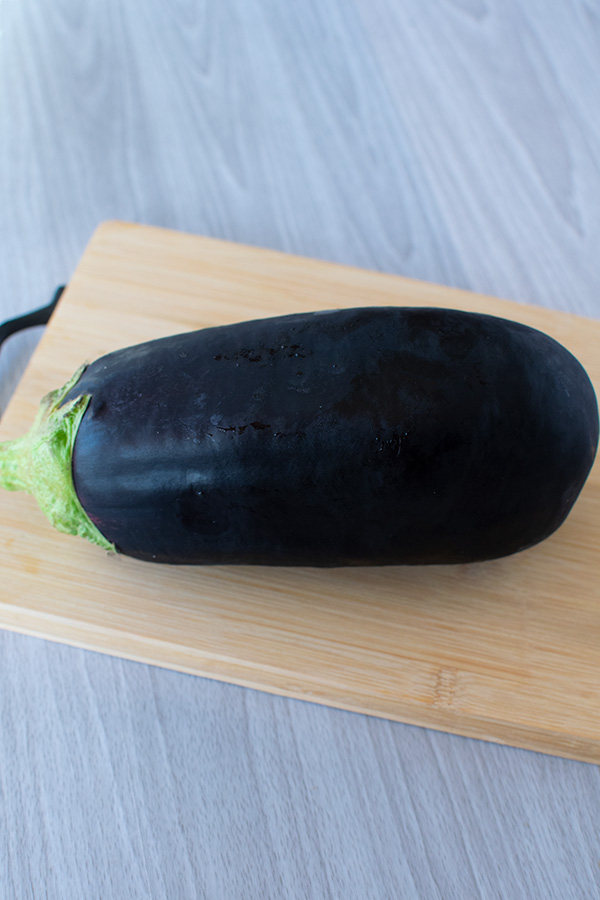
Eggplants have health benefits, as they contain antioxidants like vitamins A and C, which help protect your cells against damage, and are low in calories.
About cooking eggplant
Eggplants can be roasted, baked, steamed, deep-fried, or sautéed.
Before cooking an eggplant, cut off the top part where the green is (called a calyx). The bottom tip should also be removed, but this is not imperative. The skin is perfectly fine to eat, but it must be cooked well. Otherwise it may come out chewy.
This recipe can use either peeled eggplants or eggplants with the skin (having the skin on will not ruin the recipe).
Eggplant is naturally a little bitter. If you find that to be the case, you can draw out the bitterness by sprinkling it with salt and letting it sit awhile. If you are using slices or pieces, slightly salt after cutting. I have personally never found this to be a problem when cooking with eggplants
Using salt before cooking can help prevent the eggplant from absorbing too much oil and becoming greasy if using oil with the eggplant recipe (I normally just pat the pieces with a paper towel if need be).
If you do use salt, MAKE SURE to rinse it off before cooking the eggplant, or the salt will become a part of your dish!
Personally, I have never salted my eggplants before using them (and I have used eggplants in two countries) and have never had any problem with bitterness, but if you have any concern, please do.
If a recipe calls for frying, but you prefer not to do so because of the calories the oil will add to the recipe, you can spray with cooking oil and bake instead.
What is needed to make Easy Vegetarian Eggplant Parmesan?
I hardly ever meal plan, so I like to keep a cupboard full of seasonings, spices, veggies, and canned goods in my kitchen to use whenever the mood strikes.
But these are all you need to have on hand to make this recipe even last minute!
eggplant
egg
bread crumbs
gooey cheese of choice
favorite pasta sauce
(oil for frying)
Want to make delicious eggplant cutlets?
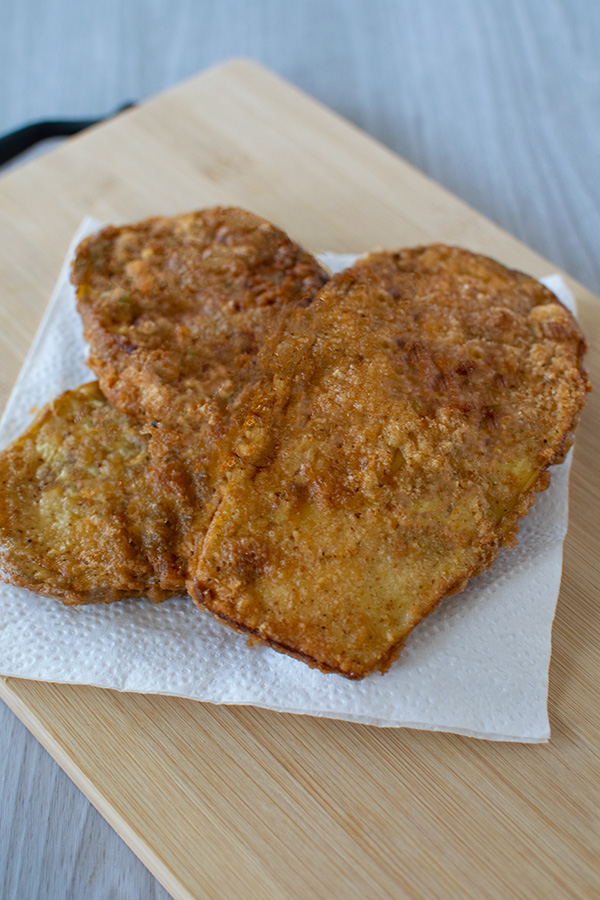
Easy Vegetarian Eggplant Parmesan Recipe
Layers of delicious fried eggplant, delicious sauce, and gooey cheese! Only 5 ingredients and made without meat!
Ingredients
- 2 large eggplants
- 6-8 eggs (start with 6, add more if needed)*
- 2-3 cups breadcrumbs, plain or seasoned (start with 2 cups, add more if needed)*
- 1 pound (or more, as desired) of mozzarella and or Parmesan cheese (or other gooey cheese of your choice)
- 24-ounce jar of your favorite marinara or pasta sauce
- oil for frying
Instructions
- Heat oil in a large frying pan on medium heat (approximately ¼" - ⅓" high).
- Cut off the ends of the eggplant and peel it (or leave the skin on, if desired—I leave the skin).
- Slice the eggplant into slices of approximately ½" wide, either lengthwise or into disks.
- Pour eggs and breadcrumbs into separate bowls large enough to accommodate dipping the eggplant slices.
- Dip each slice into egg, then breadcrumbs, then egg again, making sure the slices are well coated.
- Place in pan with oil that has been heated on medium.
- Fry one side until golden brown, then flip and fry the other side until golden brown (you should be able to easily stick a fork through when they are ready).
- Remove fried eggplant and place on a plate covered with paper towels to drain.
Frying the eggplant
Preparing the Eggplant Parmesan
- Place a layer of eggplant on the bottom of a 9"x13" casserole dish or other suitable-sized baking pan.
- Pour marinara or pasta sauce evenly over the layer of eggplant (determine how many layers of eggplant you will have and pour that fraction of sauce onto each—e.g., if you have 4 layers, then ¼ of the sauce will be poured on each).
- Add the cheese over the sauce (again, divide according to the number of layers you have).
- Repeat until you have used all the ingredients.
- Place in an oven that has been preheated to 350° and bake for 20-30 minutes or until the cheese has melted completely.
Notes
*Many people only use one coat of egg and do not re-dip after the breadcrumbs. If you don't dip a second time, you will need fewer eggs.
Additional note: The amount of eggs and breadcrumbs you will need depends on how many slices you have and how well you coat. That is why I write a range of amounts for both. Chances are you will be left with some extra, but having a nice amount allows for easier coating and starting with a smaller amount, and having more at the ready to add if needed helps prevent waste.
Nutrition Information:
Yield:
6Serving Size:
1Amount Per Serving: Calories: 746Total Fat: 20gSaturated Fat: 6gTrans Fat: 0gUnsaturated Fat: 12gCholesterol: 261mgSodium: 1673mgCarbohydrates: 111gFiber: 13gSugar: 22gProtein: 30g