Easy Rosemary Garlic Roasted Potatoes is a simple recipe for a delicious and savory side dish that elevates classic garlic roasted potatoes with the fresh, aromatic flavor of rosemary.
And it’s simple to prep. Just 5 ingredients in one pan.
By rubbing potato chunks in oil, salt, garlic, and fresh rosemary, you create a perfectly seasoned side that is naturally vegan and budget-friendly.
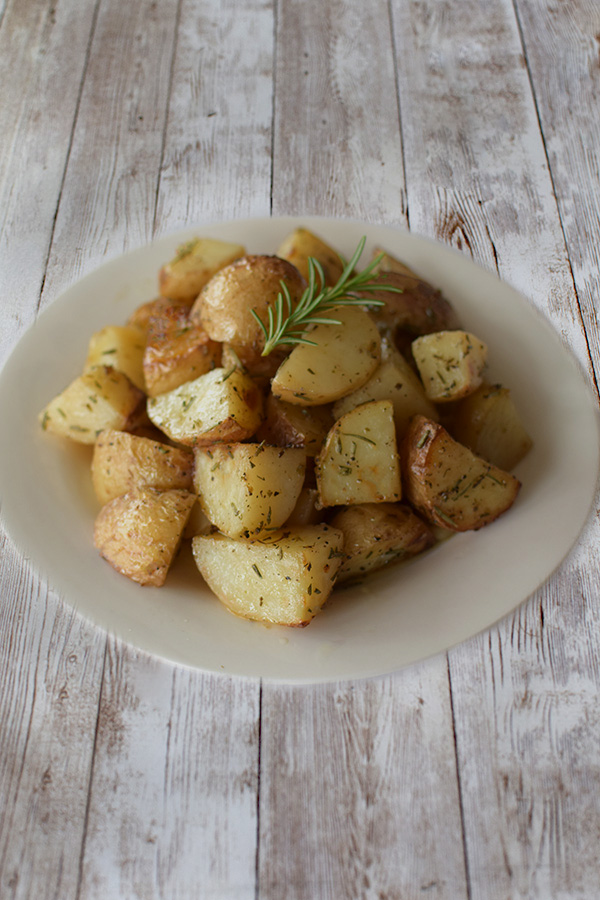
Easy Rosemary Garlic Roasted Potatoes are so good, don’t be surprised if they’re eaten right out of the pan and never even make it to the table!
This vegan, budget-friendly side dish is simple to prepare with just 5 ingredients and one pan.
Just rub a little oil, granulated garlic, salt, and fresh rosemary on chunks of potato for a flavorful side that complements any main dish.
It’s the perfect recipe for your next family potluck!
A little about potatoes
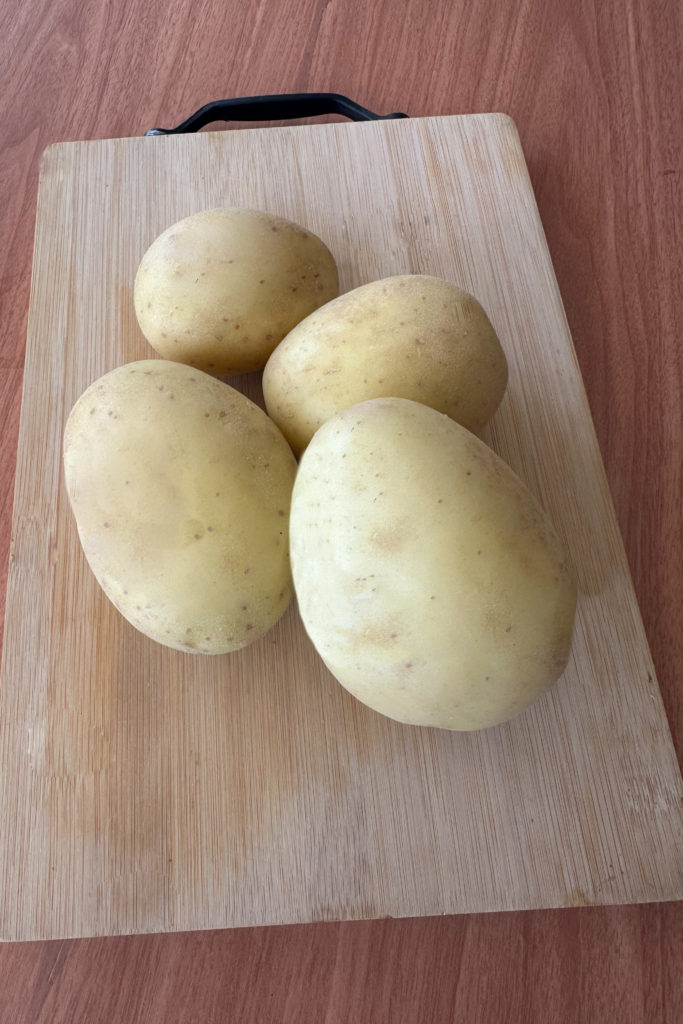
The potato is a perennial, starchy tuber, a root vegetable, that is native to the Americas.
Potatoes contain health benefits and are an excellent source of fiber, vitamins, and nutrients and provide fuel for the body.
Potatoes are gluten-free and very filling. In addition, they are a good source of antioxidants—some more than others—and they contain resistant starch. However, their nutritional content depends on the type of potato. Much of a potato’s nutrition is in the skin of the potato, and peeling them reduces their nutritional value.
Adding fattening toppings, such as sour cream or butter, adds calories and fat.
Different potatoes are considered to work best with different recipes, but overall, they can be used in a variety of delicious meals for recipes from all over the world.
There may be over a couple hundred varieties of potatoes in the United States, but there are only 7 main categories. The most popular of these are the red, white, yellow, and russet.
Fun Facts
- Potatoes were first cultivated in Peru by the Incas.
- Potatoes were introduced to Europe (Ireland) toward the end of the 16th century.
- Potatoes began to be planted in the colonies in the early 1700s.
- Potatoes are the #1 vegetable crop in the United States and 4th most consumed in the world.
- Idaho is the largest grower of potatoes.
- The potato was the first vegetable to be grown in space.
Essentials to keep in your pantry
I’ve found that this list of “essentials” is great to always have on hand in my kitchen. This has allowed me to make many dishes last minute without having to make sudden trips to the store or having to borrow from a neighbor.
Seasoning and flavoring:
- salt (my recipes use regular table salt)
- ground black or white pepper
- granulated garlic or garlic powder (I prefer granulated)
- onion powder
- sweet paprika and/or sweet pepper flakes (paprika is ground dried red pepper, pepper flakes are crushed dried red pepper)
- hot paprika, hot pepper flakes, or cayenne pepper (moderately spicy dried ground chili pepper) for those occasional spicy dishes
- ground turmeric
- ground cumin
- ground cinnamon
- ground ginger
- ground nutmeg
- ground cloves (for pumpkin flavors)
- sugar (granulated)
- brown sugar
- chicken consommé powder / beef bouillon powder (regular or vegetarian)
- onion soup mix
- onion flakes (substitute for fresh onion—3 tablespoons for 1 medium onion).
- various herbs
- additional spices to adapt taste to preference
Misc:
- oil / margarine / butter / cooking spray
- coconut cream as a dairy-free cream substitute
- flavorless milk substitute as a dairy-free milk alternative
- cornstarch as a thickening agent
- flour
- baking powder
- baking soda
- bread crumbs or cornflake crumbs (you can make these with your blender or food processor) for coating
- condiments, such as ketchup, mustard, barbecue sauce
- tomato sauce/tomato paste/canned tomatoes—diced or crushed/pasta sauce
- soy sauce (makes a great flavoring for savory foods)
- ready-made pie crusts and dough (to just add filling)
We always have eggs in the fridge and onions, rice, and potatoes on our shelves, as well as pasta.
In addition, having some fresh vegetables in the fridge, such as carrots, celery, tomatoes, bell peppers (various colors), etc., can be very useful when putting together a quick but delicious meal.
Some useful cooking information
What does it mean when recipes say “to taste” about an ingredient?
When recipes say “to taste,” it means that you can put in as little or as much as you like to your own taste. Some recipes have many ingredients that a cook can adjust to their own taste when cooking (not so much when baking, though).
The best way to calculate what your taste is with a recipe that you are not yet familiar with is to first taste the dish and then add the “to taste” ingredient GRADUALLY, a little at a time—a splash of this or a pinch of that—until the dish is just the way you like it.
Make sure to stir the ingredient after each time you add it so that the flavor will distribute evenly and become part of the dish. Then taste again. Repeat until you reach your personal preference.
Note: If you plan on using the recipe again, it is highly recommended to make a note of what and how much you added so that you can refer to it next time.
What does “savory” mean?
“Savory” refers to foods that are not sweet, such as foods that taste salty, spicy, or herbal.
So, what is needed to make easy garlic roasted potatoes?
Even if you don’t want to keep a pantry full of just-in-case ingredients, these are all you need to have on hand to make this recipe!
potatoes
rosemary
oil
granulated garlic
salt
Love potatoes?
Try:
Easy Classic Potato Salad With Eggs
Easy Creamy Vegetarian Potato Soup
Easy Rosemary Garlic Roasted Potatoes
Easy, delicious, and vegan potatoes with garlic and rosemary.
Ingredients
- 2 pounds of potatoes, cut into chunks or slices
- 2 teaspoons salt (or to taste)
- 4 teaspoons rosemary, dried or fresh
- 1 teaspoon granulated garlic
- oil or cooking spray
Instructions
- Place potatoes in a roasting pan or a baking sheet.
- Coat with a little oil or cooking spray.
- Sprinkle granulated garlic, rosemary, and salt. Mix well.
- Bake at 400°F for approximately an hour or until a fork slides through, mixing occasionally for even cooking *
Notes
* If you want them browned, cook past the time they are "ready", but be careful to remember to occasionally mix, so they don't burn.
Nutrition Information:
Yield:
6Serving Size:
1Amount Per Serving: Calories: 166Total Fat: 3gSaturated Fat: 0gTrans Fat: 0gUnsaturated Fat: 2gCholesterol: 0mgSodium: 721mgCarbohydrates: 33gFiber: 4gSugar: 2gProtein: 4g