Easy Homemade Duck Sauce is a sweet and tangy fruit-based sauce popular in Chinese-American cuisine that’s delicious for dipping and glaze.
And this simple recipe is 100% pork-free and dairy-free!
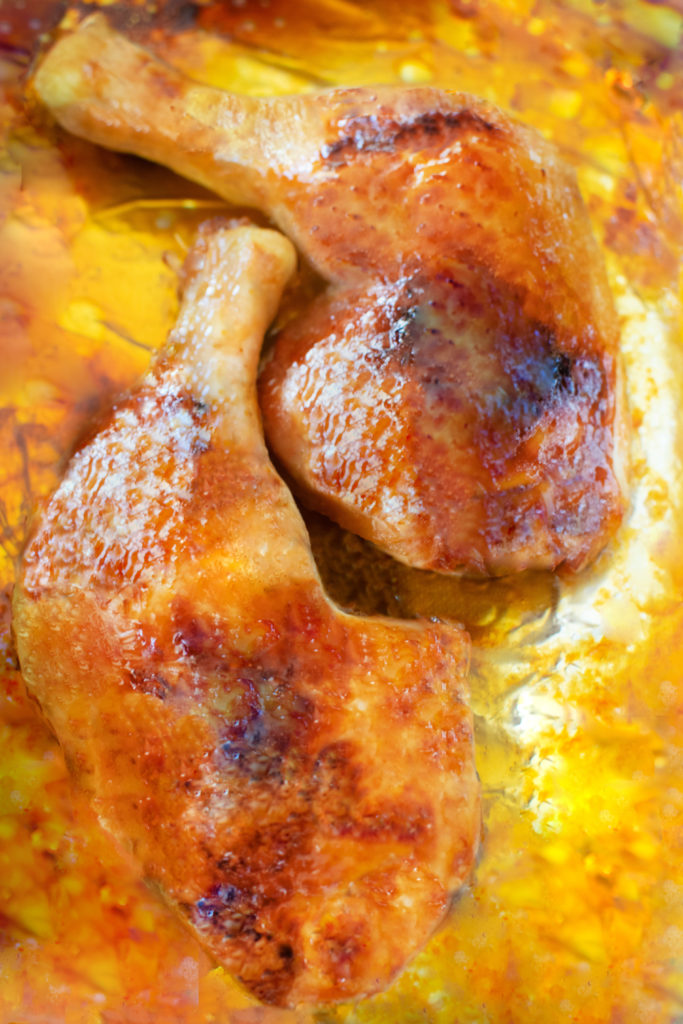
While duck sauce is a creation by Chinese immigrants to America, it has become a popular part of the Chinese-American food culture as a glaze for chicken (like duck sauce chicken) or a dipping sauce (like for corned beef and cabbage eggrolls).
Why bother squeezing out those dozens of little sticky packets you collected from restaurants and takeout, or even settleing for buying jars of duck sauce in the supermarket when homemade duck sauce is simple to make and very flavorful!
And it’s both kosher and vegan!
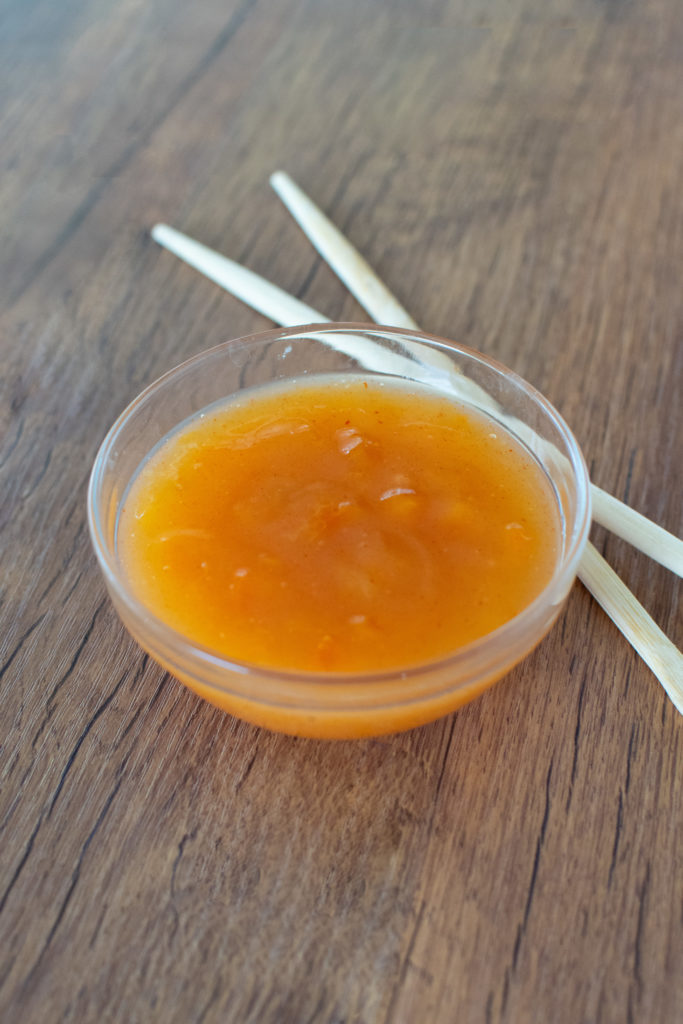
This homemade duck sauce recipe is a sweet and tangy condiment made from apricot jam and it’s perfect for using as in a variety Chinese-American dishes as a dip for sides, such as wonton strips and eggrolls, and for glaze on foods, such as duck, chicken, meat, and even fish.
And you can use the drippings for gravy over rice or mashed potatoes or other sides!
A little about Chinese-American Food
Chinese-American cuisine is a style of Chinese cuisine that was developed by Chinese immigrants to America. These dishes significantly differ from traditional Chinese dishes because Chinese-American dishes were adapted to suit American tastes and the availability of the ingredients.
Chinese immigrants arrived in the United States in large numbers in the mid-19th century in order to escape the economic difficulties in China.
They mostly settled together in ghettos, individually known as Chinatown, and—since there were anti-Chinese laws preventing them from owning their own land—they opened their own businesses, such as laundry services and restaurants.
Initially, the family-owned businesses catered to miners and railroad workers, and Restaurants were initally set up to cater to miners and railroad workers and food was based on the requests of the customers.
New recipes were created to suit American tastes using whatever ingredients were available.
Delicious duck sauce is one of these creations.
While the new dishes were not traditional Chinese, these restaurants were responsible for the development of the ever-popular Chinese-American cuisine.
Duck sauce was created by Chinese immigrants to America to appeal to the American taste, but since the sauce is pareve (containing neither meat nor dairy), by the 1960s and 1970s it was being sold in jars by Jewish-kosher companies and became popular in Jewish American cuisine.
Kosher Chinese-American Food
It is well known that Jews (especially those with ties to New York) love Chinese food. It’s also well known, that on Christmas, Jews who want to eat out, get…you got it…Chinese food!
You can find at least one and, more often than not, several kosher Chinese restaurants in predominantly Jewish neighborhoods. In the town of Cedarhurst, New York, for example, there are two within a couple of blocks – both excellent…and don’t even get me started on Brooklyn.
Jews as a group were probably first introduced to Chinese food in the Lower East Side of Manhattan, where immigrants of various cultures settled in their own neighborhoods in the late 1800s and early 1900s.
Anti-Chinese laws and acts, which prevented them from owning land and competing with whites, so many Chinese opened restaurants.
The majority of Jewish immigrants at that time were observant in their religion and ate only kosher food when they arrived in New York. But, over time, many assimilated.
Some continued keeping kosher at home but allowed themselves to stray while out. Chinese food wasn’t expensive and their restaurants were open on Sundays.
Jews who kept kosher were only first introduced to Chinese-American recipes when a kosher deli owner in New York took Cantonese Chinese recipes and replicated them but substituted kosher veal, beef, and chicken livers for the pork, focusing on the deep, savory sauce of the dishes.
Sol was the first to create what became known as deli-chinese. Later, when they closed, another store opened on Coney Avenue in Brooklyn called “Essex on Coney” and I can testify that their kosher Chinese food was delicious as they catered the bar-mitzvahs of two of my sons!
Unfortunately, they ultimately closed as well.
What does tangy mean?
Tangy describes a strong, sharp, zesty, or slightly sour flavor or aroma.
What is tangy-sweet?
Tangy-sweet is a flavor that combines a sharp, zesty, or sour flavor with a sweet flavor.
Other Homemade Chinese-American dishes
If you eat kosher or just don’t eat pork, kosher Chinese-Amercian restaurants may not be where you live and, even if they are, they are not particularly inexpensive.
So, the solution to that is to make them at home!
Try some of these amazingly easy recipes for kosher Chinese-American food (or put Chinese in the search bar for more!).
- Kosher Chicken Chow Mein
- Kosher Beef and Broccoli
- Kosher Corned Beef & Cabbage Egg Rolls
- Kosher Beef Lo Mein
- Vegetarian Fried Rice
Easy Homemade Duck Sauce (Pork-Free, Dairy-Free)
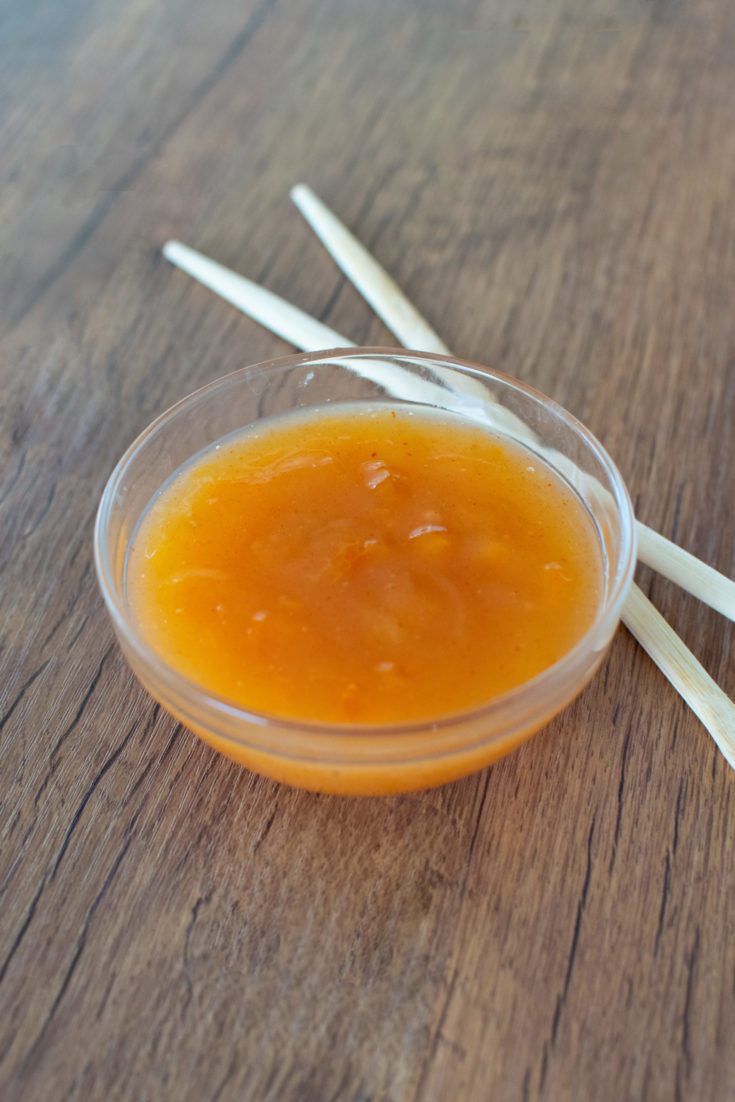
Delicious and simple, tangy-sweet fruit sauce used for glaze or dipping. Made without any pork or dairy ingredients.
Ingredients
- 3/4 cup apricot or peach (or combination of both) jam *
- 2 tablespoons cornstarch
- 1 1/2 tablespoons white granulated sugar
- 1 tablespoon rice vinegar (have more on hand) *
- 1/2 teaspoon paprika (for color)
- pinch (1/8 teaspoon) salt
- water
Instructions
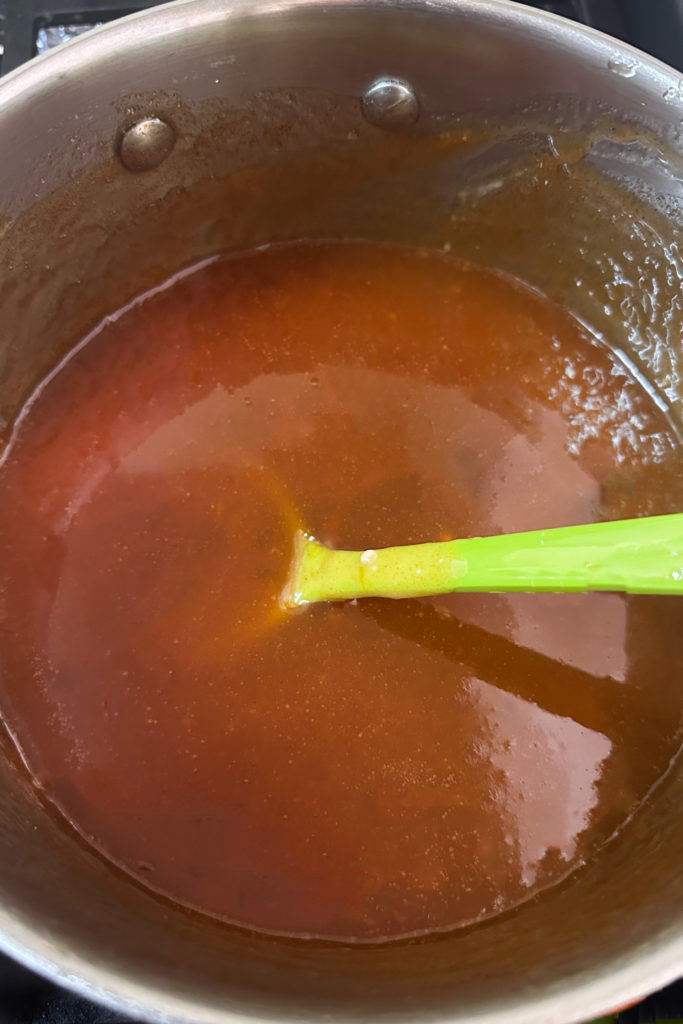
- Pour the jam, sugar, rice vinegar, and 1/2 cup water into a sauce pan on medium heat and mix well.
- Mix in the paprika and salt.
- Place the cornstarch in a bowl and add 1/4 cup water and mix well so there are no lumps, and pour into the jam mixture.
- Bring just to a boil while mixing and turn off.
- Let cool.
Notes
How strong or mild this will come out will depend on how strong or mild your jam is. The same holds true for the fruitiness of the sauce.
Personally, while I have found that the sauce calms down after it has completely cooled, if my sauce is too strong, I add water (and then more cornstarch to thicken if need be) and if it is too fruity, I neutralize with a little more vinegar.
Nutrition Information:
Yield:
4Serving Size:
1Amount Per Serving: Calories: 49Total Fat: 0gSaturated Fat: 0gTrans Fat: 0gUnsaturated Fat: 0gCholesterol: 0mgSodium: 3mgCarbohydrates: 12gFiber: 1gSugar: 8gProtein: 0g