Moroccan-Israeli Fish (dag Morokai, in Hebrew) is a simple, flavorful recipe for tilapia (or your solid white fish of choice) simmered in a delicious, savory, slightly spicy tomato and red pepper sauce.
It’s an amazing pescatarian and dairy-free (parve) meal for all fish lovers!
While this delightful and popular dish originated in Moroccan cuisine, it was brought to Israel by Moroccan Jews and adapted into Israeli food culture by using tilapia instead of sea bass or grouper.
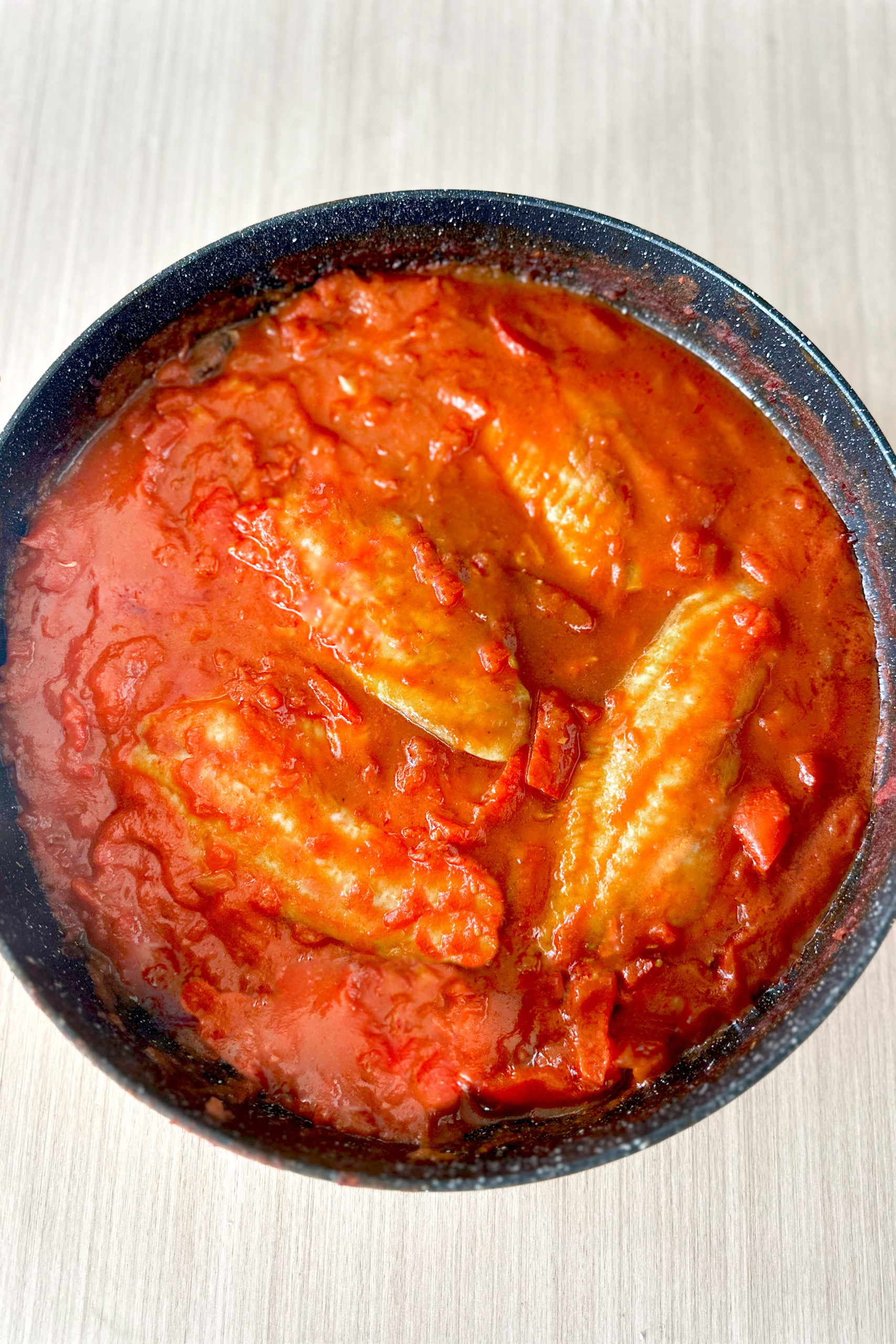
Moroccan-Israeli Fish is a dish that was brought to Israel by Jews from Morocco during the first years after the establishment of the State of Israel.
It was adapted from the traditional that typically used sea bass or grouper, to the more-affordable tilapia and became a part of Israeli food culture.
You can make it very spicy, mildly spicy or with no spice at all.
I used to make it for one of my sons before he had a matriculation exam because he liked it so much. One time, I overspiced and he still enjoyed it despite the fact that his eyes started watering!
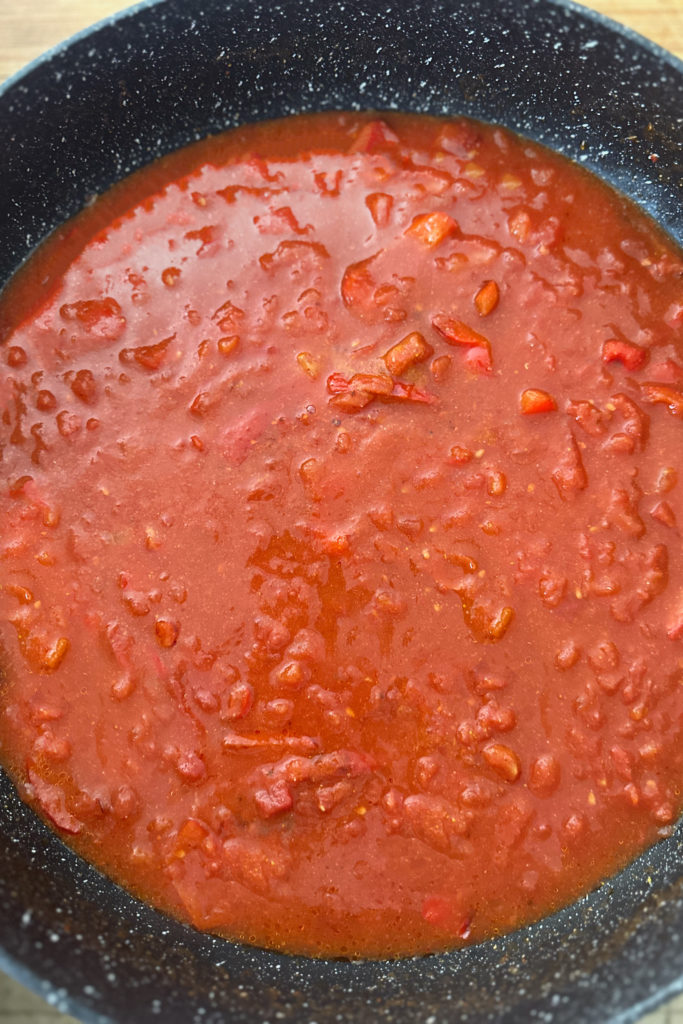
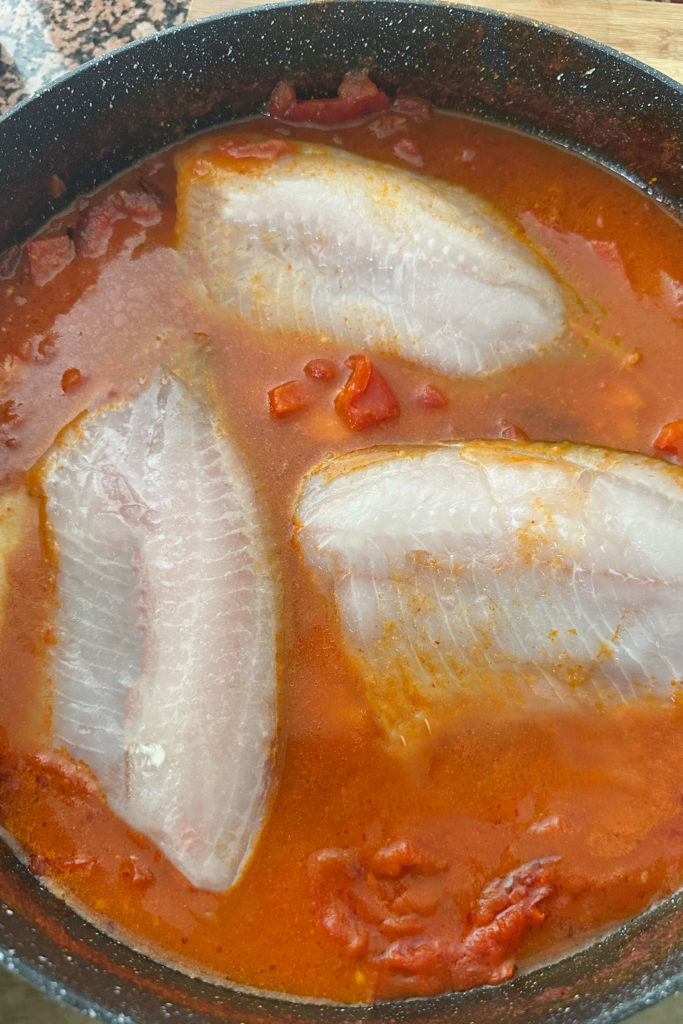
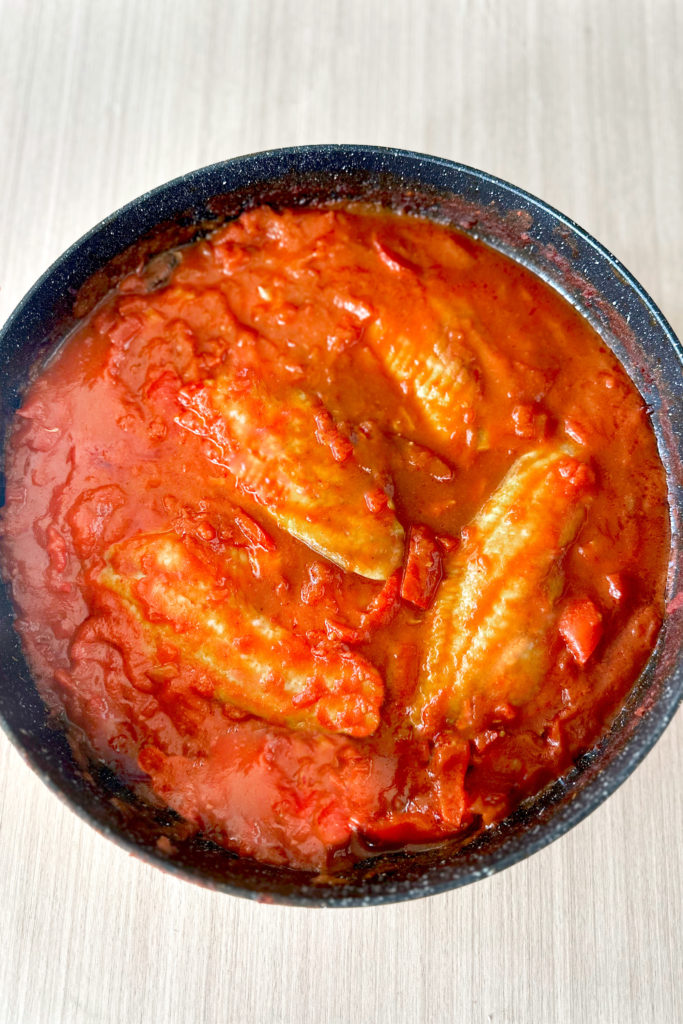
You might look at this picture and think that it looks different that other pictures of this dish. That’s because you will normally see the fish swimming in a red oil.
Mizrahi food tends to be very oily and I use much less oil preferring to save the calories while still making the delicious dishes everyone loves.
Moroccan Jews in Israel
The majority of Moroccan Jews in Israel are the descendants of Jews that immigrated to Israel from Morocco.
Before the establishment of the State of Israel, the British put a quota on the amount of Jews that could immigrate to Israel, so most of the immigration was considered “illegal.”
However, many Jews risked their lives to flee their countries of origin, including Arab and Muslim countries, such as Morocco.
Because the Muslims were against the establishment of the State of Israel, after the declaration of the state and the civil war that followed, life became more difficult for the Jews of Morocco, because the Muslims would attack Jews as a result.
This brought about a wave of immigrants to Israel from Morocco, as did every Arab-Israeli war that followed.
So, during the 1950s and for decades afterward, waves of Moroccan Jews immigrated to Israel.
Morocco was once the home of the largest Jewish community in the Muslim world. However, by the time of the Yom Kippur war, the majority of Morocco’s Jews had immigrated to Israel, and they brought their delicious cuisine with them.
A little about Israeli cuisine
Some people complain about cultural appropriation in cuisine when food from one country is attributed to another country.
However, national cuisine in itself is often a mingling of food from a variety of cultures, often due to a change of ruling countries and a shifting of borders.
Turkish cuisine, for example, goes back to the Ottoman Empire and was a combination of several cultures under Ottoman rule.
When people move from country to country, they will take their cultures with them, and their descendants may adapt their traditional cuisine with that of their new home, and if they don’t, others might.
When one lives in a melting pot, such as the US or Israel, it is just unrealistic to expect that food from a particular culture won’t mingle with that of other cultures.
That being said, “Israeli cuisine” is basically Middle Eastern (as opposed to Eastern European food) that was brought to Israel by Jews when they fled or were expelled from Muslim countries and moved to Israel mostly after the declaration of the State of Israel (collectively known as Mizrahi Jews).
Recipes were passed from generation to generation, and although decades have passed, the foods are still known by the culture they came from, and everyone seems to have their own way of making them.
That said, there are many variations of pretty much any “Israeli” recipe because of background, custom, or even just taste. When choosing a recipe, one has to know what actually constitutes a main ingredient—what makes the dish what it is—and what is left up to individual taste.
And tilapia has nutritional value!
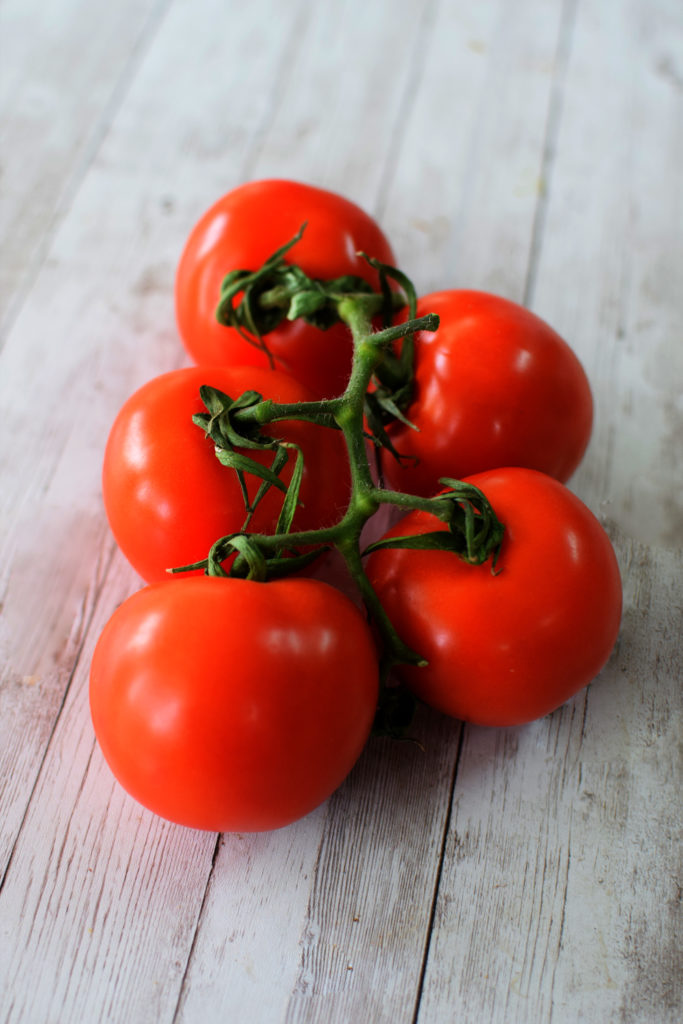
And so do tomatoes!
And check out peppers little information about bell peppers!
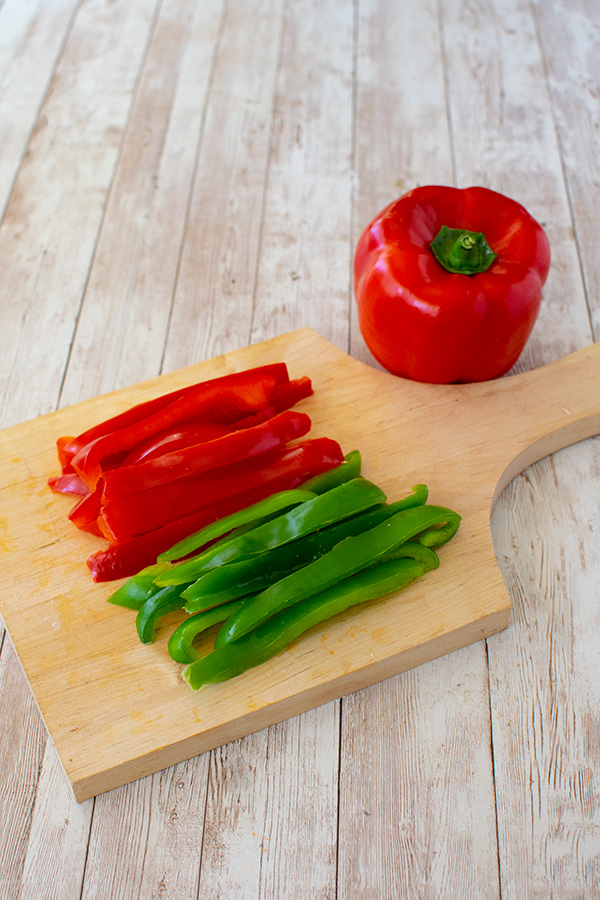
Bell peppers come in different colors, such as green, red, orange, yellow (the most common)…and, believe it or not, white brown, striped, and purple.
Peppers are commonly used in foods, salads, as side dishes, toppings or – if you are like my son – a snack.
Peppers are native to Mexico, Central America, and South America. Spanish explorers brought pepper seeds back to Spain with them in 1943. From Spain, peppers spread from there to Europe and Asia.
Red peppers are actually ripened green peppers and because they do so gradually, you may see peppers that are both green and red at the same time. Red peppers sweeter in flavor than the green, which are more acidic and a little bitter. Red peppers can be used in the production of paprika.
“Permagreen” don’t turn red, but rather stay green even after they ripen.
Orange and Yellow peppers are their own varieties and have a gentle, sweet taste.
Bell peppers contain almost no protein at all and are almost entirely made of water, with a small percentage of carbohydrates. They are rich in vitamins C, B6, K, A, and E as well as some minerals and antioxidants. The different colored peppers contain different vitamins and nutrients, and they are all very low in fat.
Bell peppers generally have a long life, especially if kept in refrigeration.
What are the different oils used in cooking?
“High-heat” oils have neutral flavors and have been processed in order to handle high temperatures and are good for sautéing, searing, and frying. These include canola oil, vegetable oil, avocado oil, and grapeseed oil, each with its own “best for” with chefs.
Some oils have their own flavor and are good for sautéing and roasting and add a little extra to the dish. These include extra virgin olive oil, coconut oil, and peanut oil. Extra virgin olive oil works well with roasting or sautéing, but not for deep frying.
Coconut oil is good in dishes where a slightly coconut flavor enhances the dish, and peanut oil is good for deep frying and will add a subtle nutty taste and smell. Many Asian dishes call for peanut oil in the ingredients.
Then there are oils that are not used with heat but rather for dressing up foods, such as sesame oil, flaxseed oil, and walnut oil, among others.
What does it mean when recipes say “to taste” about an ingredient?
When recipes say “to taste,” it means that you can put in as little or as much as you like to your own taste. Some recipes have many ingredients that a cook can adjust to their own taste when cooking (not so much when baking though).
The best way to calculate what your taste is with a recipe that you are not yet familiar with is to first taste the dish and then add the “to taste” ingredient GRADUALLY, a little at a time—a splash of this or a pinch of that—until the dish is just the way you like it.
Make sure to stir the ingredient after each time you add it so that the flavor will distribute evenly and become part of the dish. Then taste again. Repeat until you reach your personal preference.
Note: If you plan on using the recipe again, it is highly recommended to make a note of what and how much you added so that you can refer to it next time.
What does it mean when a recipe says that an ingredient is “optional”?
If an ingredient is “optional,” it means that you can add it in or not based on your own preference. An optional ingredient can be flavor related (i.e., salty, sweet, spicy, etc.), appearance related (garnish), or even something like nuts or chocolate chips in baking.
What does “savory” mean?
“Savory” refers to foods that are not sweet, such as foods that taste salty, spicy, or herbal.
Recommended seasonings and flavoring to keep in your cupboard:
- salt (my recipes use regular table salt)
- ground black or white pepper
- granulated garlic or garlic powder (I prefer granulated)
- onion powder
- sweet paprika and/or sweet pepper flakes (paprika is ground dried red pepper, pepper flakes are crushed dried red pepper)
- hot paprika, hot pepper flakes, or cayenne pepper (moderately spicy dried ground chili pepper) for those occasional spicy dishes
- ground turmeric
- ground cumin
- ground cinnamon
- ground ginger
- ground nutmeg
- ground cloves (for pumpkin flavors)
- sugar (granulated)
- brown sugar
- chicken consommé powder / beef bouillon powder (regular or vegetarian)
- onion soup mix
- onion flakes (substitute for fresh onion—3 tablespoons for 1 medium onion).
- various herbs
- additional spices to adapt taste to preference
Weather can have an effect on some of the spices and on the chicken consommé powder, so I keep as many of the seasonings in the refrigerator or freezer as I can, and I keep everything tightly closed in containers (you will be surprised to know just how determined moths are at getting into sealed bags and how hot red pepper powder can attract little black bugs—YUCK!).
Therefore, store your items properly.
What is needed for this recipe?
I hardly ever meal plan, so I like to keep a cupboard full of seasonings, spices, veggies, and canned goods in my kitchen to use whenever the mood strikes.
But these are all you need to have on hand to make this recipe even last minute!
tilapia fillets without skin (or other solid white fish)
diced tomatoes (canned or fresh)
red bell pepper
granulated garlic
tomato paste
sweet paprika
chili pepper flakes or hot pepper flakes, optional
ground turmeric
salt
oil for frying
Do you love Middle Eastern food? Try these easy recipes!
Matbucha
Moussaka
Moroccan-Israeli Meatballs and Olives
Shakshuka
Want to try another Moroccan-Israeli dish? Try Easy Moroccan-Israeli Meatballs with Olives!
Easy Moroccan-Israeli Fish
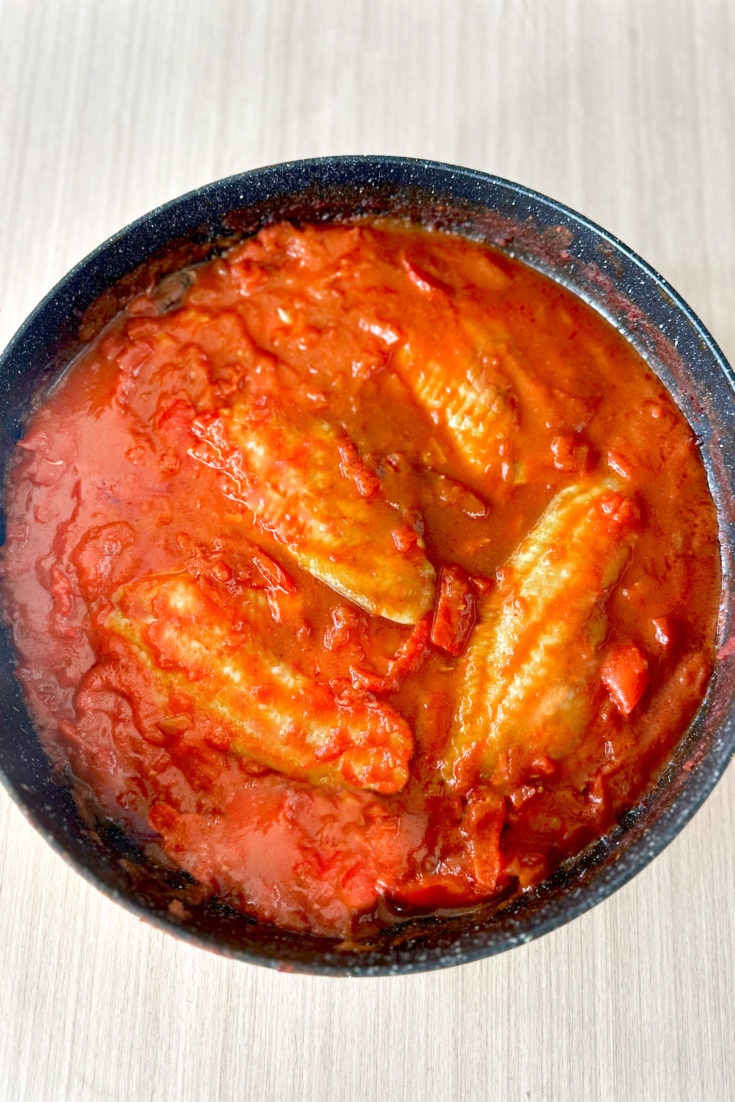
White fish in a delicious, savory, slightly spicy tomato sauce.
Ingredients
- 4-5 pieces tilapia fillets without skin (or other solid white fish)*
- 1 28-ounce can diced tomatoes (or 4 - 5 medium tomatoes, diced or chopped)
- 1 red bell pepper
- 1 tablespoon granulated garlic
- 2 tablespoons tomato paste, slightly heaped
- 2 tablespoons sweet paprika
- 1 tablespoon chili pepper flakes (or hot pepper flakes for additional spicy) or to taste (optional)
- 1 teaspoon ground turmeric
- 1/2 tablespoon salt (or to taste)
- 1 1/2 cup water
- oil for frying
Instructions
- Coat the bottom of the pot with a thin layer of oil.
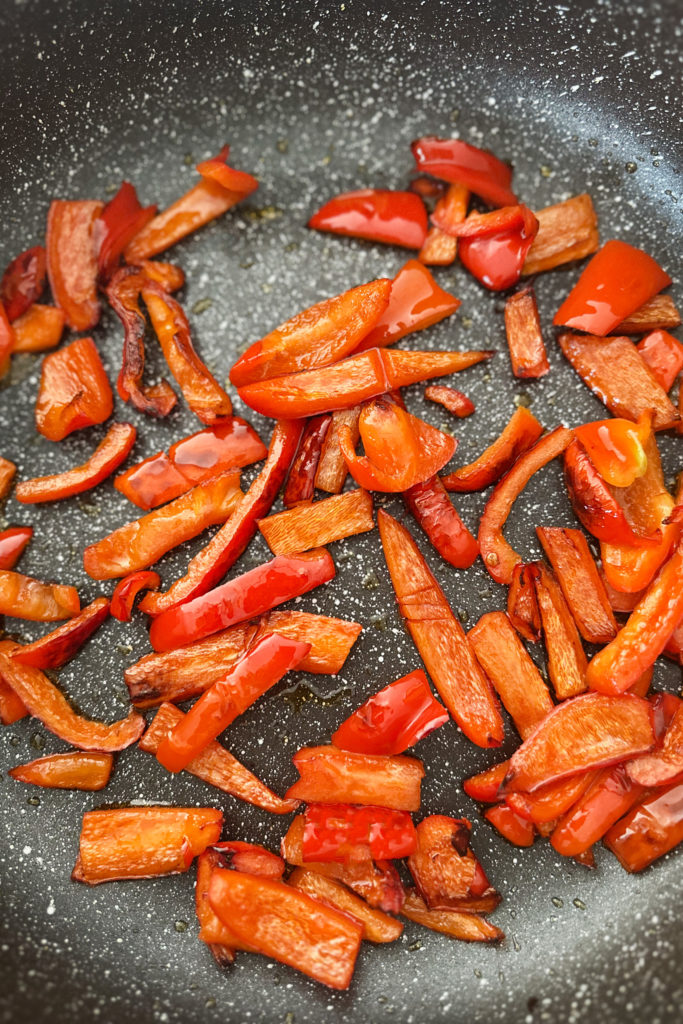
- Cut the sweet pepper into thin strips and lightly fry on a medium heat.
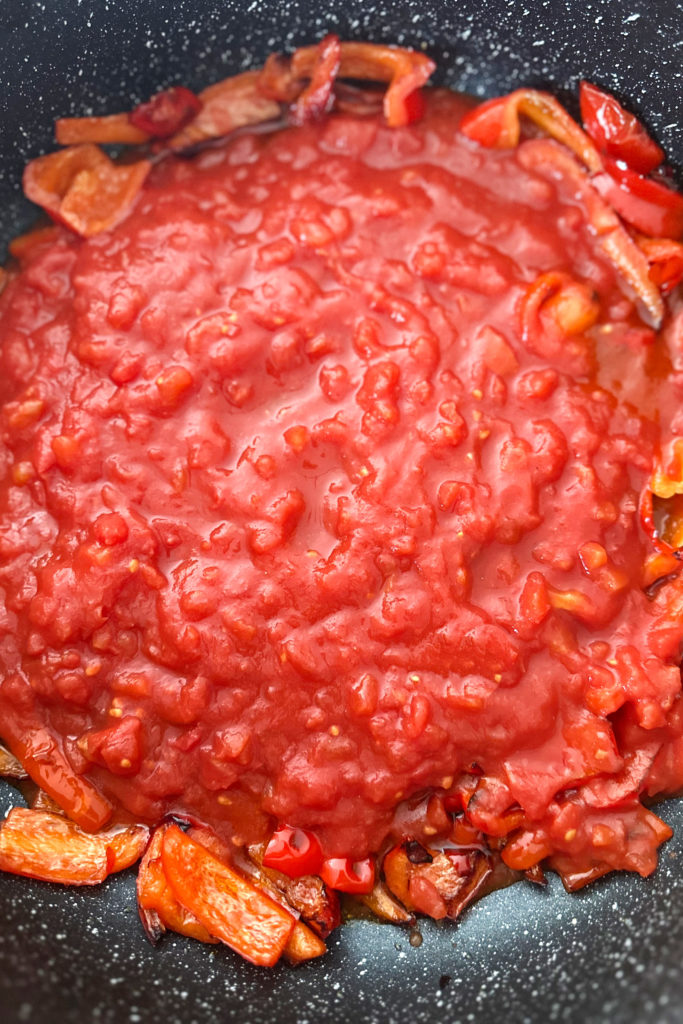
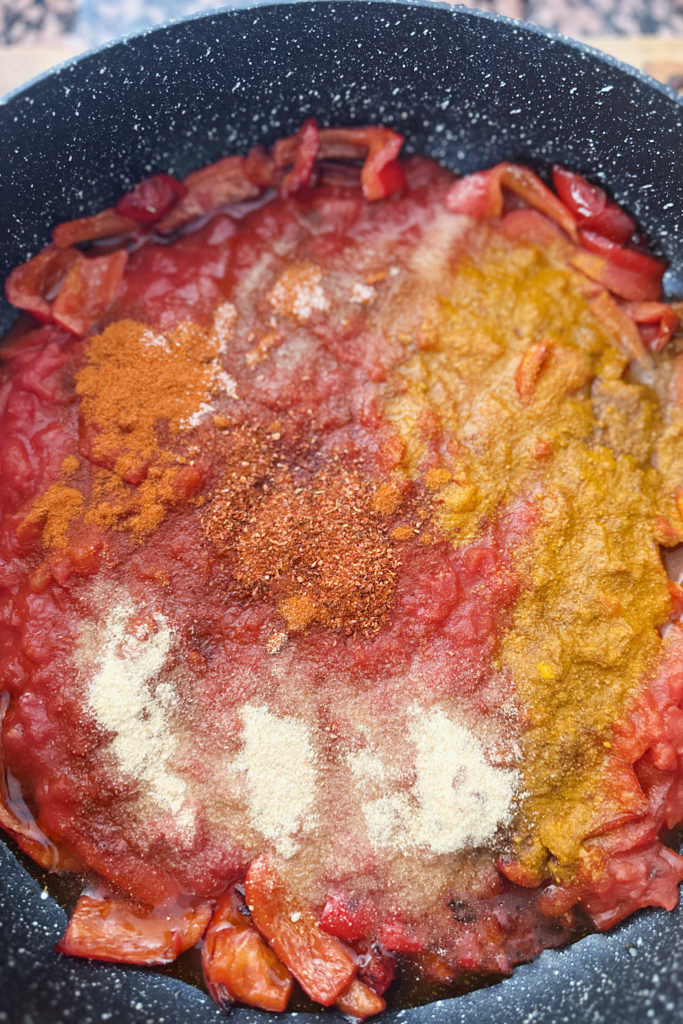
- Add tomatoes, granulated garlic, tomato paste, paprika, turmeric, water, salt, and chili or hot pepper flakes if desired.
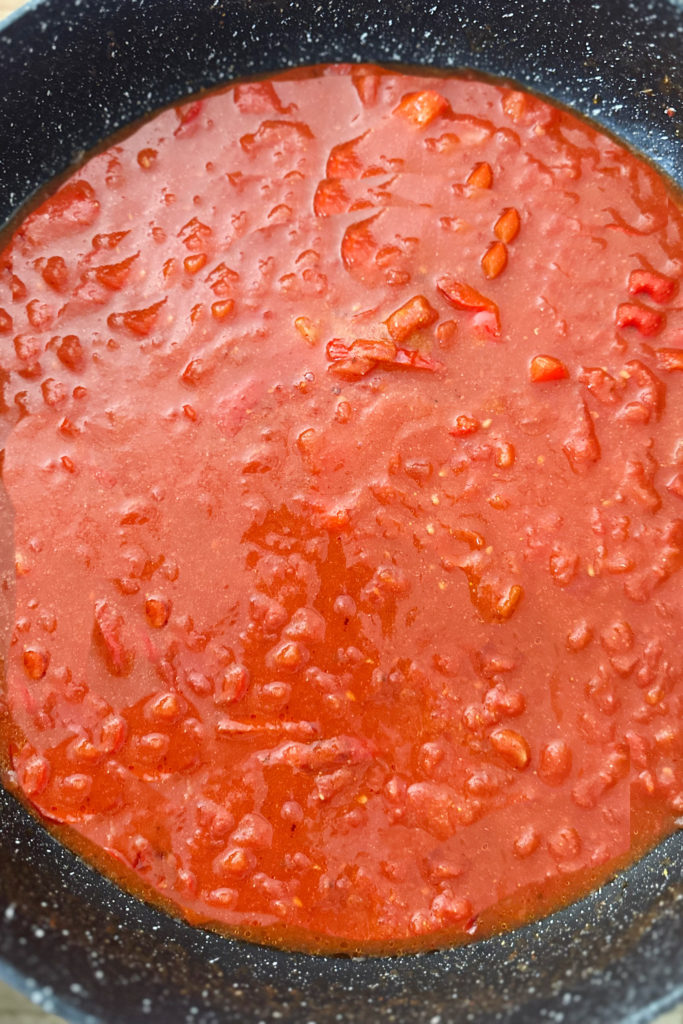
- Cook for approximately 20 minutes or until everything has become a chunky sauce.
- Add the fish and poach until cooked through.
Notes
*I use whatever fish I have
Nutrition Information:
Yield:
4Serving Size:
1Amount Per Serving: Calories: 375Total Fat: 10gSaturated Fat: 2gTrans Fat: 0gUnsaturated Fat: 7gCholesterol: 121mgSodium: 1154mgCarbohydrates: 16gFiber: 6gSugar: 8gProtein: 59g
Sherri
Thursday 2nd of January 2025
The tilapia we get here ...frozen in individual pieces have skin on the fillets. Is it not ok just to cook it with it on?
Lori
Monday 6th of January 2025
If you either eat with the skin on or don't mind removing it later, then feel free to leave it on. I find it easier to remove after it's been cooked.