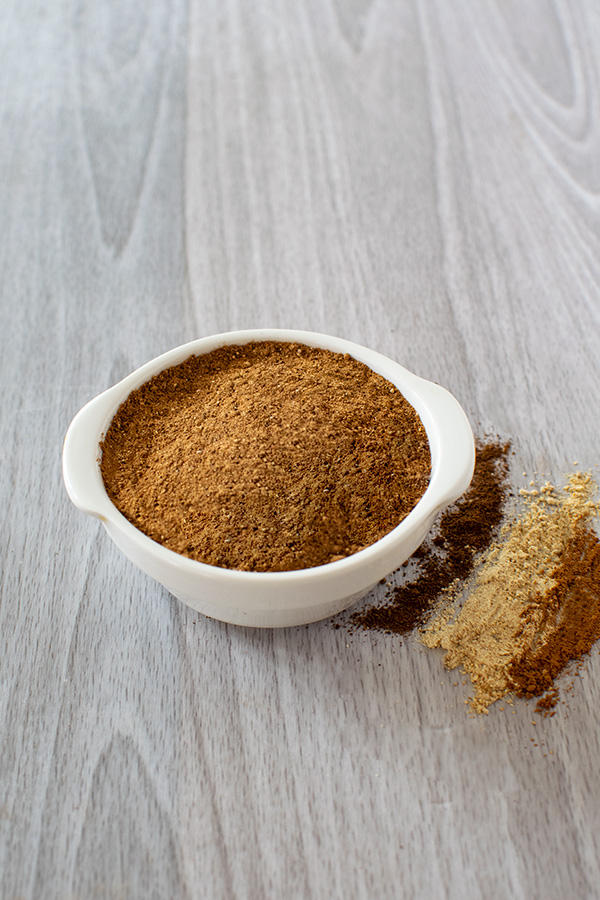
Easy Homemade Shawarma Seasoning Spice Mix is an amazingly flavorful blend of spices with the deep, earthy Middle Eastern flavor of cumin.
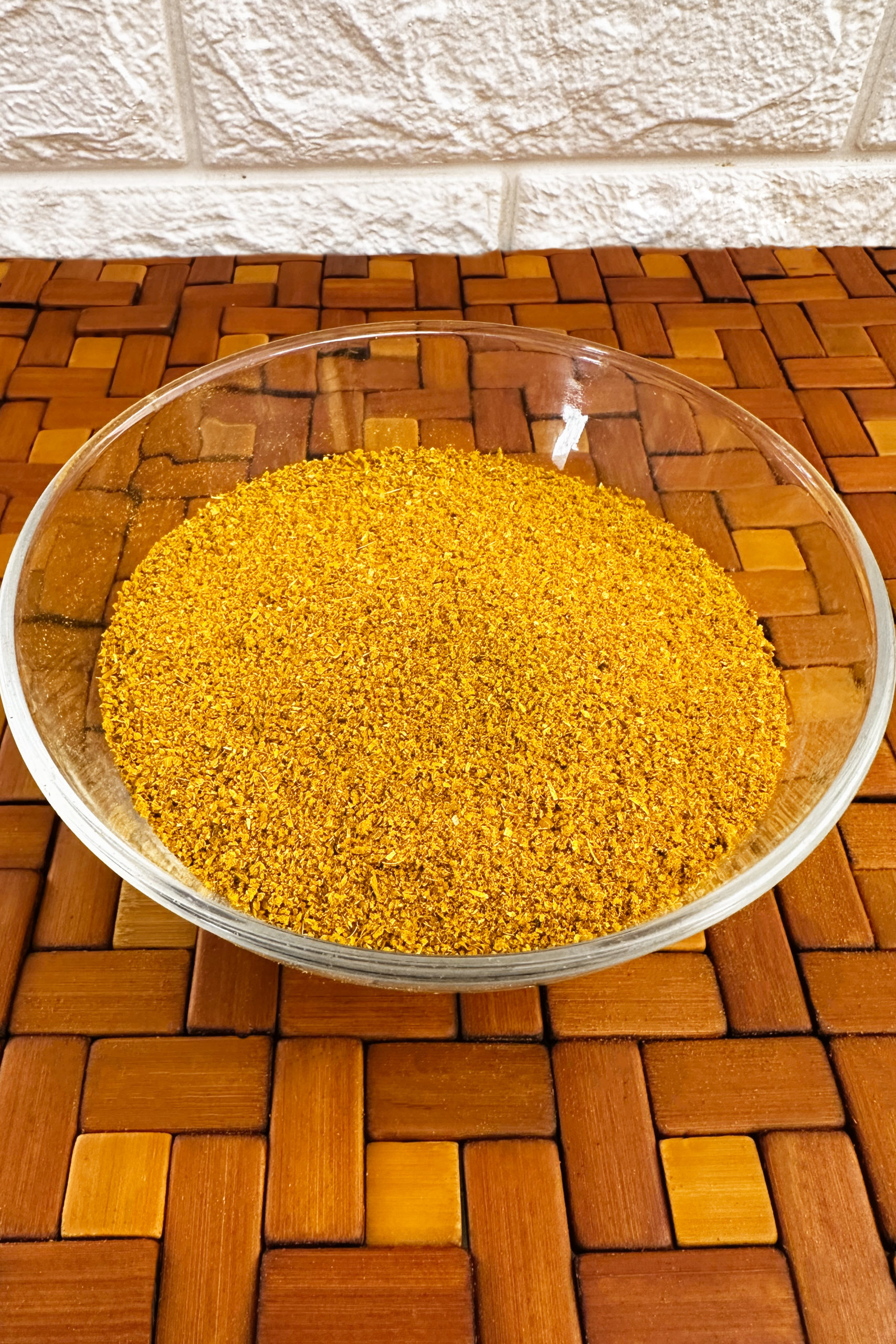
Shawarma spice brings the warm, earthy flavor of cumin to this popular Middle Eastern street food.
It is the defining spice blend for shawarma, a popular street food in Israel and throughout the Middle East.
This simple DIY spice blend enhances beef, lamb, and chicken, whether you choose to bake, broil, fry, or barbecue. Use it for homemade chicken shawarma or as a versatile rub for everything from chicken breast to steak.
Make several batches in advance to keep on hand. While it stores well in a spice rack or cupboard for over a year, the seasoning retains its flavor best when stored in the fridge or freezer.
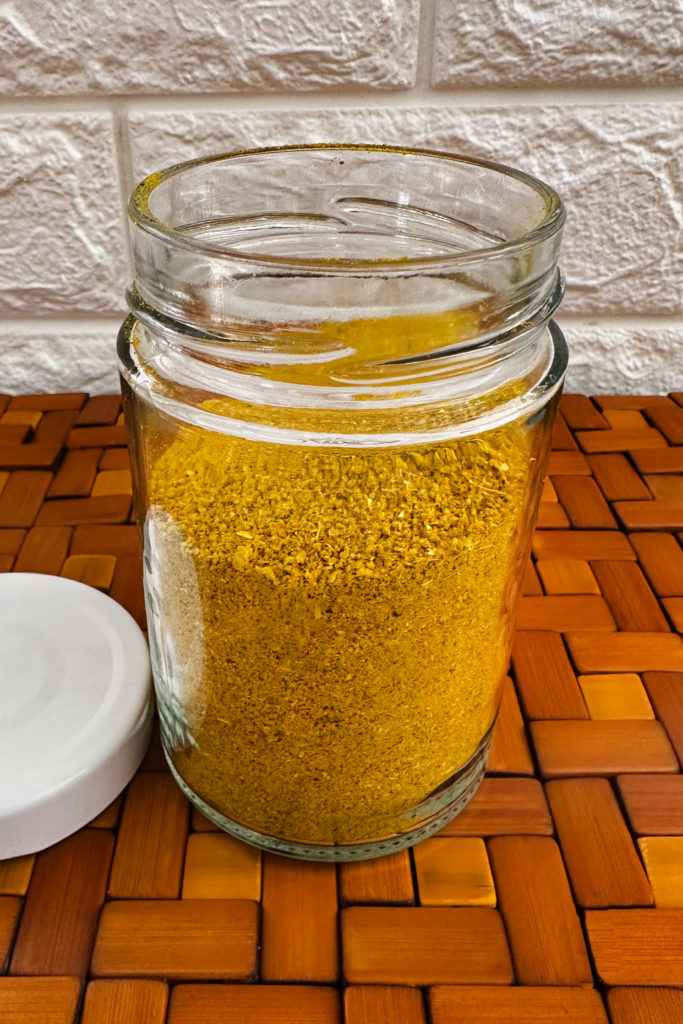
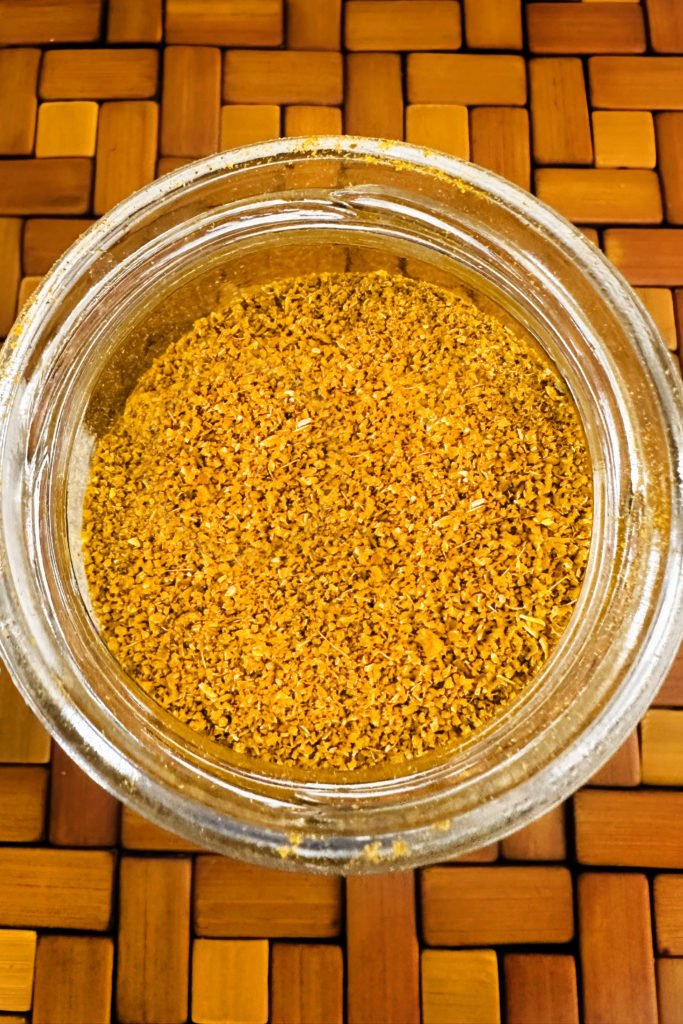
Tips for making shawarma seasoning mix at home
- Note that the strong Middle Eastern taste is the cumin, which is the dominant taste of shawarma seasoning. Everyone has their own taste as far as the seasoning is concerned, so feel free to add more or less of whatever you like.
- If you would like a spicier flavor, use hot paprika to taste and less sweet paprika in the same quantity.
- The more yellow the spice, the more turmeric in the ingredients (be careful not to use too much, or the resulting taste may be reminiscent of soap).
Frequently Asked Questions: Homemade Shawarma Seasoning
1. What is the secret to a great shawarma spice blend?
The secret is the balance between earthy, warm, and bright notes. Cumin provides the foundational earthiness, while turmeric gives it that signature golden color. The addition of allspice adds a subtle, warming aromatic quality that distinguishes shawarma from standard taco or chili seasonings.
2. How should I store homemade shawarma seasoning?
To preserve the potency of the spices, store your mix in an airtight glass jar or container. Keep it in a cool, dark place, such as a pantry cupboard, away from direct sunlight and heat sources. Properly stored, it will maintain its best flavor for up to 6 months.
3. What can I use this spice blend on besides shawarma?
This blend is incredibly versatile. You can use it as a rub or to sprinkle on meat or chicken. It is also excellent for seasoning roasted vegetables like cauliflower, chickpeas, or sweet potatoes.
4. Can I adjust the intensity of the flavor?
Absolutely. If you prefer a more intense, earthy flavor, increase the cumin by 1 tablespoon. If you want a bit of heat, you can add ¼ teaspoon of cayenne pepper or ground chili flakes to the mix.
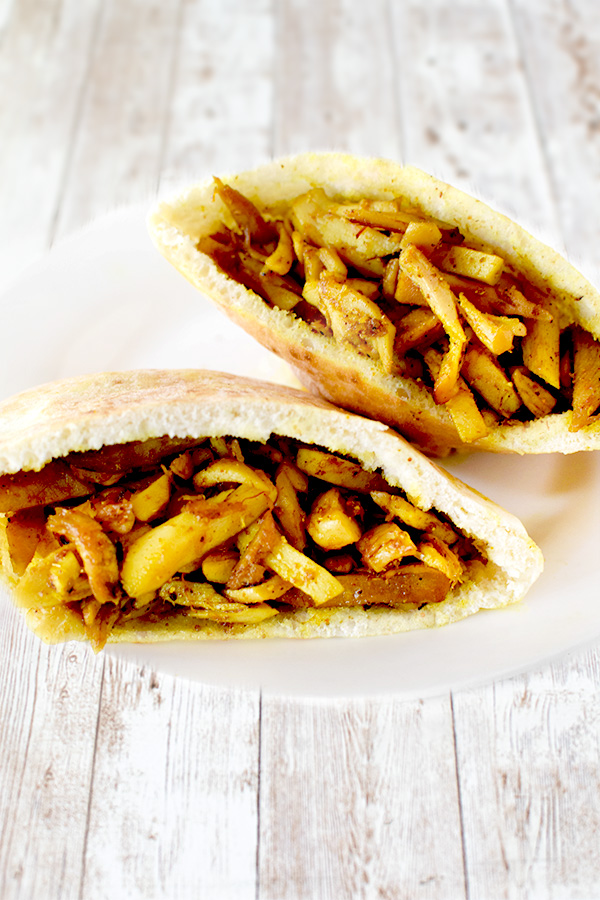
You can use this convenient shawama spice to make homemade shawarma!
A Little About Shawarma
Shawarma (pronounced SHA-WAR-MA, not SWARMA) is a Middle Eastern dish that is a popular street food. In Israel, it is mostly made from lamb or turkey or a combination.
Shawarma's origin is from the Doner Kabab from Turkey, whose modern cuisine developed from the Ottomans of the Ottoman Empire who adopted combined different traditional dishes of the countries they ruled.
The Greek version of a shawarma is a Gyro, which will often include pork.
Both names (doner and gyro) indicated turning or spinning, and in fact the name shawarma comes from the Turkish form of the Arabic word for turn or spin.
Shawarma is made from different types of meat that can be used together to create it. These include, lamb, turkey, chicken, and beef.
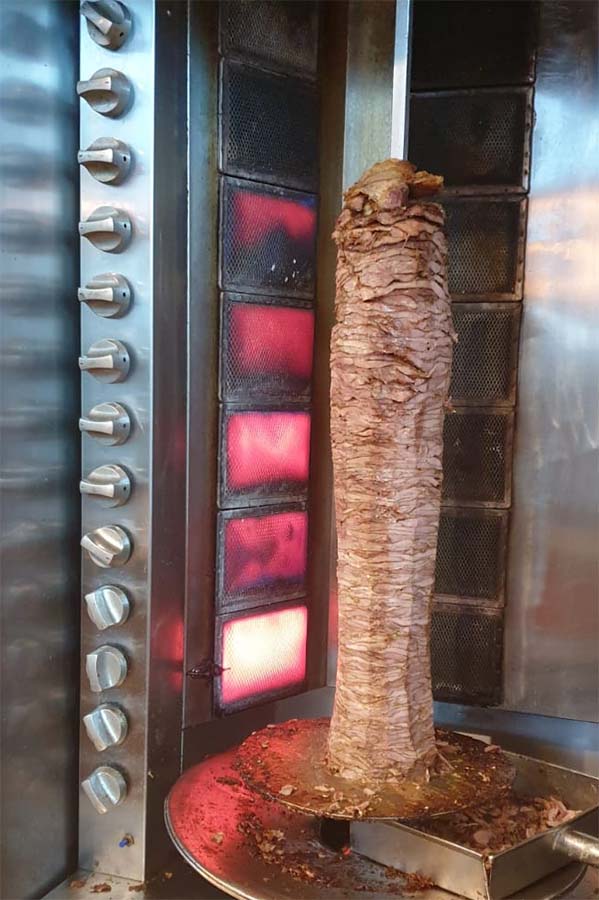
The different types of seasoned meat are sliced and skewered in tight layers on a vertical rotisserie or spit with layers of fat at the top. The skewer rotates vertically and slowly near a heat source, and the fat melts over the meat, giving the meat a wonderful flavor as it lightly roasts on the outside.
Shawarma is a popular street food in the Middle East. It seems that every country has their own traditional way of eating it.
In Israel, it will normally be served in a pita or in a laffa (an Iraqi flatbread that is part of Israeli cuisine) together with a variety of additions, such as tahini, hummus, babaganush (eggplant spread), pickles, Israeli salad (diced cucumbers and tomatoes), French fries, pickled cabbage, and more. Everyone just puts in what they like.
A little about Israeli cuisine
Some people complain about cultural appropriation in cuisine when food from one country is attributed to another country.
However, national cuisine in itself is often a mingling of food from a variety of cultures, often due to a change of ruling countries and a shifting of borders.
Turkish cuisine, for example, goes back to the Ottoman Empire and was a combination of several cultures under Ottoman rule.
When people move from country to country, they will take their cultures with them, and their descendants may adapt their traditional cuisine with that of their new home, and if they don't, others might.
When one lives in a melting pot, such as the US or Israel, it is just unrealistic to expect that food from a particular culture won't mingle with that of other cultures.
"Israeli cuisine" is basically Middle Eastern (as opposed to Eastern European food) that was brought to Israel by Jews when they fled or were expelled from Muslim countries and moved to Israel mostly after the declaration of the State of Israel (collectively known as Mizrahi Jews).
Recipes were passed from generation to generation, and although decades have passed, the foods are still known by the culture they came from, and everyone seems to have their own way of making them.
That said, there are many variations of pretty much any "Israeli" recipe because of background, custom, or even just taste. When choosing a recipe, one has to know what actually constitutes a main ingredient-what makes the dish what it is-and what is left up to individual taste.
What does it mean when recipes say "to taste" about an ingredient?
When recipes say "to taste," it means that you can put in as little or as much as you like to your own taste. Some recipes have many ingredients that a cook can adjust to their own taste when cooking (not so much when baking, though).
The best way to calculate what your taste is with a recipe that you are not yet familiar with is to first taste the dish and then add the "to taste" ingredient GRADUALLY, a little at a time-a splash of this or a pinch of that-until the dish is just the way you like it.
Make sure to stir the ingredient after each time you add it so that the flavor will distribute evenly and become part of the dish. Then taste again. Repeat until you reach your personal preference.
Note: If you plan on using the recipe again, it is highly recommended to make a note of what and how much you added so that you can refer to it next time.
What does it mean when a recipe says that an ingredient is "optional"?
If an ingredient is "optional," it means that you can add it in or not based on your own preference. An optional ingredient can be flavor-related (i.e., salty, sweet, spicy, etc.), appearance-related (garnish), or even something like nuts or chocolate chips in baking.
Suggested seasoning essentials to keep in your cupboard:
- salt (my recipes use regular table salt)
- ground black or white pepper
- granulated garlic or garlic powder (I prefer granulated)
- onion powder
- sweet paprika and/or sweet pepper flakes (paprika is ground dried red pepper, pepper flakes are crushed dried red pepper)
- hot paprika, hot pepper flakes, or cayenne pepper (moderately spicy dried ground chili pepper) for those occasional spicy dishes
- ground turmeric
- ground cumin
- ground cinnamon
- ground ginger
- ground nutmeg
- ground cloves (for pumpkin flavors)
- sugar (granulated)
- brown sugar
- chicken consommé powder / beef bouillon powder (regular or vegetarian)
- onion soup mix
- onion flakes (substitute for fresh onion-3 tablespoons for 1 medium onion).
- various herbs
- additional spices to adapt taste to preference
What is needed for this recipe?
I hardly ever meal plan, so I like to keep a cupboard full of seasonings, spices, veggies, and canned goods in my kitchen to use whenever the mood strikes.
But these 5 ingredients are all you need to have on hand to make this recipe even last minute!
ground cumin
sweet paprika
ground turmeric
granulated garlic
salt
Optional:
dried or fresh cilantro
ground allspice
And schmaltz pairs well with the seasoned chicken to make shawarma!
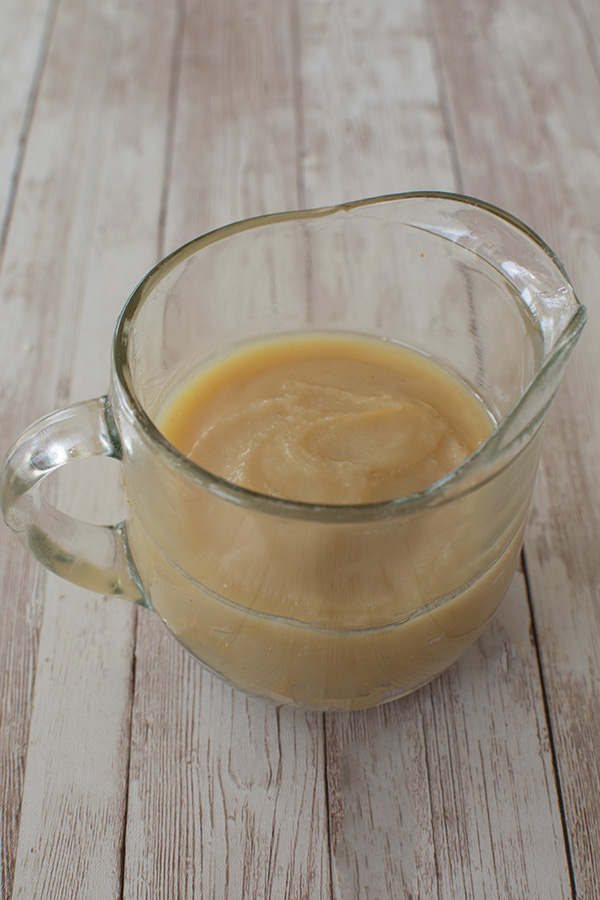
Want to try another flavorful Israeli seasoning blend?
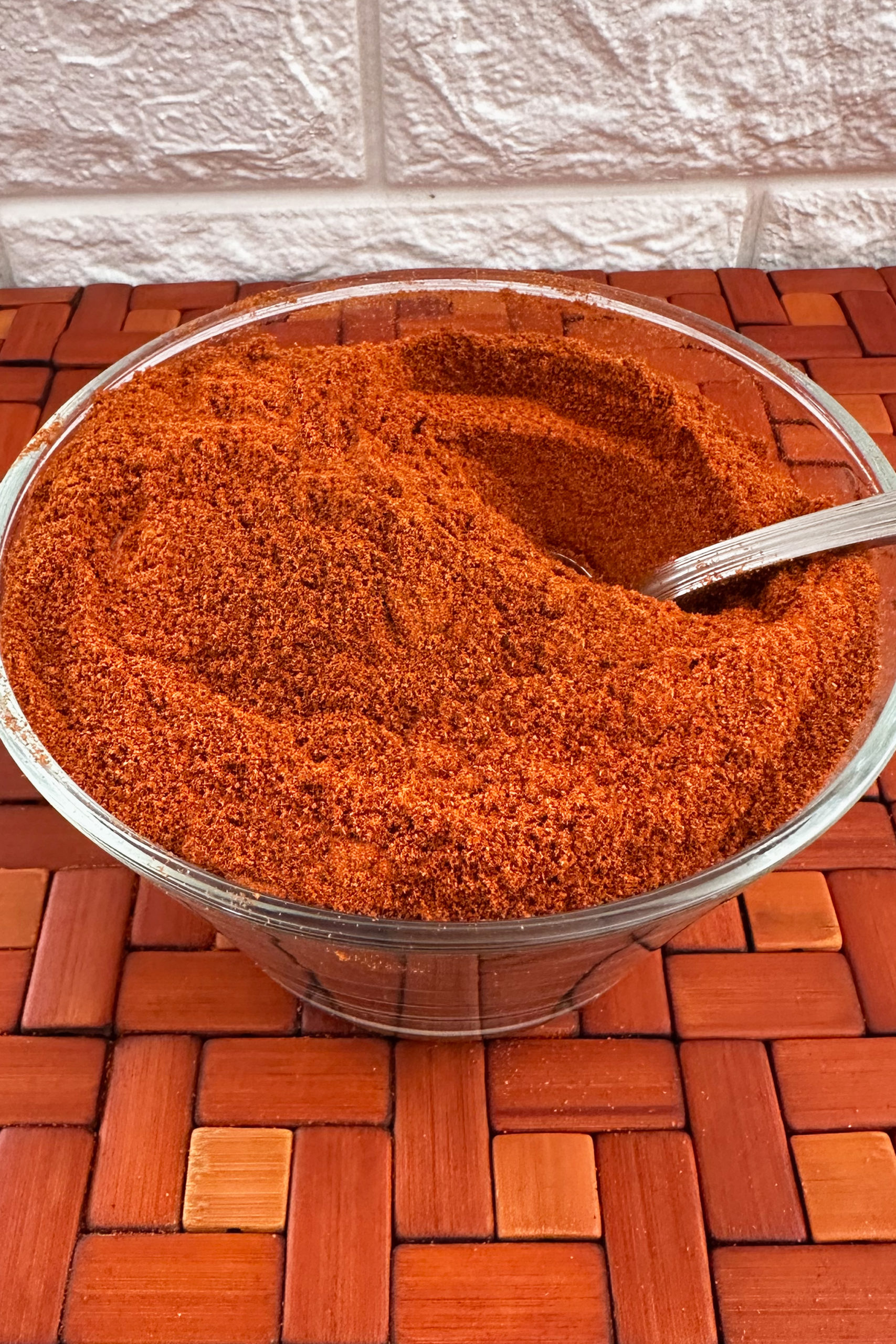
Easy Homemade Shawarma Seasoning Spice Mix Recipe
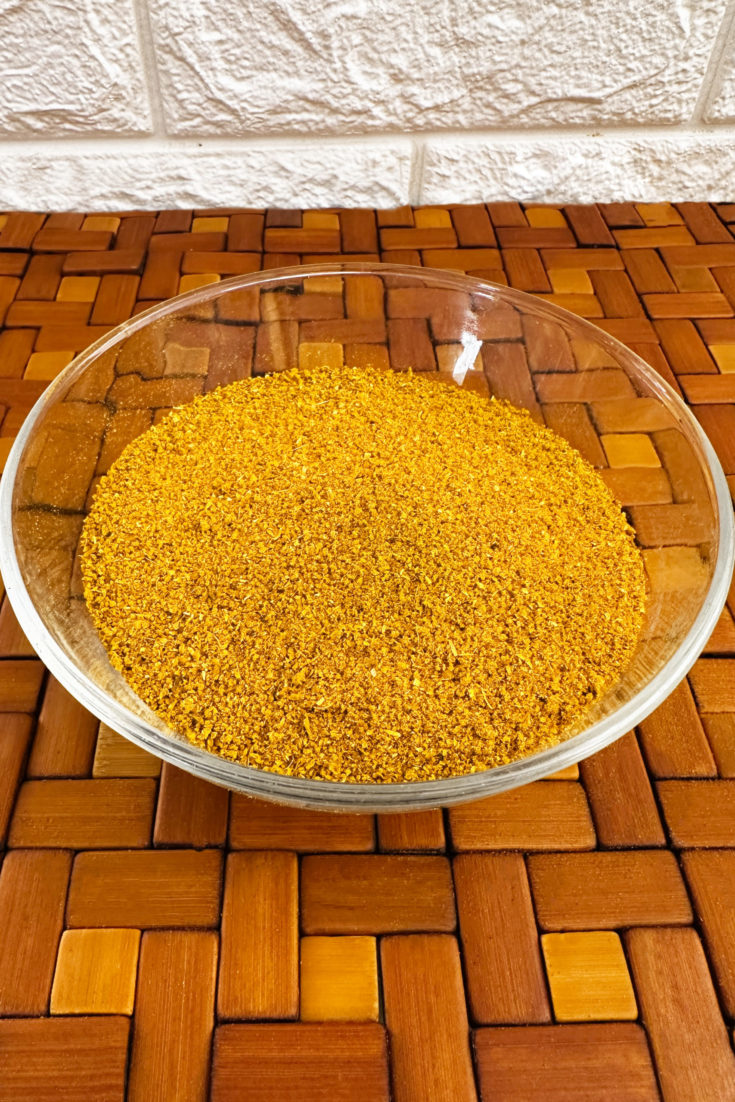
Easy 5-ingredient shawarma seasoning blend—the taste of the Middle Eastern street food.
Ingredients
- 3 tablespoons ground cumin (more, if you like a stronger taste)
- 2 tablespoons sweet paprika
- 2 tablespoons ground turmeric
- 1 teaspoon granulated garlic
- 1 teaspoon salt
- ½ teaspoon dried cilantro or 1 teaspoon fresh cilantro (optional)
- ½ teaspoon ground allspice (optional)
Instructions
- Mix all spices together in a bowl until the color is uniform.
- Store in an air-tight container until ready to use.
Nutrition Information:
Yield:
4Serving Size:
1Amount Per Serving: Calories: 45Total Fat: 2gSaturated Fat: 0gTrans Fat: 0gUnsaturated Fat: 1gCholesterol: 0mgSodium: 541mgCarbohydrates: 8gFiber: 3gSugar: 1gProtein: 2g