Eggplant Parmesan for Passover is made of layers of delicious eggplant cutlets, savory tomato sauce, and gooey cheese.
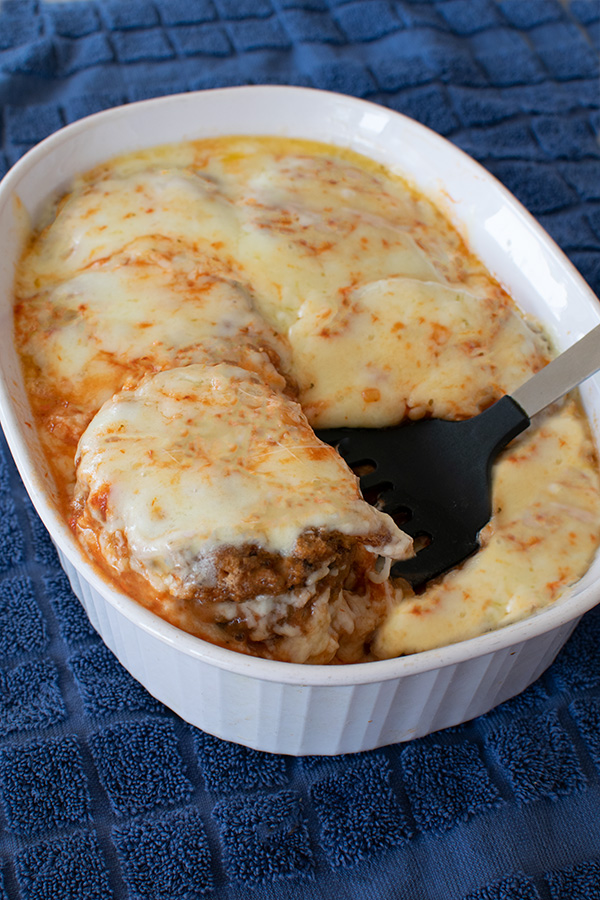
Vegetarian Eggplant Parmesan is an easy-to-make vegetarian dish that’s great for lunch or dinner. It also warms up well in the microwave or oven as leftovers. Or you can make the eggplant cutlets ahead and then make Eggplant Parmesan for Passover from that.
And eggplants have health benefits, as they contain antioxidants like vitamins A and C, which help protect your cells against damage, and are low in calories
General information regarding cooking:
The following information may not particularly pertain to this recipe but rather answers general useful questions related to cooking.
What are the different oils used in cooking?
“High-heat” oils have neutral flavors and have been processed in order to handle high temperatures and are good for sautéing, searing, and frying. These include canola oil, vegetable oil, avocado oil, and grapeseed oil, each with its own “best for” with chefs.
Some oils have their own flavor and are good for sautéing and roasting and add a little extra to the dish. These include extra virgin olive oil, coconut oil, and peanut oil. Extra virgin olive oil works well with roasting or sautéing, but not for deep frying.
Coconut oil is good in dishes where a slightly coconut flavor enhances the dish, and peanut oil is good for deep frying and will add a subtle nutty taste and smell. Many Asian dishes call for peanut oil in the ingredients.
Then there are oils that are not used with heat but rather for dressing up foods, such as sesame oil, flaxseed oil, and walnut oil, among others.
What does it mean when recipes say “to taste” about an ingredient?
When recipes say “to taste,” it means that you can put in as little or as much as you like to your own taste. Some recipes have many ingredients that a cook can adjust to their own taste when cooking (not so much when baking though).
The best way to calculate what your taste is with a recipe that you are not yet familiar with is to first taste the dish and then add the “to taste” ingredient GRADUALLY, a little at a time—a splash of this or a pinch of that—until the dish is just the way you like it. Make sure to stir the ingredient after each time you add it so that the flavor will distribute evenly and become part of the dish. Then taste again. Repeat until you reach your personal preference.
Note: If you plan on using the recipe again, it is highly recommended to make a note of what and how much you added so that you can refer to it next time.
What does it mean when a recipe says that an ingredient is “optional”?
If an ingredient is “optional,” it means that you can add it in or not based on your own preference. An optional ingredient can be flavor related (i.e., salty, sweet, spicy, etc.), appearance related (garnish), or even something like nuts or chocolate chips in baking.
What does “savory” mean?
“Savory” refers to foods that are not sweet, such as foods that taste salty, spicy, or herbal.
What cooking measurement expressions mean:
Drop – ¹/₆₄ teaspoon (or less—it’s however a literal drop comes out)
Smidgen – ¹/₃₂ teaspoon
Pinch – ¹⁄₁₆ teaspoon (what you can grab between your finger and thumb)
Dash – ⅛ teaspoon (what comes out when you shake out of a shaker or bottle)
Tad – ¼ teaspoon
Dollop—a glob on a spoon (like with mayonnaise or ice cream)
Scant—a scant cup is almost a cup, just below the line.
Heaping—above the line of the spoon (teaspoon, tablespoon)*
Some useful cooking terms:
Sauté: Cooking quickly in a small amount of oil or fat in a frying pan on a relatively high heat that causes a slight browning of the food on the outside.
Sear: Browning the outside of meat at a high temperature.
Sweat: Cooking vegetables (often onions) in a little oil or fat on a low heat until they become soft and translucent (no browning).
Simmer: Heating liquid to just below the boiling point (has slow bubbles).
Boil: Cooking food submerged in water hot enough to have rapid, rolling bubbles.
Poach: Cooking in a liquid, or partially submerged, on low heat.
Roast: Cooking with consistent dry heat in an enclosed space, over 400 degrees Fahrenheit.
Bake: Cooking with dry heat in an enclosed space, under 400 degrees Fahrenheit.
Broil: Cooking with intense heat from above.
Grill: Cooking with heat from below, typically over a flame or coals.
Braise: Cooking already-seared meat in a small amount of liquid in a covered pot.
Blanch: Quickly submerging food into boiling water and then immediately into ice water to stop the cooking.
Steam: Cooking with vapor from hot simmering water from below.
Shred: Creating long, thin strips (not necessarily uniform) of vegetables, like in coleslaw.
Grate: Scraping food against a surface with rough, tiny holes that break it down into very small, fine pieces.
Zest: The scrapings of the colorful outer skin of a citrus fruit.
Mince: Cutting into the smallest pieces possible.
Dice: Cutting into small cubes.
Chop: Cutting into small (bite-size) pieces.
Julienne: Cutting into long, thin strips (like matchsticks).
Glaze: a thin liquid with high-sugar or high-fat coating applied to food or baked goods that gives a shiny look and adds flavor.
Fold in: To gently combine a light ingredient into a heavier one.
Al dente: Cooking rice or pasta to the point before it gets soft (is slightly firm).
Emulsify: Forcing two liquids together that don’t normally combine (like oil and vinegar) into a smooth sauce or dressing.
Deglaze: Adding a liquid to a hot pan after searing meat to loosen the browned bits (called fond) that got stuck.
Slurry: A mixture of liquid and dry starch, such as cornstarch or potato starch, into a paste that is used to thicken sauces and soups. One can use flour to make a slurry as well.
Roux: (pronounced “roo”) is a cooked mixture of fat and flour.
Food on Passover
Torah-observant Jews do not eat chametz (the fermented products of five grains: wheat, spelt, barley, oats, and rye).
In addition, Torah-observant Ashkenazi Jews do not eat kitniyot (or kitniyos as pronounced in Ashkenazi Hebrew). These include legumes, corn, rice, and similar foods that were deemed forbidden to eat by rabbis in the medieval period and are still not eaten today. Sephardi and Mizrachi Jews do not follow this tradition.
Many observant Ashkenazi Jews will not even eat the derivatives of these kitniyot, while others do (each family holds their own traditions regarding this).
Then, there are Ashkenazim who don’t eat “gebrokts” (or gebrochts).
Gebrokts (gebrochts) means “broken” in Yiddish, and in this case refers to matzo that has absorbed liquid. Not eating gebrokts is observed by many in the Hasidic Jewish community and Ashkenazim who have taken on this tradition, where they basically don’t mix anything wet with matzo.
So, things like matzo sandwiches, fried matzo, and even matzo balls are a no-no for them.
There is a joke that sums it all up:
On Passover, we should remember people who have little to eat on this holiday. They are called Ashkenazim.
Over the years, I have learned to adapt “normal” food for Passover so that my family won’t complain about boring, tasteless, or repetitive meals.
I find that having good food and variety makes the week of Passover a very pleasant experience, and I hope this recipe will help make yours just that!
If you just want eggplant cutlets without the sauce or cheese, try Fried Eggplant Cutlets for Passover!
A little about eggplants
The eggplant is native to India and Asia, where it can be found growing wild, and it is believed that eggplants were brought to Europe sometime during the 7th or 8th century.
Australians and Americans call the vegetable eggplant, while in England it is called an aubergine, from the French word for this vegetable.
Because of its meaty texture, eggplant is used instead of meat in some vegetarian versions of meat recipes.
While there are a variety of types of eggplants, the one for this recipe is the large, egg-shaped (or teardrop-shaped), blackish-purple one with the meaty inside.
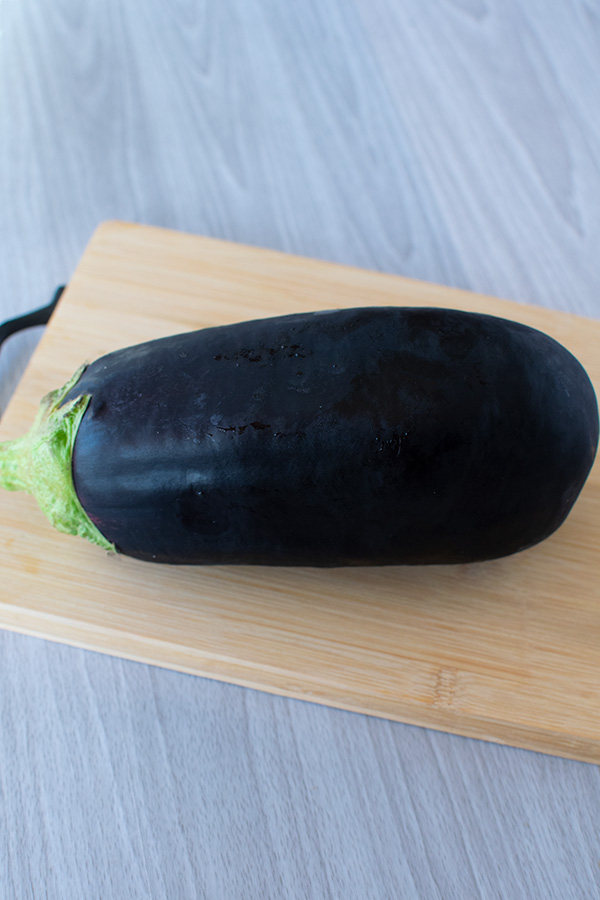
Eggplants have health benefits, as they contain antioxidants like vitamins A and C, which help protect your cells against damage, and are low in calories.
About cooking eggplant
Eggplants can be roasted, baked, steamed, deep-fried, or sautéed.
Before cooking an eggplant, cut off the top part where the green is (called a calyx). The bottom tip should also be removed, but this is not imperative. The skin is perfectly fine to eat, but it must be cooked well. Otherwise it may come out chewy.
This recipe can use either peeled eggplants or eggplants with the skin (having the skin on will not ruin the recipe).
Eggplant is naturally a little bitter. If you find that to be the case, you can draw out the bitterness by sprinkling it with salt and letting it sit awhile. If you are using slices or pieces, slightly salt after cutting. I have personally never found this to be a problem when cooking with eggplants
Using salt before cooking can help prevent the eggplant from absorbing too much oil and becoming greasy if using oil with the eggplant recipe (I normally just pat the pieces with a paper towel if need be).
If you do use salt, MAKE SURE to rinse it off before cooking the eggplant, or the salt will become a part of your dish!
Personally, I have never salted my eggplants before using them (and I have used eggplants in two countries) and have never had any problem with bitterness, but if you have any concern, please do.
If a recipe calls for frying, but you prefer not to do so because of the calories the oil will add to the recipe, you can spray with cooking oil and bake instead.
Eggplant Parmesan for Passover
Very easy eggplant parmesan, kosher for Passover.
Ingredients
- 2 large eggplants
- 6-8 eggs (start with 6, add more if needed)**
- 1 1/2 - 2 cups matzo meal or matzo cake meal (start with 1 1/2 and add more if needed)**
- 1 pound of a mixture of shredded mozzarella and Parmesan, as desired (I use mozzarella)
- 24-ounce jar of marinara or pasta sauce
- oil for frying
Instructions
- Heat oil in a large frying pan on medium heat (approximately 1/4" - 1/3" high).
- Cut off the ends of the eggplants and peel them (or leave the skin on, if desired—I leave the skin).
- Slice eggplant into slices of approximately 1/2" wide, either lengthwise or into disks.
- Pour eggs and matzo meal/matzo cake meal into separate bowls large enough to accommodate dipping the eggplant slices.
- Dip each slice into egg, then matzo meal/matzo cake meal, then egg again, making sure the slices are well coated.*
- Place in a pan with oil that has been heated on medium.
- Fry one side until golden brown, then flip and fry the other side until golden brown (you should be able to easily stick a fork through when they are ready).
- Remove and place on a plate covered with paper towels to drain.
Frying the eggplant
Preparing the Eggplant Parmesan
- Place a layer of eggplant on the bottom of a 9"x13" casserole dish or other suitable-sized baking pan.
- Pour marinara or pasta sauce evenly over the layer of eggplant (determine how many layers of eggplant you will have and pour that fraction of sauce onto each—ex., if you have 4 layers, then 1/4 of the sauce will be poured on each).
- Add the cheese over the sauce (again, divide according to the number of layers you have).
- Repeat until you have used up all the ingredients.
- Place in an oven that has been preheated to 350° and bake for 20-30 minutes or until the cheese has melted completely.
Notes
MAKE SURE ALL INGREDIENTS ARE KOSHER FOR PASSOVER.
*Most people only use one coat of egg and do not re-dip after the matzo meal. I always dip twice.
**The number of eggs and matzo meal you will need depends on how well you coat. Chances are you won't need it all, but having a nice amount allows for easier coating, and starting with a smaller amount and having more at the ready to add if needed helps prevent waste.
Additional note: the difference between matzo meal and matzo cake meal is that the matzo cake meal is ground finer.
Nutrition Information:
Yield:
12Serving Size:
1Amount Per Serving: Calories: 504Total Fat: 15gSaturated Fat: 6gTrans Fat: 0gUnsaturated Fat: 7gCholesterol: 155mgSodium: 665mgCarbohydrates: 71gFiber: 6gSugar: 11gProtein: 21g
Holly Zendels
Saturday 19th of April 2025
Great recipe for Passover! Is there a website I can go to get more?
Lori
Thursday 29th of May 2025
easyshmeezyrecipes.com. Just put Passover in the search bar.
Lori
Saturday 19th of April 2025
The same one: easyshmeezyrecipes.com. :)