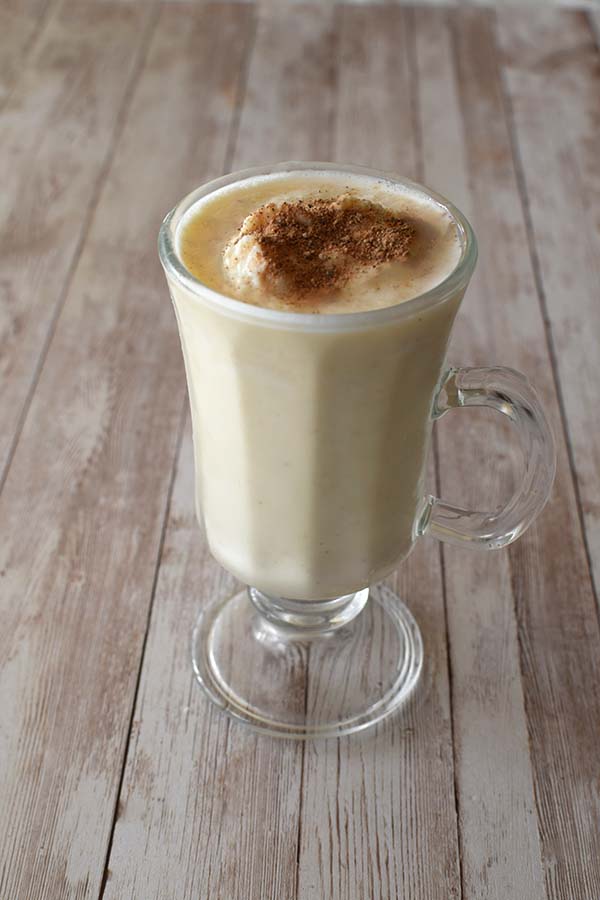
Easy Homemade Non-Alcoholic Eggnog is a no-cook recipe for the traditional, rich, and creamy holiday mocktail drink with the warm flavor of nutmeg.
About this recipe...
Eggnog is a sweet, creamy drink that's traditionally made from milk, cream, sugar, whipped eggs, and nutmeg.
Because making eggnog on the stove can get complicated, you may typically only make it homemade for the holidays.
However, this recipe is simple to prepare, with only 7 pantry ingredients. And since there is no cooking involved, you don't have to be concerned about tempering eggs, and there is zero risk of curdling.
So, you can feel free to make this recipe at any time, for any occasion!
Chilled, it's a perfect cool, smooth mocktail for hot summer events.
And if you want to make it alcoholic, just spike it!
A little about Eggnog
While the origins of the name "eggnog" seem to be in dispute (there are several thoughts on the idea depending on which dictionary one uses or who one asks), it is generally believed that the drink itself originated in England in as early as the 13th century and may have derived from a drink favored by monks. Needless to say, it evolved over time.
The drink included milk, eggs, and some form of liquor.
When it was expensive to make, because of the cost of the ingredients, it was primarily consumed by the wealthy. However, once it arrived in America in the 18th century, where eggs and milk could readily be found and rum was less expensive than other liquors, it became a popular drink for all.
Later, when rum became difficult to get due to the Revolutionary War, people substituted whiskey or bourbon. Some people even used moonshine to keep the cost down.
There is some evidence that some variation of eggnog was used as a medical remedy, and records show that even George Washington had his own version that he served to visitors.
Even today, many versions of the drink can be found depending on where one is.
Easy Non-Alcoholic Eggnog is a very easy-to-make recipe that doesn't require any cooking but tastes delicious! Oh, and feel free to add liquor if you so choose!
Frequently Asked Questions (FAQs): Easy Homemade Non-Alcoholic Eggnog
1. How long will this homemade eggnog stay fresh?
Because this contains fresh dairy and eggs, it's best stored in an airtight container in the coldest part of your refrigerator. It should stay fresh and delicious for up to 3 days. Always give it a good shake or a quick stir before serving, as the spices and cream may settle.
2. Can I make this dairy-free?
While this recipe relies on the richness of heavy whipping cream and milk for its signature texture, you can try substituting them with high-fat, unsweetened canned coconut cream and milk. However, you might find that there is a coconutty taste to the eggnog.
Or you can use a dairy-free whipping cream, such as Rich's Whip, and then you can use a neutral flavor oat milk to replace regular milk.
3. Why is a high-speed blender important?
Using a blender is essential to emulsify the eggs, sugar, and cream. It incorporates air into the mixture, which is what gives the eggnog its light, frothy, and luxurious mouthfeel. If you don't have a high-speed blender, a stand mixer with a whisk attachment can work well, though it may take a few extra minutes to achieve the same smooth result.
4. How can I adjust the thickness of the eggnog?
If you prefer a thicker, custard-like eggnog, you can reduce the milk by half a cup. Conversely, if you prefer a thinner, more drinkable consistency, simply add a bit more milk until it reaches your desired thickness.
5. What is the best way to serve this for a holiday or family gathering?
For an extra touch of elegance, serve this in chilled glasses. Garnish each serving with a fresh dusting of ground cinnamon or freshly grated nutmeg right before passing them out. The aroma of the fresh spice on top is a nice part of the experience.
Some useful terms
What does it mean when recipes say "to taste" about an ingredient?
When recipes say "to taste," it means that you can put in as little or as much as you like to your own taste. Some recipes have many ingredients that a cook can adjust to their own taste when cooking (not so much when baking, though).
The best way to calculate what your taste is with a recipe that you are not yet familiar with is to first taste the dish and then add the "to taste" ingredient GRADUALLY, a little at a time-a splash of this or a pinch of that-until the dish is just the way you like it.
Make sure to stir the ingredient after each time you add it so that the flavor will distribute evenly and become part of the dish. Then taste again. Repeat until you reach your personal preference.
Note: If you plan on using the recipe again, it is highly recommended to make a note of what and how much you added so that you can refer to it next time.
What does it mean when a recipe says that an ingredient is "optional" or "if desired"?
If an ingredient is "optional," it means that you can add it in or not based on your own preference. An optional ingredient can be flavor-related (i.e., salty, sweet, spicy, etc.), appearance-related (garnish), or even something like nuts or chocolate chips in baking.
What cooking measurement expressions mean:
Drop - ¹/₆₄ teaspoon (or less-it's however a literal drop comes out)
Smidgen - ¹/₃₂ teaspoon
Pinch - ¹⁄₁₆ teaspoon (what you can grab between your finger and thumb)
Dash - ⅛ teaspoon (what comes out when you shake out of a shaker or bottle)
Tad - ¼ teaspoon
Dollop-a glob on a spoon (like with mayonnaise or ice cream)
Scant-a scant cup is almost a cup, just below the line.
Heaping-above the line of the spoon (teaspoon, tablespoon)
What ingredients are needed to make homemade non-alcoholic eggnog?
eggs*
whipping cream
white granulated sugar
milk
vanilla extract (a good imitation is fine)
ground nutmeg
salt
ground cinnamon for garnish, if desired
*Note: Because this is a no-cook recipe using raw eggs, if you are concerned about young kids, pregnant women, or anyone with a compromised immune system, you can use pasteurized eggs for this recipe.
And here is another delicious cold drink!
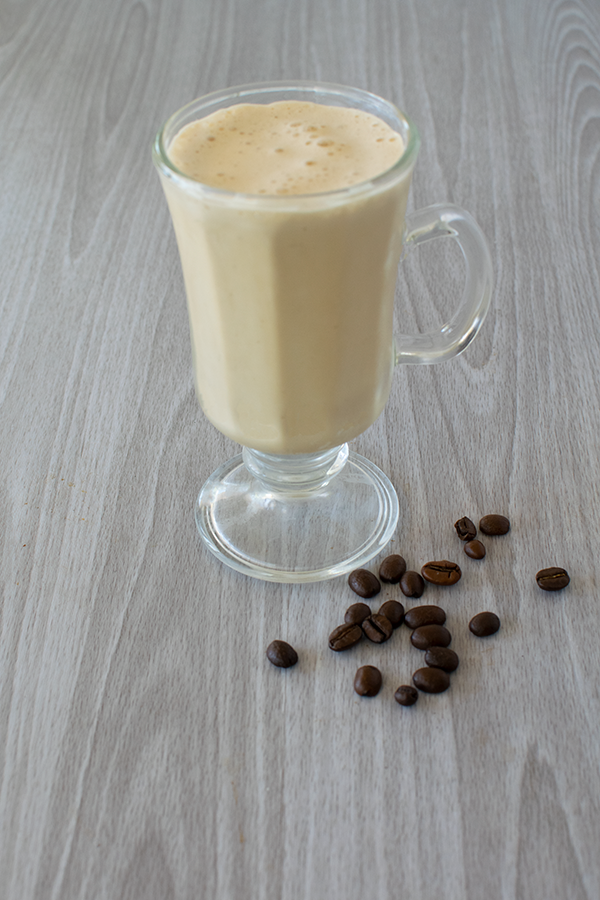
Easy Homemade Non-Alcoholic Eggnog Recipe
Delicious and easy non-alcoholic, no-cook eggnog recipe to make at home any time of the year!
Ingredients
- 6 eggs
- 1 cup whipping cream
- 1 ¼ cup white granulated sugar
- 2 cups milk
- 1 tablespoon vanilla extract (a good imitation is fine)
- 1 ½ teaspoons ground nutmeg
- ¼ teaspoon salt
- ground cinnamon for garnish, if desired
Instructions
- Beat whipping cream until stiff.
- Separate the whites from the yokes.
- Whip the whites until stiff.
- Combine the stiff egg whites, whipped cream, egg yolks, milk, sugar, vanilla, nutmeg, and salt.
- Chill (around half an hour), mix if needed, pour into glasses, top with cinnamon garnish (if desired), and serve.
Nutrition Information:
Yield:
4Serving Size:
1Amount Per Serving: Calories: 626Total Fat: 31gSaturated Fat: 18gTrans Fat: 1gUnsaturated Fat: 11gCholesterol: 356mgSodium: 313mgCarbohydrates: 71gFiber: 0gSugar: 71gProtein: 15g