Red Cabbage Salad for Passover is an easy, one-bowl recipe for the vegetarian tangy-sweet purple cabbage coleslaw often found in NY bagel shops.
It's dairy-free, so it goes perfectly with burgers, steak, or chicken.
It's great for your Passover lunch or dinner and perfect for picnics, BBQs, or get-togethers!
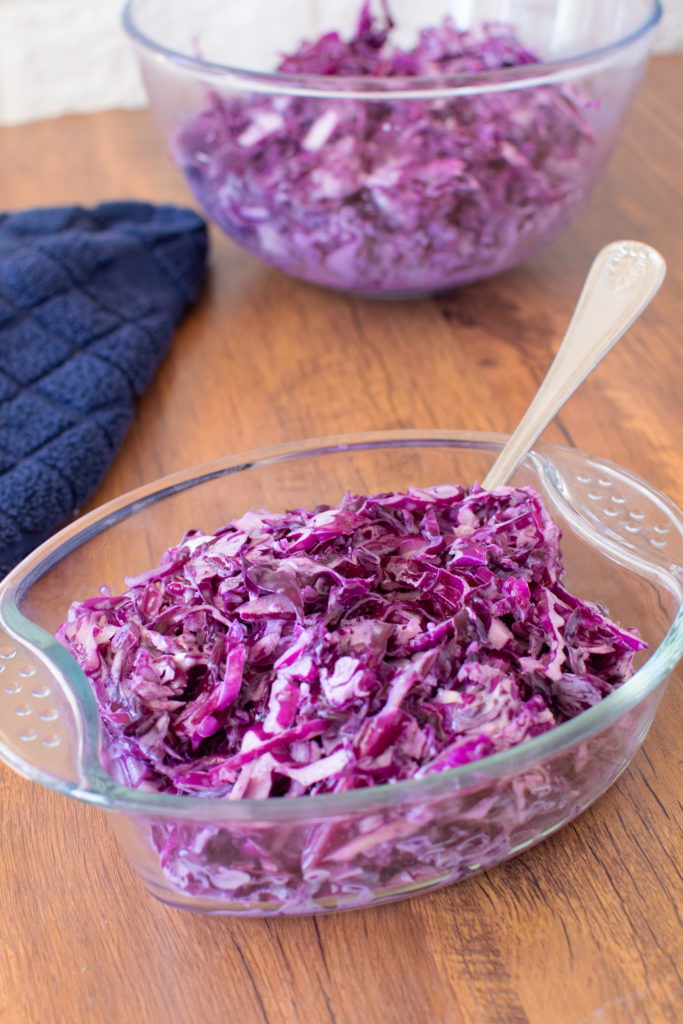
New York delis have the BEST red cabbage salad and this red coleslaw is no exception!
It's a great as a side with lots of dishes-meat and dairy
And it can even be eaten on the day of the seder! So, have your no-matzo main with a side of this coleslaw and you'll be set!
Eating on the day of the seder
Jews who keep the laws of Passover do not eat matzo or any foods that contain anything from matzo (such as matzo meal or matzo cake meal) the entire day before the seder, which is in the evening.
Some people even have the custom of not eating such foods for two weeks before, beginning on Rosh Chodesh Nissan or even as far back as Purim, which is a month before.
Food on Passover
Torah-observant Jews do not eat chametz (the fermented products of five grains: wheat, spelt, barley, oats, and rye).
In addition, Torah-observant Ashkenazi Jews do not eat kitniyot (or kitniyos as pronounced in Ashkenazi Hebrew). These include legumes, corn, rice, and similar foods that were deemed forbidden to eat by rabbis in the medieval period and are still not eaten today. Sephardi and Mizrachi Jews do not follow this tradition.
Many observant Ashkenazi Jews will not even eat the derivatives of these kitniyot, while others do (each family holds their own traditions regarding this).
Then, there are Ashkenazim who don't eat "gebrokts" (or gebrochts).
Gebrokts (gebrochts) means "broken" in Yiddish, and in this case refers to matzo that has absorbed liquid. Not eating gebrokts is observed by many in the Hasidic Jewish community and Ashkenazim who have taken on this tradition, where they basically don't mix anything wet with matzo.
So, things like matzo sandwiches, fried matzo, and even matzo balls are a no-no for them.
There is a joke that sums it all up:
On Passover, we should remember people who have little to eat on this holiday. They are called Ashkenazim.
Over the years, I have learned to adapt "normal" food for Passover so that my family won't complain about boring, tasteless, or repetitive meals.
I find that having good food and variety makes the week of Passover a very pleasant experience, and I hope this recipe will help make yours just that!
Kosher for Passover Pantry Essentials (Suggestion)
As I learned to prepare more and more recipes for Passover, I also learned which basics and seasonings are good to have on hand to have the ability to make a dish on short notice-especially during the holiday-and not have to run out to the store or borrow from a neighbor.
So, I maintain a selection of what I consider "kosher for Passover pantry essentials" in my refrigerator and on my shelves during the week of Passover.
If you make your own list, just make sure that everything is Kosher for Passover (or KLP-Kasher L'Pesach, in Hebrew) and if you are Ashkenazi, that list will be shorter than if you are not.
Make sure to check with a qualified rabbi if you have any questions.
Here are some things that I always keep on my Passover shelves:
- salt
- ground black or white pepper
- granulated garlic or garlic powder
- onion powder
- ground cinnamon
- sugar (granulated)
- brown sugar
- chicken consommé powder
- onion soup mix
- various herbs
- additional spices to adapt taste to preference
- oil / margarine / butter / cooking spray
- potato starch as a thickening agent
- baking powder
- matzo meal
- matzo cake meal (matzo meal but ground finer)
- mayo
- tomato sauce/tomato paste/canned tomatoes-diced or crushed/pasta sauce
We always have eggs in the fridge and onions and potatoes on our shelves (if we were not Ashkenazi, I would certainly keep rice as well).
In addition, having fresh vegetables , such as carrots, celery, bell peppers (red, green, etc), tomatoes (if you don't want to use canned), etc. can be very useful when putting together a quick but delicious meal.
Love deli salads? Try this Deli-Style Coleslaw for Passover recipe!
Red Cabbage Salad for Passover
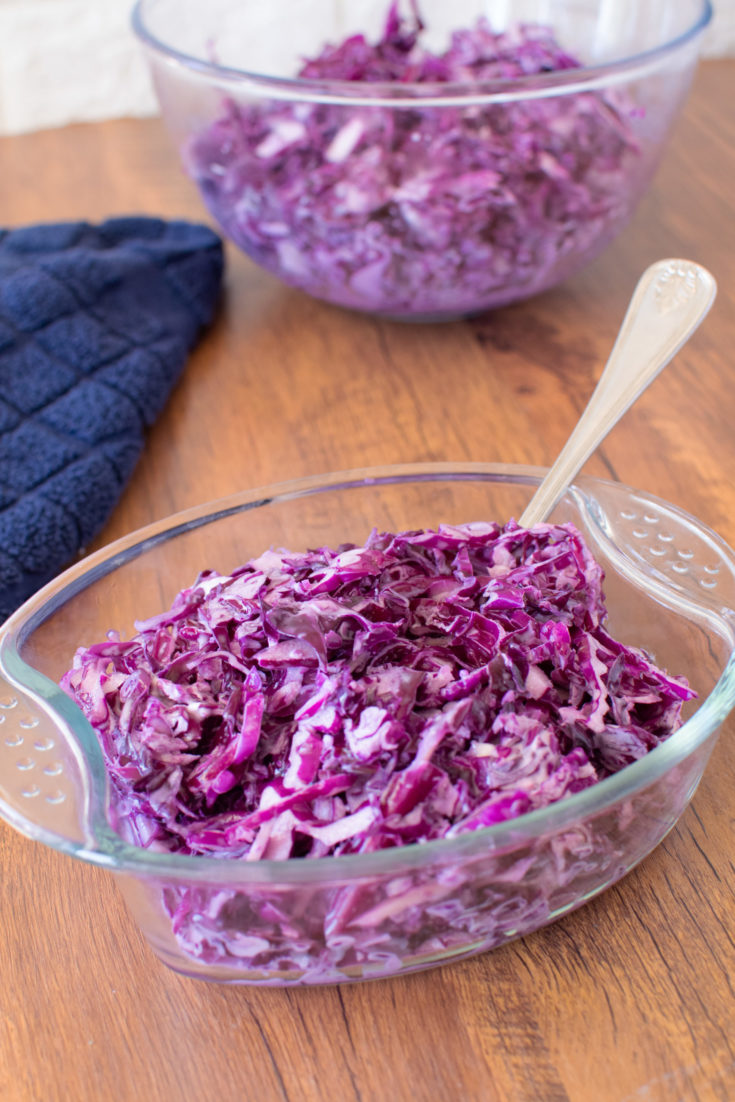
Delicious red (purple) coleslaw, dairy-free and vegetarian. Great for lunch, dinner, picnics, and BBQs during the holiday!
Ingredients
- 28-32 ounces shredded red (purple) cabbage
- ¾ cup mayonnaise
- ½ cup onion, grated very small or pureed*
- ⅓ cup sugar
- ⅓ cup white vinegar
- ⅓ cup water
- 3 tablespoons vegetable oil
- 1 ¼ teaspoons salt
- ½ teaspoon pepper, white or black
Instructions
- Pour the shredded cabbage into a large mixing bowl.
- Add the mayonnaise, onion, sugar, vinegar, water, oil, salt, and pepper and mix very well (you can add these one at a time and mix in between if you like).
- Chill (it tastes better after it has sat for a while and gotten cold).
- Pour out excess liquid if you don't want it (as the cabbage sits, it will seep liquid). Add a bit more mayonnaise if desired for creaminess.
Notes
MAKE SURE ALL INGREDIENTS ARE KOSHER FOR PASSOVER
* If you grate the onion, you will most likely see the pieces of shredded onion in the salad.
Nutrition Information:
Yield:
4Serving Size:
1Amount Per Serving: Calories: 512Total Fat: 46gSaturated Fat: 6gUnsaturated Fat: 40gCholesterol: 19mgSodium: 978mgCarbohydrates: 25gFiber: 1gSugar: 23gProtein: 1g