Easy Dairy-Free Chocolate Chip Muffins Recipe

Sharing is caring!

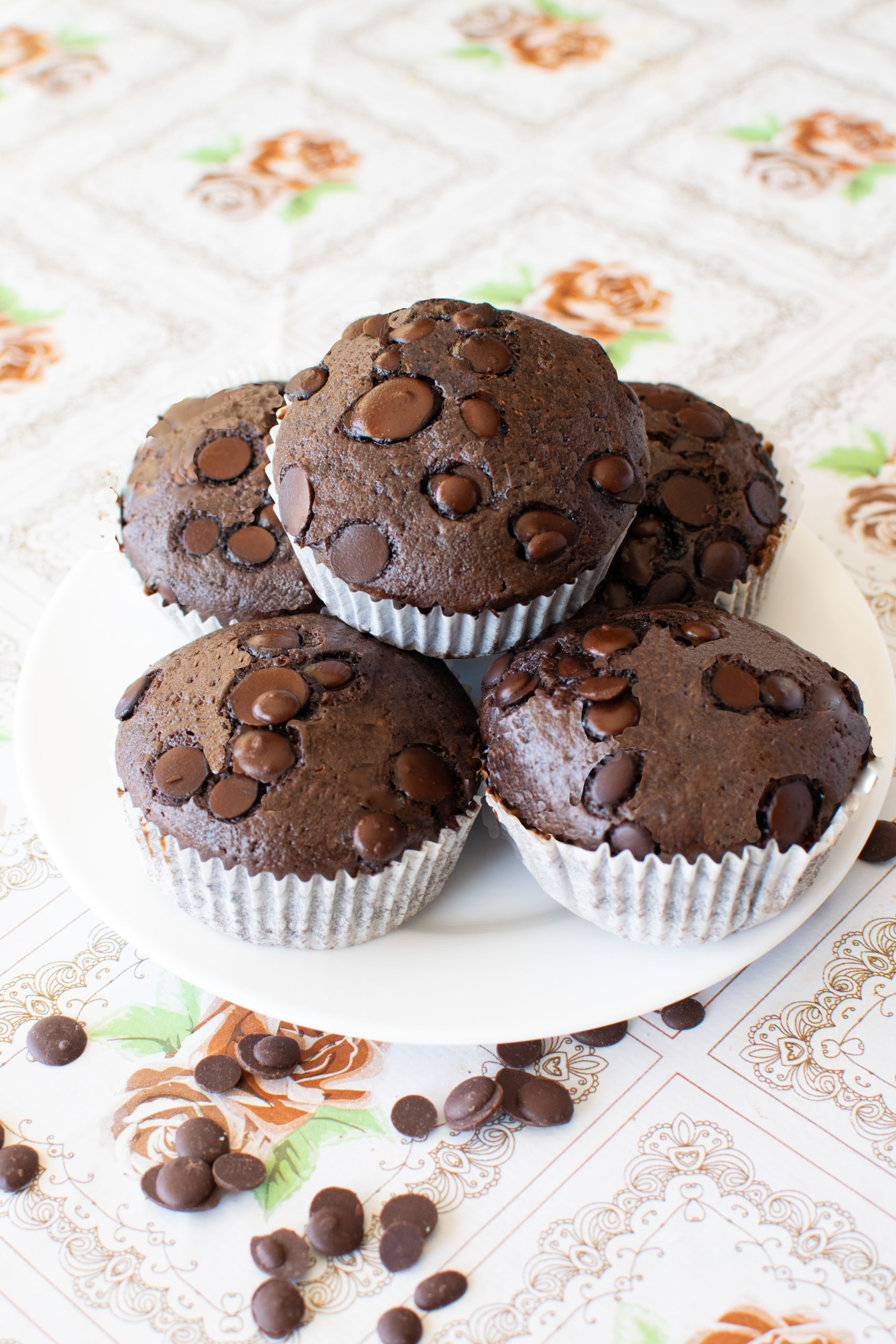
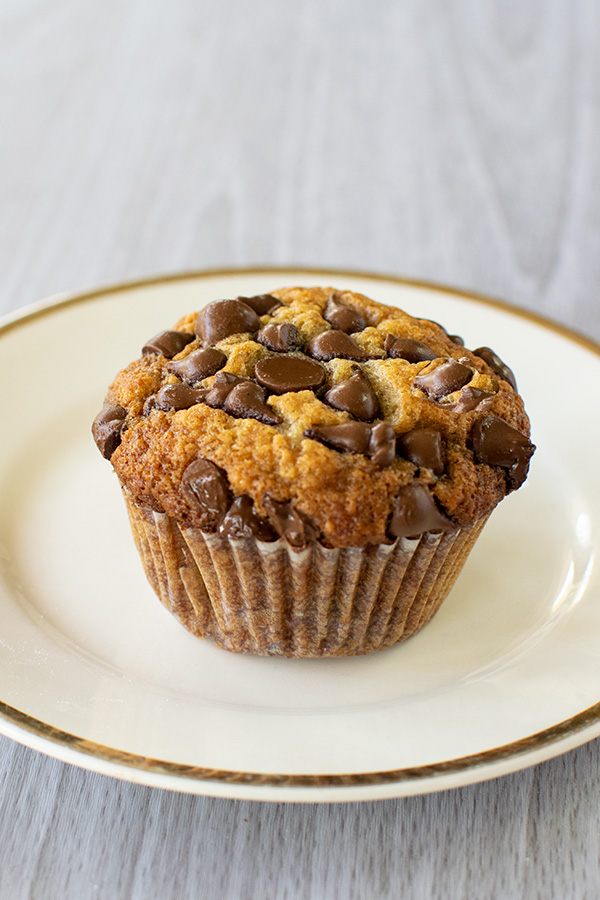
Easy Dairy-Free Chocolate Chip Muffins is a one-bowl recipe for vanilla muffins with chocolate chips, made without butter or milk.

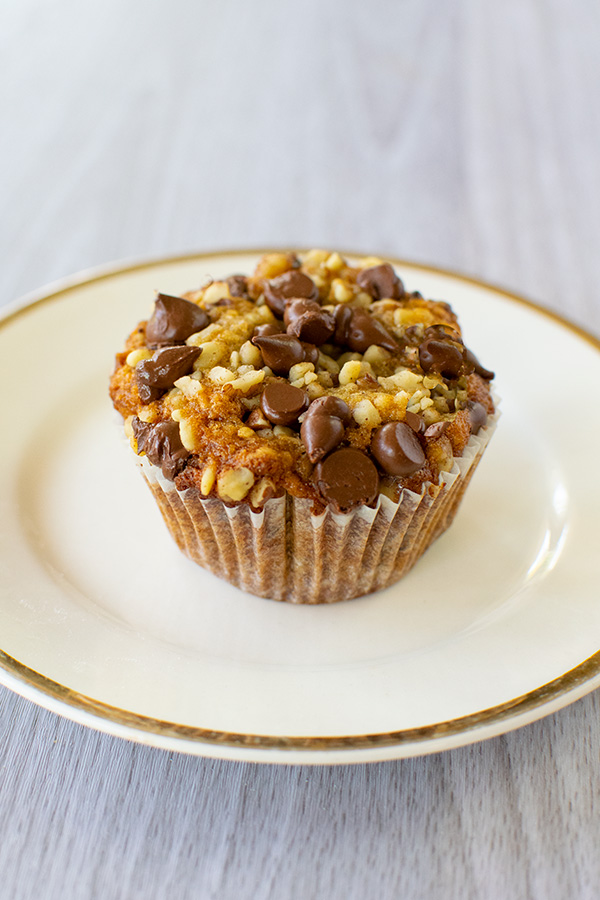
Easy Dairy-free chocolate chip muffins on a green and white plate and another green and white plate in front with a half-eaten muffin

These dairy-free muffins are perfect for anyone who loves quick-bread in individual servings.

Just one bowl, pour, and bake. And they're made using simple pantry ingredients, without milk or butter, so they're a terrific treat for anyone avoiding dairy.

And since they're made with oil, there is no margarine in the ingredients either.

Plus, they're customizable, so you can use your favorite add-ins such as nuts, raisins, dried cranberries, or whatever you like. Or you can even have them plain and leave out the chocolate chips.

They're delicious with coffee, tea, or cold drinks, and they're a terrific on-the-go snack.

Jump to:

Frequently Asked Questions

Can I use melted coconut oil instead of vegetable oil?

Yes, melted coconut oil or any neutral cooking oil works wonderfully in this recipe. However, coconut oil may add a coconutty flavor to the muffins.

How do I store dairy-free muffins?

Store them in an airtight container at room temperature for up to 3 days, or freeze them for up to 3 months.

Can I add nuts or dried fruit instead of chocolate chips?

Yes, these muffins are fully customizable. You can either add the dried fruit and nuts to the chocolate chips, swap the chocolate chips out, or leave the muffins plain altogether.

Can I make these muffins ahead of time?

Yes, you can bake them in advance and keep them stored in an airtight container, or freeze the baked muffins to enjoy later.

Are these muffins made without margarine?

Yes, this recipe uses simple oil instead of margarine, butter, or milk.

What is the difference between using baking soda and using baking powder?

Baking soda and baking powder are both synthetic leavens that help baked goods rise, but there is a difference between them.

Baking soda is pure sodium bicarbonate, which needs another ingredient that is acidic in order to be activated. When the baking soda touches the acid, it creates a carbon dioxide gas, which helps the baked good rise. Baking soda is between 3 and 4 times stronger than baking powder, and if too much baking soda is used, your baked good will end up with a metallic flavor.

Baking powder is baking soda that is already mixed with an acid and a stabilizer and will be activated by moisture and heat. Nowadays, baking powder is called double-acting because it activates twice-once when it gets wet (when you mix the ingredients together) and again when it heats in the oven.

Replacing one with the other can be tricky, and it's not recommended. However, if you have no choice, then do solid research for substituting one for the other for the baked good you are preparing so you don't ruin it.

What are eggs for in baking?

Eggs are made up of two parts: the whites and the yolks (the yellow). 

Egg whites are made up of protein that sets when heated and helps baked goods hold their structure. The yolks are made up of fats and vitamins and help ingredients bond.

Eggs also help baked goods rise as well as keep them moist.

It is important to have the right amount of eggs when baking, because if there are too many eggs in a recipe, this can cause a rubbery, dense texture, and if there are too few eggs, this can cause a crumbly, dry texture.

The different parts of the egg will provide different textures to baked goods; using the entire egg in baking will provide moisture and help the baked good rise evenly, using extra yolks will create richer, denser textures, and extra whites will add fluffiness but may create a drier texture.

What is the difference in using oil vs. butter or margarine?

Both margarine and butter are solid fats at room temperature, and both contain more saturated fats than oil.

While margarine and butter will change from a solid to a liquid when heated, they will change back to solids when cooled again. Oil stays liquid at all temperatures. Oil also coats flour better in the preparation process before baking.

Butter "creams" better than margarine, but one cannot cream oil at all.

When converting a recipe from butter or margarine to oil, the general conversion rate is 1 to ¾ (although if you are doing more than one batch, you might need to reduce the oil because I have found that baked goods come out oily in this case).

And when converting from oil to margarine or butter, typically the ratio is 1 to 1¼ and from margarine or butter to oil, the ratio is typically 1 to ¾.

What is the difference between real vanilla extract and imitation vanilla?

Real vanilla is made from soaking vanilla beans in alcohol, imitation vanilla is synthetic, and real vanilla costs quite a bit more than imitation. Whether or not there will be a taste difference in your baking depends on the baked good, so do some research before you decide.

I personally always use the imitation as long as I have a really good brand because it's not worth it to me to spend the extra money.

Love muffins?

Yield: 12 muffins

Easy Dairy-Free Chocolate Chip Muffins Recipe

Dairy-free chocolate chip muffins on a green and white plate and another green and white plate in front with a half-eaten muffin
5.0 Stars (2 Reviews)

Easy and delicious vanilla muffins without chocolate chips, made without milk and without butter.

Prep Time 10 minutes
Cook Time 20 minutes
Additional Time 5 minutes
Total Time 35 minutes

Ingredients

  • 2 cups all-purpose flour
  • 1 ¼ cup white granulated sugar
  • 2 teaspoons baking powder
  • 1 teaspoon salt
  • 2 eggs
  • ⅓ cup oil
  • ½ cup water
  • 1 tablespoon vanilla
  • 1 cup dairy-free chocolate chips

Instructions

  1. Combine the flour, sugar, baking powder, and salt in a mixing bowl.
  2. Add the eggs, oil, water, and vanilla and mix thoroughly.
  3. Fold in the chocolate chips so they are evenly dispersed throughout the batter.
  4. Pour into the wells of a 12-muffin pan (that have cupcake paper in them or that have been greased well).
  5. Place the muffin pan in an oven that has been preheated to 350°F and bake for approximately 15 minutes or until eh tops have become a golden brown (it's best to test by sticking a toothpick into the middle of some of the muffins and making sure it comes out clean).

Nutrition Information:

Yield:

12

Serving Size:

1

Amount Per Serving: Calories: 327Total Fat: 14gSaturated Fat: 4gUnsaturated Fat: 10gCholesterol: 31mgSodium: 298mgCarbohydrates: 46gFiber: 2gSugar: 12gProtein: 6g

Sharing is caring!

Leave a Reply

Your email address will not be published. Required fields are marked *