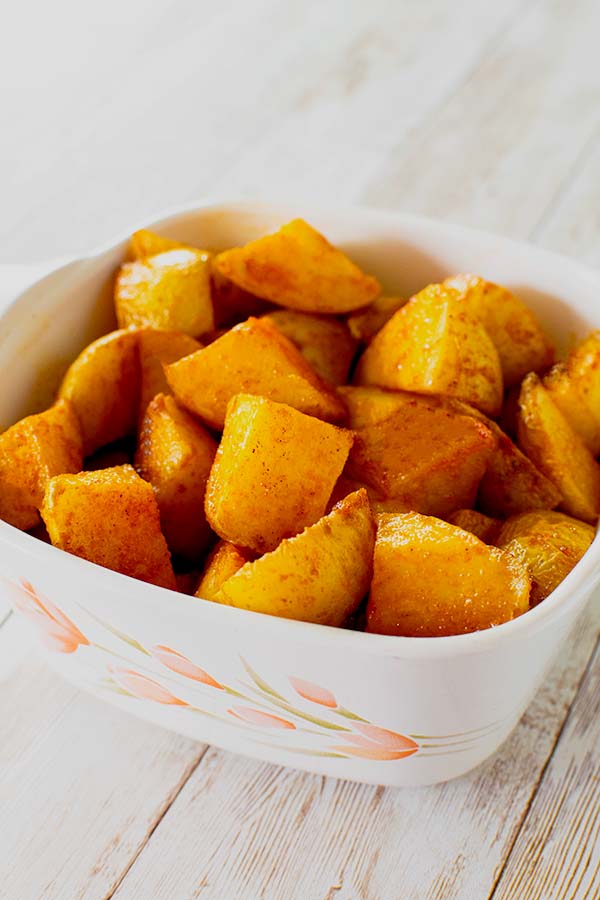
Easy paprika and salt roasted potatoes is a one-pan, vegan, savory side dish recipe with only 4 ingredients-just combine everything and pop them into the oven.
About roasted potatoes
This is one of the simplest potato recipes you can make. Only 4 ingredients and one pan. Mix and roast.
And you don't have to peel the potatoes if you don't want to.
While, sometimes, the outside comes out a little crispy if overcooked, the inside is always soft and literally just melts in your mouth.
They are so good that they often don't make it to the serving plate, as we will just stand around and eat them straight from the pan!
They are terrific for busy people and work well even if you are in the dorms at school because they are best made in a toaster oven!
Serve as a side at your table or bring to that potluck dinner!
Prepare ahead and just warm up! And you don't have to peel them if you don't want to.
Have some already-peeled potatoes that have started to brown? This is a terrific way to save them!
It's naturally vegan, so you can serve it to anyone!
And they make great leftovers!
Frequently Asked Questions: Roasted Paprika Potatoes
1. What is the secret to getting "melt-in-your-mouth" roasted potatoes?
The secret is the potato variety and the roasting temperature. Using a high-starch potato like a Yukon Gold or a medium-starch like white potatoes provides a creamy interior. Roasting at a higher temperature allows the outside to crisp up quickly while the inside steams, creating that signature contrast.
2. Which type of paprika should I use: sweet, smoked, or hot?
This depends on your flavor preference. Sweet paprika provides a mild, classic flavor and vibrant color. Smoked paprika adds a deep, woody, "campfire" aroma that makes the potatoes taste heartier. You can also mix them for a balanced flavor profile.
3. Do I need to peel the potatoes before roasting?
It is optional. Leaving the skins on adds extra texture, nutrients, and a rustic aesthetic. If you choose to keep the skins on, ensure you scrub them thoroughly under cold water and dry them completely before cutting and tossing with oil.
4. Can I prep these potatoes ahead of time?
You can cut and soak the potatoes in cold water for up to 2 hours before roasting-this removes excess starch and helps them get crispier. However, it's preferable not to coat them in oil and salt until shortly before they go into the oven, or they may lose their crunch.
5. How do I keep my roasted potatoes from sticking to the pan?
Ensure your baking sheet is well-oiled or lined with high-quality parchment paper. Also, ensure the potatoes are not overcrowded; leaving space between each piece allows the hot air to circulate, which ensures even browning and prevents them from steaming and sticking.
A little about potatoes
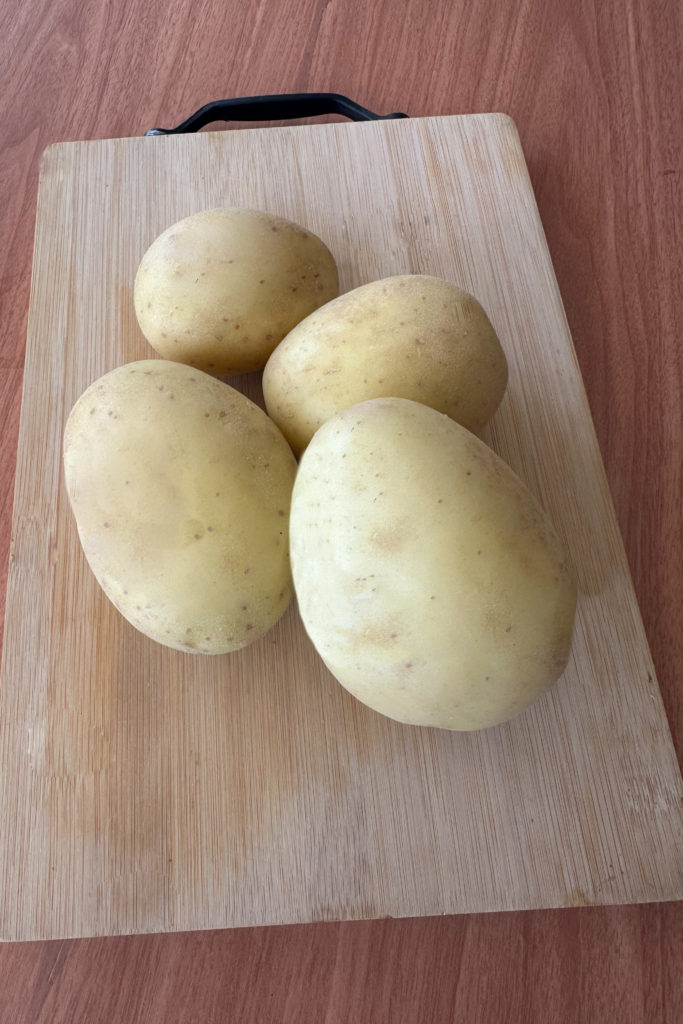
The potato is a perennial, starchy tuber, a root vegetable, that is native to the Americas.
Potatoes contain health benefits and are an excellent source of fiber, vitamins, and nutrients and provide fuel for the body.
Potatoes are gluten-free and very filling. In addition, they are a good source of antioxidants-some more than others-and they contain resistant starch. However, their nutritional content depends on the type of potato. Much of a potato's nutrition is in the skin of the potato, and peeling them reduces their nutritional value.
Adding fattening toppings, such as sour cream or butter, adds calories and fat.
Different potatoes are considered to work best with different recipes, but overall, they can be used in a variety of delicious meals for recipes from all over the world.
There may be over a couple hundred varieties of potatoes in the United States, but there are only 7 main categories. The most popular of these are the red, white, yellow, and russet.
Fun Facts
- Potatoes were first cultivated in Peru by the Incas.
- Potatoes were introduced to Europe (Ireland) toward the end of the 16th century.
- Potatoes began to be planted in the colonies in the early 1700s.
- Potatoes are the #1 vegetable crop in the United States and the 4th most consumed in the world.
- Idaho is the largest grower of potatoes.
- The potato was the first vegetable to be grown in space.
Some cooking terms
What are the different oils used in cooking?
"High-heat" oils have neutral flavors and have been processed in order to handle high temperatures and are good for sautéing, searing, and frying. These include canola oil, vegetable oil, avocado oil, and grapeseed oil, each with its own "best for" among chefs.
Some oils have their own flavor and are good for sautéing and roasting and add a little extra to the dish. These include extra virgin olive oil, coconut oil, and peanut oil. Extra virgin olive oil works well with roasting or sautéing but not for deep frying.
Coconut oil is good in dishes where a slightly coconut flavor enhances the dish, and peanut oil is good for deep frying and will add a subtle nutty taste and smell. Many Asian dishes call for peanut oil in the ingredients.
Then there are oils that are not used with heat but rather for dressing up foods, such as sesame oil, flaxseed oil, and walnut oil, among others.
What does it mean when recipes say "to taste" about an ingredient?
When recipes say "to taste," it means that you can put in as little or as much as you like to your own taste. Some recipes have many ingredients that a cook can adjust to their own taste when cooking (not so much when baking, though).
The best way to calculate what your taste is with a recipe that you are not yet familiar with is to first taste the dish and then add the "to taste" ingredient GRADUALLY, a little at a time-a splash of this or a pinch of that-until the dish is just the way you like it.
Make sure to stir the ingredient after each time you add it so that the flavor will distribute evenly and become part of the dish. Then taste again. Repeat until you reach your personal preference.
Note: If you plan on using the recipe again, it is highly recommended to make a note of what and how much you added so that you can refer to it next time.
What does it mean when a recipe says that an ingredient is "optional"?
If an ingredient is "optional," it means that you can add it in or not based on your own preference. An optional ingredient can be flavor-related (i.e., salty, sweet, spicy, etc.), appearance-related (garnish), or even something like nuts or chocolate chips in baking.
What does "savory" mean?
"Savory" refers to foods that are not sweet, such as foods that taste salty, spicy, or herbal.
What cooking measurement expressions mean:
Drop - ¹/₆₄ teaspoon (or less-it's however a literal drop comes out)
Smidgen - ¹/₃₂ teaspoon
Pinch - ¹⁄₁₆ teaspoon (what you can grab between your finger and thumb)
Dash - ⅛ teaspoon (what comes out when you shake out of a shaker or bottle)
Tad - ¼ teaspoon
Dollop-a glob on a spoon (like with mayonnaise or ice cream)
Scant-a scant cup is almost a cup, just below the line.
Heaping-above the line of the spoon (teaspoon, tablespoon)*
How to make these easy roasted potatoes in a toaster oven.
I think that the easiest/quickest way to make these is in a toaster oven (mine can fit a lasagna-size pan).
I use the "toast" setting for the majority of the roasting time, and then, when the potatoes are slightly brown on top, I turn to the "bake" setting and cook for the rest of the time.
If you like your potatoes more on the firm side, then cook just until you can slide a fork through. I like mine on the soft side, where you can just about mash the roasted pieces with a fork (truly melt-in-your-mouth) and cook longer.
You have to be careful, though, not to let them dry out if you choose the cook-longer option.
Can I freeze these?
I wouldn't. Every time I have frozen potatoes, they come out mushy after being defrosted.
Tip
If you have already cut potatoes and they have gone a little brown, this is a perfect way to save them from being tossed out. As long as the potatoes are still good (not rancid), then no one will be the wiser.
Some suggestions for main dishes to go with these delicious paprika potatoes:
Easy Israeli Grill Spice Chicken
Easy 5-Ingredient Dairy-Free Meatloaf (with Onion Soup Mix)
Easy Paprika and Salt Roasted Potatoes Recipe
A delicious, one-pan, 4-ingredient, vegan potato side dish that goes great with any main!
Ingredients
- 1½ - 2 pounds of potatoes cut into chunks of approximately 1 - 1½ inches in size.*
- 1 tablespoon sweet paprika or to taste (you can add a little hot paprika too if you want spicy)
- ½ tablespoon salt or to taste**
- ¼ cup vegetable oil
Instructions
- Place potato pieces in a baking pan and generously coat with oil.
- Then coat generously with the paprika and salt.
- Roast on the middle rack at 400°F for approximately 1 hour***, mixing every 15 minutes or so for even cooking
- Cook until soft, checking potatoes in various places around the pan by poking them with a fork.
- Drain any excess oil before serving or use a slotted spoon to move from pan to dish.
Notes
* Preferably a medium- to high-starch type, such as Yukon Gold or white potatoes.
** The salt can get a little tricky because potatoes absorb salt, so ½ tablespoon of salt may not be enough for people. You can add more later if you like and judge better for next time.
*** The time depends somewhat on the type of potato but also on the size of the chunk and how spread out they are in the pan.
Nutrition Information:
Yield:
6Serving Size:
1Amount Per Serving: Calories: 82Total Fat: 9gSaturated Fat: 1gTrans Fat: 0gUnsaturated Fat: 8gCholesterol: 0mgSodium: 353mgCarbohydrates: 0gFiber: 0gSugar: 0gProtein: 0g