The Sabich is a very popular, original Israeli street food.
This incredible vegetarian pita sandwich is made of fried eggplant, hard-boiled eggs, and fresh Israeli salad of diced tomatoes and cucumbers are all stuffed into a pita, and then drizzled with creamy tahini and it is also often made with amba (a tangy mango sauce that has a combination of spicy, sweet, and sour flavors).
And you can customize it with other spreads, vegetables, and herbs!
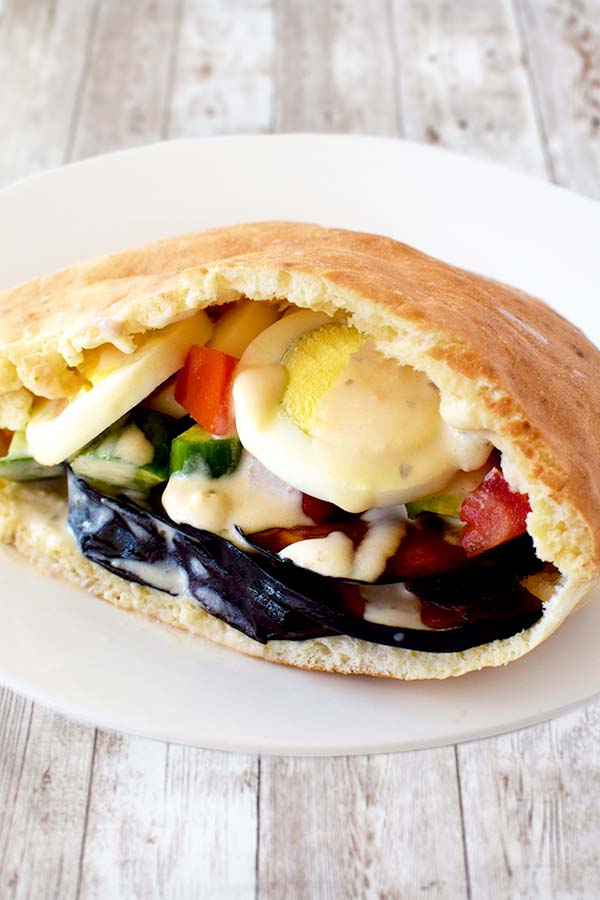
What is a Sabich?
First of all, the way to pronouce the word is sahbeekh – with the ch or kh sounding like you are trying to get phlem out of the back of your throat.
“Sabich” in itself doesn’t really mean anything. While some like to think it is an acronym from the names of some ofthe contents in Hebrew, the truth of the matter is that it was named was named for one of the partners that created it.
The story told in Israel is that Sabich Tzvi Chalbi, and his partner, Ya’akov Sasson, had a small stand in Ramat Gan, that was by the first/last stop of bus number 63 of the Dan bus company, which traveled between Ramat Gan and Tel Aviv. In 1961, the partners created a sandwich for the drivers.
They used foods that that Iraqis would traditionally eat for their breakfast platter: pita, fried eggplant, tomatoes, cucumbers, hard boiled eggs, etc. with tahini (in Hebrew, pronounced tchina – again with the phlegm) and amba (a tangy mango-pickle condiment of Jewish-Iraqi and Jewish-Kurdish origin).
The drivers would drive by the stand and call out “Sabich, make me a sandwich” and that is how the sandwich became known as the Sabich.
While the sabich became a very popular Israeli dish and is sold around the country, the original shop is still in the same place and in the summer of 2020, the mayor of Ramat Gan named the area Sabich Square to memorialize the contribution to Israeli cuisine.
Why are there so many Sabich sandwich recipes?
Like pretty much every other recipe out there, everyone makes dishes according to their own tradition and taste and the sabich is no different. I like to keep my recipes as simple to allow anyone who wants to make a quick dish without straying from the basics to do just that.
The original ingredients that were made part of the sabich are remembered to be:
- Pita
- Fried Eggplant
- Hummus (pronounced khoomoos – the kh making the phlegm sound)
- Aruk (an Iraqi herb)
- Tahini (tchina – pronounced tkheena)
- Israeli vegetable salad (made only of cubed tomatoes and cucumbers)
- Amba
- Schug (a hot middle eastern condiment made with hot peppers – prounounced skhoog)
- Pickles
- Parsley
- Chopped red onions with sumac and lemon juice
- Potatoes
- Hard boiled egg
And you can feel free to put in as much or as little as you want of any of them (of course, if you leave out the pita or eggplant, you can pretty much assume it is no longer a sabich).
Tips for making a sabich
- Make sure to use fresh pita. Dried pita will crack and the contents of your sandwich will fall out.
- When choosing an eggplant, it should be the darkest kind you can find to make sure it is ripe.
- The fresher your ingredients, the better tasting the sabich.
A little about Israeli cuisine
Some people complain about cultural appropriation in cuisine when food from one country is attributed to another country.
However, national cuisine in itself is often a mingling of food from a variety of cultures, often due to a change of ruling countries and a shifting of borders.
Turkish cuisine, for example, goes back to the Ottoman Empire and was a combination of several cultures under Ottoman rule.
When people move from country to country, they will take their cultures with them, and their descendants may adapt their traditional cuisine with that of their new home, and if they don’t, others might.
When one lives in a melting pot, such as the US or Israel, it is just unrealistic to expect that food from a particular culture won’t mingle with that of other cultures.
That being said, “Israeli cuisine” is basically Middle Eastern (as opposed to Eastern European food) that was brought to Israel by Jews when they fled or were expelled from Muslim countries and moved to Israel mostly after the declaration of the State of Israel (collectively known as Mizrahi Jews).
Recipes were passed from generation to generation, and although decades have passed, the foods are still known by the culture they came from, and everyone seems to have their own way of making them.
That said, there are many variations of pretty much any “Israeli” recipe because of background, custom, or even just taste. When choosing a recipe, one has to know what actually constitutes a main ingredient—what makes the dish what it is—and what is left up to individual taste.
I personally find it very arrogant and quite irritating when a blogger (not naming names) will put “authentic” in the title of an “Israeli” recipe, as if all the rest of the variations are mere imitations. What’s worse is when that blogger makes the recipe with her own twist and then calls it authentic!
Adding more or less of a spice or adding a spice that is not in the recipe does not make it less authentic, but calling it “authentic” and then adding unnecessary extra ingredients above and beyond what needs to be there is misleading.
For example, “authentic” Israeli salad (what Israelis call Israeli salad) is diced tomatoes and cucumbers. Sometimes, they will add some oil, salt, and pepper, but THAT’S IT. Anything else does not have to be there, but if you leave out the cucumbers or the tomatoes, you no longer have an “Israeli salad.”
So, find the recipes you like with the ingredients you prefer, add your own twists, and בתאבון (pronounced: b’te’ah’vone, literally translated, “with appetite”)!
And Israeli salad, made of tomatoes and cucumbers, both of which have nutritional benefits. As does eggplant.
A little about eggplants
The eggplant is native to India and Asia, where it can be found growing wild, and it is believed that eggplants were brought to Europe sometime during the 7th or 8th century.
Australians and Americans call the vegetable eggplant, while in England it is called an aubergine, from the French word for this vegetable.
Because of its meaty texture, eggplant is used instead of meat in some vegetarian versions of meat recipes.
While there are a variety of types of eggplants, the one for this recipe is the large, egg-shaped (or teardrop-shaped), blackish-purple one with the meaty inside.
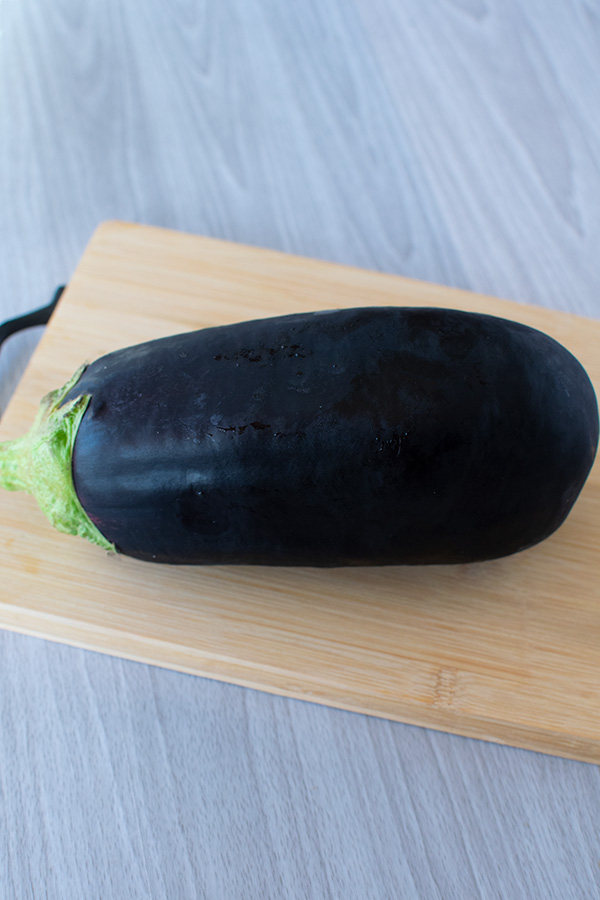
Eggplants have health benefits, as they contain antioxidants like vitamins A and C, which help protect your cells against damage, and are low in calories.
Eggplant is naturally a little bitter. If you find that to be the case, you can draw out the bitterness by sprinkling it with salt and letting it sit awhile.
If you do use salt, MAKE SURE to rinse it off before cooking the eggplant, or the salt will become a part of your dish!
Personally, I have never salted my eggplants before using them (and I have used eggplants in two countries) and have never had any problem with bitterness, but if you have any concern, please do.
If a recipe calls for frying, but you prefer not to do so because of the calories the oil will add to the recipe, you can spray with cooking oil and bake instead.
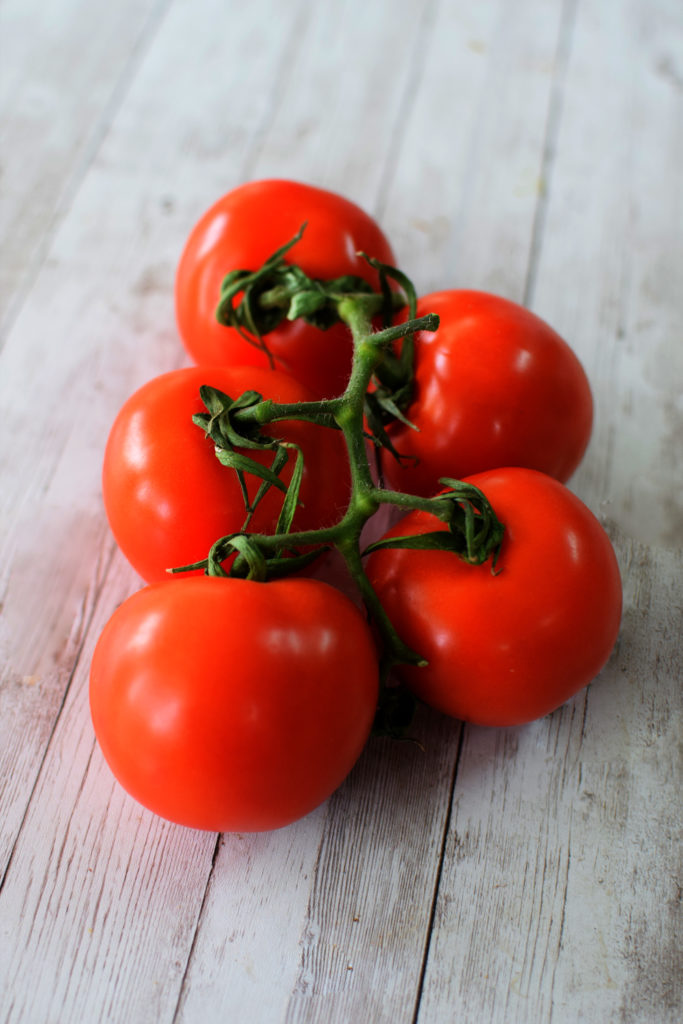
And tomatoes have nutritional value!
And check out the benefits of eggs!
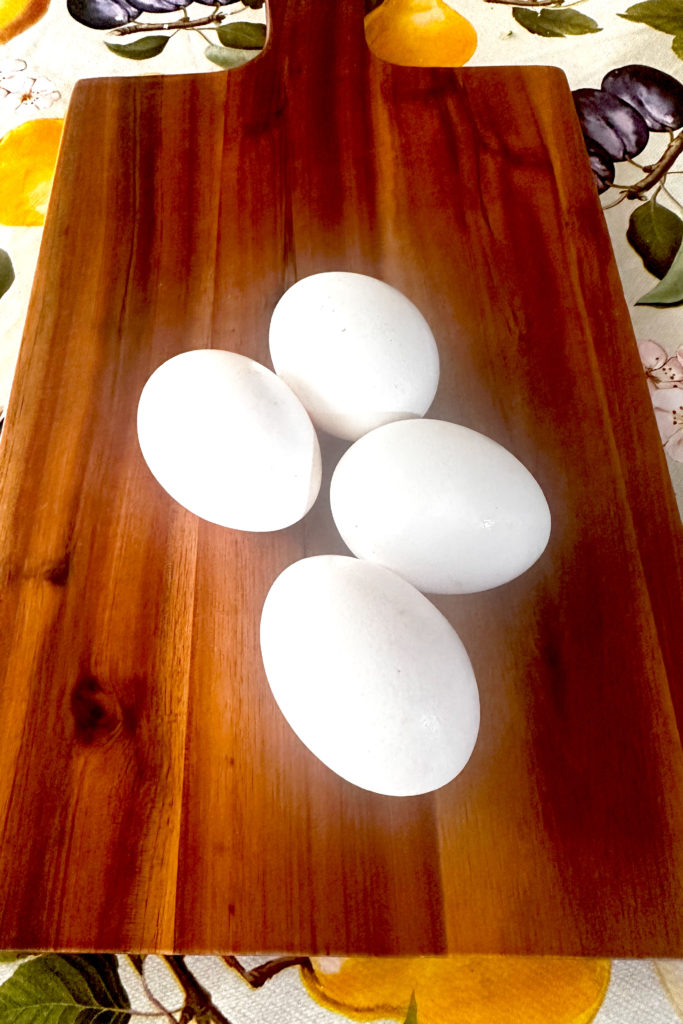
For many years eggs were considered a source of high cholesterol and a possible cause of heart disease, and people were warned against them and recommended to have only a few per week in their diets.
It is true that one large egg yolk has 200 mg of cholesterol. However, the additional nutrients that eggs contain may actually help LOWER the risk of heart disease by raising the “good” cholesterol in one’s body.
Eggs are high in protein and filling but low in calories. They have nutritional value and contain a large variety of vitamins as well as some antioxidants.
The color of the yolk depends on the diet of the hen, and different types of chickens may lay different colored eggs; white or brownish.
Egg white consists primarily of approximately 90 percent water and contains almost no fat or carbohydrates.
The yolk of a new egg is firm, but then it absorbs water from the egg white, which causes it to increase in size and become loose.
You may be surprised to know that raw egg white is sometimes used in the preparation of vaccines.
Many people believe that since eggs are found in the refrigerated section of the supermarket, and very frequently near the dairy section, they are also dairy.
Nonetheless, eggs are NOT DAIRY. You CANNOT milk a chicken!
What does it mean when recipes say “to taste” about an ingredient?
When recipes say “to taste,” it means that you can put in as little or as much as you like to your own taste. Some recipes have many ingredients that a cook can adjust to their own taste when cooking (not so much when baking though).
The best way to calculate what your taste is with a recipe that you are not yet familiar with is to first taste the dish and then add the “to taste” ingredient GRADUALLY, a little at a time—a splash of this or a pinch of that—until the dish is just the way you like it. Make sure to stir the ingredient after each time you add it so that the flavor will distribute evenly and become part of the dish. Then taste again. Repeat until you reach your personal preference.
Note: If you plan on using the recipe again, it is highly recommended to make a note of what and how much you added so that you can refer to it next time.
What does it mean when a recipe says that an ingredient is “optional”?
If an ingredient is “optional,” it means that you can add it in or not based on your own preference. An optional ingredient can be flavor related (i.e., salty, sweet, spicy, etc.), appearance related (garnish), or even something like nuts or chocolate chips in baking.
What is needed for this recipe?
I hardly ever meal plan, so I like to keep a cupboard full of seasonings, spices, veggies, and canned goods in my kitchen to use whenever the mood strikes.
But these are all you need to have on hand to make this recipe even last minute!
Basics
2 pitas
eggplant
hard boiled eggs
tomato
cucumber
Optional
chopped fresh parsley
boiled sliced potatoes
hot sauce
tahini
humus
amba (an Iraqi condiment of tangy mango)
Love Israeli street food?
Try: Easy Homemade Chicken Shawarma and Easy Homemade Turkey Shawarma.
Easy Israeli Sabich
Delicioius and vegetarian, original Israeli sandwich of fried eggplant, hard-boiled egg, and vegetables with tahini in a pita.
Ingredients
- 2 pitas
- 1 medium eggplant, sliced thin (1/4 - 1/3 inches wide)
- 2 hard boiled eggs
- 1 tomato
- 1 cucumber
Optional Fillers
- chopped fresh parsley
- boiled sliced potatoes
- hot sauce
- tahini
- humus
- amba (an Iraqi condiment of tangy mango)
Instructions
- Slice eggplant into discs (1/4 - 1/3 inch thick)*
- Using a paper towel or napkin, dab off moisture.
- Fry until both sides are a deep golden brown and place on paper towel or napkin to drain.*
- Dice tomato and cucumber (to make Israeli salad - there should be equal parts of each)
- Slice eggs (doesn't matter how thick)
- Place everything (including any additional fillers) inside the pitas in whichever order desired.
Notes
*or spray with cooking oil and bake at 350°F until deep golden brown
Nutrition Information:
Yield:
2Serving Size:
1Amount Per Serving: Calories: 551Total Fat: 14gSaturated Fat: 3gTrans Fat: 0gUnsaturated Fat: 9gCholesterol: 187mgSodium: 603mgCarbohydrates: 90gFiber: 14gSugar: 16gProtein: 21g