Vegetarian Russian Olivier Potato Salad is a vegetarian version of the famous and classic Russian potato salad (salat Olivye), but pork-free, made without ham, or sausage.
In fact, it’s completely meatless.
It’s an easy and quick side dish that’s great for BBQs, picnics, or anything.
And it’s dairy-free!
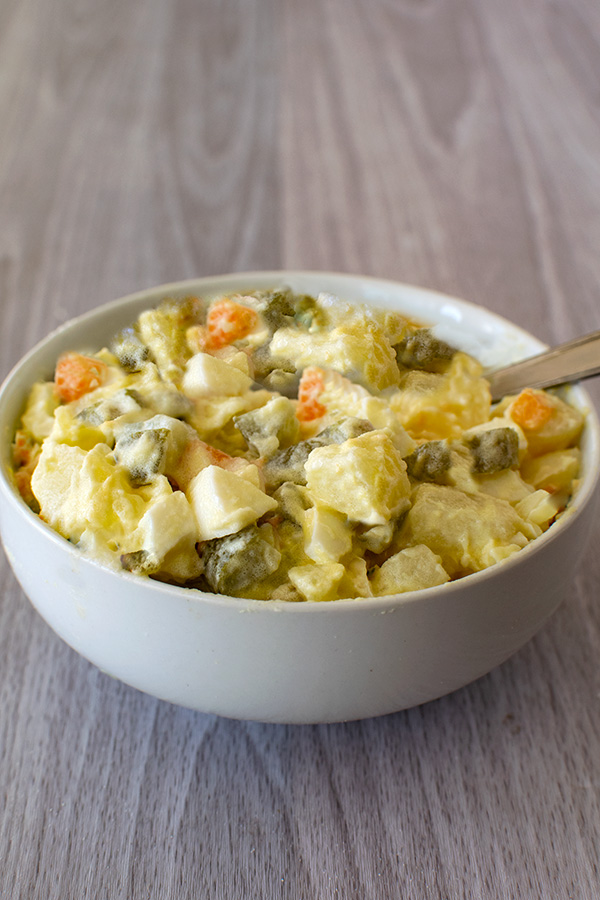
No need to go to the deli to have the famous Russian Olivier potato salad! Just make it at home. Simple as that.
Olivier Salad is a potato salad dish in traditional Russian cuisine, but it is popular worldwide. and is often served wtih meat, such as ham, hot dogs, sausage, chicken, deli meat, etc.
In some countries this potato salad is called Olivier potato salad (after its creator), some call it Russian Salad, and many have completely different names for it altogether.
The original version was created by a Belgian chef—Lucien Olivier—working in one of Moscow’s most popular restaurants—the Hermitage—sometime in the mid-19th century.
The salad was well received and became the restaurant’s signature dish.
It is believed that the recipe was stolen by a sous-chef, who left the Hermitage and went to work elsewhere, and then, later, he apparently sold the recipe to various publications, which caused it to spread.
Olivier salad refrigerates well, so make ahead and take to BBQs, picnics, or potluck dinners!
Take to work or school and save your lunch money!
Feel free to use leftover boiled potatoes, peas, and/or carrots!
Also, there are health benefits to peas.
And carrots have nutritional value as well!
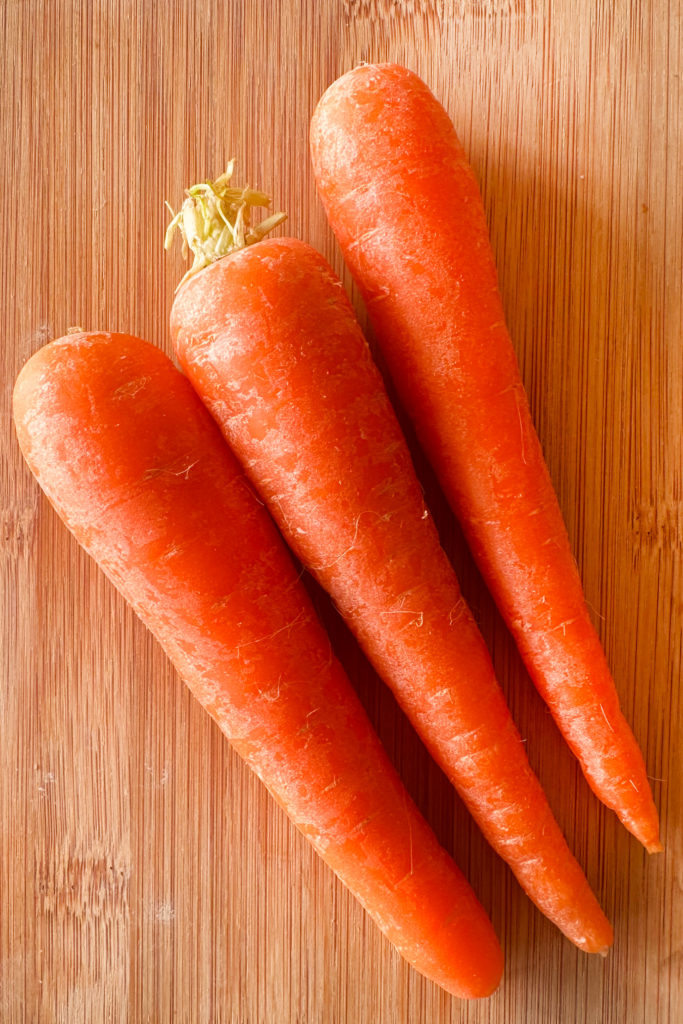
And check out potatoes!
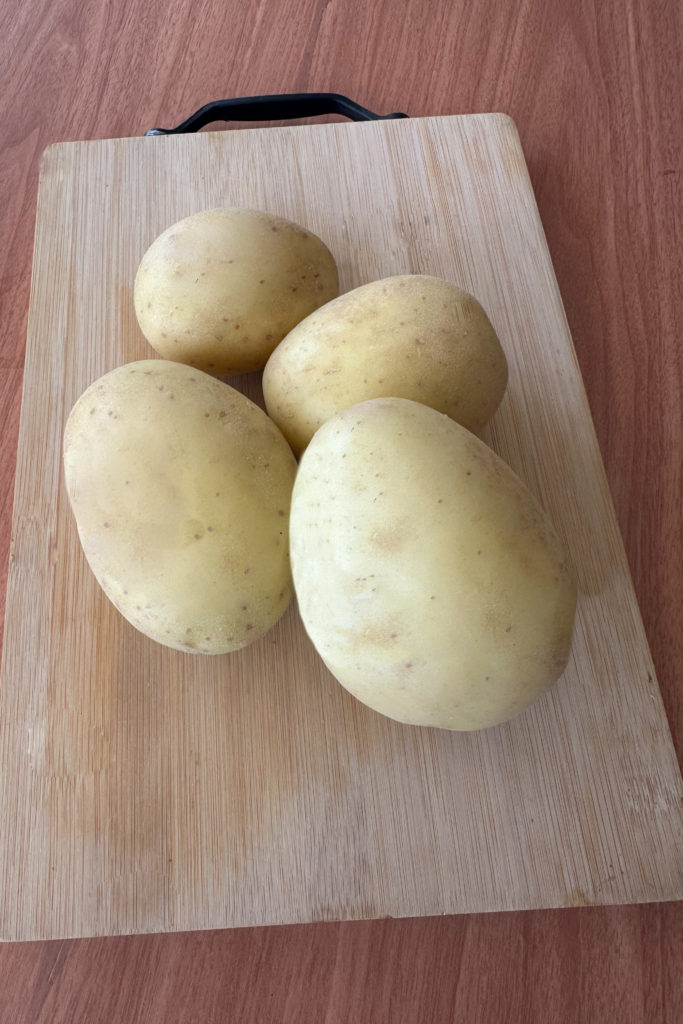
The potato is a perennial, starchy tuber, a root vegetable, that is native to the Americas.
Potatoes contain health benefits and are an excellent source of fiber, vitamins, and nutrients and provide fuel for the body.
Potatoes are gluten-free and very filling. In addition, they are a good source of antioxidants—some more than others—and they contain resistant starch. However, their nutritional content depends on the type of potato. Much of a potato’s nutrition is in the skin of the potato, and peeling them reduces their nutritional value.
Adding fattening toppings, such as sour cream or butter, adds calories and fat.
Different potatoes are considered to work best with different recipes, but overall, they can be used in a variety of delicious meals for recipes from all over the world.
There may be over a couple hundred varieties of potatoes in the United States, but there are only 7 main categories. The most popular of these are the red, white, yellow, and russet.
Fun Facts
- Potatoes were first cultivated in Peru by the Incas.
- Potatoes were introduced to Europe (Ireland) toward the end of the 16th century.
- Potatoes began to be planted in the colonies in the early 1700s.
- Potatoes are the #1 vegetable crop in the United States and 4th most consumed in the world.
- Idaho is the largest grower of potatoes.
- The potato was the first vegetable to be grown in space.
What does it mean when recipes say “to taste” about an ingredient?
When recipes say “to taste,” it means that you can put in as little or as much as you like to your own taste. Some recipes have many ingredients that a cook can adjust to their own taste when cooking (not so much when baking though).
The best way to calculate what your taste is with a recipe that you are not yet familiar with is to first taste the dish and then add the “to taste” ingredient GRADUALLY, a little at a time—a splash of this or a pinch of that—until the dish is just the way you like it. Make sure to stir the ingredient after each time you add it so that the flavor will distribute evenly and become part of the dish. Then taste again. Repeat until you reach your personal preference.
Note: If you plan on using the recipe again, it is highly recommended to make a note of what and how much you added so that you can refer to it next time.
What is needed for this recipe?
I hardly ever meal plan, so I like to keep a cupboard full of seasonings, spices, veggies, and canned goods in my kitchen to use whenever the mood strikes.
But these are what you need to have on hand to make this recipe even last minute!
potatoes
mayonnaise
sour pickles (pickled cucumbers)
peas and carrots
medium onion
hard boiled eggs
salt and/or pepper
Want to try another Russian-stlye classic dish? Try: Easy Dairy-Free Beef Stroganoff
Love side salads? Try these!
- Classic Potato Salad with Eggs
- Deli-Style Broccoli Salad
- Israeli-Style Mushroom Salad
- Moroccan-Israeli Eggplant Salad
Easy Vegetarian Russian Olivier Potato Salad
Classic Russian Salat Olivye potato salad made without ham or sausage. Completely meat and dairy-free.
Ingredients
- 4 medium-large cooked potatoes
- 2/3 cup mayonnaise (or as much as desired)
- 8 ounces sour pickles (pickled cucumbers)
- 8 ounces canned peas and carrots
- 1/2 - 2/3 medium onion
- 4 hard boiled eggs
- salt and/or pepper to taste, if desired
Instructions
- Dice potatoes, pickles, onions, and hard boiled eggs to approximately the same small size and pour into a mixing bowl.
- Add peas and carrots
- Add mayonnaise and mix well.
- Add salt and/or pepper to taste.
Nutrition Information:
Yield:
8Serving Size:
1Amount Per Serving: Calories: 266Total Fat: 17gSaturated Fat: 3gTrans Fat: 0gUnsaturated Fat: 13gCholesterol: 101mgSodium: 478mgCarbohydrates: 23gFiber: 3gSugar: 3gProtein: 7g
