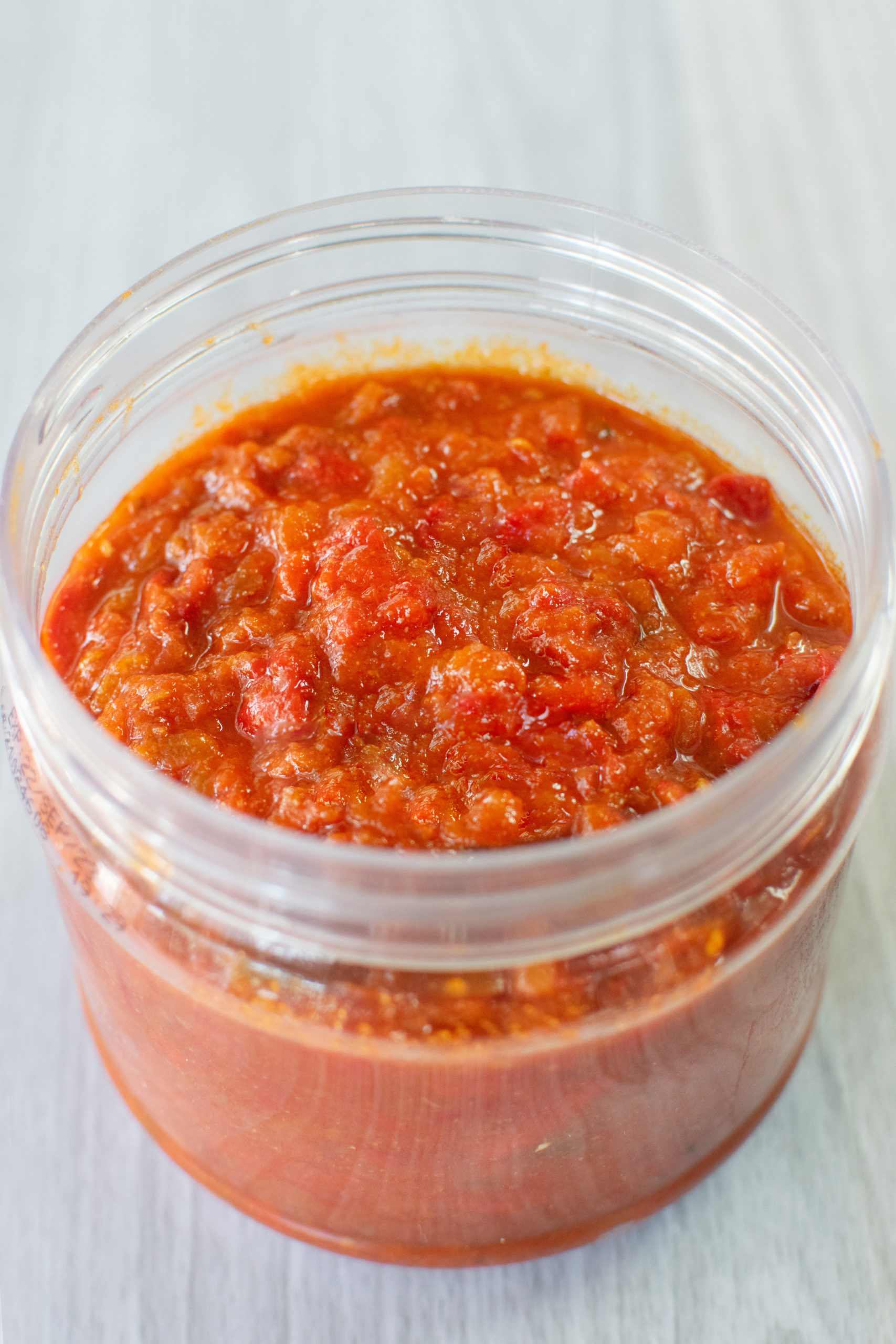
Moroccan Eggplant Salad is a savory, flavorful Moroccan-Israeli dish made with eggplant, sweet bell peppers, and tomatoes. This vegan recipe is a classic Middle Eastern side salad.
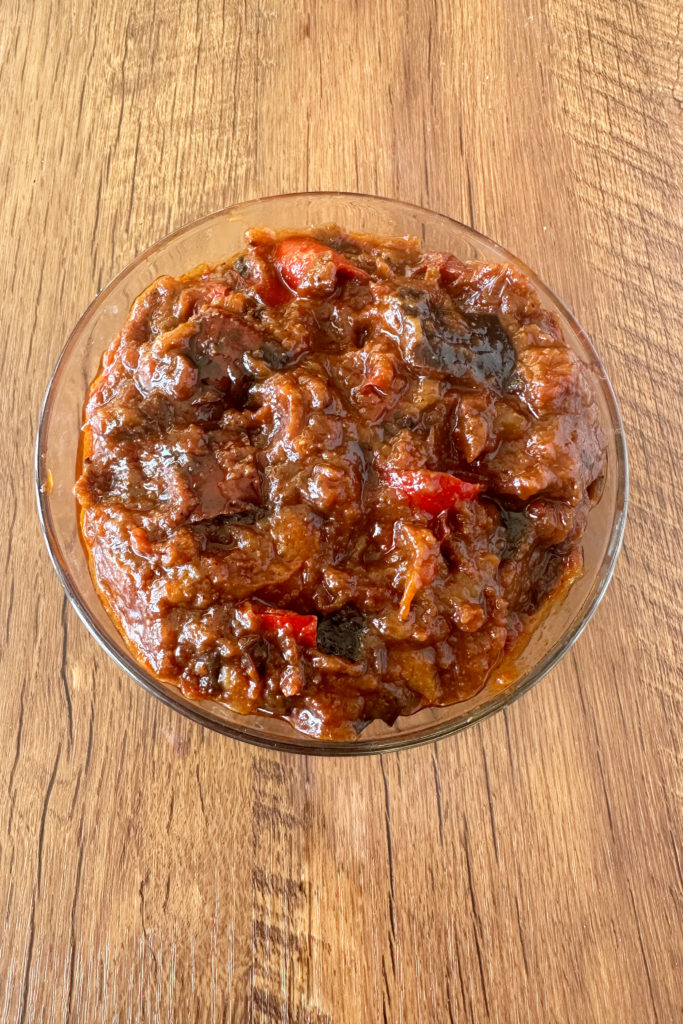
Moroccan eggplant salad is a delicious vegan recipe of eggplant, tomatoes, and red peppers in an amazing savory sauce with spices that are popular in Middle Eastern cuisine.
When Moroccan Jews fled persecution in Muslim countries and immigrated to Israel after the establishment of the state, they brought their delicious recipes with them. These foods became part of Israeli cuisine, often after being adapted according to the availability of local ingredients.
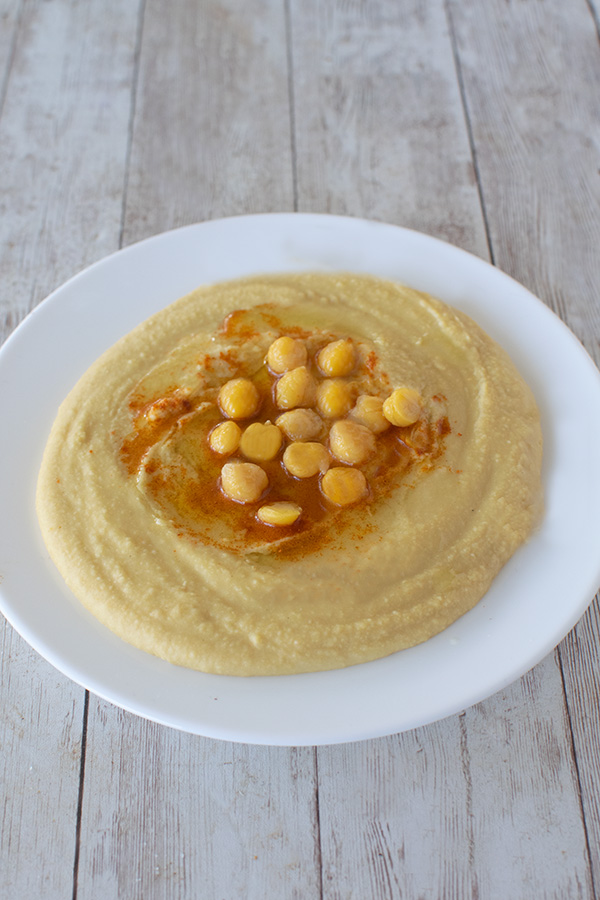
This salad is one of several cold vegetable salads, called salatim, that Israelis serve as appetizers on mezze platters, as sides with their meals, or as fillings in pita or laffa, along with shawarma or falafel. Hummus and tahini are also commonly served as part of these meals.
This eggplant and pepper salad is easy to make and can be eaten just like a typical deli salad. Serve it as a side at meals at home, or bring it to picnics and backyard barbecues.
Jump to:
What is needed to make Moroccan-Israeli eggplant salad?
eggplant
red bell peppers
tomato (fresh or canned)
sweet paprika
white granulated sugar
granulated garlic
salt
onion powder
lemon juice
cumin
black pepper
hot paprika (or hot chili spice), optional for spiciness
oil for frying
Note: Don't let the quantity of ingredients scare you. If you're anything like me, you already have most of these basics in your pantry anyway.
Frequently Asked Questions (FAQs)
What is Moroccan eggplant salad?
Moroccan eggplant salad is a savory vegetable dish made with eggplant, tomatoes, peppers, and spices. It's one of the Moroccan-inspired salads commonly served as part of Israeli salatim.
Is Moroccan eggplant salad vegan?
Yes. This Moroccan eggplant salad is completely vegan and made without any animal products.
Can I make Moroccan eggplant salad ahead of time?
Yes. This salad can be made ahead of time and stored in the refrigerator. The flavors develop as it sits, making it a good make-ahead appetizer or side dish.
How long does Moroccan eggplant salad last in the refrigerator?
Store the salad covered in the refrigerator and enjoy it within 3 to 4 days. Keep it refrigerated until serving.
How should I serve Moroccan eggplant salad?
Serve it cold or at room temperature as an appetizer, side dish, or part of a mezze platter. It's also delicious stuffed into pita or laffa with other fillings.
What can I serve with Moroccan eggplant salad?
Moroccan eggplant salad pairs well with hummus, tahini, falafel, shawarma, grilled meats, and other Israeli salatim. It can also be served as part of a larger mezze-style meal.
What's interesting about bell peppers?
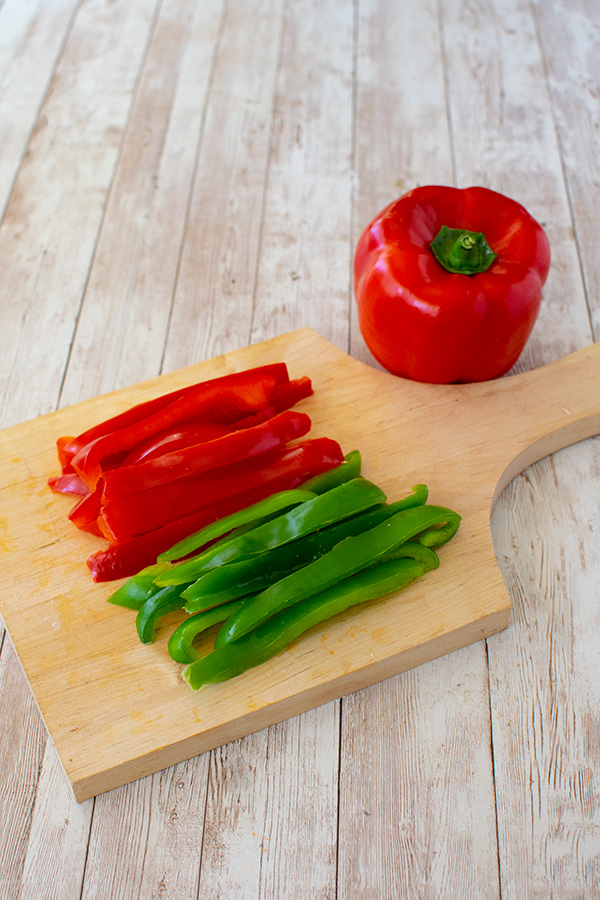
Bell peppers come in different colors, such as green, red, orange, yellow (the most common)...and, believe it or not, white, brown, striped, and purple.
They are commonly used in foods, salads, as side dishes, as toppings, or-if you are like my son-as a snack.
Peppers are native to Mexico, Central America, and South America. Spanish explorers brought pepper seeds back to Spain with them in 1943. From Spain, peppers spread from there to Europe and Asia.
Red peppers are actually ripened green peppers, and because they do so gradually, you may see peppers that are both green and red at the same time. They are sweeter in flavor than the green, which are more acidic and a little bitter, and can be used in the production of paprika.
"Permagreen" don't turn red, but rather stay green even after they ripen.
Orange and yellow peppers are their own varieties and have a gentle, sweet taste.
Bell peppers contain almost no protein at all and are almost entirely made of water, with a small percentage of carbohydrates. They are rich in vitamins C, B6, K, A, and E as well as some minerals and antioxidants. The different colored peppers contain different vitamins and nutrients, and they are all very low in fat.
And, they generally have a long life, especially if kept in refrigeration.
And about eggplants?
The eggplant is native to India and Asia, where it can be found growing wild, and it is believed that eggplants were brought to Europe sometime during the 7th or 8th century.
Australians and Americans call the vegetable eggplant, while in England it is called an aubergine, from the French word for this vegetable.
Because of its meaty texture, eggplant is used instead of meat in some vegetarian versions of meat recipes.
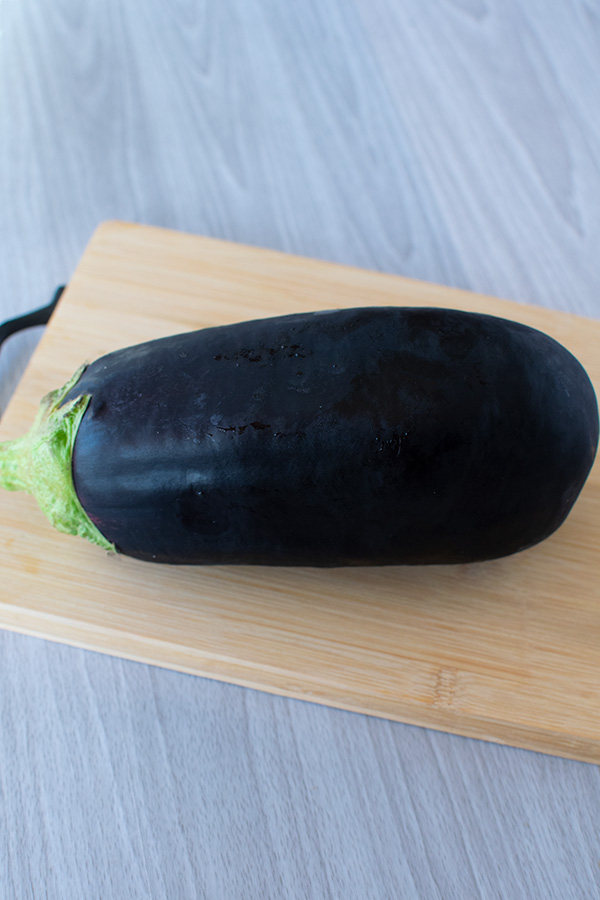
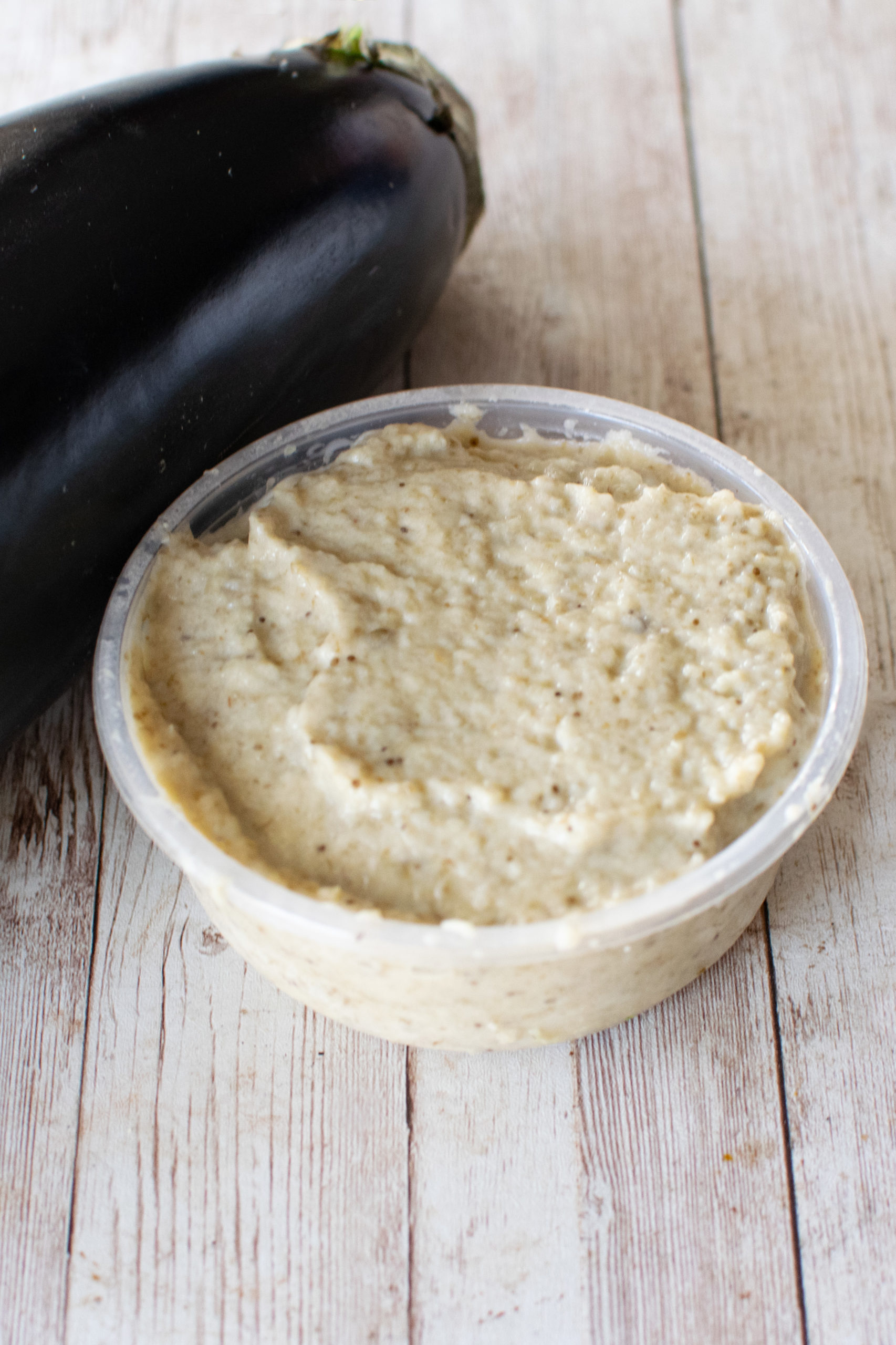
While there are a variety of types of eggplants, the one for this recipe is the large, egg-shaped (or teardrop-shaped), blackish-purple one with the meaty inside.
Eggplants have health benefits, as they contain antioxidants like vitamins A and C, which help protect your cells against damage, and are low in calories.
About cooking eggplant
Eggplants can be roasted, baked, steamed, deep-fried, or sautéed.
Before cooking an eggplant, cut off the top part where the green is (called a calyx). The bottom tip should also be removed, but this is not imperative. The skin is perfectly fine to eat, but it must be cooked well. Otherwise it may come out chewy.
This recipe can use either peeled eggplants or eggplants with the skin (having the skin on will not ruin the recipe).
Eggplant is naturally a little bitter. If you find that to be the case, you can draw out the bitterness by slicing them and then sprinkling with salt and letting it sit for around 15 minutes or so.
Using salt before cooking can also help prevent the eggplant from absorbing too much oil and becoming greasy if using oil with the eggplant recipe (I normally just pat the pieces with a paper towel if need be).
If you do use salt, MAKE SURE to rinse it off before cooking the eggplant, or the salt will become a part of your dish! Then pat dry.
Personally, I have never salted my eggplants before using them (and I have used eggplants in two countries) and have never had any problem with bitterness, but if you have any concern, please do.
If a recipe calls for frying, but you prefer not to do so because of the calories the oil will add to the recipe, you can spray with cooking oil and bake instead.
How is this salad a Moroccan-Israeli classic?
The majority of Moroccan Jews in Israel are the descendants of Jews that immigrated to Israel from Morocco.
Before the establishment of the State of Israel, the British put a quota on the amount of Jews that could immigrate to Israel, so most of the immigration was considered "illegal." However, many Jews risked their lives to flee their countries of origin, including Arab and Muslim countries, such as Morocco.
Because the Muslims were against the establishment of the State of Israel, after the declaration of the state and the civil war that followed, life became more difficult for the Jews of Morocco, because the Muslims would attack Jews as a result. This brought about a wave of immigrants to Israel from Morocco, as did every Arab-Israeli war that followed.
So, during the 1950s and for decades afterward, waves of Moroccan Jews immigrated to Israel.
Morocco was once the home of the largest Jewish community in the Muslim world. However, by the time of the Yom Kippur War, the majority of Morocco's Jews had immigrated to Israel, and they brought their delicious cuisine with them.
Love Israeli/Middle Eastern food?
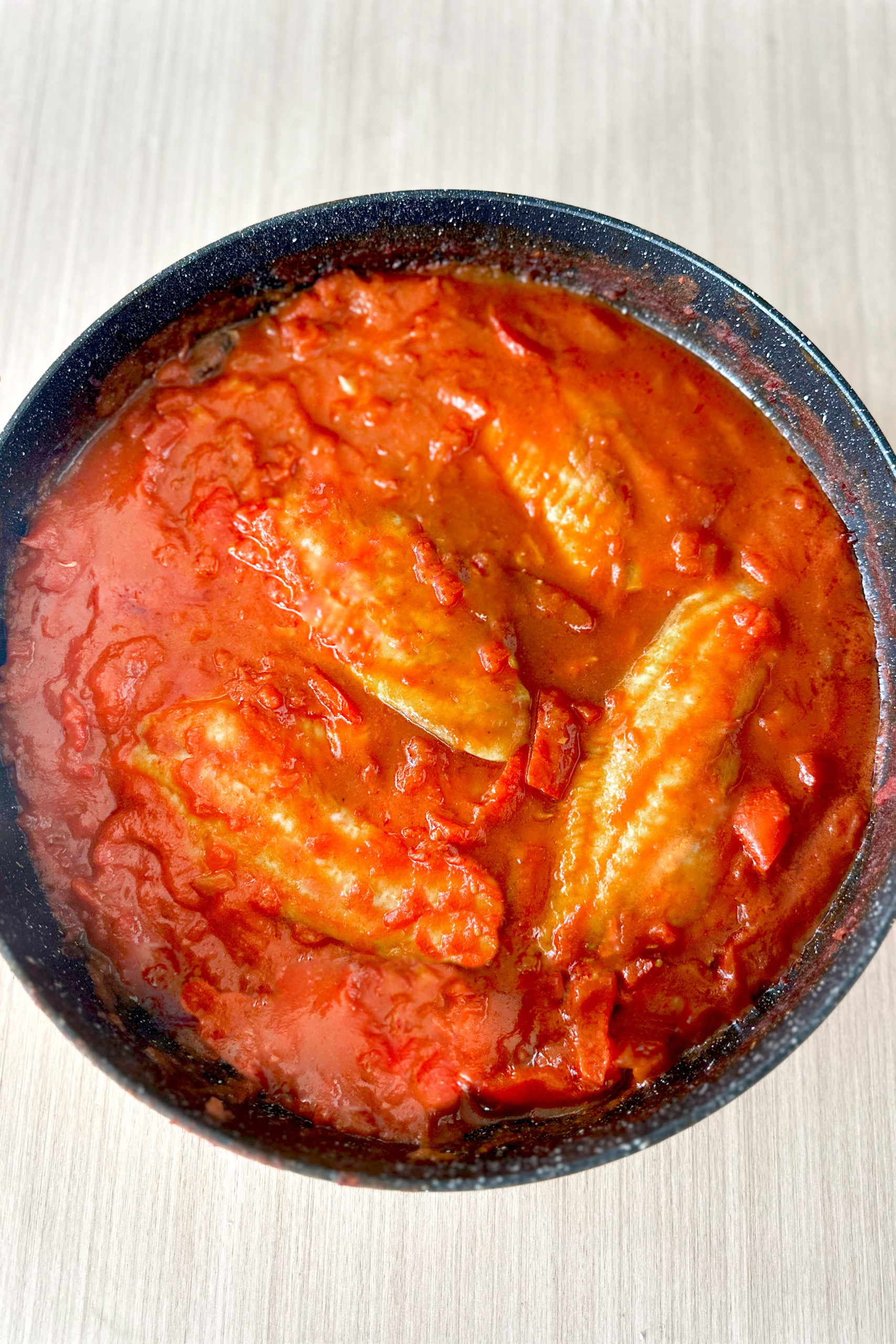
Moroccan Eggplant Salad
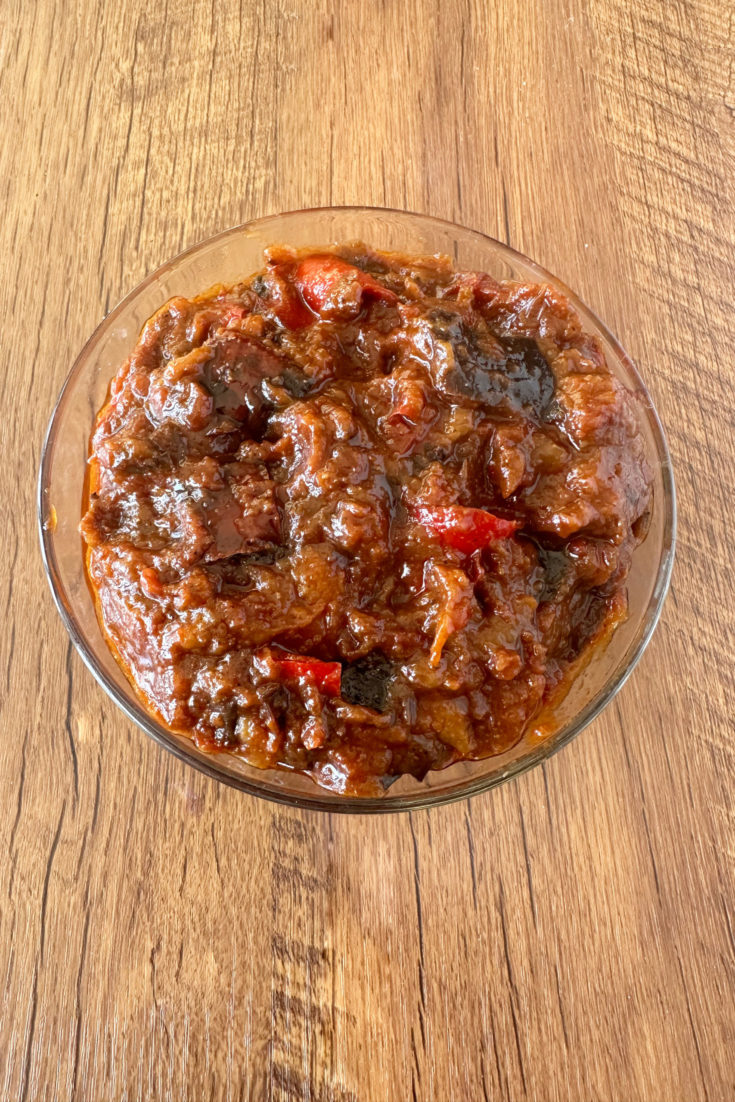
Delicious and savory, vegan eggplant salad with red bell peppers, tomatoes, and delicious spices.
Ingredients
- 2 medium eggplants cut into approximately 1" pieces/cubes
- 2 red bell peppers cut into approximately 1" pieces
- 18 ounces of diced tomato (fresh or canned)
- 2 tablespoons sweet paprika*
- 2 teaspoons white granulated sugar
- 1 teaspoon granulated garlic
- 1 teaspoon salt or to taste
- 1 teaspoon onion powder
- 1 teaspoon lemon juice
- ½ teaspoon cumin
- ½ teaspoon black pepper
- ½ teaspoon hot paprika (or hot chili spice), optional for spicy
- 1 cup water
- oil for frying
Instructions
- Pour oil into a frying pan to a height of approximately ⅛" and heat on medium.
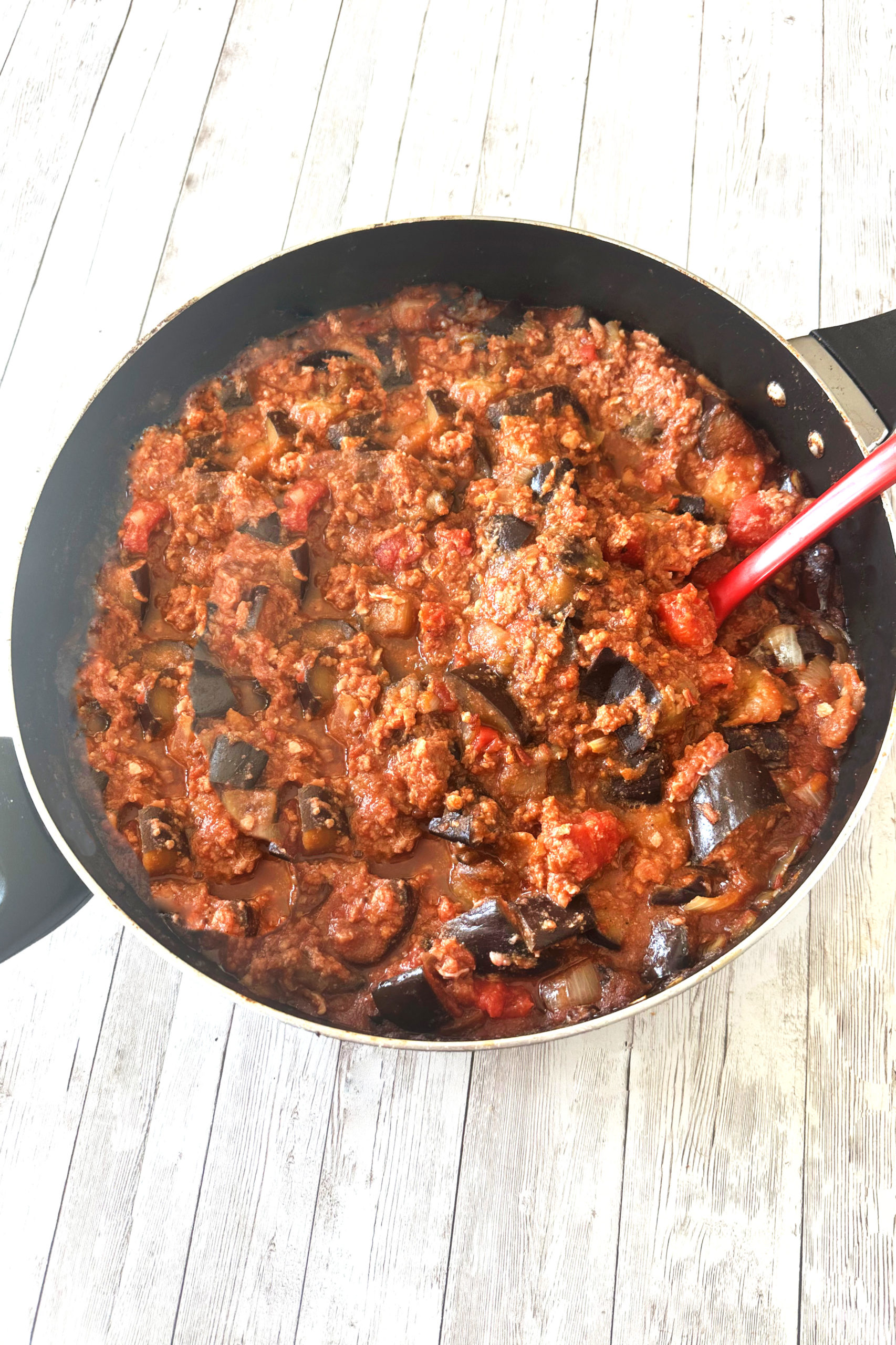
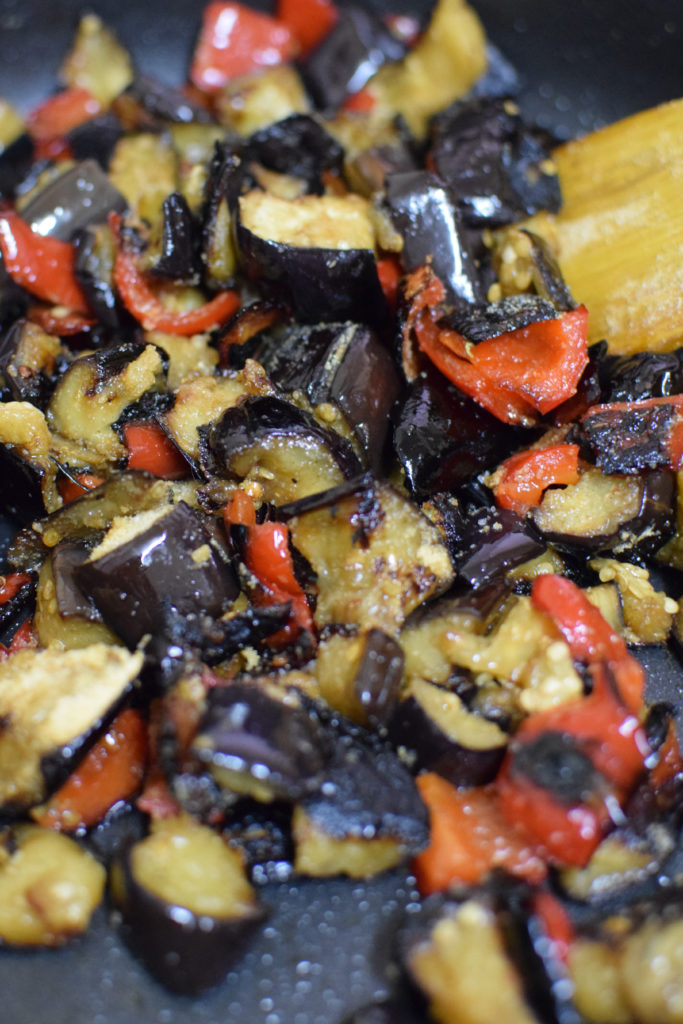
- Add the pieces of eggplant and red pepper and saute until cooked (until you can slide a fork into the pieces).
- Add the tomato, sweet paprika, sugar, garlic, salt, onion powder, lemon juice, cumin, black pepper, hot paprika (if using it), and water.
- Cook, mixing occasionally, until the water has mostly evaporated and the mixture is thick.
- Let cool.
Notes
*regular paprika
Nutrition Information:
Yield:
4Serving Size:
1Amount Per Serving: Calories: 187Total Fat: 2gSaturated Fat: 0gUnsaturated Fat: 2gSodium: 566mgCarbohydrates: 44gFiber: 14gSugar: 19gProtein: 6g