Easy Dairy-Free Glazed Baked Cake Doughnuts (donuts) is a simple recipe inspired by nostalgic, old-fashioned cake doughnuts, but not deep fried and made without buttermilk or butter.
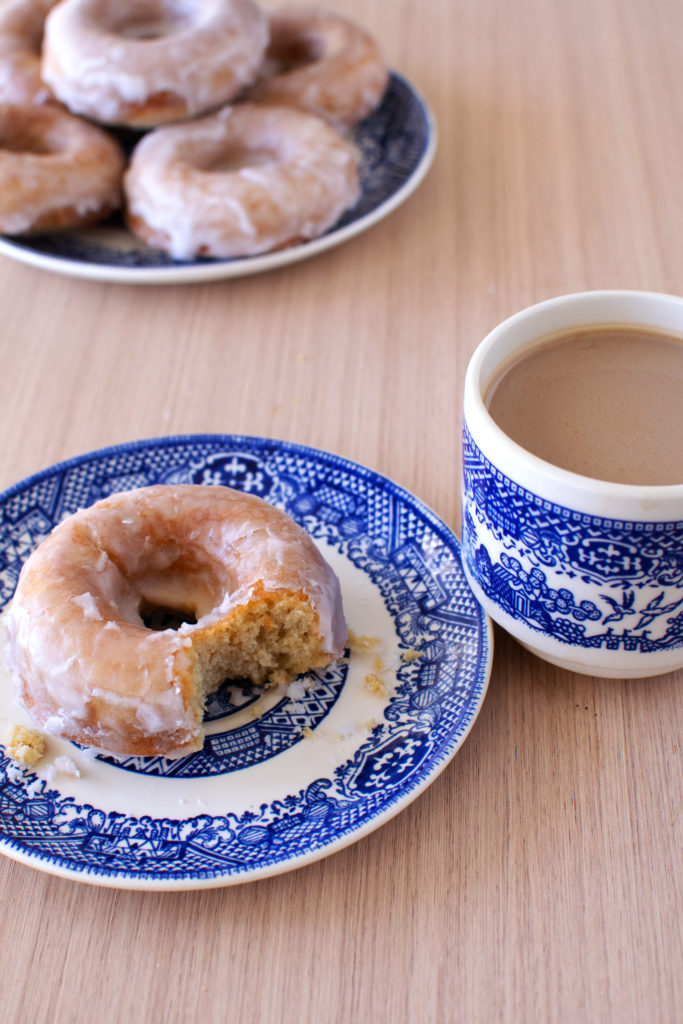
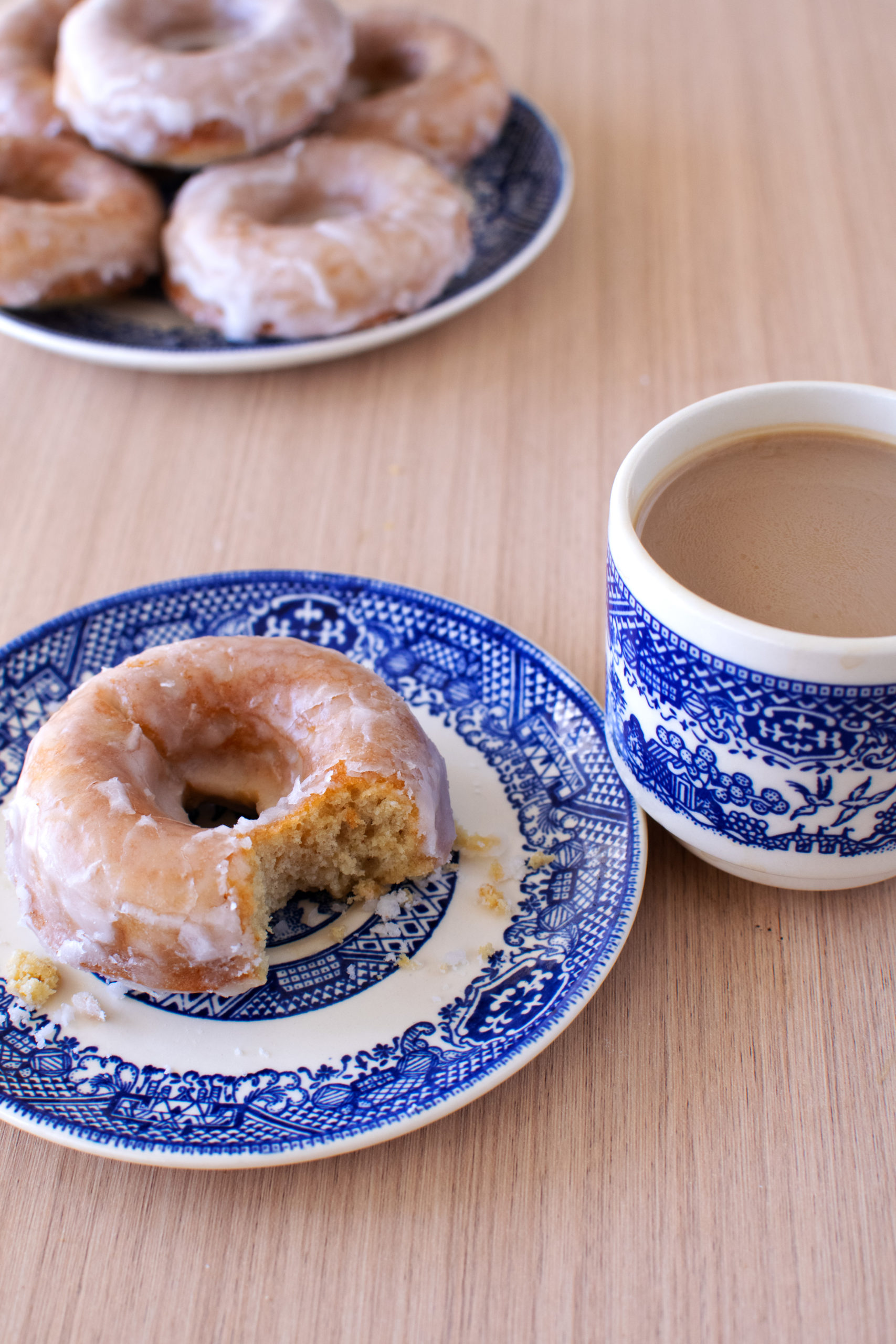
Ever get a craving for something delicious and cakey? Baked doughnuts are perfect.
And they are terrific to have with your morning coffee, as an afternoon snack, or a comforting treat at the end of a long day.
And compared to traditional doughnuts, they're almost guilt-free.
Baked doughnuts not only take a short time to make, they have fewer calories and a lower percentage of fat content than traditional doughnuts of the same size because they're not deep fried.
And these doughnuts are made with oil, no butter and no margarine.
Making these baked cake donuts is as simple as making cupcakes. Make the batter, pour, and bake. Oh, and then add glaze. Voila!
And they're great for anyone who is avoiding dairy, since they are made without buttermilk and butter.
Jump to:
FAQs for Easy Dairy-Free Baked Cake Doughnuts
Do I need a special pan to make baked doughnuts?
Yes, to get the classic ring shape, you will need a silicone or metal doughnut pan. If you don't have one on hand, you can alternatively bake this batter in a mini muffin tin to make bite-sized doughnut holes or muffins.
How do I get the glaze to set properly on baked doughnuts?
Let your baked doughnuts cool completely before dipping them in the glaze. If the doughnuts are still warm, the glaze will melt and thin out too much instead of forming a nice, set coating.
Can I add mix-ins or spices to the doughnut batter?
Yes, you can easily customize the base batter by adding your own favorite warm spices.
How do I store leftover glazed baked doughnuts?
Store leftover glazed doughnuts in a single layer in an airtight container at room temperature for up to 2 days. Because they don't have preservatives, they are best enjoyed fresh, but you can microwave them for about 5 to 10 seconds to restore that freshly baked softness before eating.
Can I freeze baked cake doughnuts?
Yes! It is best to freeze the doughnuts before glazing them. Let them cool completely, store them in a freezer-safe container or bag for up to 2 months, and then thaw at room temperature before dipping them in a fresh batch of glaze.
What is the best way to fill a doughnut pan without making a mess?
Transfer the batter into a large zip-top bag, snip off one of the bottom corners, and pipe the batter evenly into each cup of the doughnut pan. Or you can use a pastry bag.
Why does this recipe have salt in the ingredients?
Even though salt tends to make foods, well, salty, it actually plays other roles in baking as well.
For example, the right amount of salt balances flavors in baked goods; it can bring out the sweetness of sugar and, at the same time, prevent them from tasting overly sweet. It also can help dull the bitterness of cocoa.
Salt prevents baked goods from tasting bland, while it balances the richness of the fats. It also helps develop flavor in yeast breads and works with proteins to strengthen gluten and make it more elastic.
Salt helps baked goods stay a little fresher for a little longer and helps delay mold from growing on them.
What is the difference between baking soda and baking powder?
Baking soda and baking powder are both synthetic leavens that help baked goods rise, but there is a difference between them.
Baking soda is pure sodium bicarbonate, which needs another ingredient that is acidic in order to be activated. When the baking soda touches the acid, it creates a carbon dioxide gas, which helps the baked good rise. Baking soda is between 3 and 4 times stronger than baking powder, and if too much baking soda is used, your baked good will end up with a metallic flavor.
Baking powder is baking soda that is already mixed with an acid and a stabilizer and will be activated by moisture and heat. Nowadays, baking powder is called double-acting because it activates twice-once when it gets wet (when you mix the ingredients together) and again when it heats in the oven.
Replacing one with the other can be tricky, and it's not recommended. However, if you have no choice, then do solid research for substituting one for the other for the baked good you are preparing so you don't ruin it.
What do eggs do in baking?
Eggs are made up of two parts: the whites and the yolks (the yellow).
Egg whites are made up of protein that sets when heated and helps baked goods hold their structure. The yolks are made up of fats and vitamins and help ingredients bond.
Eggs also help baked goods rise as well as keep them moist.
It is important to have the right amount of eggs when baking, because if there are too many eggs in a recipe, this can cause a rubbery, dense texture, and if there are too few eggs, this can cause a crumbly, dry texture.
The different parts of the egg will provide different textures to baked goods; using the entire egg in baking will provide moisture and help the baked good rise evenly, using extra yolks will create richer, denser textures, and extra whites will add fluffiness but may create a drier texture.
What is the difference in using oil vs. butter or margarine?
Both margarine and butter are solid fats at room temperature, and both contain more saturated fats than oil.
While margarine and butter will change from a solid to a liquid when heated, they will change back to solids when cooled again. Oil stays liquid at all temperatures. Oil also coats flour better in the preparation process before baking.
Butter "creams" better than margarine, but one cannot cream oil at all.
When converting a recipe from butter or margarine to oil, the general conversion rate is 1 to ¾ (although if you are doing more than one batch, you might need to reduce the oil because I have found that baked goods come out oily in this case).
And when converting from oil to margarine or butter, typically the ratio is 1 to 1¼, and from margarine or butter to oil, the ratio is typically 1 to ¾.
What is the difference between real vanilla extract and imitation vanilla?
Real vanilla is made from soaking vanilla beans in alcohol, imitation vanilla is synthetic, and real vanilla costs quite a bit more than imitation. Whether or not there will be a taste difference in your baking depends on the baked good, so do some research before you decide.
I personally always use the imitation as long as I have a really good brand because it's not worth it to me to spend the extra money.
If you like this baked doughnuts recipe...

Love nostalgia?
Like old-fashioned baked goods?
or food
Easy Dairy-Free Galzed Baked Cake Donuts Recipe
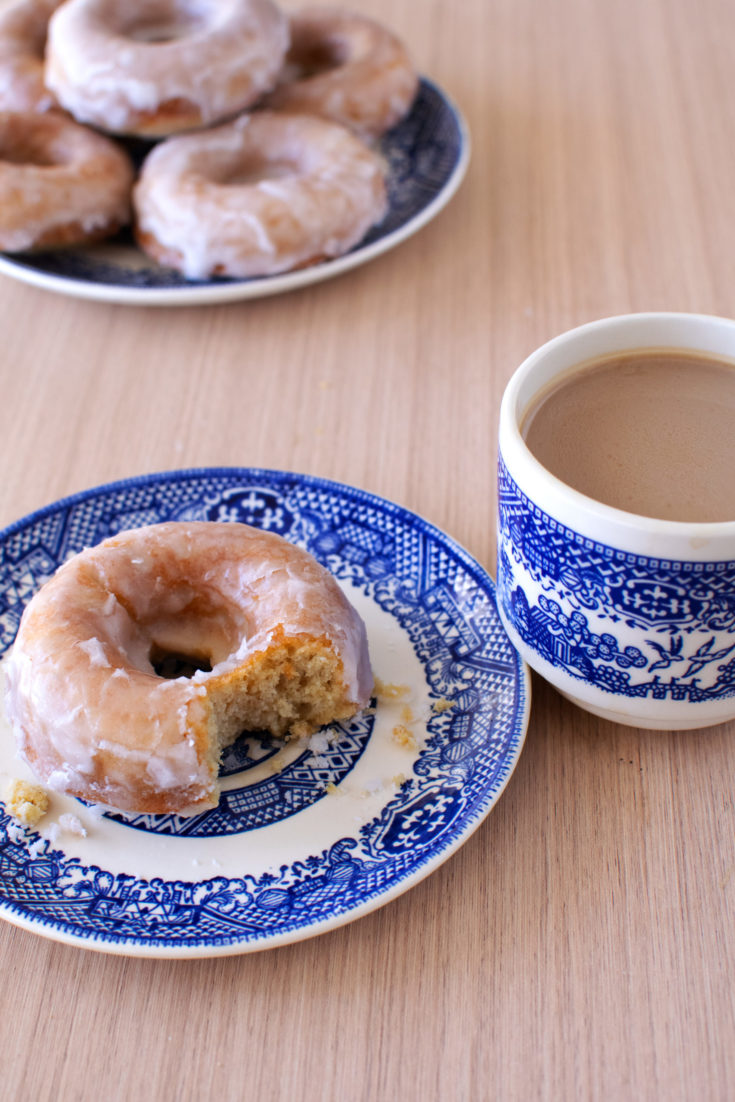
Absolutely delicious old-fashioned cake donuts, made without butter or buttermilk, and coated in a delicious glaze.
Ingredients
Donuts
- 2 cups all-purpose flour
- ¾ cup granulated sugar
- 2 teaspoon baking powder
- ½ teaspoon ground nutmeg
- 1 teaspoon salt
- ¾ cup dairy-free buttermilk substitute* (see notes)
- 2 eggs
- 1 teaspoon vanilla extract
- 1 ½ tablespoons vegetable oil
Glaze:
- 1 cup powdered sugar
- 2 tablespoons of water, oat milk, or other milk alternative
- ½ teaspoon vanilla extract
Instructions
- In a large mixing bowl, combine flour, sugar, baking power, nutmeg and salt.
- Add the buttermilk (or buttermilk alternative as in the notes), eggs, vanilla, and oil and combine completely.
- Fill well-greased wells of donut pans to around ¾ high.
- Place in an oven that has been preheated to 350°F and bake for around 8 minutes or until the donuts are firm and dry (ie no longer wet) or until a toothpick inserted into them comes out clean.
- Remove from the oven and let cool a little and then remove donuts from the pans and set aside to finish cooling.
- In the meantime, make the glaze by combining together the powdered sugar, milk (or water), and vanilla and mixing well until smooth.
- When the donuts have cooled, dip each of them in the glaze so that they are completely covered and set on a wire rack to dry.
Notes
* Dairy-free buttermilk substitute:¾ cup neutral-flavored oatmilk1 ½ tablespoons lemon juice or white vinegar
Nutrition Information:
Yield:
12Serving Size:
1Amount Per Serving: Calories: 437Total Fat: 16gSaturated Fat: 8gUnsaturated Fat: 7gCholesterol: 65mgSodium: 397mgCarbohydrates: 69gFiber: 1gSugar: 37gProtein: 6g