Jerusalem Kugel is a delicious classic spicy-sweet noodle casserole dish that’s an integral part of Israeli cuisine.
Also known by it’s Hebrew name, Kugel Yerushalmi (or as it is called by English speakers: Yerushalmi kugel) is completely unlike other noodle casseroles.
This is because this kugel has a very destinctive flavor due to the carmelized sugar and black pepper.
Also, it’s vegetarian and dairy-free (in other words, it’s parve).
Although this dish originated with Ashkenazi Jews, it has become a very popular dish in Israeli food culture.
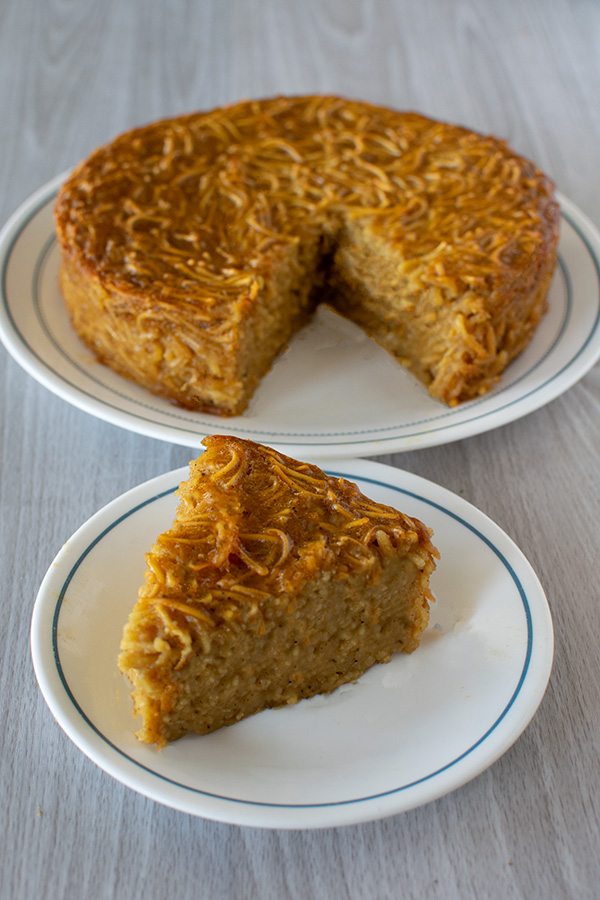
Jerusalem Kugel is an Ashkenazi Israeli kugel (baked noodle dish) from sometime in the 19th century.
While kugels are typically savory OR sweet, Jerusalem Kugel is both!
The distinctive taste, being both sweet from caramelized sugar and having the spiciness of black pepper, is what makes this noodle casserole so amazingly unique!
And it’s parve, so it’s commonly served at Shabbat lunch (like cholent) or at kiddush on Shabbat or holidays, such as Simchat Torah, when lunch is served very late due to the celebration of the Torah at morning services.
This dish is commonly set out on the table with another delicious dish, cholent!
A little about Israeli cuisine
Some people complain about cultural appropriation in cuisine when food from one country is attributed to another country.
However, national cuisine in itself is often a mingling of food from a variety of cultures, often due to a change of ruling countries and a shifting of borders.
When people move from country to country, they will take their cultures with them, and their descendants may adapt their traditional cuisine with that of their new home.
Recipes get passed from generation to generation, and although decades have passed, the foods are still known by the culture they came from, and everyone seems to have their own way of making them.
That said, there are many variations of pretty much any “Israeli” recipe because of background, custom, or even just taste.
When choosing a recipe, one has to know what actually constitutes a main ingredient—what makes the dish what it is—and what is left up to individual taste.
While most recipes in Israel came from other countries in the Middle East, some did come from Eastern Europe.
Some Israeli recipes were actually created in Israel! Such as this one and the famo and popular Israeli pita sandwich Sabich!
This recipe calls for cooking oil. If you want to substitute another kind of oil, make sure it will work before you do so.
What are the different oils used in cooking?
“High-heat” oils have neutral flavors and have been processed in order to handle high temperatures and are good for sautéing, searing, and frying. These include canola oil, vegetable oil, avocado oil, and grapeseed oil, each with its own “best for” with chefs.
Some oils have their own flavor and are good for sautéing and roasting and add a little extra to the dish. These include extra virgin olive oil, coconut oil, and peanut oil. Extra virgin olive oil works well with roasting or sautéing, but not for deep frying.
Coconut oil is good in dishes where a slightly coconut flavor enhances the dish, and peanut oil is good for deep frying and will add a subtle nutty taste and smell. Many Asian dishes call for peanut oil in the ingredients.
Then there are oils that are not used with heat but rather for dressing up foods, such as sesame oil, flaxseed oil, and walnut oil, among others.
What does it mean when recipes say “to taste” about an ingredient?
When recipes say “to taste,” it means that you can put in as little or as much as you like to your own taste. Some recipes have many ingredients that a cook can adjust to their own taste when cooking (not so much when baking though).
The best way to calculate what your taste is with a recipe that you are not yet familiar with is to first taste the dish and then add the “to taste” ingredient GRADUALLY, a little at a time—a splash of this or a pinch of that—until the dish is just the way you like it.
Make sure to stir the ingredient after each time you add it so that the flavor will distribute evenly and become part of the dish. Then taste again. Repeat until you reach your personal preference.
Note: If you plan on using the recipe again, it is highly recommended to make a note of what and how much you added so that you can refer to it next time.
What does “savory” mean?
“Savory” refers to foods that are not sweet, such as foods that taste salty, spicy, or herbal.
Keeping pantry essentials in your kitchen
For someone who cooks frequently, whether you just like to cook or have a family or frequent guests, I find it very, very, VERY helpful to make sure that I keep a lot of ingredients in my kitchen to make sure I have them on hand to prepare a variety of dishes at a moment’s notice.
I probably wouldn’t have nearly the amount of items I keep if I lived alone, but my kids have regularly asked for different meals that would normally require advanced shopping or a quick trip to the grocery store.
I have a variety of utencils (including for baking, such as measuring cups for liquid and dry ingredients, spoons, bowls, pans, etc.), as well as seasonings, spices, dried herbs, baking ingredients (such as flour, baking powder, baking soda, etc), substitutions for milk, pasta, eggs, and a whole lot of other things.
I’m not particularly great at advanced planning for meals, so I can’t even tell you how many sudden trips to the store or having to borrow from a neighbor (usually, they borrow from me!) this has saved me!
Of course, if you barely cook, you probably just want to keep the bare minimum.
But what is needed for THIS recipe, you ask?
These are the 6 ingredients you will need to have on hand to make this recipe!
egg noodles, short and thin soup noodles
white granulated sugar
oil
4 eggs
salt
black pepper
Tips for making Jerusalem Kugel:
This is overall a very simple dish. However, there are some tips to making it well because you need to watch what you’re doing.
But believe me, if I can do it, anyone can!
I continually mix the ingredients while they are on the stove so the sugar and eggs spread out evenly over the noodles, and then I just pour them into a baking pan—that is the quickest way, but if one doesn’t mix continually, there is a risk of either the sugar or eggs having little clumps.
It doesn’t matter all that much if there are little sugar clumps, because they will melt during the baking stage. But little pieces of egg (picture crumbs of scrambled egg) are unsightly.
If you have the time and don’t mind waiting, you can let the noodle mixture cool before mixing in the egg and then pour it into the baking pan.
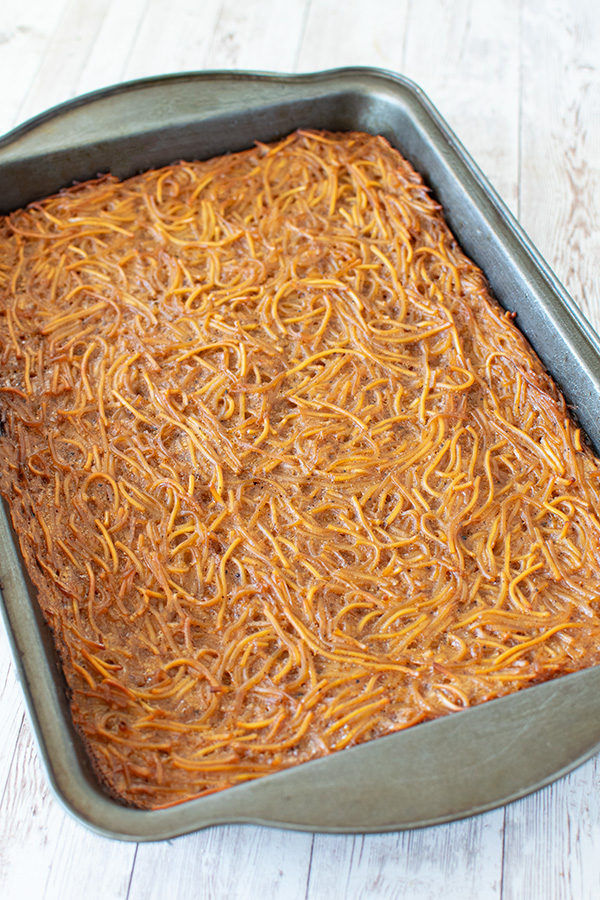
You can use any shape baking pan (NOT a loaf pan) as long as the kugel mixture fits into it.
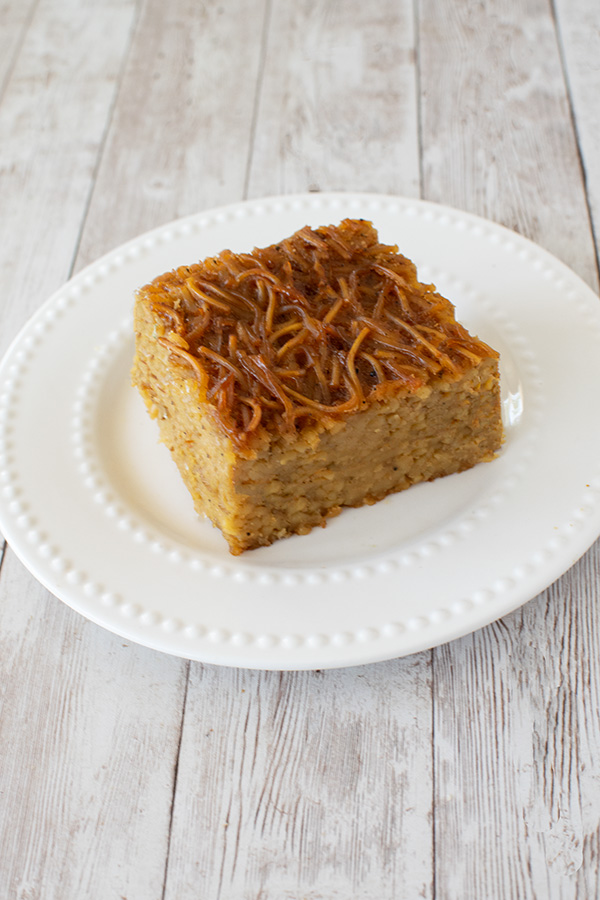
The baking time can range depending on your pan and oven, so I recommend checking after an hour and then every ten minutes or so. The top should be brown and the kugel firm to the touch.
Want to try other delicious kugels? Try these!
Broccoli Kugel
Potato Kugel
Cauliflower Kugel
Salt and Pepper Kugel
Sweet Lokshen Kugel
Easy Jerusalem Kugel (Kugel Yerushalmi)
Ashkenazi Israeli dairy-free noodle dish that is often served on Shabbat or holidays at lunch.
Ingredients
- 1 pound egg noodles, short and thin (soup noodles)
- 1 ½ cup white granulated sugar
- 1/4 cup oil
- 4 eggs, beaten
- 1 tablespoon salt
- 1 to 3 teaspoons black pepper (or to taste - this is supposed to be a peppery dish, but I recommend adding per taste for those who don't love a lot of pepper)
Instructions
- Cook noodles as directed on the package. Drain.
- Heat the oil in a pot (best is a heavy bottom pan) over a medium high flame.
- When hot, add sugar and stir continuously until fully caramelized.
- Slowly add the noodles to the caramel a spoonful at a time as you continue mixing. *
- Add in eggs, salt, and black pepper as you continue mixing.
- When everything has spread equally and smoothly over the noodles, turn off heat and pour mixture into a suitable size pan.
- Place in oven that has been preheated to 350° and bake for approximately 1 ½ - 2 hours (may be more or less, check after an hour and every so often afterward) or until the top has slightly browned and is firm to the touch).
Notes
* SEE TIPS FOR MAKING THE RECIPE BEFORE MAKING THIS RECIPE.
Nutrition Information:
Yield:
12Serving Size:
1Amount Per Serving: Calories: 215Total Fat: 7gSaturated Fat: 1gTrans Fat: 0gUnsaturated Fat: 6gCholesterol: 73mgSodium: 555mgCarbohydrates: 35gFiber: 1gSugar: 25gProtein: 4g