Easy Corned Beef and Cabbage Egg Rolls are a delicious no-pork version of the classic Chinese-American style appetizer.
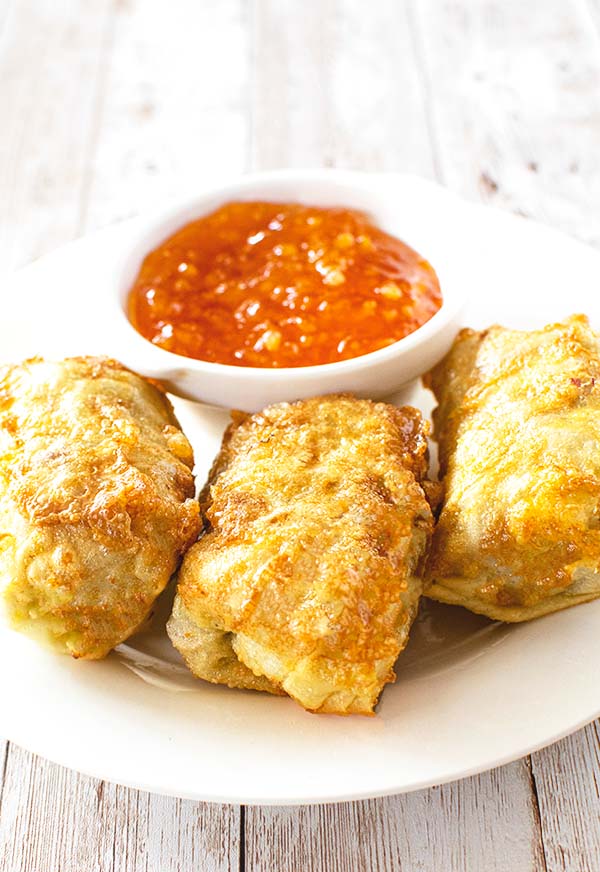
This simple, 4-ingredient recipe features savory pieces of corned beef and shredded cabbage rolled in wrappers, dipped in an egg wash, and fried to crispy perfection.
This homemade version is not only pork-free, it's dairy-free too. So, it's kosher.
Plus, this recipe uses more corned beef than the tiny flecks typically found in restaurant versions, making them more hearty and filling.
About egg rolls
Classic Chinese-American egg rolls were invented in New York in the 1930s, adapted for local tastes using available ingredients.
While those egg rolls are typically made with pork, these egg rolls-like those found in kosher restaurants and takeouts-use savory corned beef instead.
Corned beef and cabbage egg rolls are so simple to make with only four ingredients (plus oil for frying) that you may never want to order takeout again!
Pro tip: In a pinch, if you don't have corned beef on hand, you can substitute other deli meats like salami, bologna, or turkey. Simply chop the deli meat into small pieces, fry until about half done, and then mix with the cabbage.
I have also used a simple combination of ground meat and cabbage as a filling.
Impress your family and friends with this delicious homemade version.
Once they're ready, just dip them in your favorite sauce and enjoy!
Frequently Asked Questions (FAQs) for Corned Beef & Cabbage Eggrolls
1. Can I use leftover corned beef for these eggrolls?
Yes, leftovers are perfect for this recipe. Using pre-cooked corned beef saves time and ensures the meat is already tender. Simply shred or finely dice the meat and ensure it is chilled before adding it to the eggroll wrapper to prevent the wrapper from getting soggy.
2. How do I prevent the eggrolls from bursting during frying?
The key is to avoid overfilling the wrappers. Use a consistent amount of filling (usually about 2-3 tablespoons) and ensure you seal the edges thoroughly with a light brush of water or an egg wash. Also, ensure the filling is not too wet; if you use cabbage, sauté it well to evaporate excess moisture before wrapping.
3. Can these be baked or air-fried instead of deep-fried?
Yes. For air-frying, brush the outside of the assembled eggrolls lightly with oil and cook at 375°F (190°C) for about 8-10 minutes, turning halfway, until golden and crispy. For oven baking, place them on a rack on a baking sheet and brush with oil, baking at 400°F (200°C) until crisp.
4. What is the best dipping sauce for corned beef eggrolls?
"Best" is subjective, but a classic spicy brown mustard or a Thousand Island-style dipping sauce complements the corned beef flavor profile well. Some also enjoy a tangy horseradish cream sauce to cut through the richness of the fried wrapper. Duck sauce is also a popular tangy-sweet sauce for dipping.
5. How do I keep the eggrolls crispy if I'm serving them later?
The best way to maintain crispiness is to store them in a single layer on a cooling rack rather than a closed container while they cool. If you need to reheat them, skip the microwave, which will make them soft. Reheat them in a 350°F (175°C) oven or air fryer for a few minutes to regain their crunch. Or you can lightly refry in a little oil.
What do you need to make this corned beef and cabbage egg roll recipe?
I hardly ever meal plan, so I like to keep a cupboard full of seasonings, spices, veggies, and canned goods in my kitchen to use whenever the mood strikes.
This is certainly true for Chinese-American homemade takeout recipes where a lot of the ingredients overlap.
These are all you need to have on hand to make this recipe even last minute!
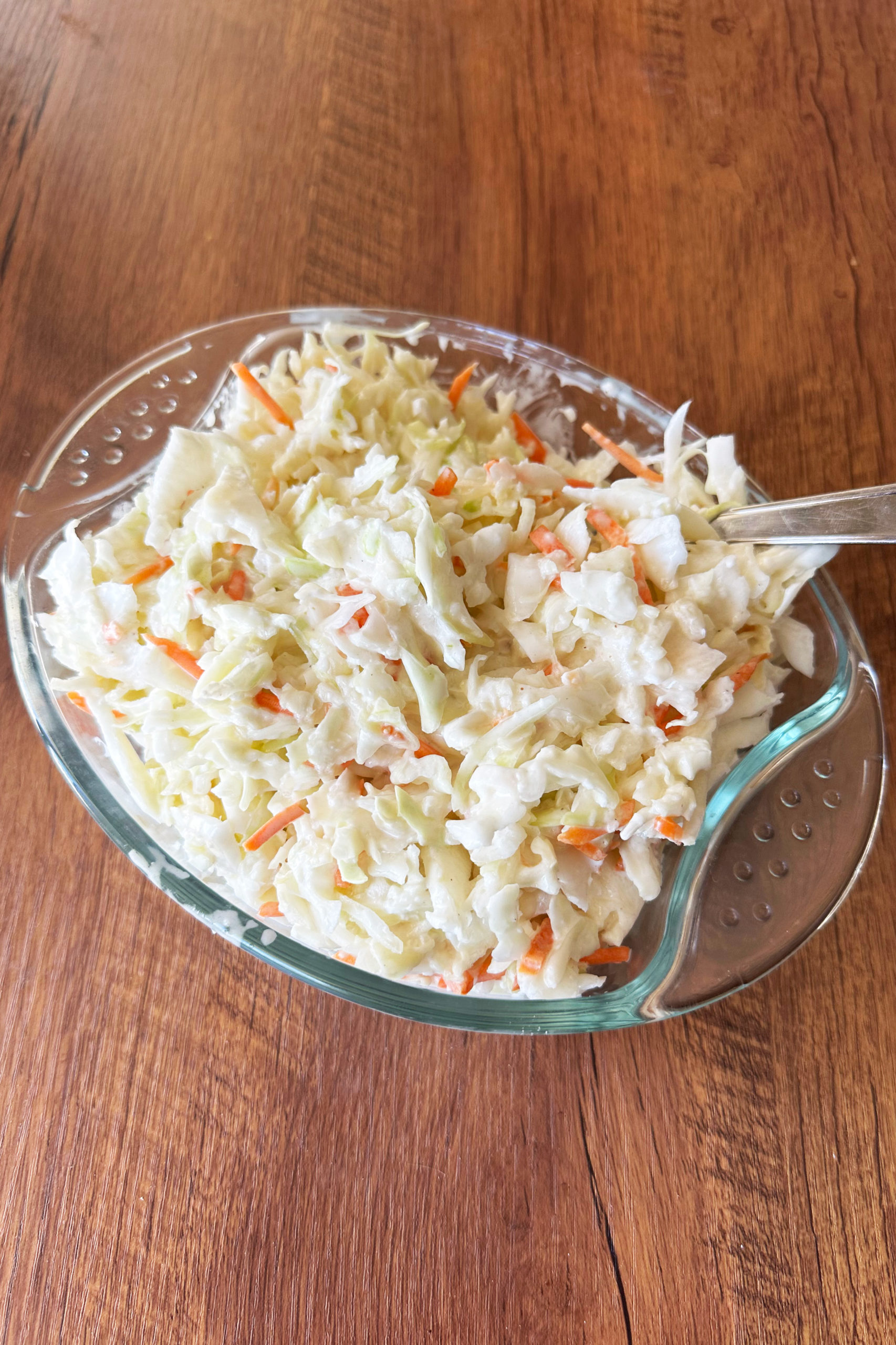
3 cups green cabbage*
shredded carrots (optional)*
corned beef
package egg roll wraps
eggs
Vegetable oil for frying
*or a bag of raw coleslaw
A little about Chinese-American Food
Chinese-American cuisine is a style of Chinese cuisine that was developed by Chinese immigrants. These dishes significantly differ from traditional Chinese dishes because Chinese-American dishes were adapted to suit American tastes.
Chinese immigrants arrived in the United States in large numbers in the mid-19th century in order to escape the economic difficulties in China, hoping to find work during the California Gold Rush and on the Central Pacific Railroad.
They mostly settled together in ghettos, individually known as Chinatown, and-since there were laws preventing them from owning their own land-they opened their own businesses, such as laundry services and restaurants.
Initially, the family-owned businesses catered to miners and railroad workers, and restaurants were set up in places where Chinese food was unknown. Food was based on the requests of the customers, and recipes were created to suit American tastes using whatever ingredients were available.
One major difference between traditional Chinese cuisine and Chinese-American cuisine is in the use of vegetables. Chinese-American recipes will use raw or uncooked ingredients and those not native to China. Traditional Chinese cuisine, on the other hand, rarely contains raw or uncooked ingredients and often uses Asian leaf vegetables.
While the new dishes were not traditional Chinese, these restaurants were responsible for the development of the ever-popular Chinese-American cuisine.
The little history of kosher Chinese-American Food
It is well known that Jews (especially those with ties to New York) love Chinese food.
Jews as a group were probably first introduced to Chinese food in the Lower East Side of Manhattan, where immigrants of various cultures settled in their own neighborhoods in the late 1800s and early 1900s.
By the early 1900s, approximately one million Jews from Eastern Europe lived in the Lower East Side of Manhattan while there were only approximately 7,000 Cantonese Chinese, most of whom had moved from California after the gold rush.
Due to anti-Chinese laws and acts, which prevented them from competing with whites, many Chinese had opened restaurants to support themselves and their families.
Although Jewish immigrants had originally kept kosher when immigrating to America, over time many of them assimilated and even if they continued keeping kosher at home, they would eat non-kosher out of the house. Chinese restaurants were open on Sundays, a favorite time for Jews to go out to eat.
Jews who continued to keep kosher had their first Chinese-American food experience when a Jewish, kosher deli owner created kosher Chinese recipes.
Sol Bernstein, a Jewish, kosher deli owner, used Cantonese Chinese recipes and substituted kosher veal, beef, and chicken livers for pork, and thus he was the first to sell kosher Chinese food.
The kosher Chinese food became very popular, and Sol continued to sell deli alongside it on the menu. He did very well, and the deli continued to prosper until he died in 1992, when it was sold.
Chinese-American Style homemade takeout!
While there are Chinese-American restaurants and takeout places all over, they are harder to find and often quite expensive if you keep kosher or don't want pork or shellfish in your food.
However, the solution to that is to make them at home! So, try these!
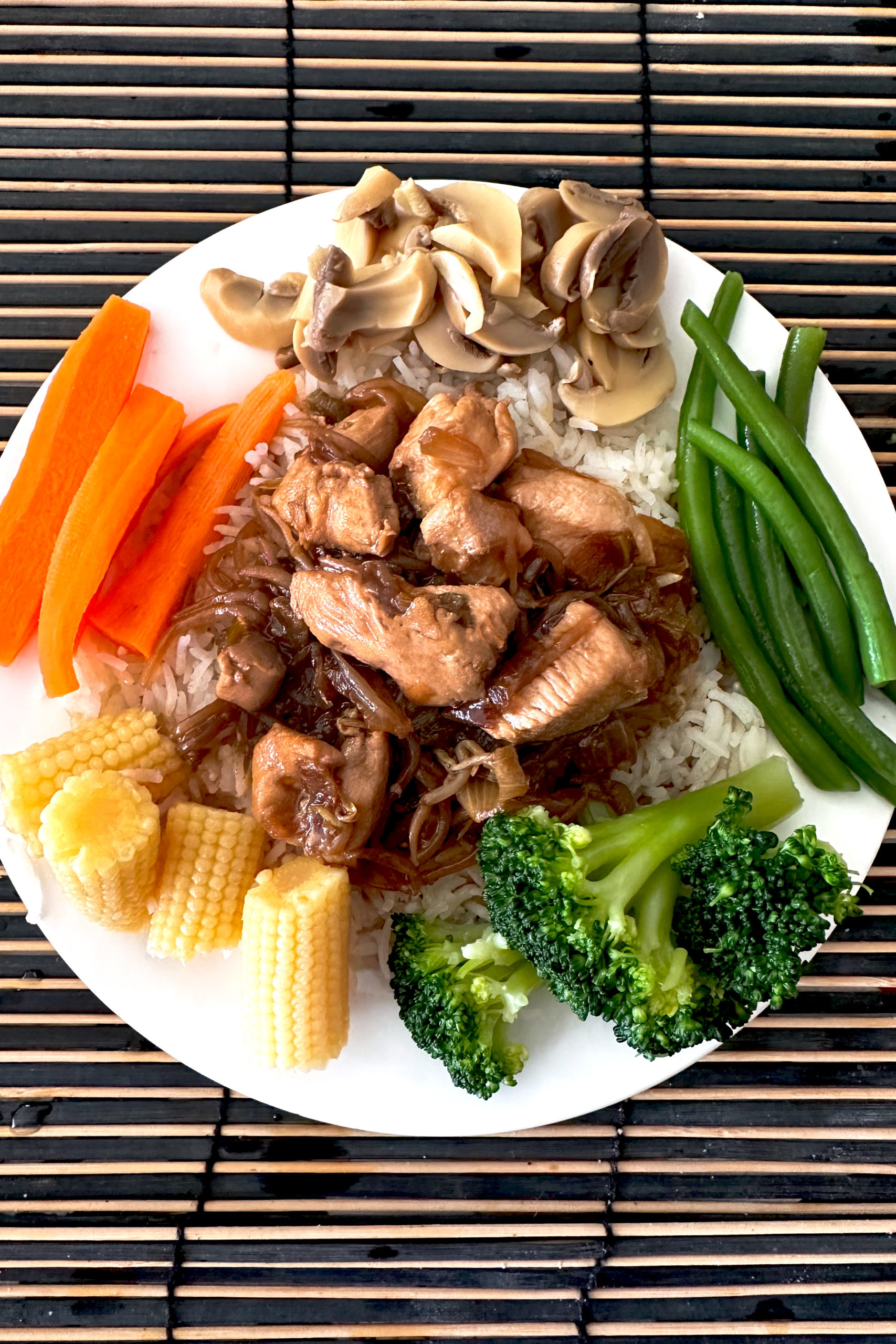
- Duck Sauce Chicken
- Pepper Steak
- Corned Beef & Cabbage Egg Rolls
- Vegetarian Fried Rice
- Beef Chow Mein
- Beef Lo Mein
- Beef and Broccoli
- Beef Chop Suey
Easy Corned Beef and Cabbage Egg Rolls Recipe
Easy 4-ingredient egg rolls with cabbage and a lot of corned beef, fried to a delicious crispiness.
Ingredients
- 3 cups green cabbage, shredded thin*
- ½ cup shredded carrots (optional)*
- 1 cup corned beef, shredded or cut into small pieces**
- 2 eggs, beaten
- Vegetable oil for frying
- 1 pound package of egg roll wraps
Instructions
- Mix shredded cabbage, shredded carrots (if desired) and corned beef in a bowl.
- Spoon some of the corned beef and cabbage mixture into the middle of a wrap, leaving enough room to comfortably fold.**
- Fold in the sides toward the middle of the wrap over the mixture and then roll from the other side.
- Place a little water or egg on the remaining edge to seal the egg roll.
- Repeat with the remaining mixture and wraps.
- Pour oil onto a frying pan approximately ¼ inch high and heat on medium.
- Dip each egg roll thoroughly into the beaten egg and place in the hot oil.
- Fry on each side until golden brown and then remove and place on a dish or plate that has been lined with paper towel to absorb excess oil.
- Serving suggestion: duck sauce or chili sauce.Spoon onto middle of egg roll wrap, leaving
Notes
* You can use pre-packaged coleslaw mix.
**You can substitute an equilvant amount of various kosher deli meat as a substitution.
Nutrition Information:
Yield:
6Serving Size:
1Amount Per Serving: Calories: 315Total Fat: 15gSaturated Fat: 3gTrans Fat: 0gUnsaturated Fat: 10gCholesterol: 30mgSodium: 431mgCarbohydrates: 32gFiber: 4gSugar: 3gProtein: 14g