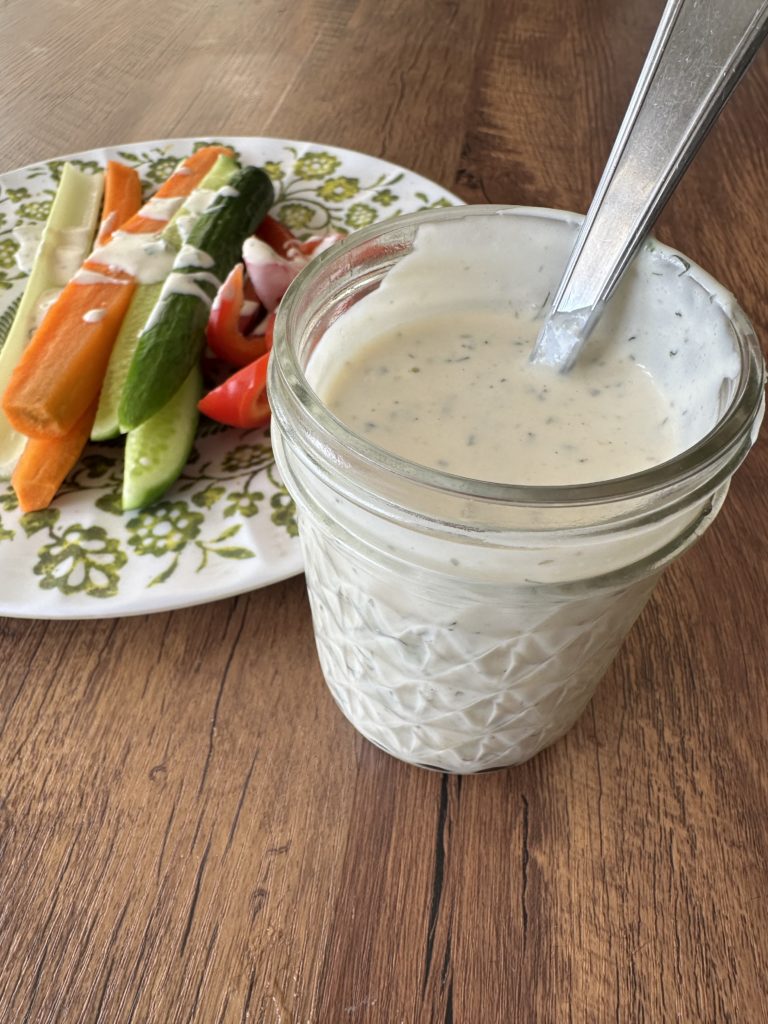
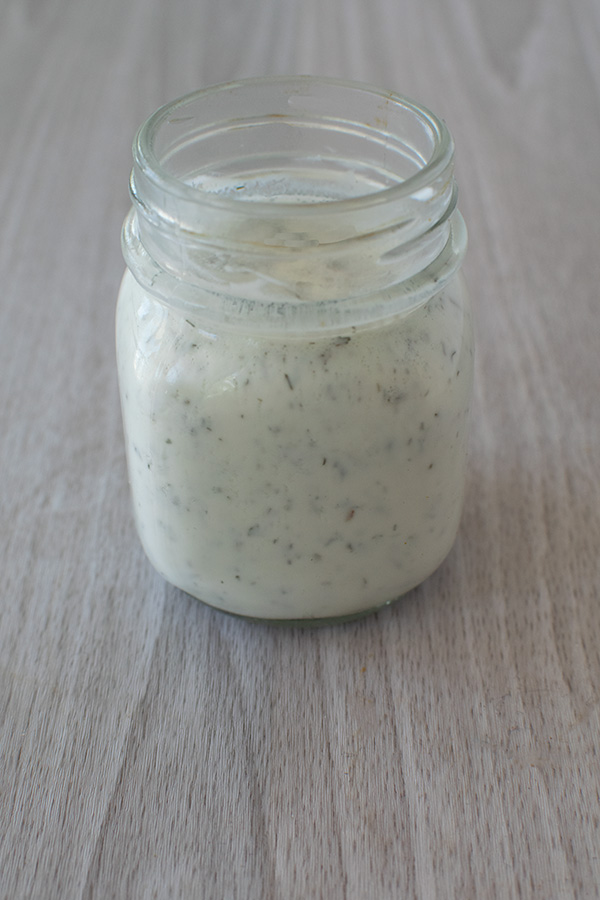
Easy homemade dairy-free ranch dressing gives you the classic, tangy flavor of classic ranch, but without buttermilk or sour cream. Also, there is no coconut milk or soaked cashews in the ingredients.
About this recipe...
Homemade dairy-free ranch dressing is made without buttermilk or sour cream and is a perfect solution for people who want to avoid dairy but don't want to settle on taste or end up with a watery, nut-based alternative.
This version of ranch dressing is nut-free, as it doesn't use soaked cashews as the dairy-free base, nor does it use coconut milk, so there is no underlying coconut flavor.
Instead, it uses mayonnaise and herbs to recreate the delicious tangy flavor.
And it's quick and simple to make in one bowl.
So, make sure to bring it to your next family picnic, backyard barbeque, or potluck with friends!
It also makes a great addition to your lunch for work or school, especially if you're bringing a green salad or sliced raw veggies!
Just like with traditional "Ranch," this condiment is delicious as a dressing on green salads, a dip for raw veggies, or a drizzle for spicy chicken wings!
While, admittedly, this isn't the original by Hidden Valley, it's still REALLY good.
A little about the original and classic Hidden Valley Ranch Dressing
Pretty much everyone is familiar with the amazing commercials about Hidden Valley Ranch Dressing, where family and friends are all gathered around a picnic table.
It was incredible marketing, because now every dressing company seems to have their own version because ranch dressing is a thing.
However, Hidden Valley isn't just a brand. The original ranch dressing was actually created by the founder of Hidden Valley Ranch!
And buttermilk has nutritional value!
Some cooking terms
What does it mean when recipes say "to taste" about an ingredient?
When recipes say "to taste," it means that you can put in as little or as much as you like to your own taste. Some recipes have many ingredients that a cook can adjust to their own taste when cooking (not so much when baking though).
The best way to calculate what your taste is with a recipe that you are not yet familiar with is to first taste the dish and then add the "to taste" ingredient GRADUALLY, a little at a time-a splash of this or a pinch of that-until the dish is just the way you like it.
Make sure to stir the ingredient after each time you add it so that the flavor will distribute evenly and become part of the dish. Then taste again. Repeat until you reach your personal preference.
Note: If you plan on using the recipe again, it is highly recommended to make a note of what and how much you added so that you can refer to it next time.
What does it mean when a recipe says that an ingredient is "optional"?
If an ingredient is "optional," it means that you can add it in or not based on your own preference. An optional ingredient can be flavor-related (i.e., salty, sweet, spicy, etc.), appearance-related (garnish), or even something like nuts or chocolate chips in baking.
What does tangy mean?
"Tangy" means that there is a strong, sharp, or zesty flavor and is mostly associated with foods and desserts that are acidic, citrusy, or sour.
Frequently Asked Questions (FAQs)
What makes this ranch dressing dairy-free?
This recipe achieves a rich and creamy texture by using mayonnaise and a blend of herbs instead of traditional dairy bases like buttermilk or sour cream, keeping it dairy-free.
What is the best mayo to use with this recipe?
While you can use any mayo you like, my favorite is Hellmann's and Best Foods (they are the same mayo with different names depending on where you are in the US).
Can I use store-bought vegan mayonnaise to make this dressing vegan?
Yes, using a quality store-bought vegan mayonnaise works wonderfully in this recipe if you want to keep the dressing completely plant-based while maintaining that classic creamy consistency.
How long does homemade dairy-free ranch dressing last in the fridge?
Store your leftover ranch dressing in an airtight jar or container in the refrigerator for up to 5 to 7 days. Give it a good shake or stir before serving again.
Can I freeze this dairy-free ranch dressing?
No, mayonnaise-based dressings and fresh herb blends do not freeze well. Freezing causes the emulsion to break, resulting in a separated, watery texture when thawed. It is best stored in the refrigerator and enjoyed fresh.
Does this ranch dressing contain nuts?
No, unlike many modern dairy-free ranch recipes that rely on soaked cashews or nut milks, this recipe is completely nut-free, making it safe for those with tree nut allergies.
Everyday seasonings and spices to keep in your kitchen (suggested)
I like to be able to make a large variety of dishes, sides, and sauces without having to prepare ahead, run out to the store last minute, or borrow from a neighbor.
That said, I make sure to have a cupboard full of items to that end. Here is a list of what I mostly keep around:
Seasoning and flavoring:
- salt (my recipes use regular table salt)
- ground black or white pepper
- granulated garlic or garlic powder
- onion powder
- sweet paprika and/or sweet pepper flakes (paprika is ground dried red pepper; pepper flakes are crushed dried red pepper)
- hot paprika, hot pepper flakes, or cayenne pepper (moderately spicy dried ground chili pepper) for those occasional spicy dishes
- ground turmeric
- ground cumin
- ground cinnamon
- ground ginger
- ground nutmeg
- ground cloves (for pumpkin flavors)
- sugar (granulated)
- brown sugar
- chicken consommé powder / beef bouillon powder (regular or vegetarian)
- onion soup mix
- onion flakes (substitute for fresh onion-3 tablespoons for 1 medium onion).
- various herbs
- additional spices to adapt taste to preference
What is needed to make easy dairy-free ranch dressing?
One of the reasons that I like to keep a cupboard full of seasonings, spices, veggies, and canned goods in my kitchen is to
But these are all you need to have on hand to make this recipe even last minute!
milk
mayonnaise
vinegar (or lemon juice)
cornstarch*
onion powder
chives
dried parsley
dried dill
garlic powder
salt
Easy Homemade Dairy-Free Ranch Dressing Recipe
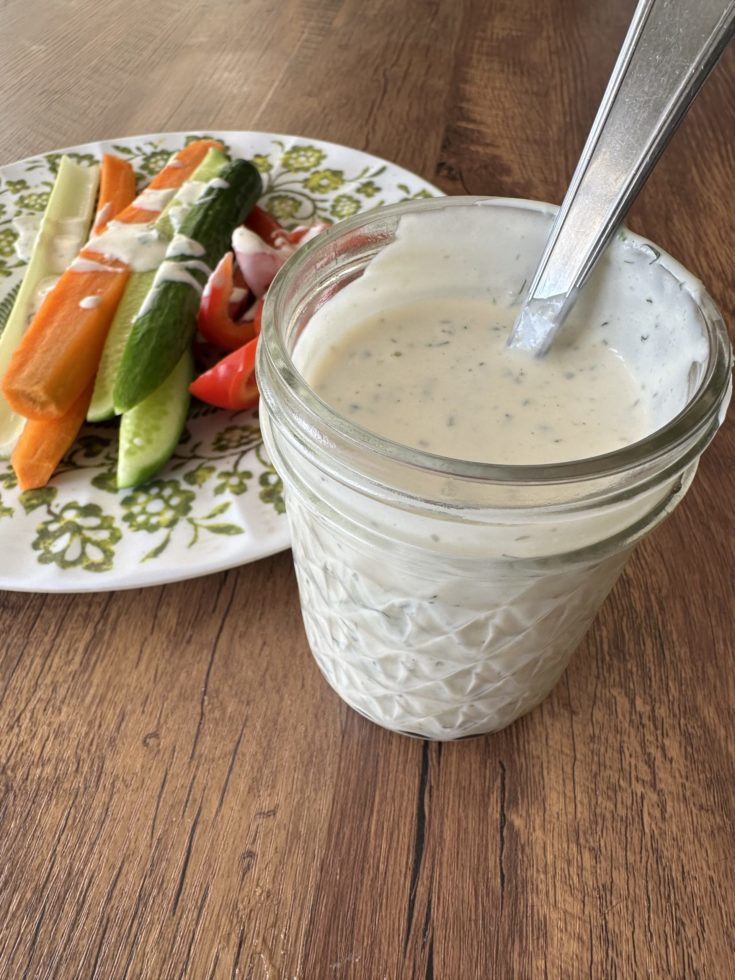
Delicious and easy, dairy-free homemade tangy ranch dressing made without buttermilk or sour cream. Great for dip, dressing, or drizzle!
Ingredients
- 1 cup oat milk
- ½ cup mayonnaise
- 1 tablespoon vinegar (or lemon juice)
- 2 teaspoons cornstarch*
- ½ teaspoon onion powder
- ½ teaspoon chives
- ⅓ teaspoon dried parsley
- ⅓ teaspoon dried dill
- ¼ teaspoon garlic powder
- ¼ teaspoon salt or to taste
Instructions
- Pour the oat milk and the cornstarch into a saucepan.
- Bring to a boil, turn off the heat, let cool, and pour into a jar.
- Add in mayonnaise and vinegar or lemon juice and shake to mix.
- Add onion powder, chives, parsley, dill, garlic powder, and salt, and shake again until mixed well.
- Transfer to a bottle or something that is convenient to pour from.
- Chill if desired.
Notes
* The cornstarch is only a thickener. If you prefer the dressing loose, then skip this step and just mix all the ingredients together.
Nutrition Information:
Yield:
8Serving Size:
1Amount Per Serving: Calories: 101Total Fat: 10gSaturated Fat: 2gTrans Fat: 0gUnsaturated Fat: 9gCholesterol: 6mgSodium: 183mgCarbohydrates: 1gFiber: 0gSugar: 1gProtein: 1g