Easy Dairy-Free Chocolate Crinkle Cookies Recipe

Sharing is caring!

Easy Dairy-Free Chocolate Crinkle Cookies is a simple recipe for soft, rich, and fudgy earthquake cookies made without butter.

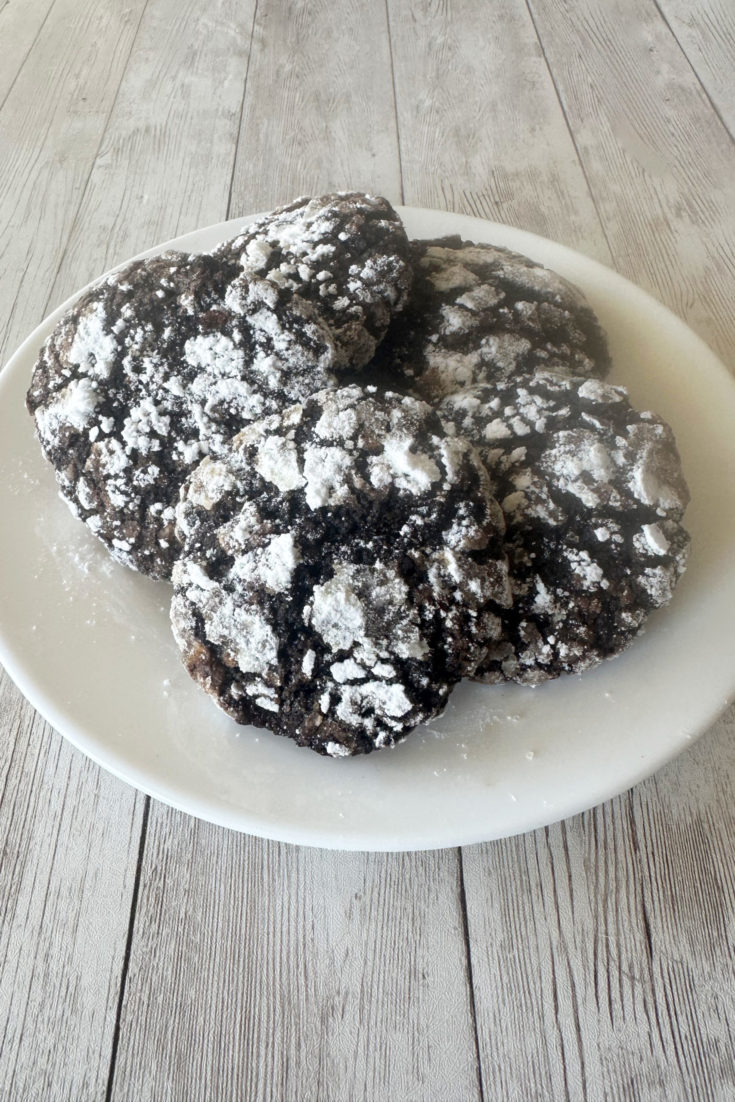
A pile of easy Dairy-Free Chocolate Crinkle Cookies made with oil on a white plate on a white wood table

Chocolate crinkle cookies, also known as earthquake cookies, are deliciously sweet and fudgy.

They're simple to make with basic pantry ingredients and no special equipment.

Plus, since they are made with oil, there is no butter in the ingredients, so they're made without dairy.

They're great with your morning coffee or as a cozy, comforting treat at the end of a long day.

Jump to:

And these cookies are customizable!

Mocha crinkle cookies

Add 1 tablespoon of instant coffee powder or crystals to the batter (or to taste)

Mint chocolate crinkle cookies

Add 2 teaspoons mint extract (or to taste)

Easy Dairy-Free Chocolate Crinkle Cookies FAQs

Why are they sometimes called earthquake cookies?

They get the name "earthquake cookies" because as the dough balls bake and expand in the oven, the powdered sugar cracks on top, creating a dramatic, textured look that resembles an earthquake fault line.

Do I need to chill the cookie dough before baking?

No. You don't have to chill. However, chilling the dough helps firm up the sticky batter, which may make it easier to roll into balls and can prevent the cookies from possibly spreading flatter in the oven.

How do I get that signature powdered sugar coating to stick?

To get that distinct white crinkle look, roll the chilled dough balls generously in granulated sugar first (which prevents the powdered sugar from melting into the dough), and then roll them thoroughly in powdered sugar right before baking.

Can I freeze these chocolate crinkle cookies?

Yes, you can freeze both the unbaked dough balls (roll them in sugar before freezing) and the already baked cookies. If freezing baked cookies, store them in an airtight container with parchment paper between the layers.

How do I store leftovers so they stay soft?

Store the baked cookies in an airtight container at room temperature with a slice of bread inside. The cookies will absorb moisture from the bread, helping them stay soft and fudgy for days.

Can I use dark brown sugar with this recipe?

The recipe calls for brown sugar, which typically means light brown sugar unless stated otherwise. If you want to use dark brown sugar, however, that's fine, but you might taste a slight additional flavor of molasses.

What is the difference between white granulated sugar and brown sugar?

The short answer is that while white granulated sugar is just pure sweetness, brown sugar is white sugar with molasses mixed into it. Light brown sugar has less molasses than dark brown sugar.

Here is how that change affects your baking:

  • White sugar is neutrally sweet. Brown sugar tastes like rich caramel or toffee.
  • White sugar makes things crisp and light. Brown sugar traps moisture, making baked goods (like brownies) dense, soft, and extra chewy.
  • Brown sugar is dark and wet; white sugar is dry and clear.

When recipes call for "brown sugar," they typically mean light brown sugar, so if you use dark brown, chances are that you will get more of a molasses flavor to whatever you are making, and you may get more of a chewy texture as well.

Tip: If a recipe calls for brown sugar and you're completely out, you can make your own by thoroughly mixing a tablespoon of molasses into a cup of regular white granulated sugar, and that will give you light-brown sugar. If you want dark brown sugar, you need to mix in more molasses.

If these are sweet, why is there salt in the ingredients?

Even though salt tends to make foods, well, salty, it actually plays other roles in baking as well.

For example, the right amount of salt balances flavors in baked goods; it can bring out the sweetness of sugar and, at the same time, prevent them from tasting overly sweet. It also can help dull the bitterness of cocoa.

Salt prevents baked goods from tasting bland, while it balances the richness of the fats. It also helps develop flavor in yeast breads and works with proteins to strengthen gluten and make it more elastic.

Salt helps baked goods stay a little fresher for a little longer and helps delay mold from growing on them.

What do eggs do in baking?

Eggs are made up of two parts: the whites and the yolks (the yellow). 

Egg whites are made up of protein that sets when heated and helps baked goods hold their structure. The yolks are made up of fats and vitamins and help ingredients bond.

Eggs also help baked goods rise as well as keep them moist.

It is important to have the right amount of eggs when baking, because if there are too many eggs in a recipe, this can cause a rubbery, dense texture, and if there are too few eggs, this can cause a crumbly, dry texture.

The different parts of the egg will provide different textures to baked goods; using the entire egg in baking will provide moisture and help the baked good rise evenly, using extra yolks will create richer, denser textures, and extra whites will add fluffiness but may create a drier texture.

What is the difference for using oil vs. butter or margarine?

Both margarine and butter are solid fats at room temperature, and both contain more saturated fats than oil.

While margarine and butter will change from a solid to a liquid when heated, they will change back to solids when cooled again. Oil stays liquid at all temperatures. Oil also coats flour better in the preparation process before baking.

Butter "creams" better than margarine, but one cannot cream oil at all.

When converting a recipe from butter or margarine to oil, the general conversion rate is 1 to ¾ (although if you are doing more than one batch, you might need to reduce the oil because I have found that baked goods come out oily in this case).

And when converting from oil to margarine or butter, typically the ratio is 1 to 1¼ and from margarine or butter to oil, the ratio is typically 1 to ¾.

What is the difference between real vanilla extract and imitation vanilla?

Real vanilla is made from soaking vanilla beans in alcohol, imitation vanilla is synthetic, and real vanilla costs quite a bit more than imitation. Whether or not there will be a taste difference in your baking depends on the baked good, so do some research before you decide.

I personally always use the imitation as long as I have a really good brand because it's not worth it to me to spend the extra money.

Which ingredients are good to have for baking even on short notice?

Love cookies?

Yield: 24 cookies

Easy Dairy-Free Chocolate Crinkle Cookies Recipe

dairy-free chocolate crinkle cookies on a white plate on a white wood table
5.0 Stars (2 Reviews)

Delicious and chocolately, dairy-free soft crinkle (earthquake) cookies.

Prep Time 15 minutes
Cook Time 10 minutes
Additional Time 5 minutes
Total Time 30 minutes

Ingredients

For the cookie

  • 1 cup all-purpose flour
  • ½ cup unsweetened cocoa powder
  • ½ cup brown sugar, packed*
  • ¼ cup granulated white sugar
  • 1 teaspoon baking powder
  • ¼ teaspoon baking soda
  • ½ teaspoon salt
  • 2 large eggs
  • ¼ cup oil
  • 1 teaspoon of vanilla extract, real or good imitation

For rolling

  • ½ cup white granulated sugar
  • ½ cup powdered sugar

Instructions

  1. Combine the flour, cocoa poder, brown sugar, white sugar, baking powder, baking soda, and salt in a mixing bowl.
  2. Add the eggs, oil, and vanilla and mix thoroughly until a solid dough has formed (it will initially seem very dry).
  3. Place the granulated and powdered sugars (for rolling) in two separate bowls.
  4. Make approximately 1" balls from the dough (I like to wet my hands first to make it easier) and then roll each well in the granulated sugar and then well in the powdered sugar. (Make sure they are covered very well with the powdered sugar.)
  5. Carefully place the balls on baking sheets that have been lined with baking paper with at least 2" between them so that they will have room to spread.
  6. Place the baking sheets into an oven that has been preheated to 325°F and bake for approximately 10 minutes (until they are firm to the touch).
  7. Let cool to firm up.

Notes

*This is light brown sugar, but you can use dark brown if you want a possible taste of molasses.

Nutrition Information:

Yield:

24

Serving Size:

1

Amount Per Serving: Calories: 160Total Fat: 4gSaturated Fat: 0gUnsaturated Fat: 3gCholesterol: 16mgSodium: 95mgCarbohydrates: 29gFiber: 1gSugar: 18gProtein: 3g
Sharing is caring!

Leave a Reply

Your email address will not be published. Required fields are marked *