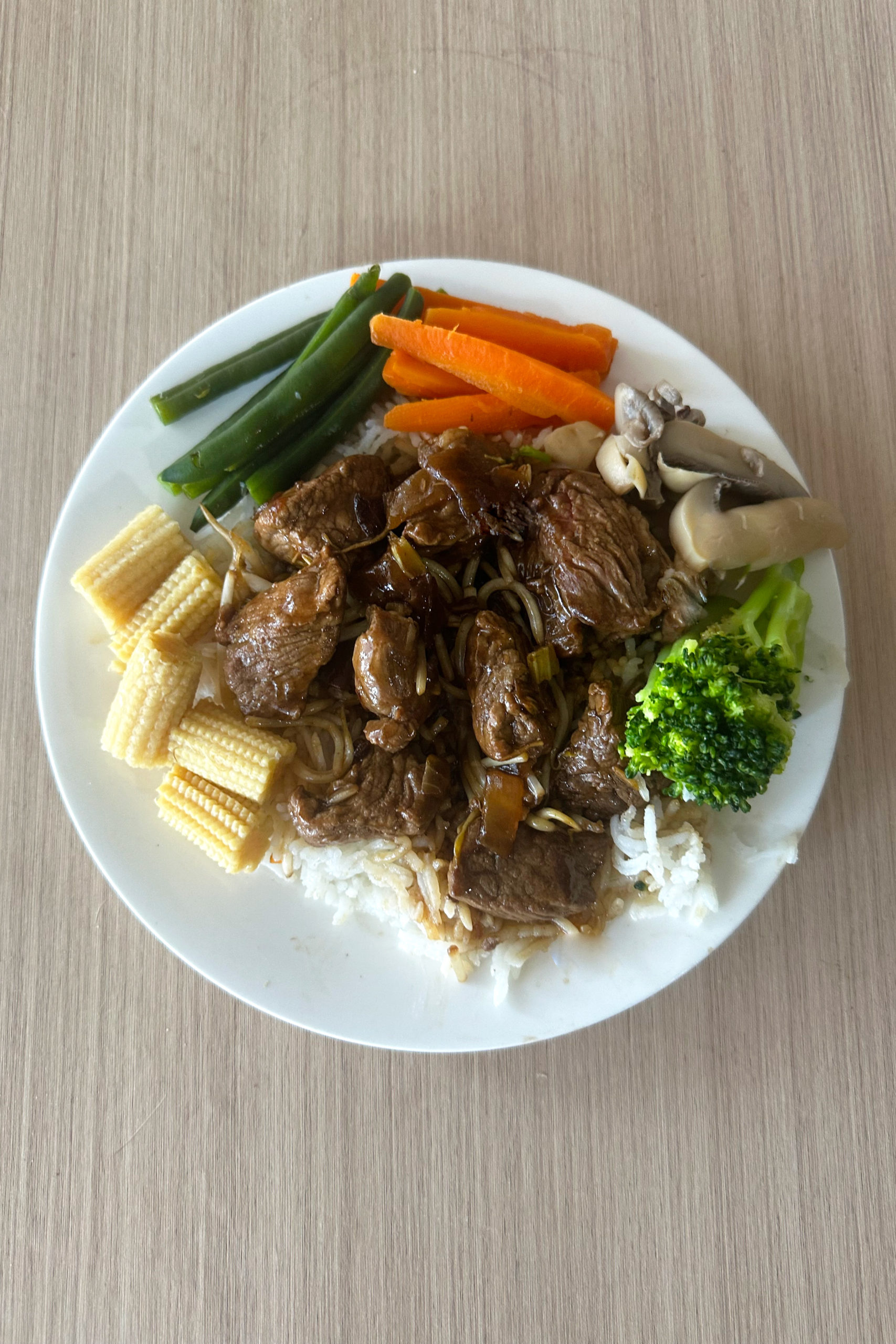
This Chicken Chop Suey is an easy recipe for the classic Chinese-American dish, made with chicken breast and bean sprouts in a savory sauce. This homemade version comes together in one pan and is made without pork or shellfish, so it's kosher.
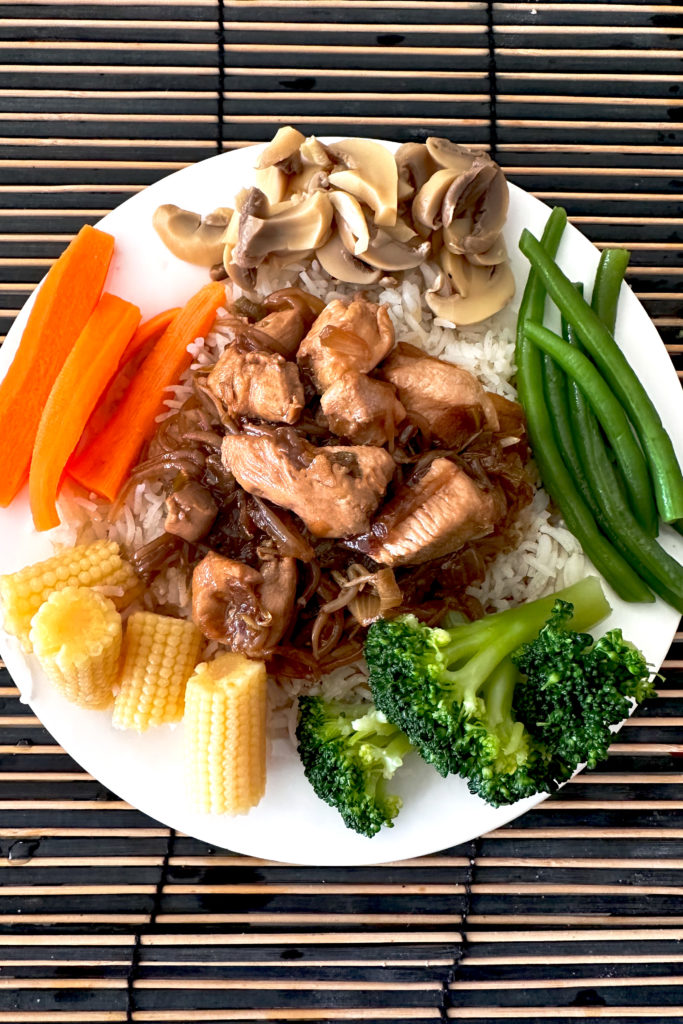
Chicken chop suey is a delicious and savory Chinese-American dish, and this recipe is a simple, budget-friendly "takeout fakeout" that's easy to customize.
Just add any of your favorite stir-fry vegetables and make it your own!
Since it's made without pork or shellfish, this recipe is kosher.
Jump to:
Homemade Takeout!
Chinese food is an American favorite, whether you sit down in a restaurant, order takeout, or have it delivered. And while many of the dishes we know as Chinese food in the United States are actually part of Chinese-American cuisine, they're still delicious!
Making Chinese food at home takes longer than placing a takeout order, but it's quicker than waiting for delivery-and if you keep kosher, it's a lot less expensive than eating at a kosher restaurant.
Many homemade Chinese recipes call for a long list of ingredients. I like to keep things simple and budget-friendly.
This Chicken Chop Suey is an easy, adaptable meal that you can customize with whatever stir-fry vegetables you have on hand. It's also a great way to use vegetables that have started to wilt-toss them into the stir-fry and save them from going to waste!
What You'll Need to Make Chicken Chop Suey
Chicken breast
Bean sprouts
Celery
Onion
Soy sauce
Stir-fry vegetables, optional
And making this dish is so easy!
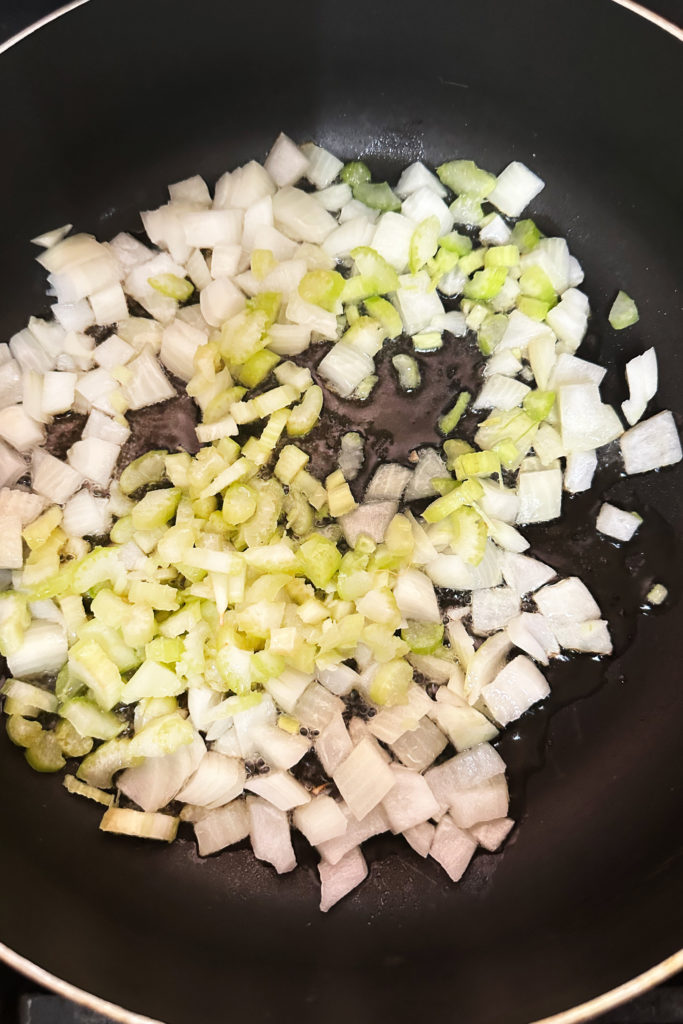
First, fry the onions and celery in a little bit of cooking oil.
Then add the chicken pieces.
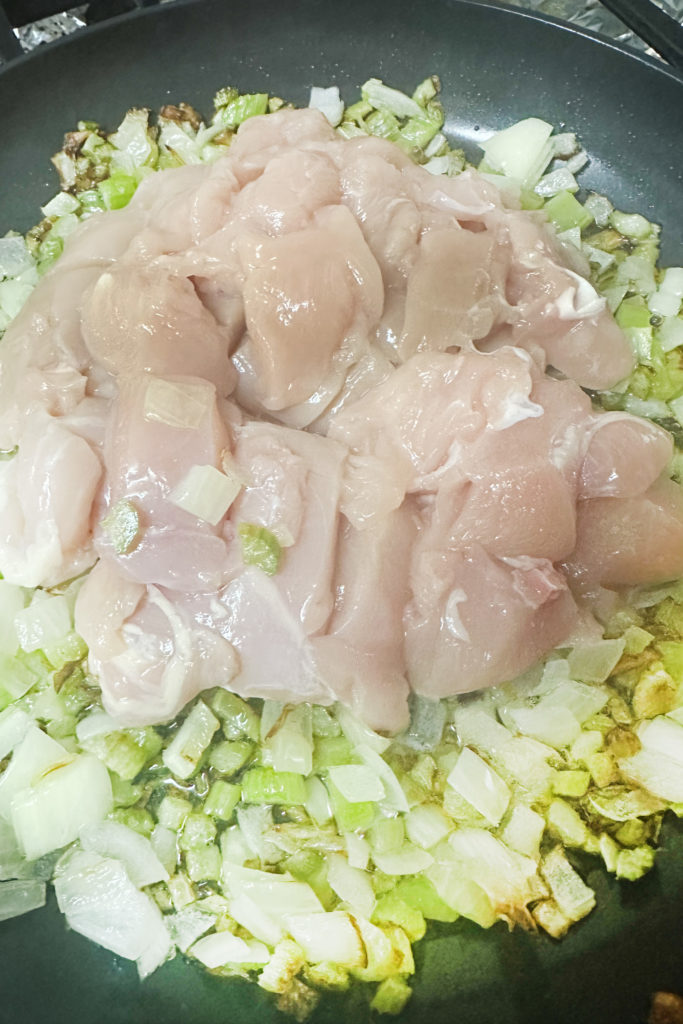
And cook them with the celery and onion.
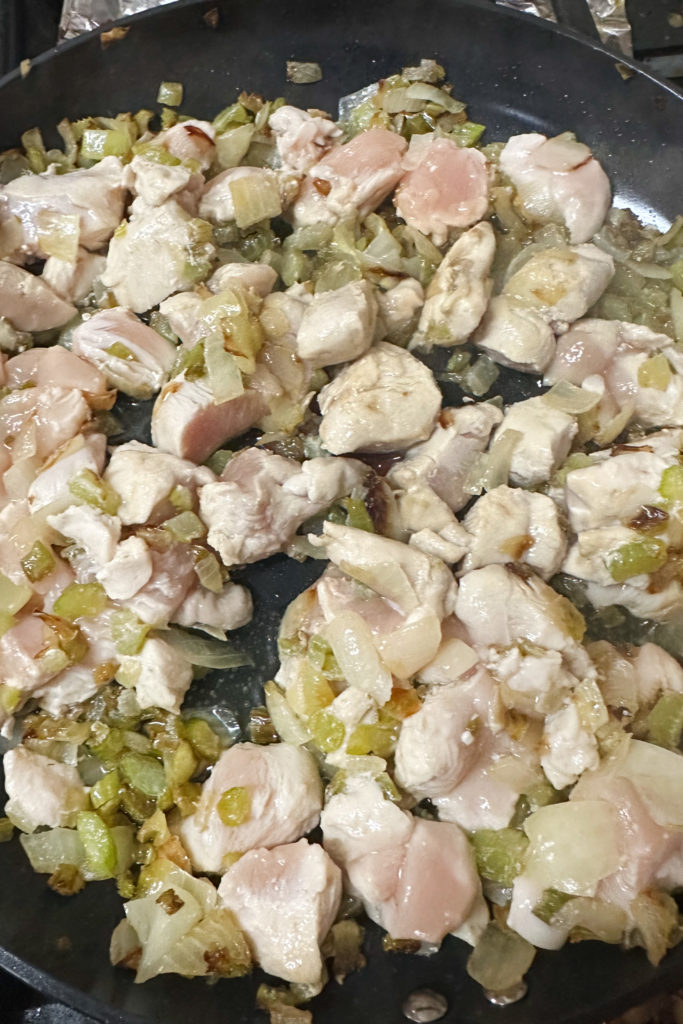
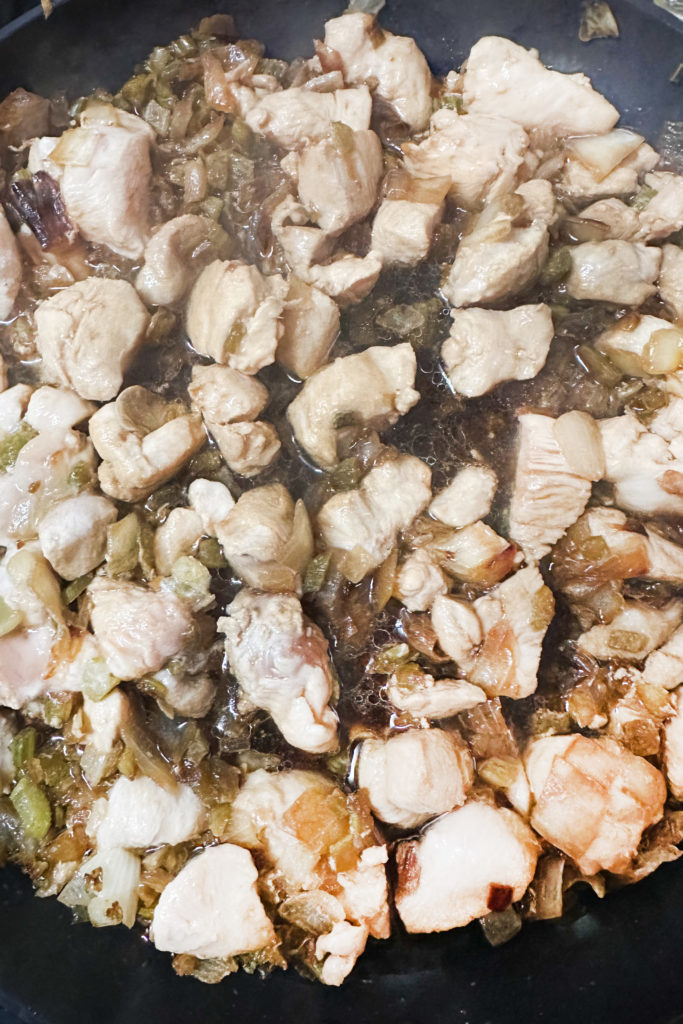
Then add the soy sauce and water and cook all together.
Then add the bean sprouts and cook them in the sauce for a little while as well. If you want your bean sprouts to be a little crunchy, then make sure not to overcook. We don't like crunchy, so we cook thoroughly.
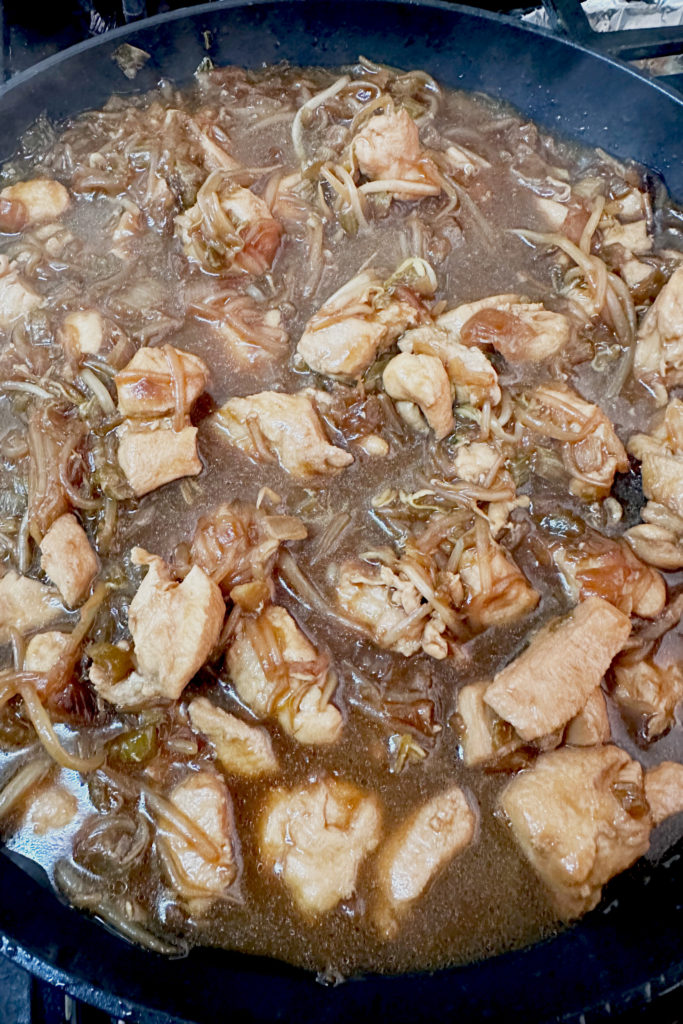
Tip: if you find that the sauce is too watery, make a slurry by mixing a little of the liquid with a tablespoon or two of corn (or potato) starch and mixing it back into the hot liquid in the pan.
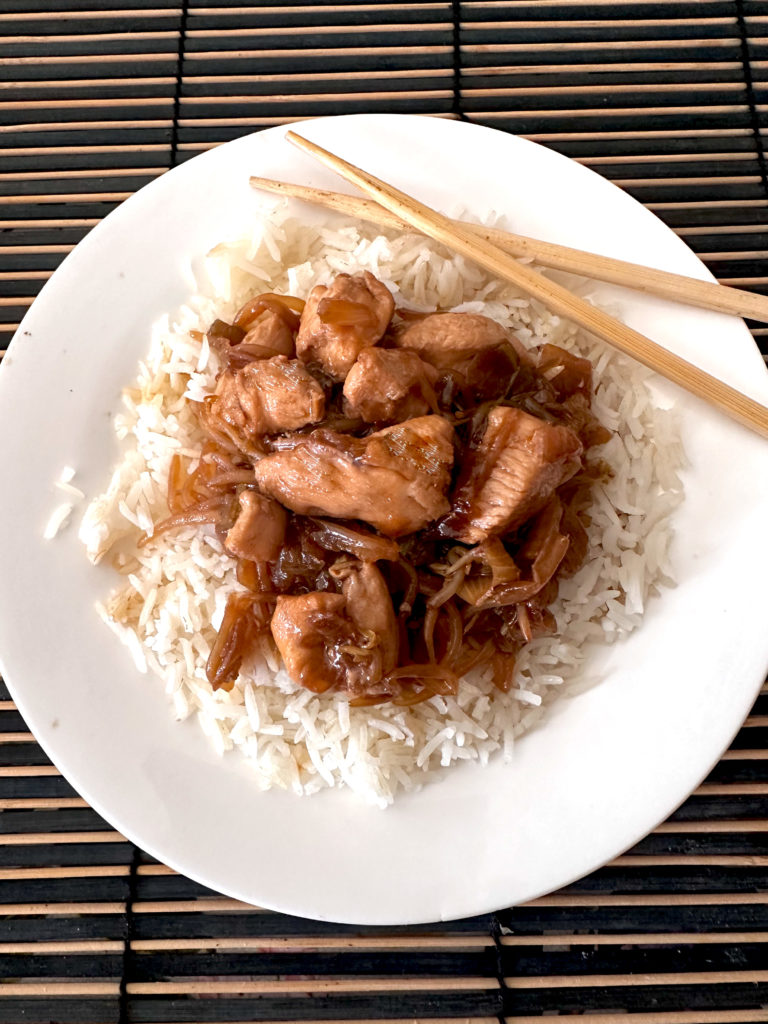
This chicken chop suey recipe is basic, so you can add any kind of stir fry you like!
Frequently Asked Questions (FAQs)
What is chicken chop suey?
Chicken chop suey is a Chinese-American dish made with chicken, vegetables, and a savory sauce. It is typically served over rice.
What is chop suey made of?
Chop suey is generally made with meat and vegetables cooked in a savory sauce. The ingredients vary from recipe to recipe, and chicken chop suey is one popular version.
Does chicken chop suey contain pork?
Many chicken chop suey recipes contain pork or pork-based ingredients, but this recipe is made without pork.
Does chicken chop suey contain shellfish?
Some chicken chop suey recipes use oyster sauce, which contains oysters. This recipe contains no shellfish and is kosher.
Is chicken chop suey Chinese or Chinese-American?
Chicken chop suey is generally considered part of Chinese-American cuisine. Chop suey became popular in the United States as Chinese immigrants adapted dishes to American ingredients and tastes.
What vegetables can I add to chicken chop suey?
You can add many vegetables to chicken chop suey, including the stir-fry vegetables you enjoy most. This recipe is adaptable, so it's also a good way to use vegetables you already have on hand.
What Is Chinese-American food?
Chinese-American cuisine is a style of Chinese cuisine that developed in the United States as Chinese immigrants adapted their cooking to local ingredients and American tastes. As a result, many Chinese-American dishes differ significantly from the traditional dishes of China.
Chinese immigrants began arriving in the United States in large numbers in the mid-19th century, including people who came during the California Gold Rush and to work on the Central Pacific Railroad. Many settled in Chinatowns and established businesses, including restaurants.
Early Chinese restaurants often served miners, railroad workers, and other American customers. Because many of their customers were unfamiliar with Chinese food, restaurant owners adapted existing dishes and developed new ones using ingredients that were available locally and flavors that appealed to American diners.
Over time, these adaptations became part of a distinct Chinese-American culinary tradition. Familiar dishes such as chop suey, chow mein, and American-style fried rice are examples of foods that became popular in the United States.
Chinese-American cuisine isn't simply traditional Chinese food served in America. It developed from Chinese cooking while also reflecting the ingredients, tastes, and dining culture of the United States.
What Is Kosher Chinese Food?
It is well known that Jews, especially those with ties to New York, love Chinese food. You can find kosher Chinese restaurants in many predominantly Jewish neighborhoods. In Cedarhurst, New York, for example, there are two within a couple of blocks-both excellent. And don't even get me started on Brooklyn.
There's even a popular joke about the Jewish love of Chinese food:
"According to the Jewish calendar, the year is 5749. According to the Chinese calendar, the year is 4687. That means for 1,062 years, the Jews went without Chinese food."
The joke dates back to at least 1989, although no one seems to know exactly when it originated.
The connection between Jewish and Chinese food goes back to New York's Lower East Side in the late 19th and early 20th centuries, when Jewish and Chinese immigrant communities lived and worked in close proximity. Chinese restaurants became increasingly popular with Jewish New Yorkers, and the tradition of eating Chinese food became an enduring part of Jewish-American culture.
By the early 20th century, Chinese restaurants were well established in New York's Jewish neighborhoods. They were affordable, often open on Sundays, and offered a type of food that was different from the traditional Jewish restaurants and delis of the time. The fact that Chinese cooking generally used little dairy also made some dishes seem more compatible with Jewish dietary traditions, although Chinese restaurant food was not actually kosher.
But what about Jews who did keep kosher?
In 1959, Sol Bernstein, the son of kosher butcher and deli owner Schmulka Bernstein, began serving Chinese food at Bernstein-on-Essex, his kosher delicatessen on Manhattan's Lower East Side. Bernstein is often credited with pioneering kosher Chinese food in the United States.
Sol adapted Chinese dishes to meet kosher requirements, using kosher beef, veal, and chicken in place of pork and leaving shellfish off the menu. His restaurant offered traditional Jewish deli foods alongside Chinese dishes, creating a unique combination that became enormously popular.
Schmulka Bernstein had operated a kosher butcher shop and smokehouse on the Lower East Side for decades. Sol's deli, which opened in the late 1950s at 135 Essex Street, became known as Bernstein-on-Essex, although many people simply called it Schmulka Bernstein's after his father.
The restaurant's slogan was "Where kashrut is king and quality reigns," and Bernstein-on-Essex became a destination for Jewish diners looking for Chinese food they could enjoy while keeping kosher.
Sol Bernstein continued operating the restaurant until his death in 1992. His contribution to the history of kosher Chinese food remains part of the fascinating connection between Jewish and Chinese food culture in New York.
Like Chinese-American style homemade takeout?
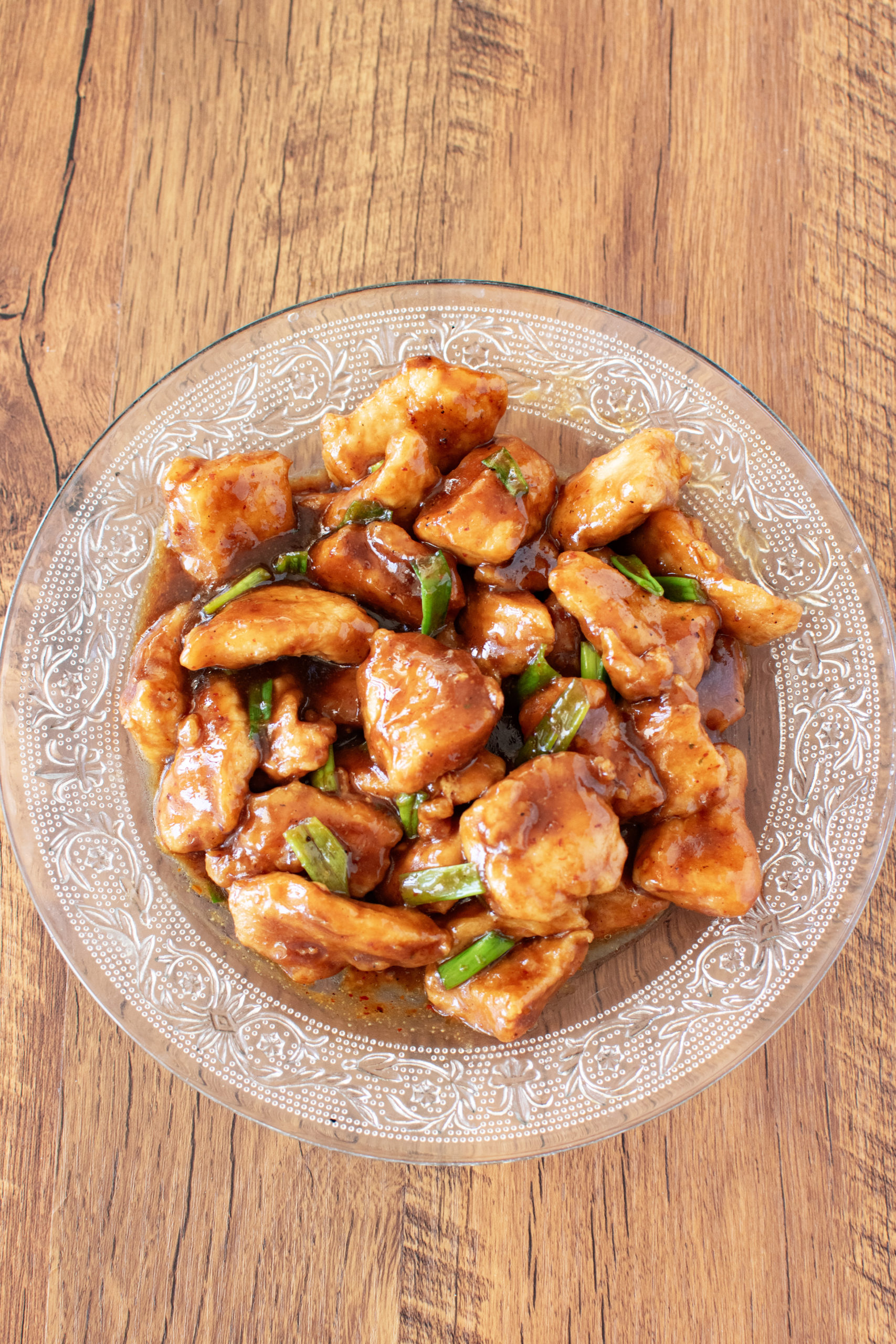
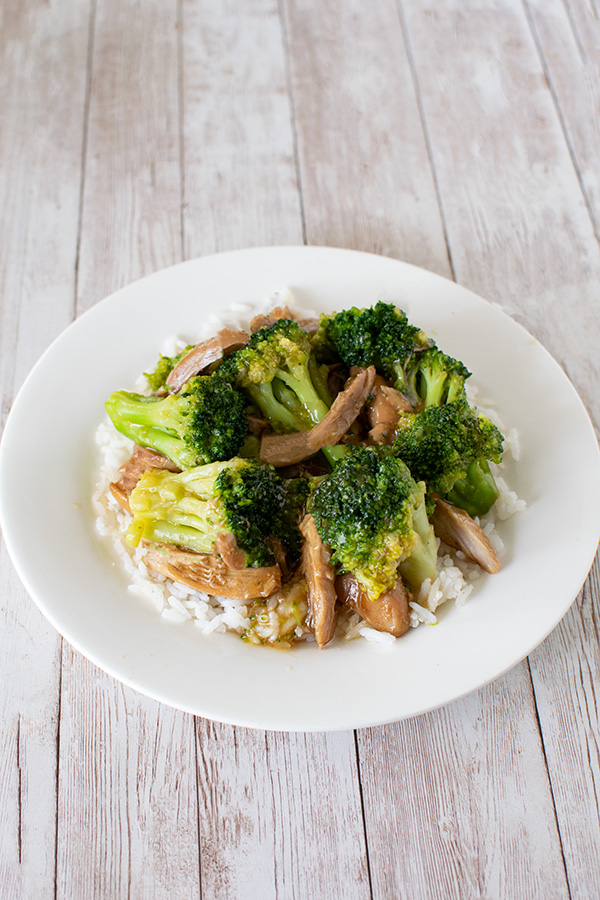
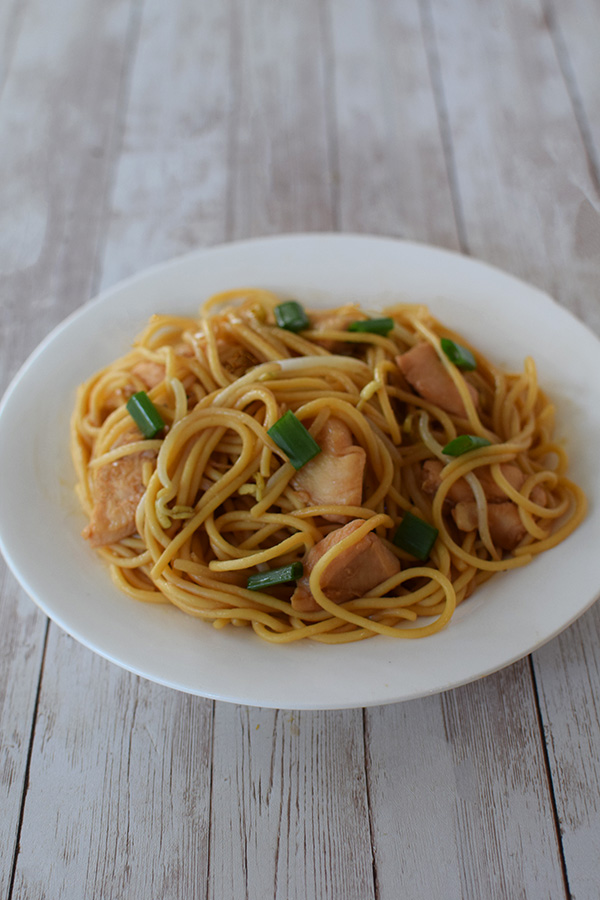
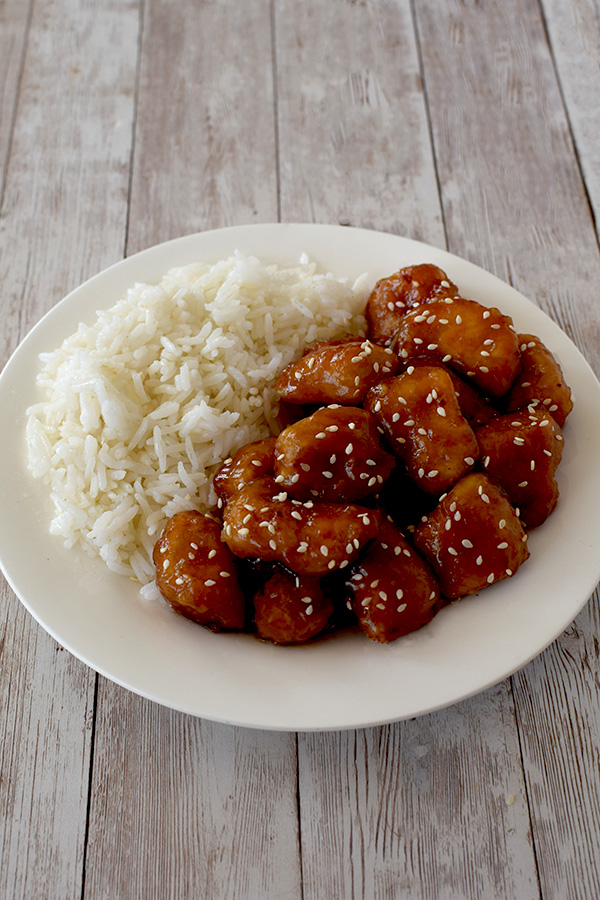
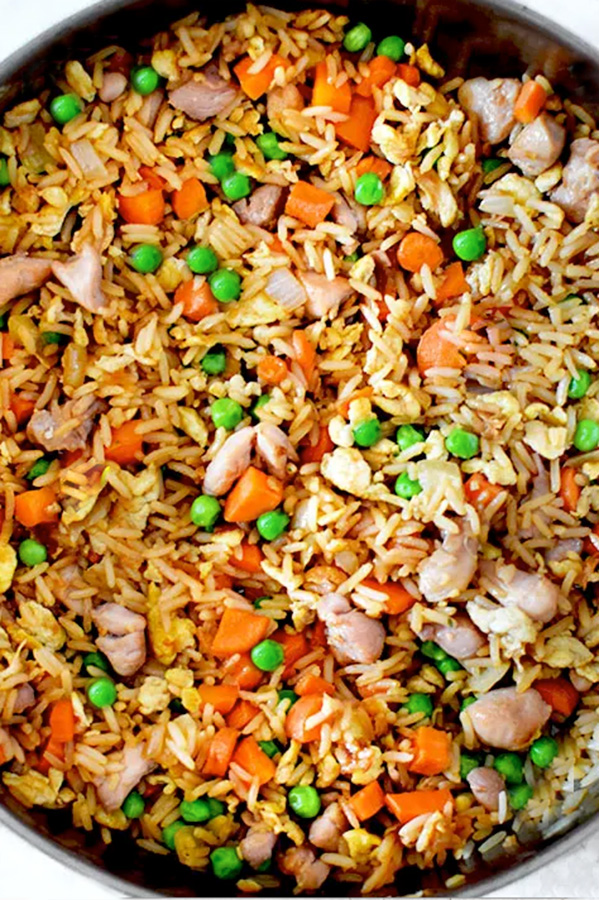
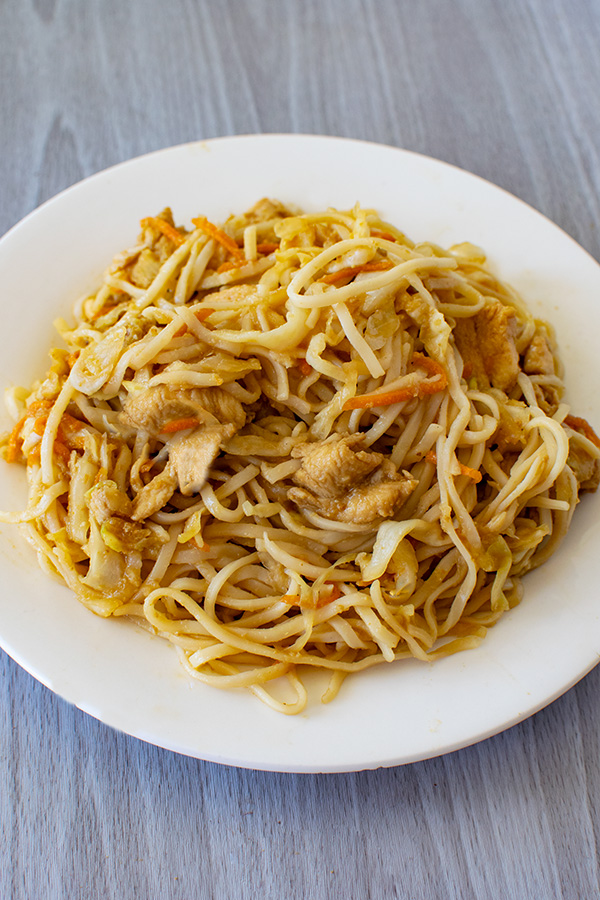
If you love Chinese-American chicken dishes and want them made without any shellfish and pork-free (or kosher), try these!
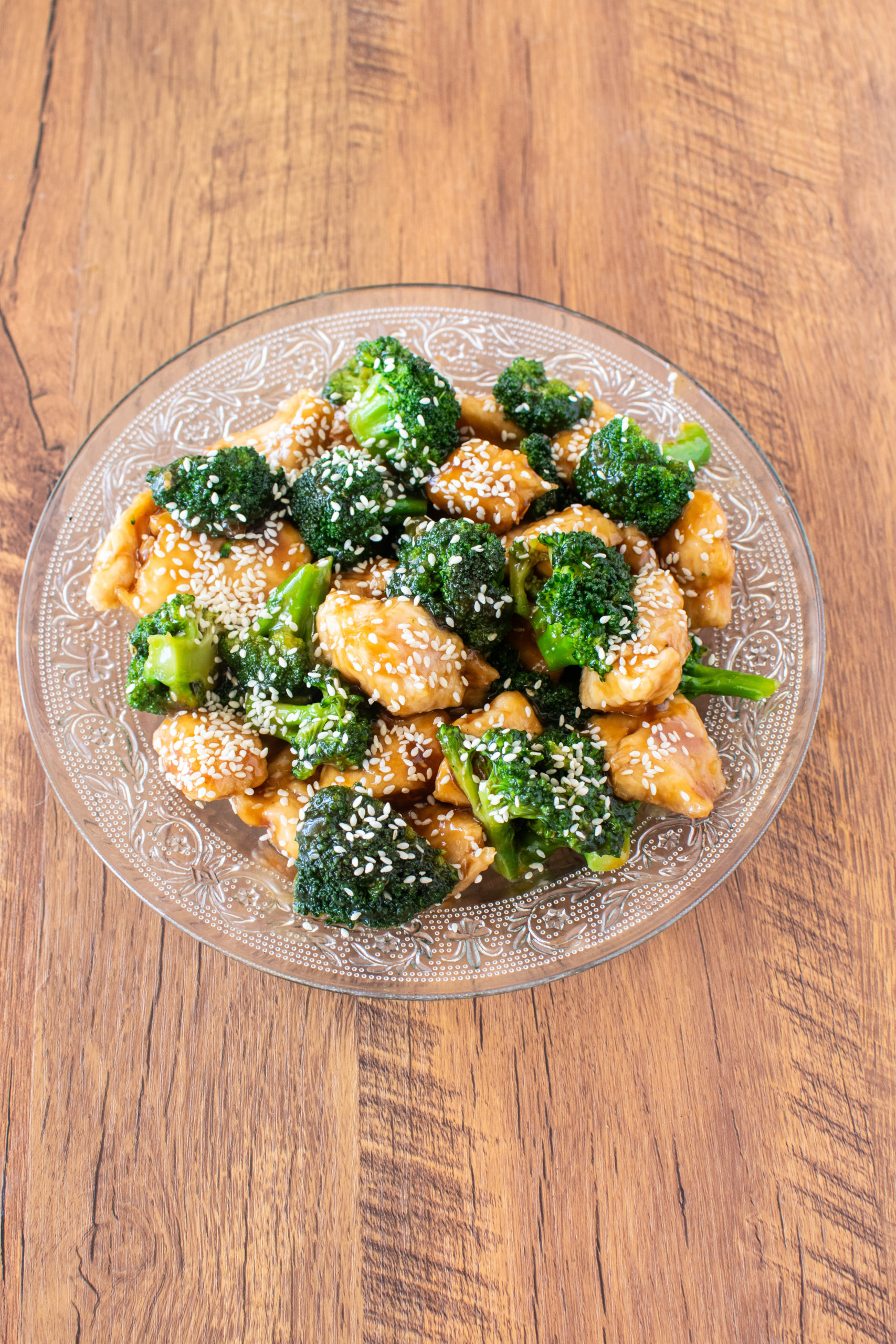
Chicken Chop Suey Recipe
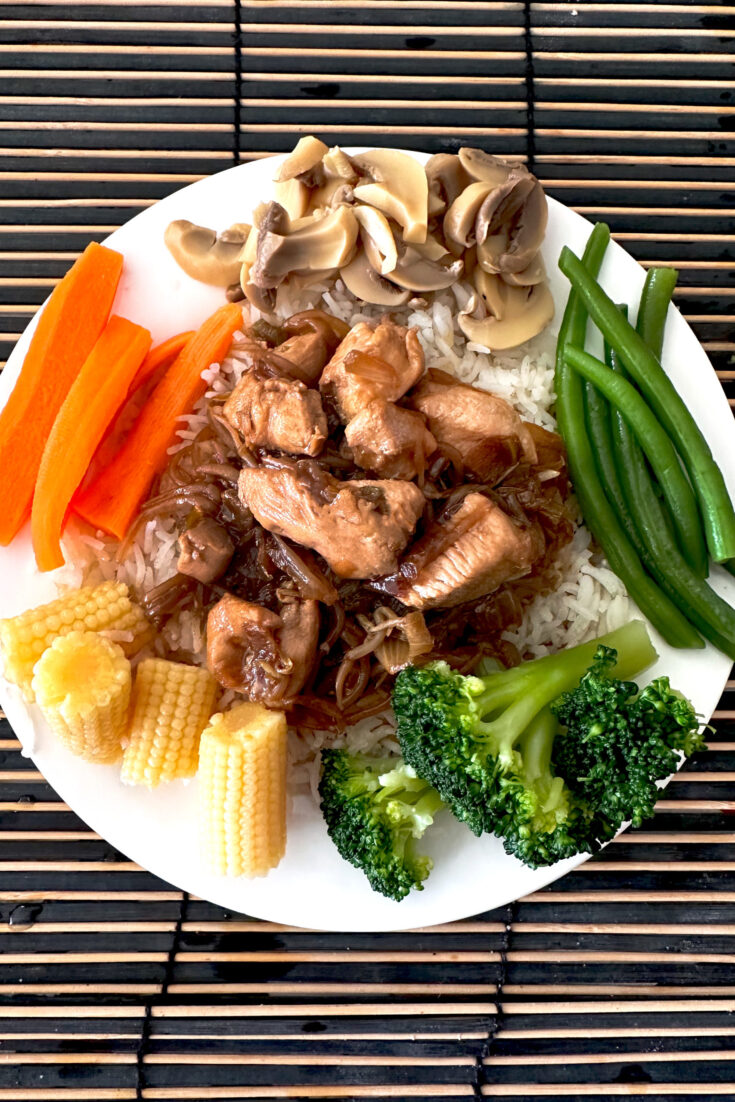
Easy, savory, and delicious, budget-friendly one-pan chicken chop suey, made without pork or shellfish.
Ingredients
- 1 ½ pounds chicken breast, cut into bite-size pieces (approximately 1"x1")
- 1 pound bean sprouts (or more, if desired)
- ½ cup celery, sliced thin horizontally (approximately 1 medium stalk or use more if desired)
- 1 medium onion diced small
- ½ cup water
- ¼ cup soy sauce
Optional stir-fry suggestions:
- cooked carrot sliced into small strips
- baby corn cut into pieces
- mushroom slices or pieces
- cooked (or par-cooked) green beans
- chopped broccoli
Instructions
- Sauté the onions and celery in a large frying pan on medium heat, mixing occasionally.
- Add the pieces of chicken and sauté them as well until cooked.
- Add the water and soy sauce.
- Add the bean sprout and cook the entire dish until the bean sprouts are just soft (if you are adding any of the other vegetables, add them at the same time as the bean sprouts).
- Serve over rice.
Make a slurry by placing the cornstarch in a bowl and adding a couple of tablespoons of the sauce. Mix until completely combined and place back into the pan and mix well.*
Notes
* If you want a thicker sauce or if your sauce is too thin because vegetables released too much liquid, make another slurry with another ½ tablespoon of cornstarch. Mix it back into the sauce in the pan.
Nutrition Information:
Yield:
2Serving Size:
1Amount Per Serving: Calories: 330Total Fat: 6gSaturated Fat: 2gUnsaturated Fat: 5gCholesterol: 146mgSodium: 1011mgCarbohydrates: 9gFiber: 2gSugar: 5gProtein: 57g