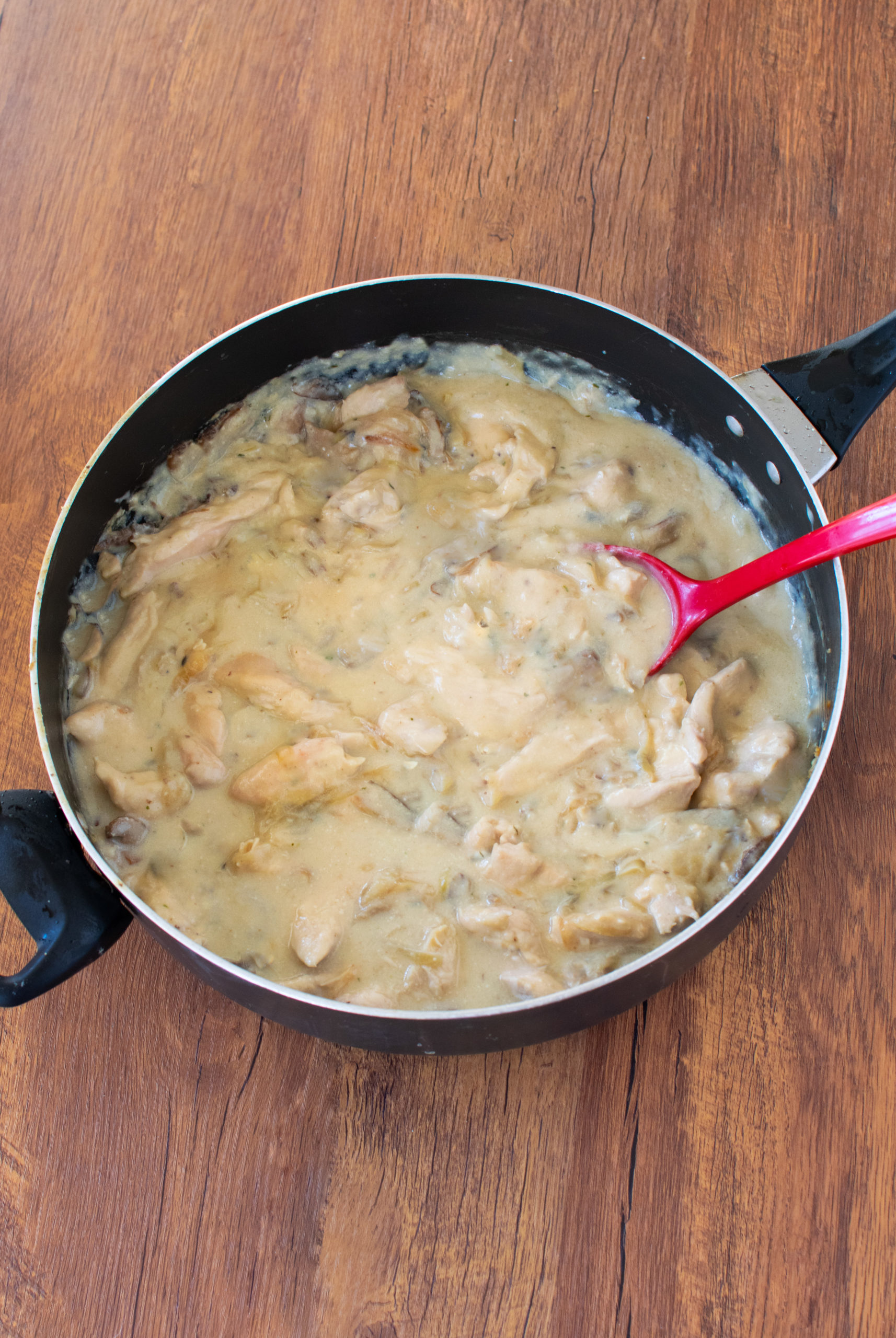
Easy Dairy-Free Chicken Pot Pie is a simple, budget-friendly recipe for classic chicken pot pie made without milk or butter.
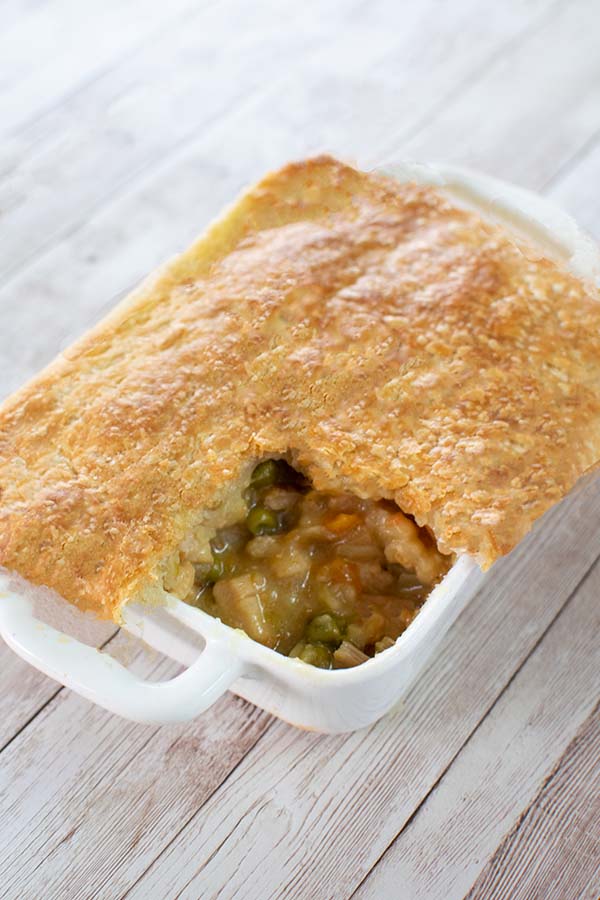
Chicken pot pie is a warm, savory, and traditional casserole dinner featuring a creamy filling and flaky dough.
It is a budget-friendly, dairy-free comfort food and a great way to use leftover chicken for family meals, potluck dinners with friends, or as a hearty, crowd-pleasing option for last-minute guests.
You can make the filling ahead of time, so this meal is incredibly easy to assemble-just top with fresh pastry dough and pop it in the oven.
It is perfect for a quick dinner after a long, busy day or to pack for a satisfying lunch at work.
And check out the health benefits of chicken, peas and carrots!
A little about Pot Pie
It seems that the first version of the pot pie began with the Greeks, who made a dish with different meats and other ingredients cooked in open pastry shells called "artocreas." The pastry was made of a flour and oil mixture and the dish was served at banquets
When the dish spread to the Romans, they served the dish with various meats, fowl, and seafood and added pastry on top.
The Crusaders spread meat pies across medieval Europe.
The English of the 16th century used meat such as pork, lamb, birds, and game, such as venison, in their pies. While the basic version was eaten by the lower class, the wealthy would serve them at banquets in which the chefs would show their talent by crafting and decorating them with flowers, designs, and heraldic devices.
The pies were brought to America by the settlers, who made chicken pot pie, beef pot pie, and sea pie, which was apparently developed on the ships across the ocean and used turkey, veal, and mutton, whichever was available.
While many things are called "pies" (take Eskimo Pie, for example, which is an ice cream), anything that does not include dough and is not baked is not truly a "pie."
Then there is Pennsylvania Dutch chicken pot pie, made by the Pennsylvania Dutch (of course). It is most commonly made with chicken, noodles, potatoes, and sometimes vegetables and is eaten out of a bowl. So, it is not really a pie at all, as there is no dough and no baking involved.
Some cooking terms
What does it mean when recipes say "to taste" about an ingredient?
When recipes say "to taste," it means that you can put in as little or as much as you like to your own taste. Some recipes have many ingredients that a cook can adjust to their own taste when cooking (not so much when baking, though).
The best way to calculate what your taste is with a recipe that you are not yet familiar with is to first taste the dish and then add the "to taste" ingredient GRADUALLY, a little at a time-a splash of this or a pinch of that-until the dish is just the way you like it.
Make sure to stir the ingredient after each time you add it so that the flavor will distribute evenly and become part of the dish. Then taste again. Repeat until you reach your personal preference.
Note: If you plan on using the recipe again, it is highly recommended to make a note of what and how much you added so that you can refer to it next time.
What does it mean when a recipe says that an ingredient is "optional"?
If an ingredient is "optional," it means that you can add it in or not based on your own preference. An optional ingredient can be flavor-related (i.e., salty, sweet, spicy, etc.), appearance-related (garnish), or even something like nuts or chocolate chips in baking.
What does "savory" mean?
"Savory" refers to foods that are not sweet, such as foods that taste salty, spicy, or herbal.
What does "sauté" mean?
To sauté means to cook quickly in a small amount of oil or fat in a frying pan on a relatively high heat that causes a slight browning of the food on the outside.
What is a slurry?
A slurry is a mixture of liquid and dry starch, such as cornstarch or potato starch, into a paste that is used to thicken sauces and soups. One can use flour to make a slurry as well.
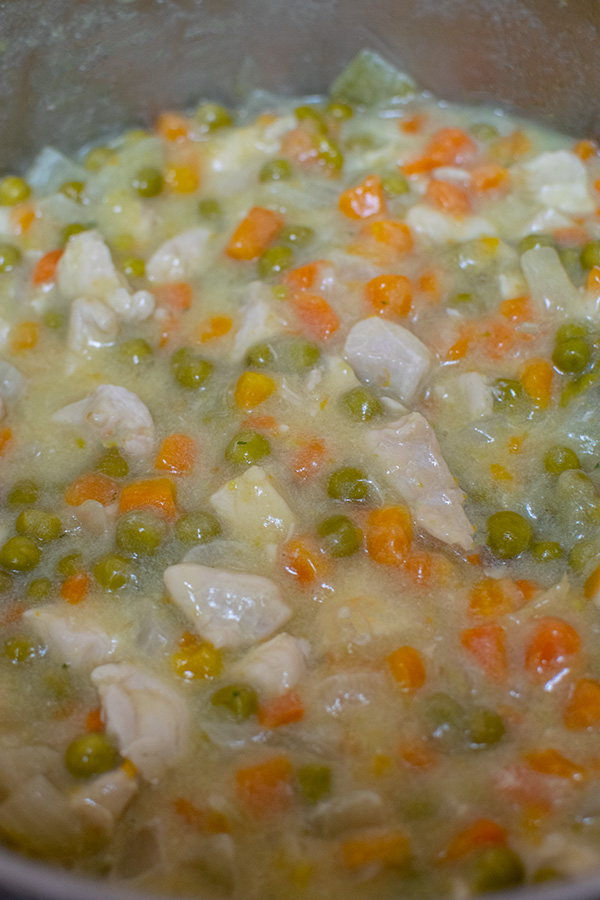
Tips for Best Dairy-Free Chicken Pot Pie
- You can use fresh or leftover (still moist) chicken.
- You can pour it into a ready-made pie crust and cover it with a second pie crust-just pinch the edges and make slits on the top for air to escape.
- If you use canned or frozen vegetables, the cook time will be reduced compared to fresh.
- Cornstarch works better as a thickener for slurry and makes gravy more glossy. However, in a pinch, you can use flour, but you must double the amount needed for cornstarch.
- To prevent clumping, you might find it easier to put the cornstarch in a bowl and then slowly add the liquid while mixing to make a slurry rather than vice versa.
Frequently Asked Questions (FAQs)
1) Is chicken breast better than chicken thighs for pot pie?
Chicken thighs are often preferred because their higher fat content makes them more forgiving and flavorful. However, chicken breast is a fantastic, leaner, and higher-protein alternative.
2) Can I use leftover chicken breast for this recipe?
Absolutely! Using leftover chicken breast is an excellent time-saver for a dairy-free chicken pot pie. Since the meat is already cooked, simply stir it into your filling right before you assemble the pie and put it in the oven.
3) What is the best way to cut chicken for a pot pie?
There is no "best way" per se, but typically, chicken breast is cut into cubes. If you are making a large pie or casserole, you can use larger 1-inch cubes, but if you are making personal pies or mini pies, smaller is better, and ½-inch cubes work well.
That said, if you are using leftover chicken, you can even shred it. The idea is to make sure that the chicken pieces are spread throughout the dish for even serving.
4) Can I add other vegetables to this recipe?
Yes. While this recipe only calls for onions, peas, and carrots, you can definitely add what you like. A couple of suggestions are diced celery and mushrooms. Just lightly saute them together with the onion.
5. Can I freeze turkey pot pie?
Yes. It is best to freeze the pie unbaked for the freshest results, though you can also freeze it after baking.
If freezing after baking, allow it to cool completely, then wrap it tightly in a double layer of plastic wrap and heavy-duty aluminum foil or in an airtight container to prevent freezer burn. It can be stored for up to 3 months.
When ready to serve, thaw it overnight in the refrigerator and bake or reheat it in an oven at 175°C until the crust is golden and the filling is hot.
Mini Chicken Pot Pies
If you would like to make individual portions of this recipe, just pour the filling into smaller, single-serve baking dishes, cover with a suitable-size piece of pastry dough, and bake until the top becomes a golden brown.
What is needed to make easy chicken pot pie?
I'm not great at meal planning and like to keep a lot of standard seasonings, spices, veggies, and canned goods in my kitchen at all times.
But these are all you need to have on hand to make this recipe even last minute!
chicken breast (fresh or leftover)
peas and carrots, frozen or canned
onion
chicken or beef consommé (bouillon) powder
water or milk substitute
cornstarch or flour
dairy-free puff pastry dough
oil for frying
If you like this recipe, try these!

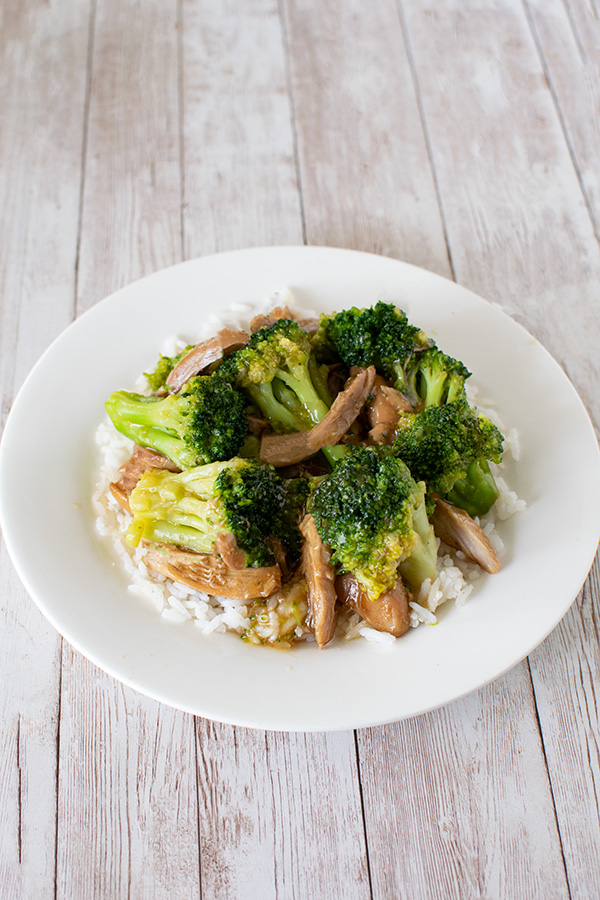
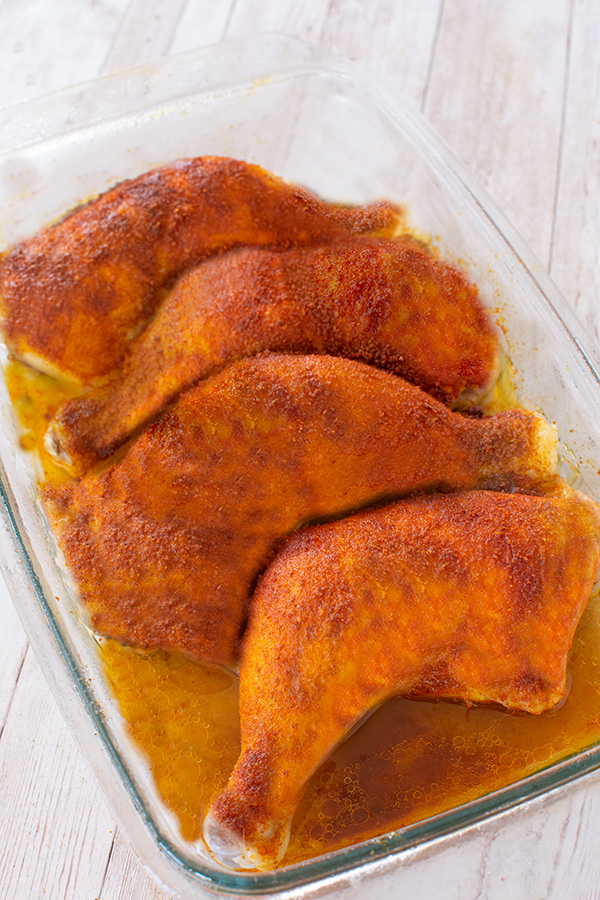
Love chicken dishes?


Easy Dairy-Free Chicken Pot Pie Recipe
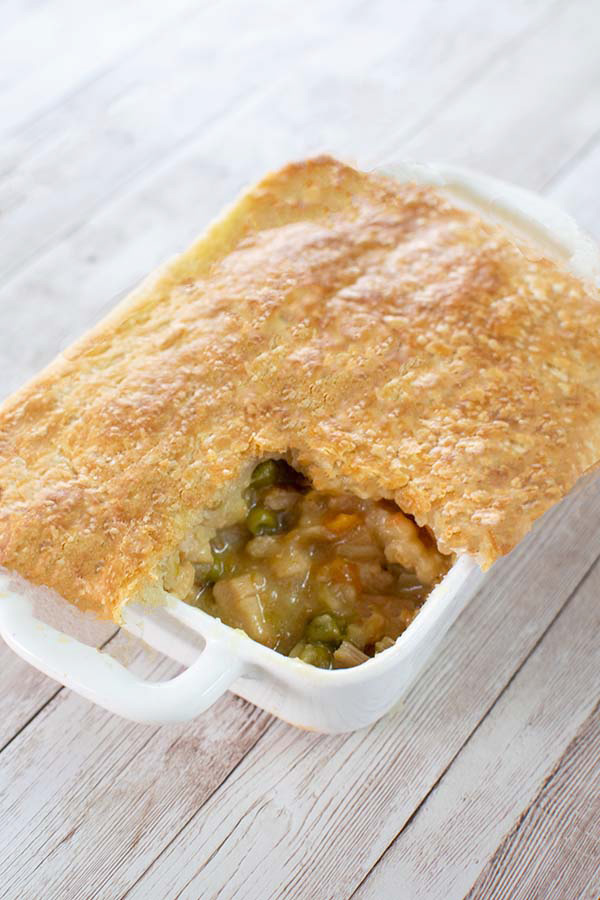
Delicious and simple, savory and creamy chicken pot pie casserole, without milk or butter!
Ingredients
- 2 cups chicken breast, cubed (fresh or leftover) or other chicken meat
- 2 cups peas and carrots (precooked, frozen or canned)*
- 1 medium onion, diced
- 1 tablespoon chicken or beef consommé (bouillon) powder (or to taste)
- 1½ cup water or milk substitute
- 2 tablespoons cornstarch or ¼ cup flour as a thickening agent**
- Diary-free puff pastry dough
- Oil for frying
Instructions
- Heat a little oil in the bottom of a medium-sized saucepan.
- Lightly sauté the diced onions on medium heat.
- Add chicken and mix with onions, stirring occasionally.
- When the chicken has cooked through (around 5 minutes), add peas and carrots, consommé powder, and water or milk substitute.***
- Cook on medium heat for 10 minutes or until chicken is cooked through.
- Lower heat to medium-low.
- Remove ½ cup of liquid from the mixture, pour it into a bowl, and add cornstarch or flour.
- Mix until smooth to make a slurry, pour back into the pot, and mix well.
- Pour mixture into a 9" round pie dish, pie shell, 8"x8" baking pan, or individual serving dishes.
- Cover with a suitable-sized piece of puff pastry dough (depending on your choice of serving dish).
- Make small slits in the top layer of dough for air to escape.
- Bake in an oven that has been preheated to 425°F for approximately 30 minutes or until the top crust is golden brown.
Notes
*Or any 2-cup mixture of vegetables: peas, carrots, diced celery, corn, and diced potatoes. If you use celery or raw potatoes, fry them with the onions so they will get soft.
** Cornstarch is a better thickener and makes the sauce more glossy.
*** Or you can use 1½ cups chicken broth instead of the consommé powder and water.
Nutrition Information:
Yield:
2Serving Size:
1Amount Per Serving: Calories: 626Total Fat: 11gSaturated Fat: 3gUnsaturated Fat: 8gCholesterol: 221mgSodium: 363mgCarbohydrates: 43gFiber: 8gSugar: 13gProtein: 88g