Easy Homemade Potato Latkes are a potato pancake dish traditionally eaten on the holiday of Chanukah (Hanukkah). This 4-ingredient recipe is budget-friendly, vegetarian, and dairy-free.
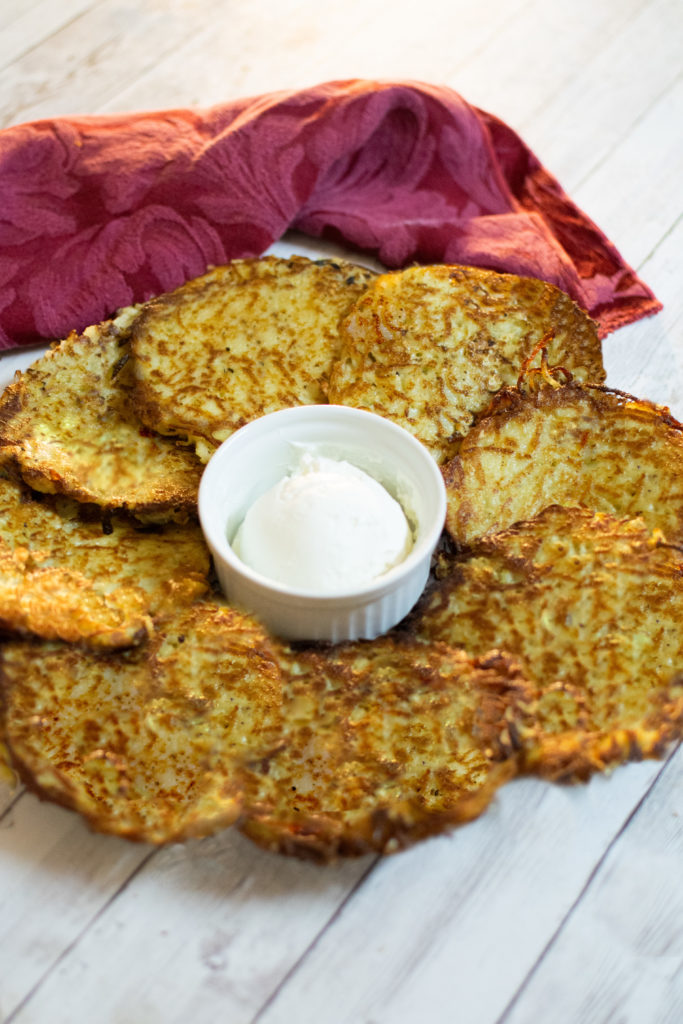
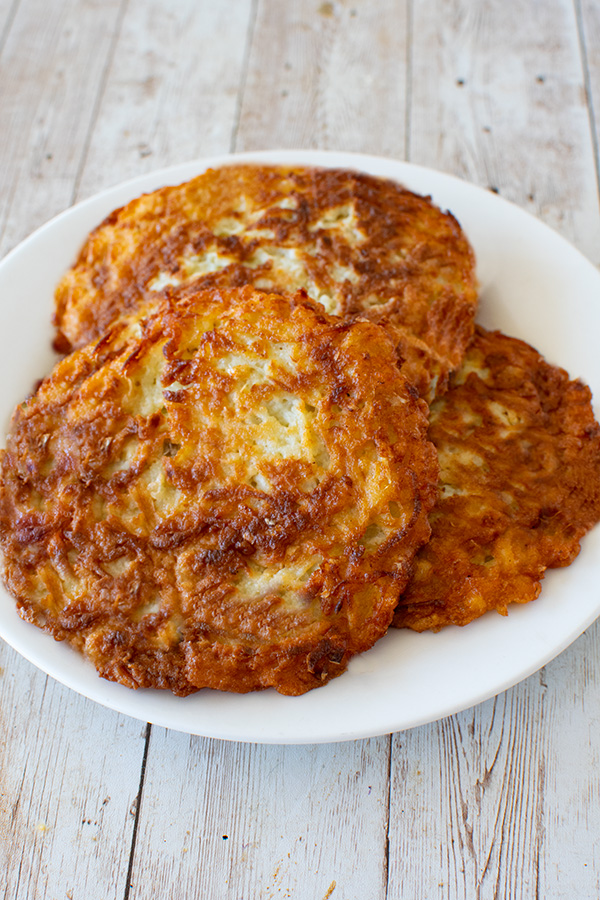
Latkes are a crispy, golden-brown dish that is a budget-friendly recipe made from 4 core ingredients: shredded or grated potatoes, onions, eggs, and matzo meal (and oil for frying). Everything else is optional.
Eat them hot or cold. Have them with sour cream, applesauce, cottage cheese, or sugar, but they're even delicious plain!
You can make them thin or thicker (just make sure that they cook all the way through so you don't serve them raw inside).
Although they're terrific any time of year, latkes typically served on the holiday of Chanukah, when the tradition is to eat oily foods (reminiscent of the oil that was enough to light the Temple for one day but lasted for eight).
Another such traditional Chanukah food is sufganiyot, which is traditionally a jelly doughnut, or sfinge, which is a Moroccan doughnut.
The word "latke" is Yiddish and comes from a Russian word that means "little pancake."
A little about potatoes
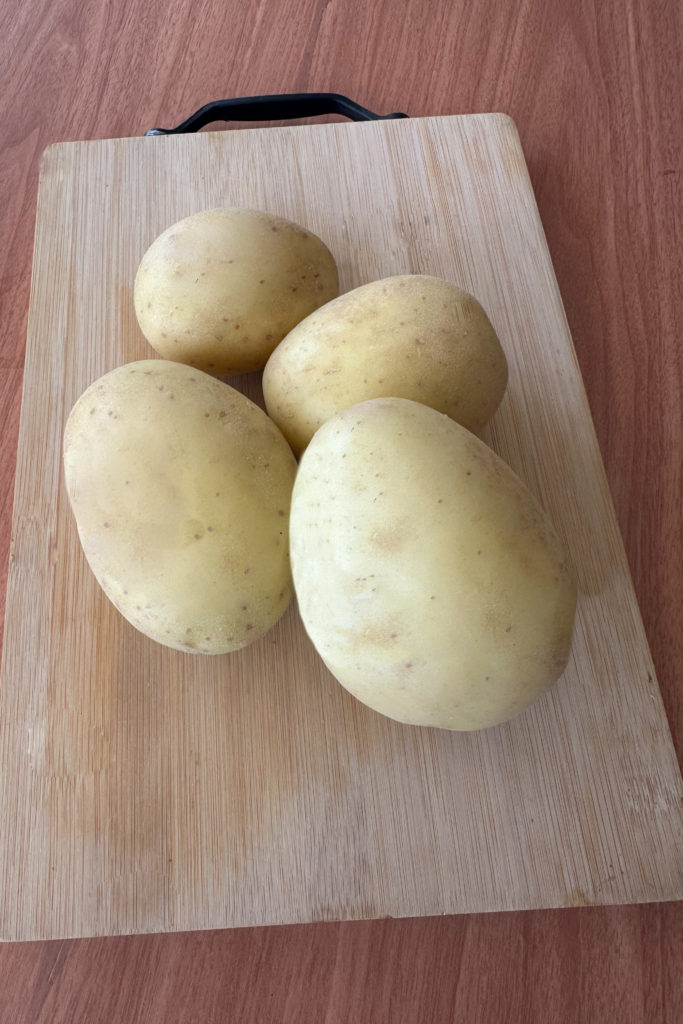
The potato is a perennial, starchy tuber, a root vegetable, that is native to the Americas.
Potatoes contain health benefits and are an excellent source of fiber, vitamins, and nutrients and provide fuel for the body.
Potatoes are gluten-free and very filling. In addition, they are a good source of antioxidants-some more than others-and they contain resistant starch. However, their nutritional content depends on the type of potato. Much of a potato's nutrition is in the skin of the potato, and peeling them reduces their nutritional value.
Adding fattening toppings, such as sour cream or butter, adds calories and fat.
Different potatoes are considered to work best with different recipes, but overall, they can be used in a variety of delicious meals for recipes from all over the world.
There may be over a couple hundred varieties of potatoes in the United States, but there are only 7 main categories. The most popular of these are the red, white, yellow, and russet.
Fun Facts
- Potatoes were first cultivated in Peru by the Incas.
- Potatoes were introduced to Europe (Ireland) toward the end of the 16th century.
- Potatoes began to be planted in the colonies in the early 1700s.
- Potatoes are the #1 vegetable crop in the United States and 4th most consumed in the world.
- Idaho is the largest grower of potatoes.
- The potato was the first vegetable to be grown in space.
Some useful related cooking info
What are the different oils used in cooking?
"High-heat" oils have neutral flavors and have been processed in order to handle high temperatures and are good for sautéing, searing, and frying. These include canola oil, vegetable oil, avocado oil, and grapeseed oil, each with its own "best for" with chefs.
Some oils have their own flavor and are good for sautéing and roasting and add a little extra to the dish. These include extra- virgin olive oil, coconut oil, and peanut oil. Extra virgin olive oil works well with roasting or sautéing, but not for deep frying.
Coconut oil is good in dishes where a slightly coconut flavor enhances the dish, and peanut oil is good for deep-frying and will add a subtle nutty taste and smdeep-frying.ian dishes call for peanut oil in the ingredients.
Then there are oils that are not used with heat but rather for dressing up foods, such as sesame oil, flaxseed oil, and walnut oil, among others.
What does it mean when recipes say "to taste" about an ingredient?
When recipes say "to taste," it means that you can put in as little or as much as you like to your own taste. Some recipes have many ingredients that a cook can adjust to their own taste when cooking (not so much when baking though).
The best way to calculate what your taste is with a recipe that you are not yet familiar with is to first taste the dish and then add the "to taste" ingredient GRADUALLY, a little at a time-a splash of this or a pinch of that-until the dish is just the way you like it.
Make sure to stir the ingredient after each time you add it so that the flavor will distribute evenly and become part of the dish. Then taste again. Repeat until you reach your personal preference.
Note: If you plan on using the recipe again, it is highly recommended to make a note of what and how much you added so that you can refer to it next time.
What does it mean when a recipe says that an ingredient is "optional"?
If an ingredient is "optional," it means that you can add it in or not based on your own preference. An optional ingredient can be flavor-related (i.e., salty, sweet, spicy, etc.), appearance-related (garnish), or even something like nuts or chocolate chips in baking.
What does "shredded" mean?
"Shredded" means to create long, thin strips (not necessarily uniform) of vegetables, like with coleslaw or potatoes.
What does "grated" mean?
"Grated" means to scrape food against a surface with rough, tiny holes that break it down into very small, fine pieces.
What do some of those silly measurement expressions mean?
Drop - ¹/₆₄ teaspoon (or less-it's however a literal drop comes out)
Smidgen - ¹/₃₂ teaspoon
Pinch - ¹⁄₁₆ teaspoon (what you can grab between your finger and thumb)
Dash - ⅛ teaspoon (what comes out when you shake out of a shaker or bottle)
Tad - ¼ teaspoon
Dollop-a glob on a spoon (like with mayonnaise or ice cream)
Scant-a scant cup is almost a cup, just below the line.
Heaping-above the line of the spoon (teaspoon, tablespoon)
Frequently Asked Questions (FAQs)
What are the best potatoes to use for potato latkes?
Starchy potatoes like Russet potatoes work best for latkes because their high starch content and low moisture help create an exceptionally crispy exterior and fluffy interior.
What do I do if my mixture leaks liquid while I am cooking?
Liquid will most likely seep out of the shredded potatoes and onions as the mixture sits in the bowl as you fry the pancakes. Squeezing out all of the liquid from the potatoes after shredding and before adding the rest of the ingredients helps.
And then you can just pour out as more liquid that accumulates or add a little more matzo meal or flour to help soak it up.
Can you freeze leftover potato latkes?
Yes, you can freeze baked or fried latkes. Just let them cool completely first. You should be able to reheat them directly from the freezer in a hot oven, in a toaster oven, or in a frying pan to restore their crispiness.
Why do people eat latkes on Chanukah?
Latkes are traditionally eaten during the holiday of Chanukah because they are fried in oil, which commemorates the miracle of the oil lamp in the Holy Temple that miraculously burned for eight days.
Can I make latkes ahead of time?
You can grate the potatoes ahead of time and store them submerged in water in the refrigerator for a few hours, but drain and squeeze them thoroughly right before mixing.
Alternatively, you can fry the latkes ahead of time and reheat them in a 400°F oven for about 5 to 10 minutes until hot and crispy again.
Keeping pantry essentials in your kitchen
For someone who cooks frequently, whether you just like to cook or have a family or frequent guests, I find it very, very, VERY helpful to make sure that I keep a lot of ingredients in my kitchen to make sure I have them on hand to prepare a variety of dishes at a moment's notice.
I probably wouldn't have nearly the amount of items I keep if I lived alone, but my kids have regularly asked for different meals that would normally require advanced shopping or a quick trip to the grocery store.
I have a variety of utensils (including for baking, such as measuring cups for liquid and dry ingredients, spoons, bowls, pans, etc.), as well as seasonings, spices, dried herbs, baking ingredients (such as flour, baking powder, baking soda, etc.), substitutions for milk, pasta, eggs, and a whole lot of other things.
I'm not particularly great at advanced planning for meals, so I can't even tell you how many sudden trips to the store or times having to borrow from a neighbor (usually, they borrow from me!) this has saved me!
Of course, if you barely cook, you probably just want to keep the bare minimum.
So, what is needed to make easy homemade latkes?
Even if you don't want to keep a pantry full of just-in-case ingredients, these are all you need to have on hand to make this recipe!
potatoes
onions
matzo meal
eggs
(oil for frying)
(salt and pepper, optional)
(toppings, optional)
Love potatoes?
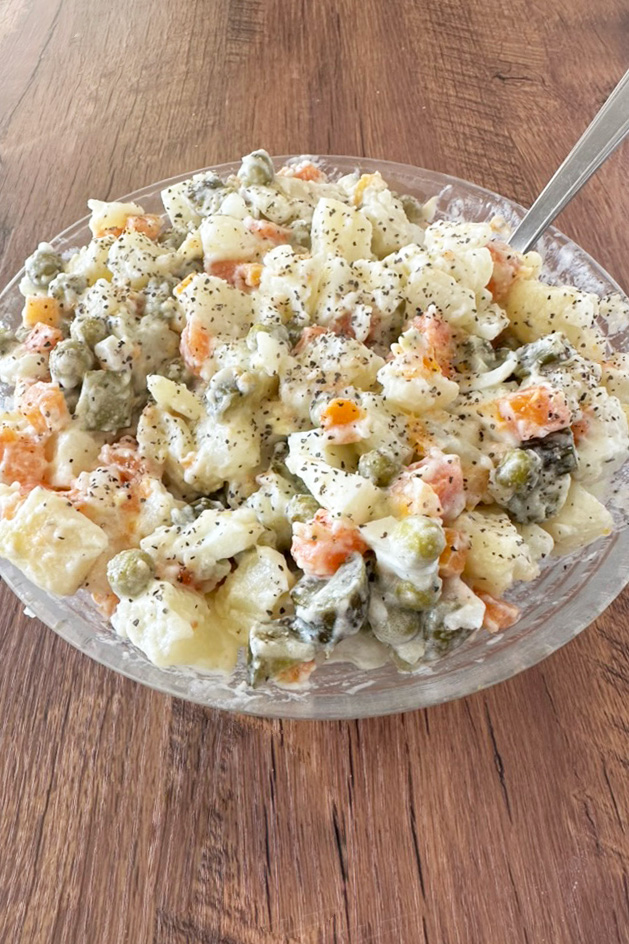
Try Easy Classic Potato Salad With Eggs
Easy Homemade Potato Latkes Recipe
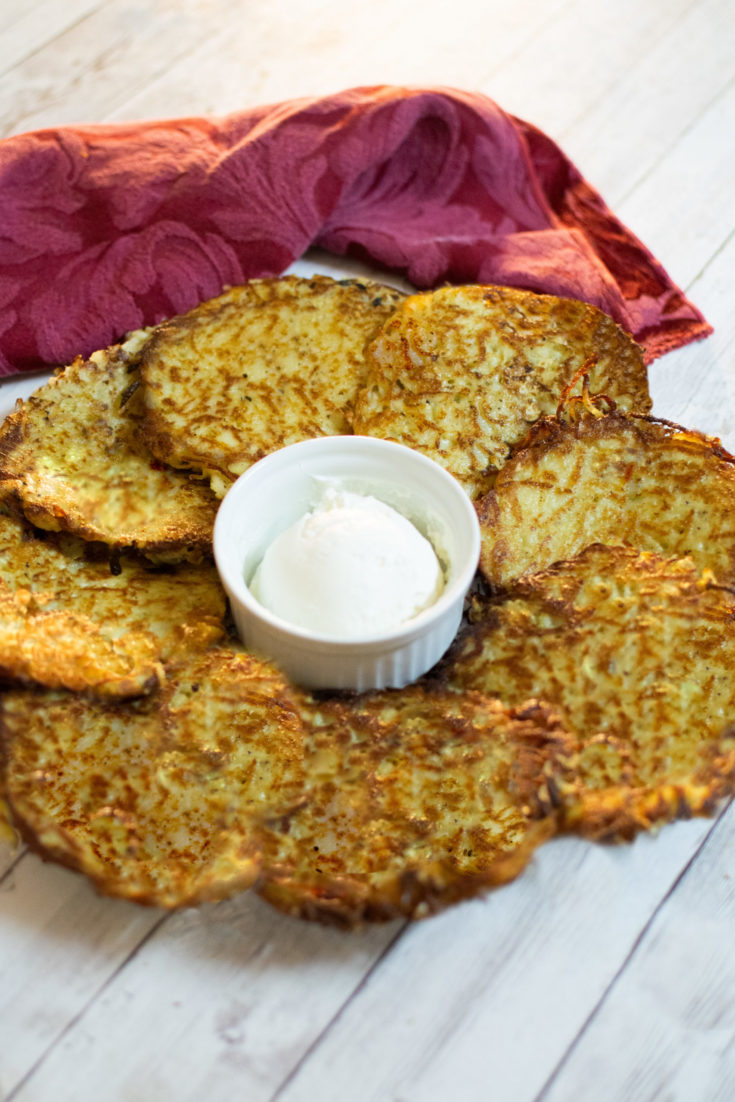
Delcious potato pancakes, made with 4 core ingredients. Have with your favorite topping on Chanukah or anytime!
Ingredients
- 1 pound potatoes
- 1 medium onion
- 2 eggs
- ½ cup all-purpose flour or matzo meal (have more on hand)*
- 1 teaspoon salt or to taste
- ½ teaspoon ground pepper or to taste, optional
- oil for frying
- toppings of choice, optional
Instructions
- Grate the potatoes and squeeze out the liquid very well (using a cheesecloth or handkerchief works well).*
- Place the drained, grated potatoes in a bowl.
- Grate onion or chop small.
- Add onions, eggs, flour, or matzo meal and mix well.*
- Pour oil approximately ¼" high into a frying pan (low sides are the easiest to work with) and heat on medium-high.
- When the oil is hot enough (a drop of batter will sizzle in it), drop heaping spoonfuls of the latke batter into the hot oil—making sure not to crowd them—flatten them a bit, and fry until golden brown. Then, carefully flip to fry on the other side.
- Remove from oil onto a paper towel-lined plate or tray.
- Repeat until the batter is used up. If more liquid comes out of the potatoes while the batter is sitting, pour it out or add some more flour or matzo meal to the batter.
- Serve with apple sauce, sour cream, sugar, cottage cheese, or anything you like!
Notes
*Chances are that if the batter has to sit for a while, it will continue to leak some liquid into the bowl, so either pour it out or you can add some more flour or matzo meal.
Nutrition Information:
Yield:
8Serving Size:
1Amount Per Serving: Calories: 127Total Fat: 3gSaturated Fat: 1gTrans Fat: 0gUnsaturated Fat: 2gCholesterol: 47mgSodium: 288mgCarbohydrates: 21gFiber: 2gSugar: 1gProtein: 4g