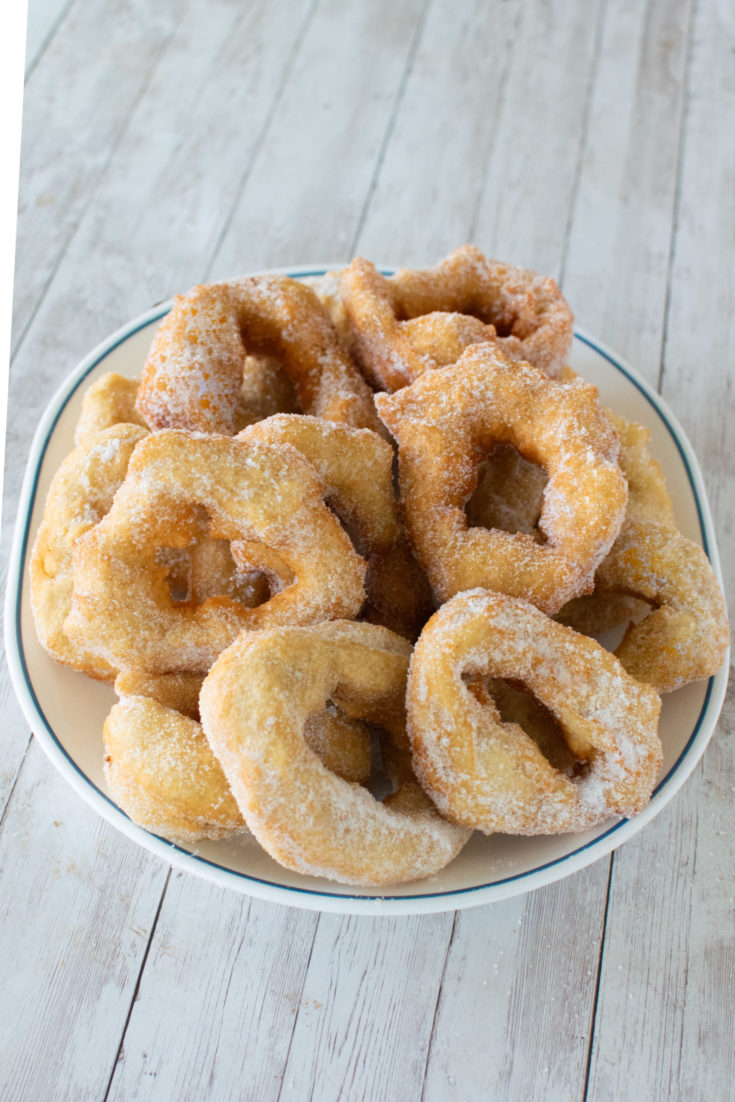
Sfinge (or sfenj) is a simple recipe for classic Moroccan fried doughnuts or fritters. The recipe contains no butter, milk, or eggs, so it's both dairy-free and vegan.
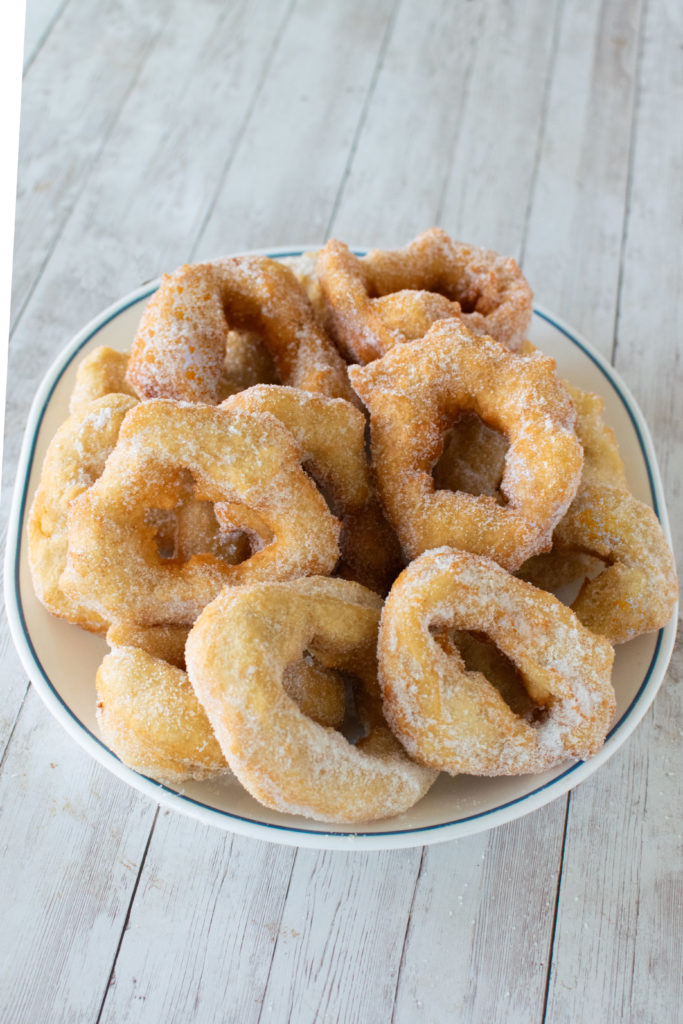
Moroccan Sfinge is a delicious treat. They're simpler to make than regular doughnuts because they're free-form and aren't supposed to have a perfectly round shape.
The dough is very wet and sticky when it goes into the oil, resulting in a fritter-like dessert that's crispy on the outside and soft on the inside.
All you do is grab some of the sticky dough from the bowl, form it into a random ring, and drop it into hot oil. When it's golden brown, take it out and roll it in granulated sugar (or drizzle it with honey or syrup). That's it!
The dough rings can be made thin or fat, or anywhere in between. Some people don't even bother forming a ring and simply drop the dough as balls into hot oil, like doughnut holes.
Sfinge is very popular among Moroccan Israelis during Chanukah, when the tradition is to eat foods fried in oil, such as jelly doughnuts and potato pancakes.
It's also traditionally enjoyed on the evening after Passover, when Moroccan Jews celebrate Maimouna, a festive celebration marking the end of the holiday.
Jump to:
What is needed to make sfinge?
all-purpose flour
oil
white granulated sugar
dry yeast
salt
Moroccan Jews in Israel
The majority of Moroccan Jews in Israel are descendants of Jewish communities that immigrated to Israel from Morocco, particularly during the 1950s and 1960s.
Morocco was once home to the largest Jewish community in the Muslim world. During the mid-20th century, political changes, rising nationalism, antisemitism, and restrictions on Jewish emigration made life increasingly difficult and uncertain for many Moroccan Jews. Large numbers left Morocco for Israel, often with little practical choice about whether they could safely remain, with additional waves of immigration continuing in later decades.
Moroccan Jews brought their rich culinary traditions with them to Israel, and Moroccan Jewish foods became an important part of Israeli cuisine. Sfinge is one of those beloved foods, enjoyed especially during Chanukah and Maimouna.
Frequently Asked Questions (FAQs)
What is sfinge?
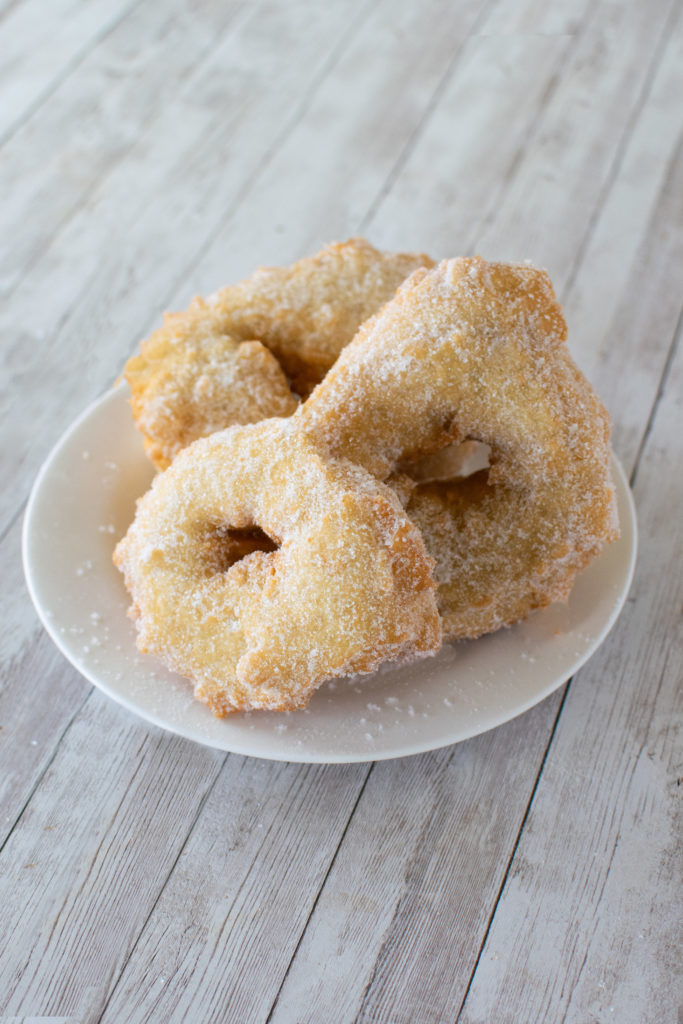
Sfinge, also known as sfenj, is a traditional Moroccan fried doughnut or fritter made from a wet, sticky dough. The dough is shaped into irregular rings and fried until golden brown, crispy on the outside, and soft inside.
Is sfinge the same as sfenj?
Yes. Sfinge and sfenj are different spellings for the same Moroccan fried doughnut. The name and spelling can vary depending on the language and transliteration.
Why is sfinge dough so sticky?
Sfinge dough is intentionally very wet and sticky. This loose dough gives the finished fritters their characteristic light, airy interior and irregular shape.
Does sfinge have to be shaped like a ring?
No. Sfinge is traditionally shaped into irregular rings, but you can also drop portions of the dough into the oil as balls to make doughnut-hole-sized fritters.
Why are Moroccan doughnuts not perfectly round?
Sfinge is a free-form doughnut rather than a rolled-and-cut doughnut. The wet dough is shaped by hand before being dropped into the hot oil, so each one naturally has an irregular shape.
How do you serve sfinge?
Sfinge can be rolled in granulated sugar while warm or served with honey or syrup. They're delicious as a snack or sweet treat with coffee or tea.
Is sfinge vegan?
Yes. This sfinge recipe is vegan because it contains no butter, milk, eggs, or other animal products.
When do Moroccan Jews eat sfinge?
Moroccan Jews in Israel commonly enjoy sfinge during Chanukah, when fried foods are traditionally eaten, and during Maimouna, the festive celebration held after Passover.
If you like Moroccan-style foods, try these!
Sfinge
Classic North African fried doughnuts or fritters that are dairy-free and vegan.
Ingredients
- 4 cups all-purpose flour
- 2 tablespoons oil
- 2 tablespoons white granulated sugar
- 1 tablespoon dry yeast
- 1 teaspoon salt
- 1 ½ cups warm water
- Extra white granulated sugar for coating after frying*
- More oil for frying
Instructions
- Mix flour, sugar, yeast, and salt in a bowl. **
- Add oil and warm water and mix well.
- Cover with plastic wrap and let sit until the mixture doubles in size. ***
- Fill a pot about an inch high with oil and place on medium heat. When a small bit of dough can sizzle in the oil, it's ready.
- Grab a handful of the dough (it will be very sticky) and make a hole in the middle and stretch it out so the hole is wide and the dough is a ring that is only around an inch or so thick.
- Carefully drop the dough in the hot oil.
- Repeat with more dough, but don't overcrowd the pot.
- Fry until the underside is a golden brown. Then flip and fry the other side.
- Remove the doughnuts from the oil with a slotted spoon (or something similar) and place in a bowl of granulated sugar and coat (or you can leave plain and later dip in honey).
- Repeat with the rest of the dough.
Notes
* Or you can drizzle honey or syrup instead of coating in sugar.
**If you are not sure if your yeast is still active, test by mixing the sugar and a little of the warm water together in a bowl and letting the mixture sit for around 5 minutes or so until it becomes frothy. If it doesn't, use a different yeast because this one is dead.
If you do test the yeast, then the first step in the instructions will be
1) Mix the yeast mixture into the flour and add the salt.
Then 2) add the oil and the rest of the warm water and mix well.
*** The time this takes depends on how warm the room is, so it can take from half an hour to around an hour and a half.
Nutrition Information:
Yield:
8Serving Size:
1Amount Per Serving: Calories: 504Total Fat: 5gSaturated Fat: 0gUnsaturated Fat: 5gSodium: 278mgCarbohydrates: 101gFiber: 5gSugar: 4gProtein: 14g