Homemade Israeli Falafel is a straightforward recipe so you can make this unique Middle Eastern street food in your own kitchen!
Falafal balls are golden crispy on the outside and soft on the inside.
They’re made from ground chickpeas and flavorful Middle Eastern spices, including warm, earthy cumin.
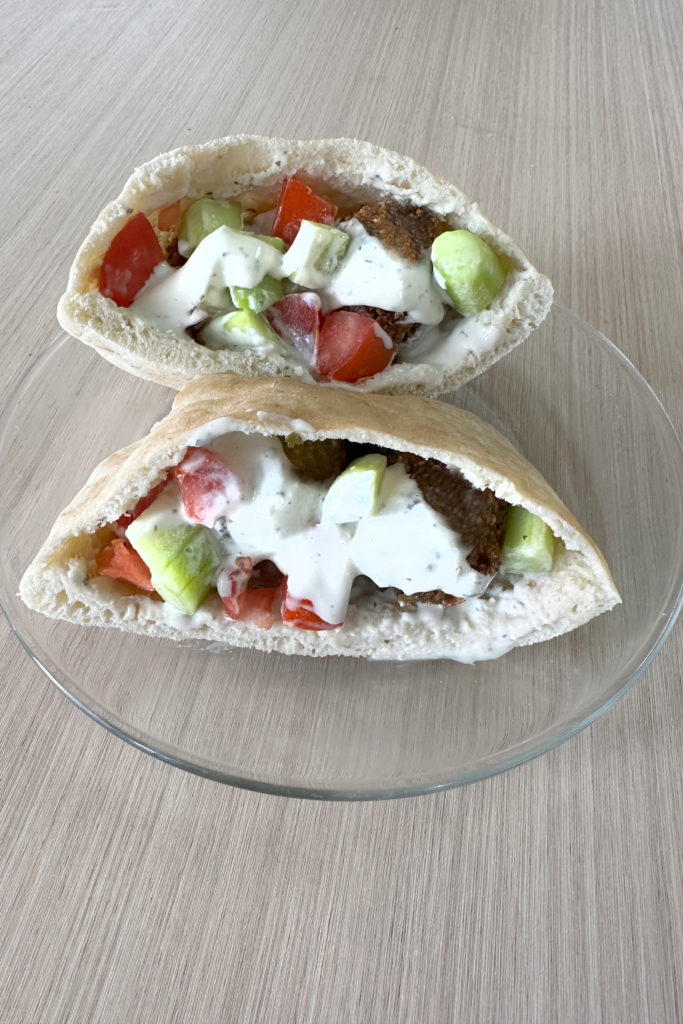
Eat them however you like them—on a plate or stuffed in a pita with tehini, hummus, matbucha, eggplant salad, vegetables, or whatever your heart desires!
And, of course, falafel is vegan!
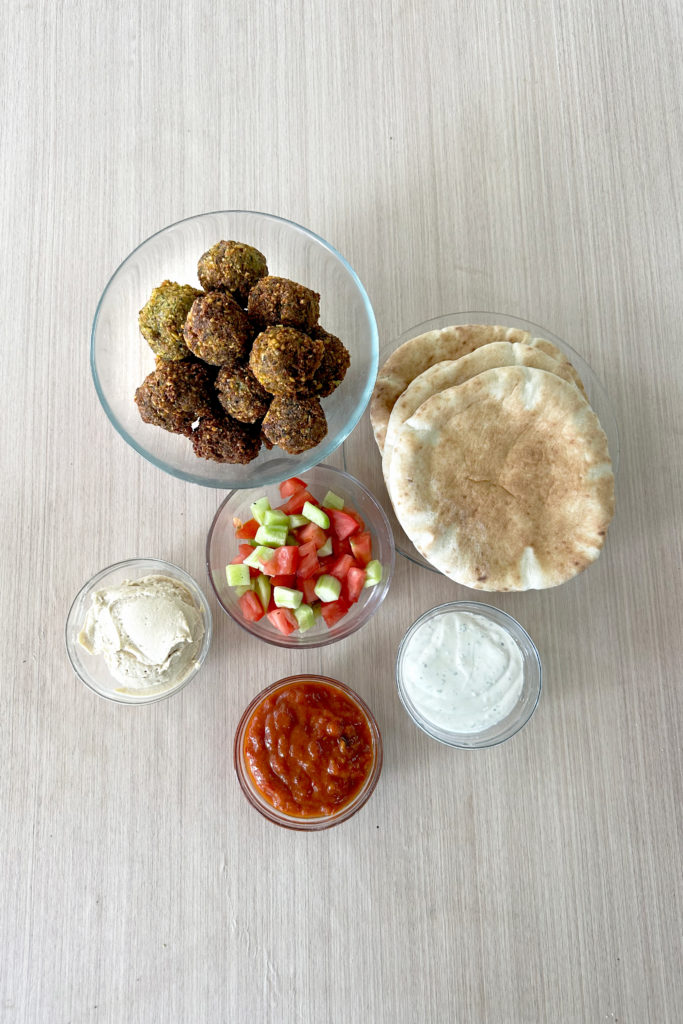
Falafels are a popular Middle Eastern street food made of balls of ground chickpeas (or fava beans) seasoned with herbs and spices and deep fried to a crispy exterior and soft interior.
They’re then place in a pita or laffa with Israeli salad (diced tomatoes and cucumbers), tahini, hummus, matbucha, coleslaw, fried eggplant, pickles, or any such variation.
In Israel, you will not find any city without several to many falafel eateries.
Falafels make a great spur-of-the-moment lunch or dinner!
A little about Israeli cuisine
Some people complain about cultural appropriation in cuisine when food from one country is attributed to another country.
However, national cuisine in itself is often a mingling of food from a variety of cultures, often due to a change of ruling countries and a shifting of borders.
Turkish cuisine, for example, goes back to the Ottoman Empire and was a combination of several cultures under Ottoman rule.
When people move from country to country, they will take their cultures with them, and their descendants may adapt their traditional cuisine with that of their new home, and if they don’t, others might.
And this includes Hummus.
When one lives in a melting pot, such as the US or Israel, it is just unrealistic to expect that food from a particular culture won’t mingle with that of other cultures.
That being said, “Israeli cuisine” is basically Middle Eastern (as opposed to Eastern European food) that was brought to Israel by Jews when they fled or were expelled from Muslim countries and moved to Israel mostly after the declaration of the State of Israel (collectively known as Mizrahi Jews).
Recipes were passed from generation to generation, and although decades have passed, the foods are still known by the culture they came from, and everyone seems to have their own way of making them.
That said, there are many variations of pretty much any “Israeli” recipe because of background, custom, or even just taste. When choosing a recipe, one has to know what actually constitutes a main ingredient—what makes the dish what it is—and what is left up to individual taste.
So, find the recipes you like with the ingredients you prefer, add your own twists, and בתאבון (pronounced: b’te’ah’vone, literally translated, “with appetite”)!
What are the different oils used in cooking?
“High-heat” oils have neutral flavors and have been processed in order to handle high temperatures and are good for sautéing, searing, and frying. These include canola oil, vegetable oil, avocado oil, and grapeseed oil, each with its own “best for” with chefs.
Some oils have their own flavor and are good for sautéing and roasting and add a little extra to the dish. These include extra virgin olive oil, coconut oil, and peanut oil. Extra virgin olive oil works well with roasting or sautéing, but not for deep frying.
Coconut oil is good in dishes where a slightly coconut flavor enhances the dish, and peanut oil is good for deep frying and will add a subtle nutty taste and smell. Many Asian dishes call for peanut oil in the ingredients.
Then there are oils that are not used with heat but rather for dressing up foods, such as sesame oil, flaxseed oil, and walnut oil, among others.
What does it mean when recipes say “to taste” about an ingredient?
When recipes say “to taste,” it means that you can put in as little or as much as you like to your own taste. Some recipes have many ingredients that a cook can adjust to their own taste when cooking (not so much when baking though).
The best way to calculate what your taste is with a recipe that you are not yet familiar with is to first taste the dish and then add the “to taste” ingredient GRADUALLY, a little at a time—a splash of this or a pinch of that—until the dish is just the way you like it. Make sure to stir the ingredient after each time you add it so that the flavor will distribute evenly and become part of the dish. Then taste again. Repeat until you reach your personal preference.
Note: If you plan on using the recipe again, it is highly recommended to make a note of what and how much you added so that you can refer to it next time.
What is needed for this recipe?
I hardly ever meal plan, so I like to keep a cupboard full of seasonings, spices, veggies, and canned goods in my kitchen to use whenever the mood strikes.
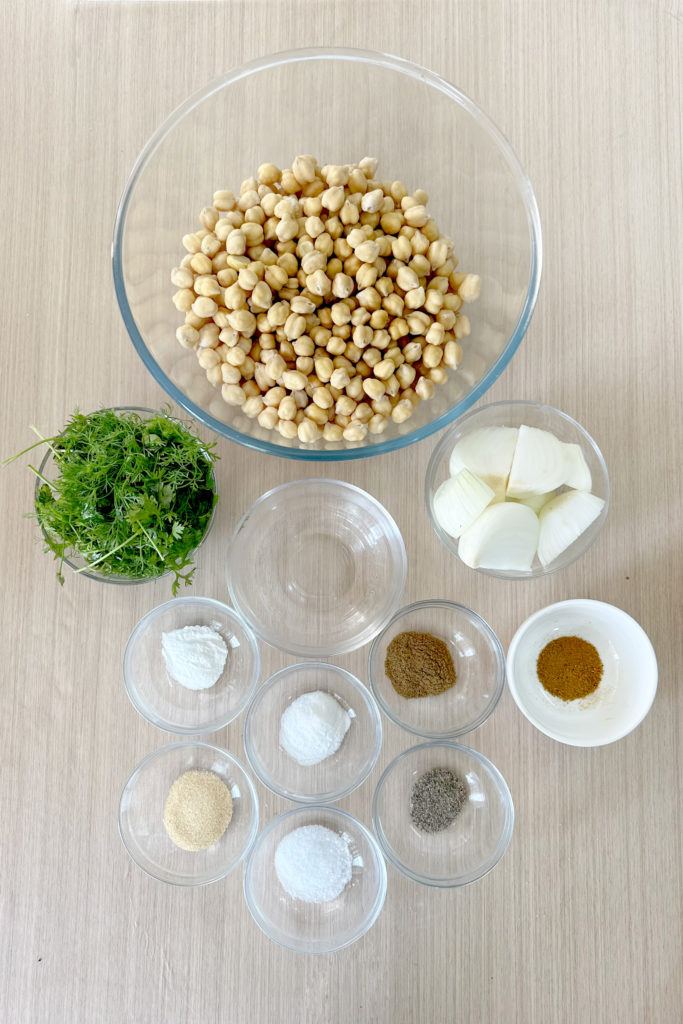
But these are all you need to have on hand to make this recipe even last minute!
raw chick peas (small chickpeas are best)
onion
coriander
fresh or granulated garlic
cumin
salt
baking powder
baking soda
black pepper
If you love Israeli street food, you’ve got to try the Sabich Pita Sandwich!
Easy Homemade Israeli Falafel
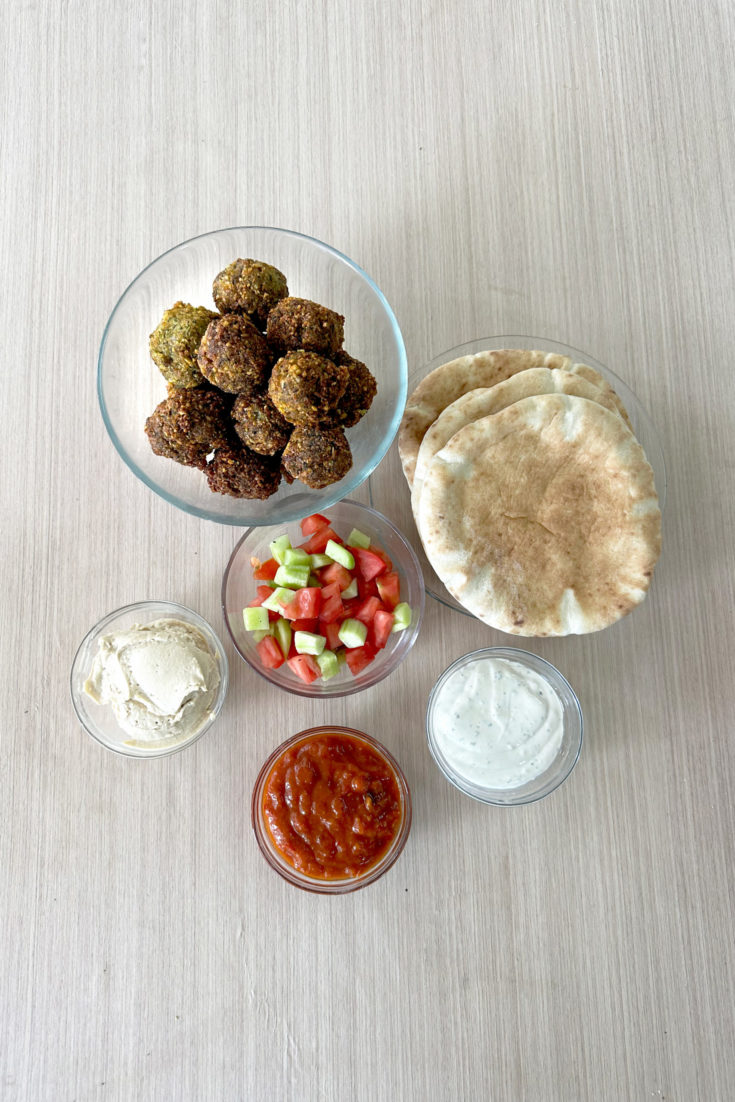
Delicious felafel balls, which are the main ingredient in falafel, the amazing Middle Eastern street food.
Ingredients
- 18 ounces raw chick peas (small chickpeas are best)
- 1 large onion, pureed
- 2 ounces of fresh coriander*
- 6 cloves of fresh garlic (or 1/2 tablespoon granulated garlic)
- 1 tablespoon cumin
- 2 teaspoons salt or to taste
- 1 teaspoon baking powder
- 1 tablespoon + 1 teaspoon of baking soda
- 1/2 teaspoon black pepper
- water
Instructions
- Place the raw chickpeas in 6 cups of water and 1 tablespoon of baking soda and let sit to soften for around 12 hours.
- Drain and wash the softened chickpeas and place them in a food processor together with the onion, garlic (or granulated garlic), coriander, cumin, salt, pepper and 2 tablespoons of water and blend, opening every so often to scrape down the sides to keep the mixture uniform, until you have a thick wet paste with very small pieces of chickpeas.
- Check to make sure that you can easily form a ball with the mixture. If you can't, then mix in one tablespoon of wter at a time until you can.
- Pour the mixture into a large mixing bowl and add the remaining 1 teaspoon of baking soda and the baking powder and combine well.
- Pour oil in a wide, low pan to a height of around 1" - 1 1/2" and heat on medium until the oil reaches around 325°F or until it is hot enough so when you drop a little piece of the mixture it to the hot oil, it fries.
- Form balls of around 1 1/4" in diameter and carefully drop them in the hot oil one at a time, making sure not to crowd. Fry until the bottom half has browned and then flip and fry the other side.
- Remove using a draining spoon and place on a plate that has been lined with paper towel to absorb excess oil.
- Serve as is or fill a pita with your favorite stuffings (Israeli salad, pickles, hummus, tehini, coleslaw, etc).
Notes
*If you are using sprigs, you can just remove the thick stem and use the thinner stems and the leaves.