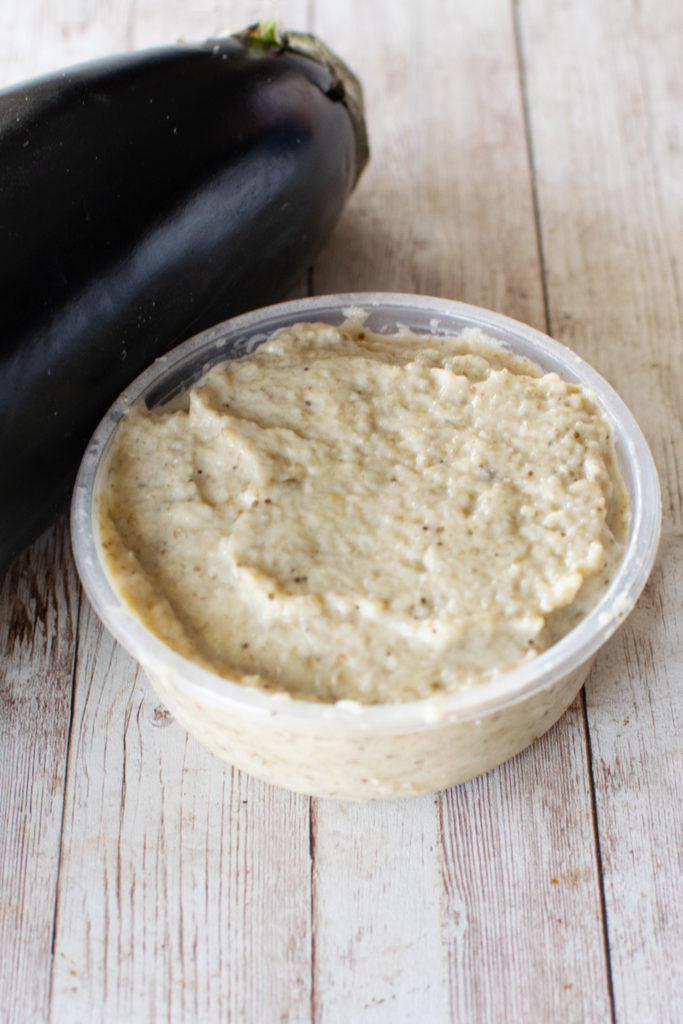
Easy Israeli Eggplant Salad with Mayo is a simple, 4-ingredient vegetarian and dairy-free recipe that is one of the Israeli appetizer salads (salatim) that are very popular in Israeli cuisine.
So, about this eggplant salad...
Cold appetizer salads (known just as "salatim") are very popular in Israeli food culture, and this eggplant salad with mayo is one of them. It's often found on mezze spread platters in restaurants.
They're traditionally served as appetizer dips for sliced plain pita or as spreads in Israeli street food, in a pita or lafa (Iraqi pita) with your own homemade Israeli falafel, with shawarma, or in a Sabich.
And you can find them at tables at events, barbeques, and get-togethers.
Plus, they make terrific sides for picnics or in a deli-meat sandwich.
Or... just eat this eggplant salad with a spoon!
Ways to roast or broil eggplant for this dish
The eggplants for this salad are roasted. You can do this in several simple ways:
1) Roast over an open flame: Poke a fork or a knife into the eggplant in several places to allow air to escape. Then, place the eggplant over a burner with open flame on your stove (cover around the burner with aluminum foil first to protect it from the eggplant, which will leak as it cooks).
Some people first wrap the eggplant in aluminum foil before placing it on the flame, so whichever way works for you.
Turn or reposition the eggplant every 2-3 minutes as the part over the flame has blackened and has shriveled a bit, until the entire eggplant has blackened and shriveled somewhat. This is the best way to prepare it (over an open flame), because of the smokey flavor it gives.
2) Roast over an electric stove: The same as the process above, but use a grill pan over the burner. It may not cooks as quickly as it does on an open flame.
3) Roast in the oven: Poke a fork or a knife into the eggplant in several places to allow air to escape. Place the eggplant on a baking tray or in a baking pan lined with aluminum foil or baking paper.
Place in a oven at a high temperature (400°F-you can use a higher temperature, but check more often) and turn the eggplant every 10-15 minutes or so until the entire eggplant has blackened and shriveled somewhat.
4) Broil in the oven: Poke a fork or a knife into the eggplant in several places to allow air to escape. Place the eggplant on a baking tray or in a baking pan lined with aluminum foil or baking paper.
Place in a oven on broil and turn the eggplant every few minutes or so until the entire eggplant has blackened and shriveled somewhat.
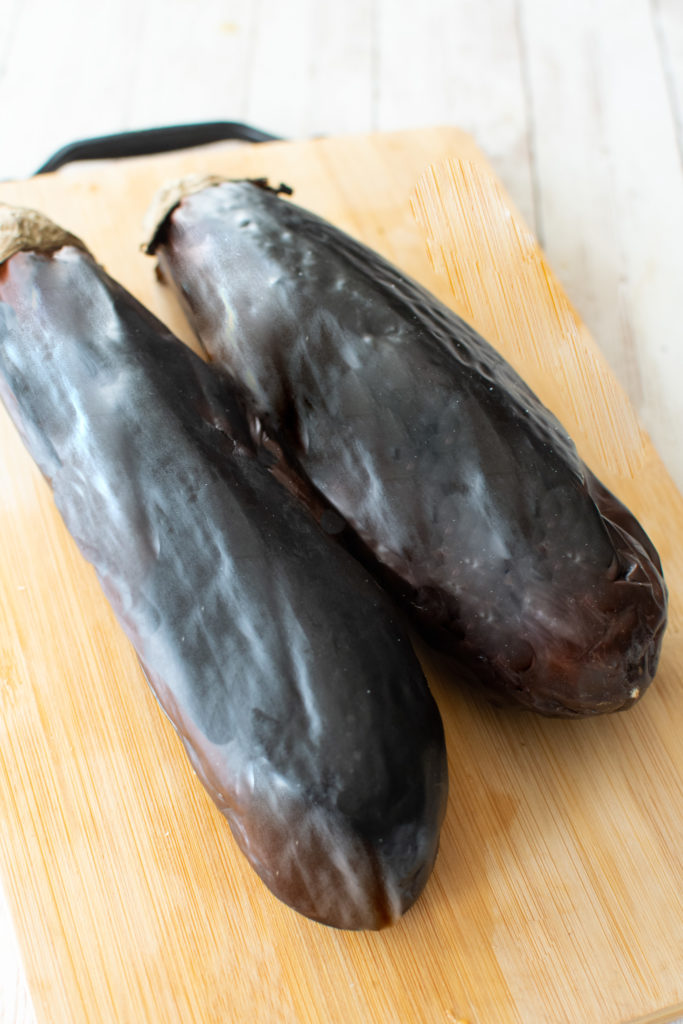

They are ready when you can easily slide a fork or knife through the skin and meat of the eggplant.
Many people don't bother to make salad out of it. They just slice it open, sprinkle with salt and/or pepper or drizzle or pour tehini over it, and eat it right out of the skin, such as with: Easy Roasted Eggplant
A little about eggplants
The eggplant is native to India and Asia, where it can be found growing wild, and it is believed that eggplants were brought to Europe sometime during the 7th or 8th century.
Australians and Americans call the vegetable eggplant, while in England it is called an aubergine, from the French word for this vegetable.
Because of its meaty texture, eggplant is used instead of meat in some vegetarian versions of meat recipes.
While there are a variety of types of eggplants, the one for this recipe is the large, egg-shaped (or teardrop-shaped), blackish-purple one with the meaty inside.
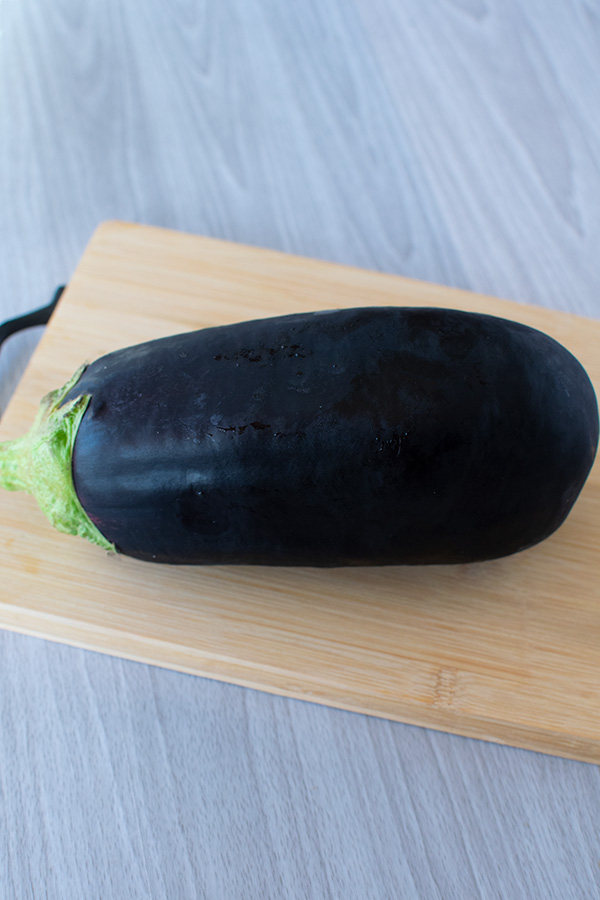
Eggplants have health benefits, as they contain antioxidants like vitamins A and C, which help protect your cells against damage, and are low in calories.
Eggplant is naturally a little bitter. If you find that to be the case, you can draw out the bitterness by sprinkling it with salt and letting it sit awhile.
If you do use salt, MAKE SURE to rinse it off before cooking the eggplant, or the salt will become a part of your dish!
Personally, I have never salted my eggplants before using them (and I have used eggplants in two countries) and have never had any problem with bitterness, but if you have any concern, please do.
Some cooking terms
What does it mean when recipes say "to taste" about an ingredient?
When recipes say "to taste," it means that you can put in as little or as much as you like to your own taste. Some recipes have many ingredients that a cook can adjust to their own taste when cooking (not so much when baking though).
The best way to calculate what your taste is with a recipe that you are not yet familiar with is to first taste the dish and then add the "to taste" ingredient GRADUALLY, a little at a time-a splash of this or a pinch of that-until the dish is just the way you like it.
Make sure to stir the ingredient after each time you add it so that the flavor will distribute evenly and become part of the dish. Then taste again. Repeat until you reach your personal preference.
Note: If you plan on using the recipe again, it is highly recommended to make a note of what and how much you added so that you can refer to it next time.
What does it mean when a recipe says that an ingredient is "optional"?
If an ingredient is "optional," it means that you can add it in or not based on your own preference. An optional ingredient can be flavor-related (i.e., salty, sweet, spicy, etc.), appearance-related (a garnish), or even something like nuts or chocolate chips in baking.
Frequently Asked Questions (FAQs)
What kind of mayonnaise should I use in this salad?
My favorite mayo to use in any such salad is Hellmann's or Best Foods (they are the same mayo, the name just depends on where you are in the US). But you can use any mayo you like. You can substitute regular mayonnaise with a low-fat variety or even with a vegan mayonnaise, and then the salad will be vegan.
How long does this eggplant salad last in the fridge?
Store your leftover eggplant salad in an airtight container in the refrigerator for up to 3 to 4 days. Give it a quick stir before serving again.
Can I use canned eggplant for this recipe?
This eggplant salad is made with roasted eggplant to get that authentic smoky flavor and tender texture. I don't know if a canned version will work.
What is the best way to cook the eggplant for this salad?
Roasting whole eggplants in the oven or charring them over an open flame yields the best results. This cooking method softens the flesh completely and imparts a rich, savory depth that forms the authentic base.
Do I need to peel the eggplant before roasting?
No. Eggplants are roasted with the skin on, and when they have become black and charred, then you scoop out the soft inside and mix well with mayo and seasoning.
Can I freeze this eggplant salad?
No, mayonnaise-based salads and cooked eggplants do not freeze well. Freezing causes the mayonnaise to break and separate, and the eggplant becomes watery and mushy upon thawing. It is best enjoyed fresh or stored in the refrigerator.
What is needed to make Israeli eggplant salad with mayo?
I hardly ever meal plan, so I like to keep a cupboard full of seasonings, spices, veggies, and canned goods in my kitchen to use whenever the mood strikes.
But these are all you need to have on hand to make this recipe even last-minute!
eggplants
mayonnaise
granulated garlic
salt
lemon juice (it's only optional)
Love eggplant? Try these!

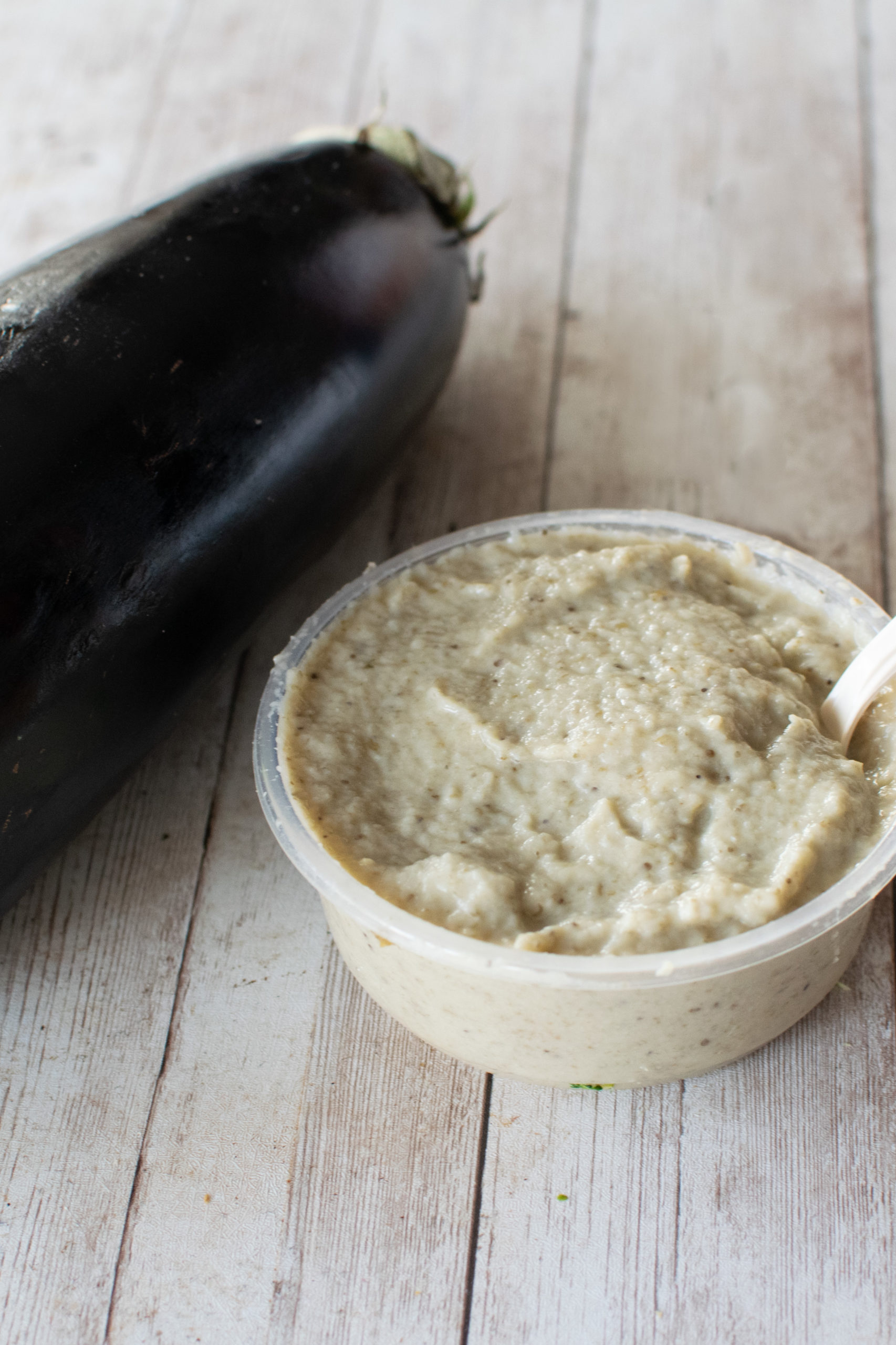
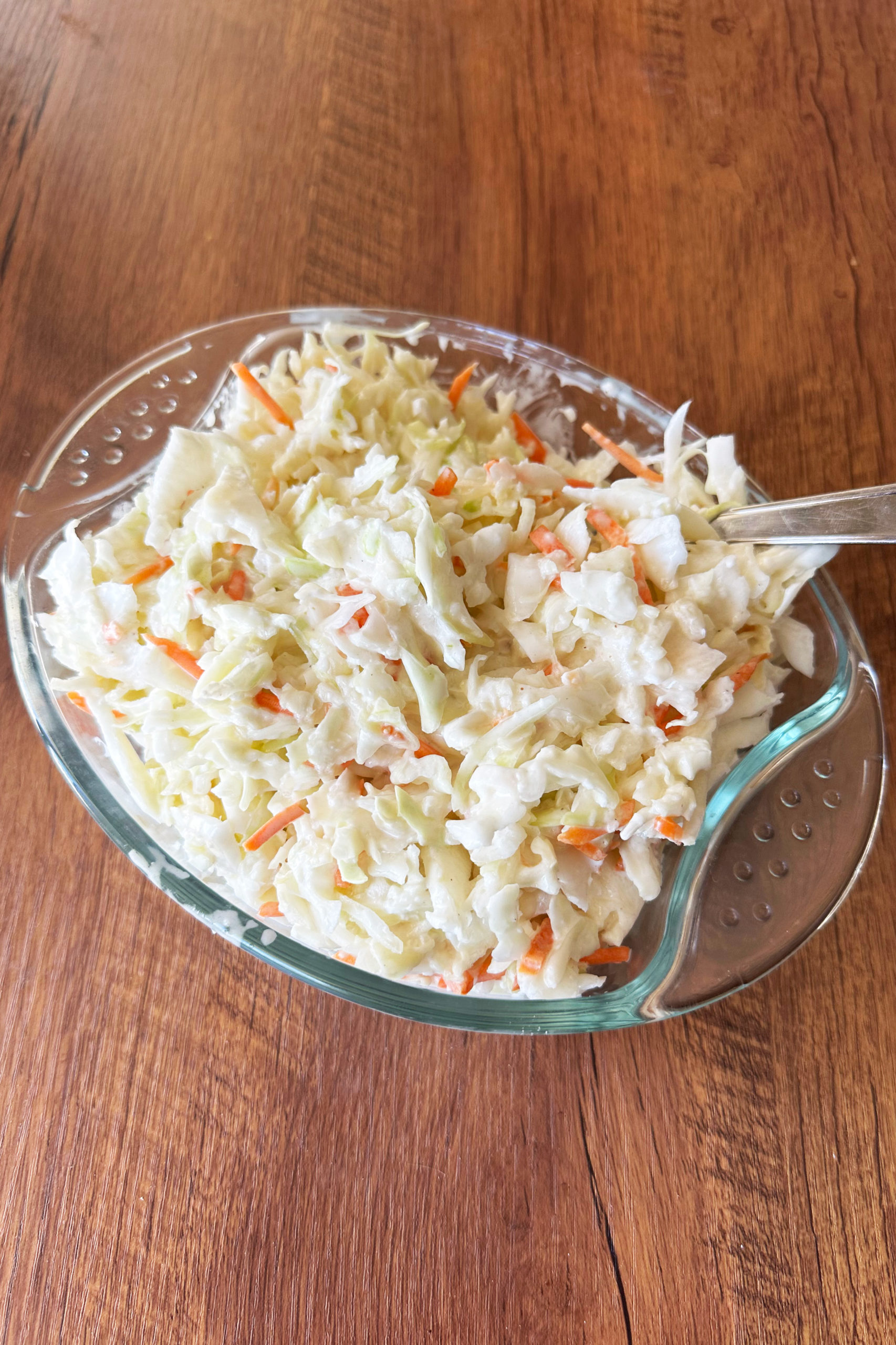
Love Israeli salads (salatim)?
Try these!
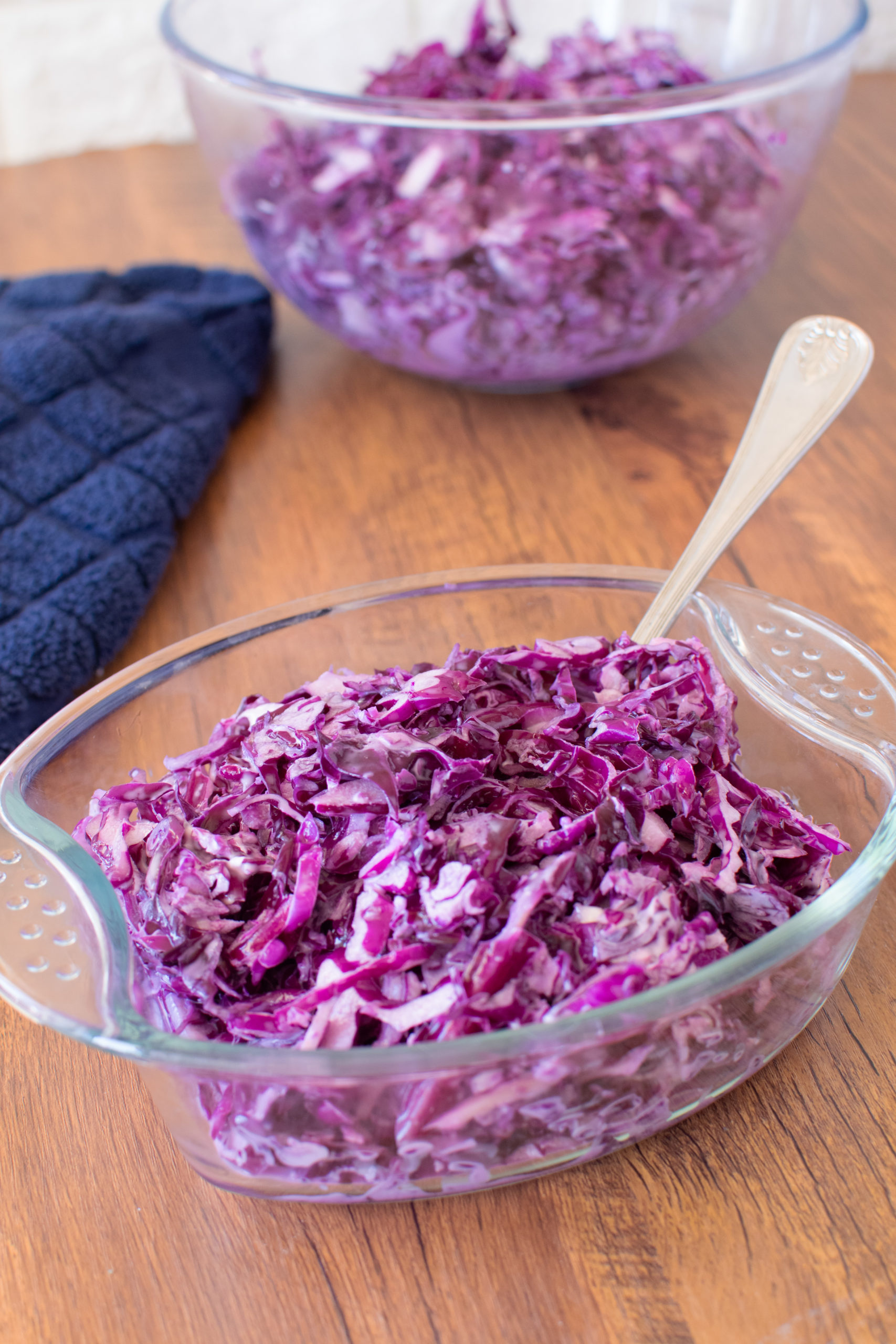
Israeli-Style Red Cabbage Salad
Israeli -Style Potato Salad
Israeli -Style Mushroom Salad
Easy Israeli Eggplant Salad Recipe with Mayo
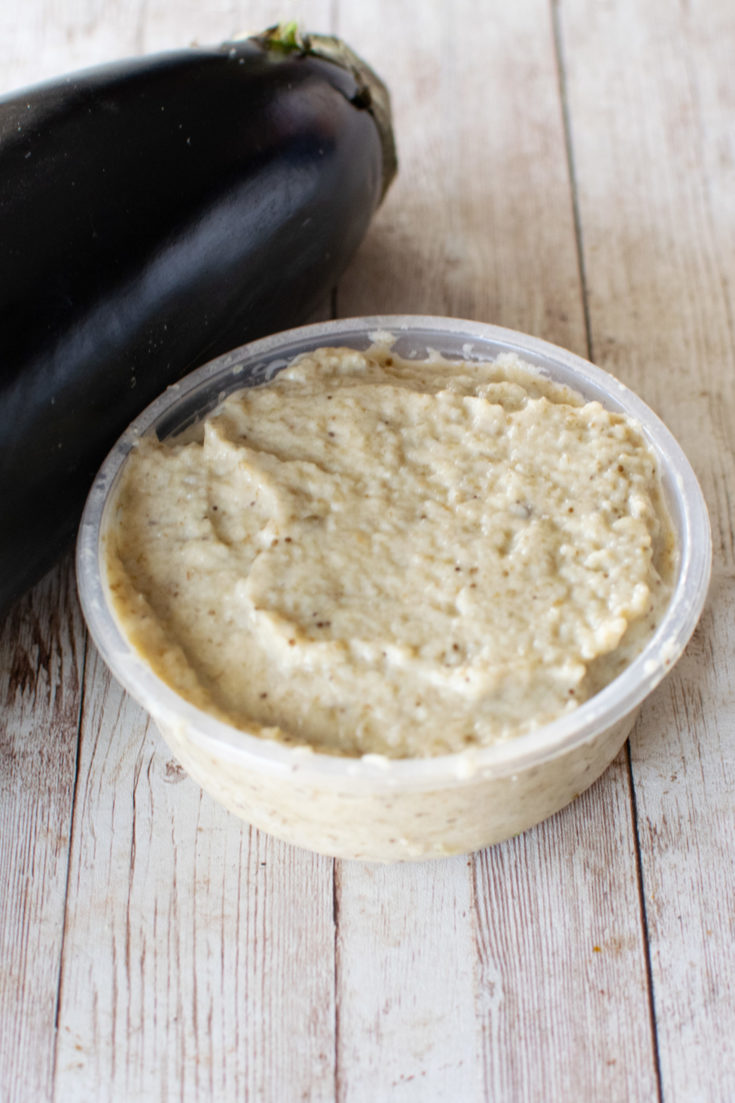
Easy and delicious eggplant with mayo salad. Vegetarian and dairy free. Perfect for dipping plain pita slices or as a spread in felafel, shwarma, and sabich!
Ingredients
- 2 medium eggplants
- ¼ cup mayonnaise
- ½ teaspoon granulated garlic
- ½ teaspoon salt
- ½ teaspoon lemon juice (optional, for tang)
Instructions
- Cut off the calyx (green top) of the eggplant.
- Roast the eggplants (*See notes)
- Peel off the burnt peel to access the cooked meat of the eggplant or alternately, cut open the eggplant and scoop out the inside.
- Place in a blender with the mayonnaise, granulated garlic, salt, and lemon juice, if desired, and blend well.
- Serve with olive oil or use as a spread.
Notes
* You can do this in several simple ways:
1) Roast over an open flame: Poke a fork or a knife into the eggplant in several places to allow air to escape. Then, place the eggplant over a burner with open flame on your stove (cover around the burner with aluminum foil first to protect it from the eggplant, which will leak as it cooks). Some people first wrap the eggplant in aluminum foil before placing on the flame, so whichever way works for you. Turn or reposition the eggplant every 2-3 minutes as the part over the flame has blackened and has shriveled a bit, until the entire eggplant has blackened shriveled somewhat. This is the best way to prepare it (over an open flame), because of the smokey flavor it gives.
2) Roast over an electric stove: The same as the process above, but use a grill pan over the burner. It may not cooks as quickly as it does on an open flame.
3) Roast in the oven: Poke a fork or a knife into the eggplant in several places to allow air to escape. Place the eggplant on a baking tray or in a baking pan lined with aluminum foil or baking paper. Place in a oven on a high temperature (400°F - you can use a higher temperature, but check more often) and turn the eggplant every 10-15 minutes or so until the entire eggplant has blackened shriveled somewhat.
4) Broil in the oven: Poke a fork or a knife into the eggplant in several places to allow air to escape. Place the eggplant on a baking tray or in a baking pan lined with aluminum foil or baking paper. Place in a oven on broil and turn the eggplant every few minutes or so until the entire eggplant has blackened shriveled somewhat.
Nutrition Information:
Yield:
4Serving Size:
1Amount Per Serving: Calories: 194Total Fat: 11gSaturated Fat: 2gTrans Fat: 0gUnsaturated Fat: 9gCholesterol: 6mgSodium: 355mgCarbohydrates: 25gFiber: 7gSugar: 9gProtein: 3g