Easy Vegetarian Fried Rice is a budget-friendly, savory side dish and a delicious way to repurpose your leftover rice without dairy or pork.
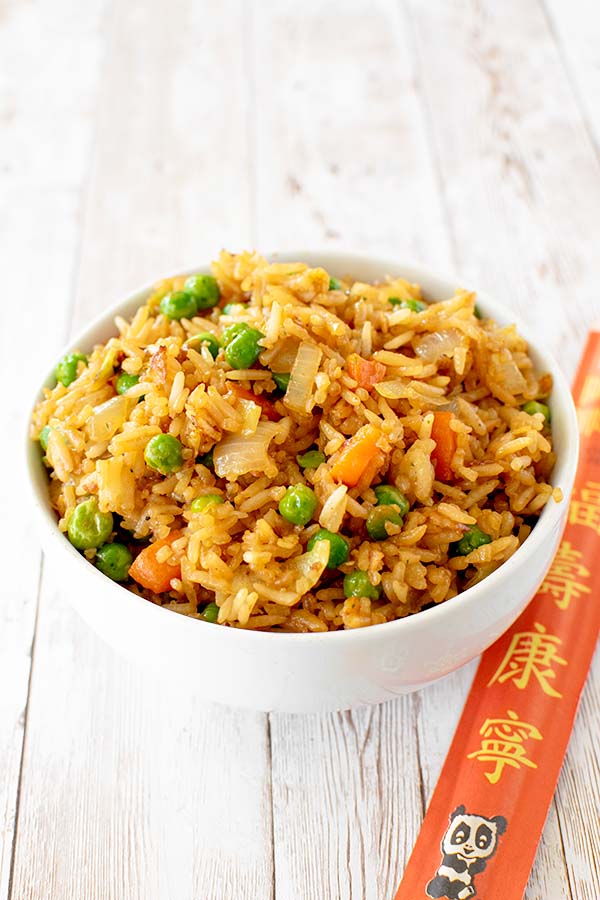
Why bother with take-out?
Easy Vegetarian Fried Rice is a simple budget-friendly recipe for a vegetarian version of the classic Chinese-American side dish that normally can be on your table in less time than it takes for takeout delivery.
Using leftover rice is the secret to getting the perfect texture. Of course, you can use freshly cooked rice if you are in a pinch, but chilled rice fries up much better.
While this recipe calls for frozen peas and carrots, it's flexible, so you can easily use canned vegetables instead.
Don't like peas and carrots? Simply leave them out!
And unlike some recipes with a myriad of ingredients, this recipe is made simple with rice, onions, and optional peas and/or carrots.
Plus, it's made without meat, pork, or dairy ingredients, so it's vegetarian and kosher!
Also, the ingredients (carrots, peas, rice, eggs) all have health benefits!
What do you need to make this vegetarian fried rice recipe?
I hardly ever meal plan, so I like to keep a cupboard full of seasonings, spices, veggies, and canned goods in my kitchen to use whenever I want to.
This is certainly true for Chinese-American homemade takeout recipes where a lot of the ingredients overlap.
These are all you need to have on hand to make this recipe even last minute!
cooked rice (i.e., leftover rice)
frozen peas and/or diced carrots
medium onion
egg
soy sauce
vegetarian chicken consommé powder (bouillon powder)
Oil for frying
Frequently Asked Questions (FAQs) for Easy Vegetarian Fried Rice
1. Does this recipe contain pork?
No. This recipe is strictly pork-free, making it an excellent choice for those seeking a delicious, traditional-style Chinese-American meal without pork.
2. Why is day-old, cold rice best for this recipe?
Cold rice is drier and firmer than freshly cooked rice. When stir-fried, the grains remain separate rather than clumping together, which is the secret to achieving that perfect, restaurant-quality texture.
3. How can I ensure the egg incorporates perfectly?
The egg is first scrambled into very small pieces, and then the rest of the ingredients are mixed in well.
5. Can I use frozen vegetables?
Yes. This recipe actually calls for frozen peas and carrots, as they save significant prep time.
6. Can I freeze leftovers?
Yes, you can freeze vegetarian fried rice in an airtight, freezer-safe container for up to 2 months. To maintain the best quality, ensure the rice has cooled completely to room temperature before freezing.
When ready to eat, thaw it in the refrigerator overnight and stir-fry in a pan over medium heat with a splash of oil or water to rehydrate the grains and restore a fresh texture. Or reheat it covered in the oven, but make sure not to overcook.
A little about Chinese-American Food
Chinese-American cuisine is a style of Chinese cuisine that was developed by Chinese immigrants. These dishes significantly differ from traditional Chinese dishes because Chinese-American dishes were adapted to suit American tastes.
Chinese immigrants arrived in the United States in large numbers in the mid-19th century in order to escape the economic difficulties in China, hoping to find work during the California Gold Rush and on the Central Pacific Railroad.
They mostly settled together in ghettos, individually known as Chinatowns, and-since there were laws preventing them from owning their own land-they opened their own businesses, such as laundry services and restaurants.
Initially, the family-owned businesses catered to miners and railroad workers, and restaurants were set up in places where Chinese food was unknown. Food was based on the requests of the customers, and recipes were created to suit American tastes using whatever ingredients were available.
One major difference between traditional Chinese cuisine and Chinese-American cuisine is in the use of vegetables. Chinese-American recipes will use raw or uncooked ingredients and those not native to China. Traditional Chinese cuisine, on the other hand, rarely contains raw or uncooked ingredients and often uses Asian leaf vegetables.
While the new dishes were not traditional Chinese, these restaurants were responsible for the development of the ever-popular Chinese-American cuisine.
The little history of kosher Chinese-American Food
It is well known that Jews (especially those with ties to New York) love Chinese food.
Jews as a group were probably first introduced to Chinese food in the Lower East Side of Manhattan, where immigrants of various cultures settled in their own neighborhoods in the late 1800s and early 1900s.
By the early 1900s, approximately one million Jews from Eastern Europe shared the Lower East Side of Manhattan with other immigrants, including only approximately 7,000 Cantonese Chinese, most of whom had moved from California after the gold rush.
Due to anti-Chinese laws and acts in the US, which prevented them from competing with whites, many Chinese opened restaurants that served the miners in California, and they moved their businesses with them as they moved eastward.
The majority of Jewish immigrants at that time were observant in their religion and ate only kosher food when they arrived in New York. But, over time, many assimilated, and even if they continued to keep kosher at home, they would eat non-kosher out.
Sunday was a favorite time for eating out, and Chinese food was not only reasonably priced, but also their restaurants were open on Sundays.
Jews who did keep kosher didn't get to enjoy the delicious recipes until Sol Bernstein, a Jewish, kosher deli owner, found a solution.
Using Cantonese Chinese recipes and substituting kosher veal, beef, and chicken livers for pork, he began selling the first kosher Chinese food, which became very popular.
Sol continued to sell deli while he incorporated Chinese foods into the menu and did very well. The restaurant continued to prosper until he died in 1992, when it was sold.
Other homemade Chinese-American dishes
For a lot of people, making homemade Chinese-American dishes may seem like a waste of time, espeically when takeout is so simple and inexpensive.
However, if you eat kosher or don't eat pork, restaurants and takeout places are harder to and often quite expensive.
So, the solution to that is to make them at home! Try some of these amazingly easy recipes for kosher Chinese-American food:
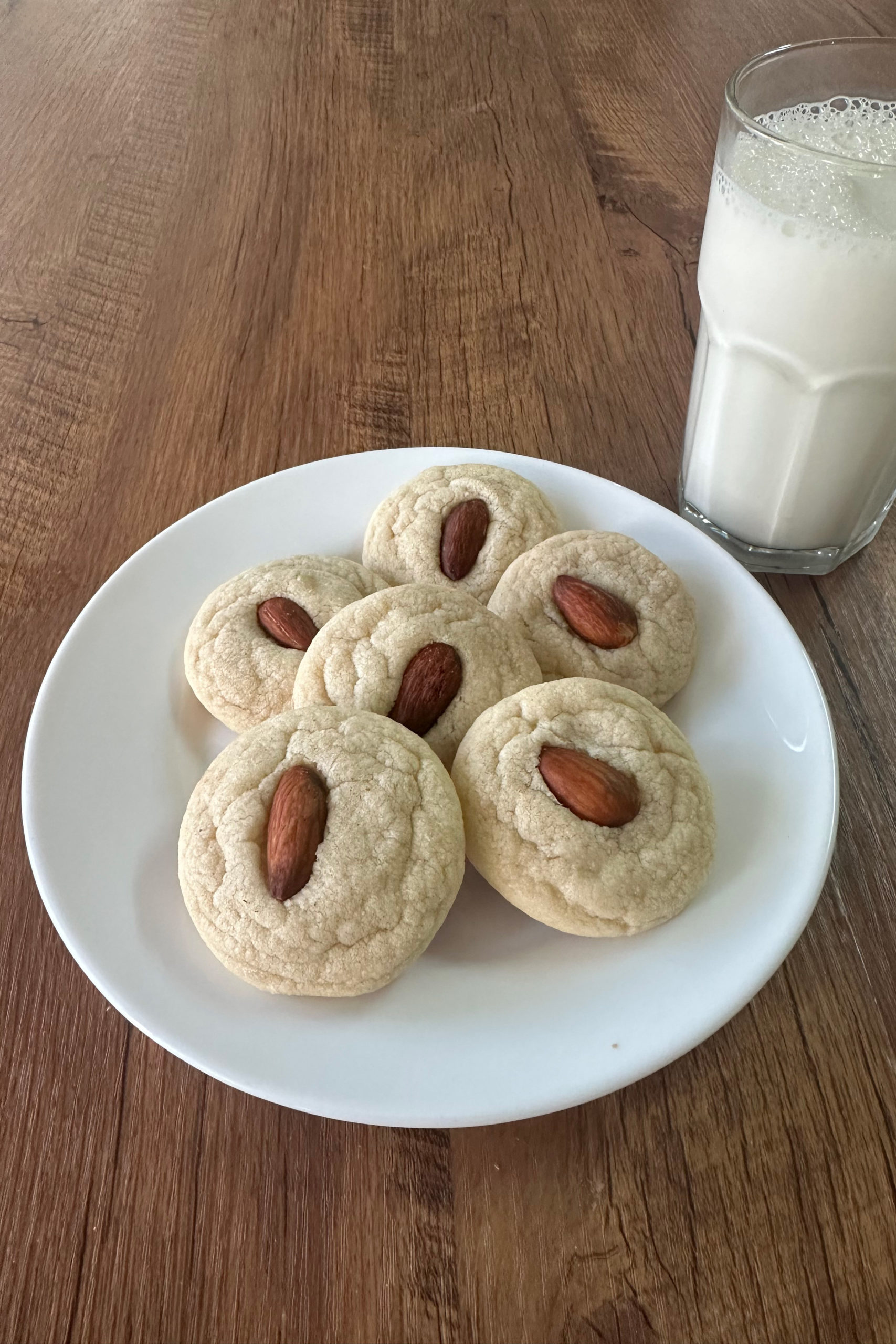
- Chinese Almond Cookies
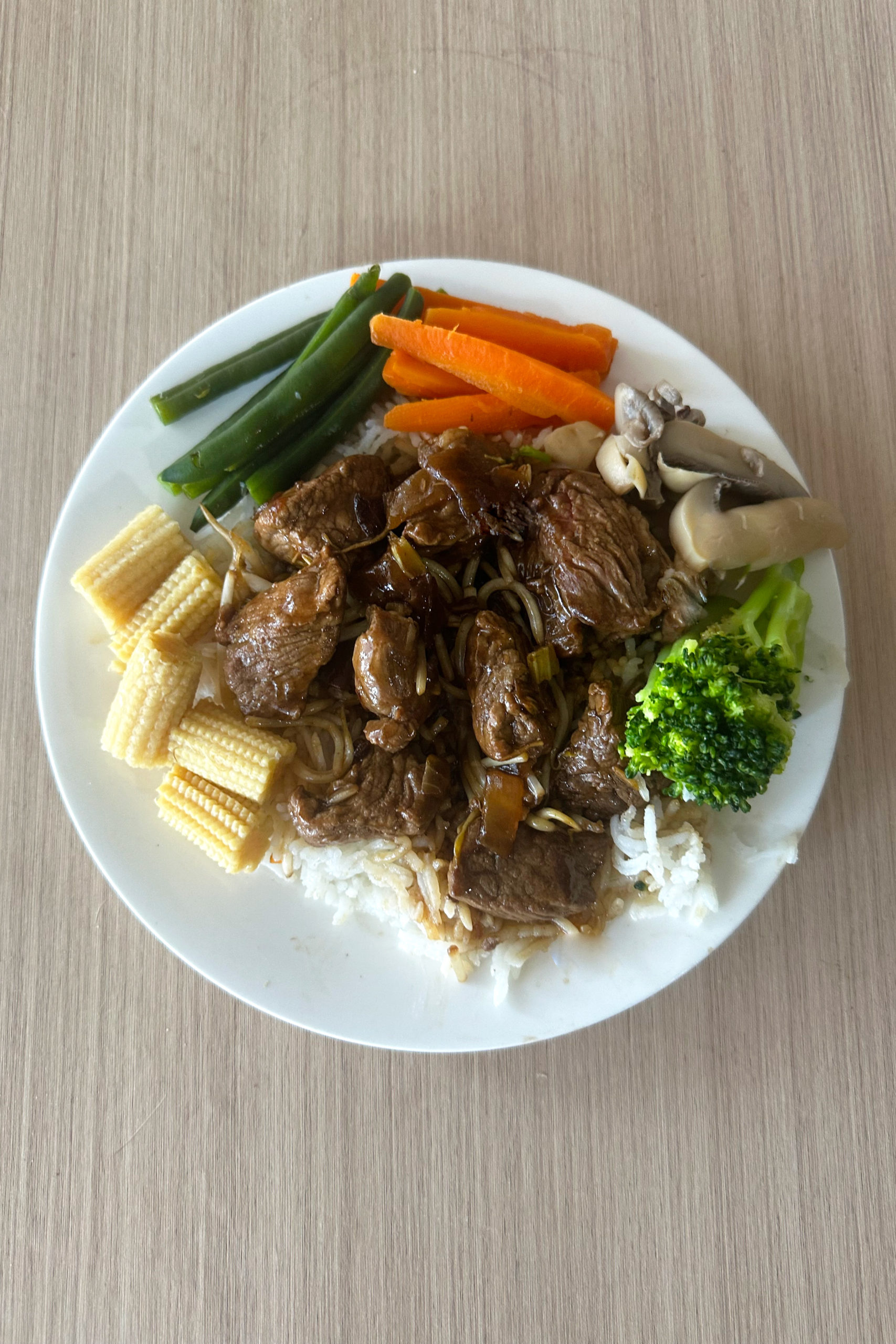
- Beef and Cabbage Egg Rolls
- Homemade Duck Sauce
- Honey Garlic Chicken
- Vegetarian Egg Drop Soup
Easy Vegetarian Fried Rice Recipe
Delicious and savory vegetarian fried rice. Made with leftover rice, no pork, and no dairy.
Ingredients
- 2 cups cooked rice (i.e. leftover rice)*
- ¾ cup frozen peas and diced carrots (you can leave one or the other or both out if you wish to)**
- 1 medium onion, diced
- 1 egg, lightly beaten
- 2 tablespoons soy sauce
- ¼ teaspoon vegetarian chicken consommé powder (bullion powder)
- Oil for frying
Instructions
- Lightly coat a suitable size pan or pot with oil.
- On medium heat, scramble the egg into small pieces.
- Add the onions and fry together, stirring continuously, until the onions have become soft and somewhat transparent.
- Mix in frozen peas and carrots (unless you're leaving them out).
- Add cooked rice to pan.
- Stir together until the rice is hot, breaking up any clumps.
- Add in soy sauce.
- Continue heating for another couple of minutes, stirring occasionally for the soy sauce to mix in.
Notes
*You can use freshly cooked rice, but chilled is better for frying.
**You can use any quantity of peas vs carrots as you prefer or you can leave one or the other out. If you want to use drained canned peas and carrots, you can do that too but since they are much softer than the frozen, you should wait until the end and fold them in so they heat with the mixture.
If you don't like peas and/or carrots just leave them out.
Nutrition Information:
Yield:
4Serving Size:
1Amount Per Serving: Calories: 222Total Fat: 1gSaturated Fat: 0gUnsaturated Fat: 1gSodium: 431mgCarbohydrates: 46gFiber: 3gSugar: 4gProtein: 7g