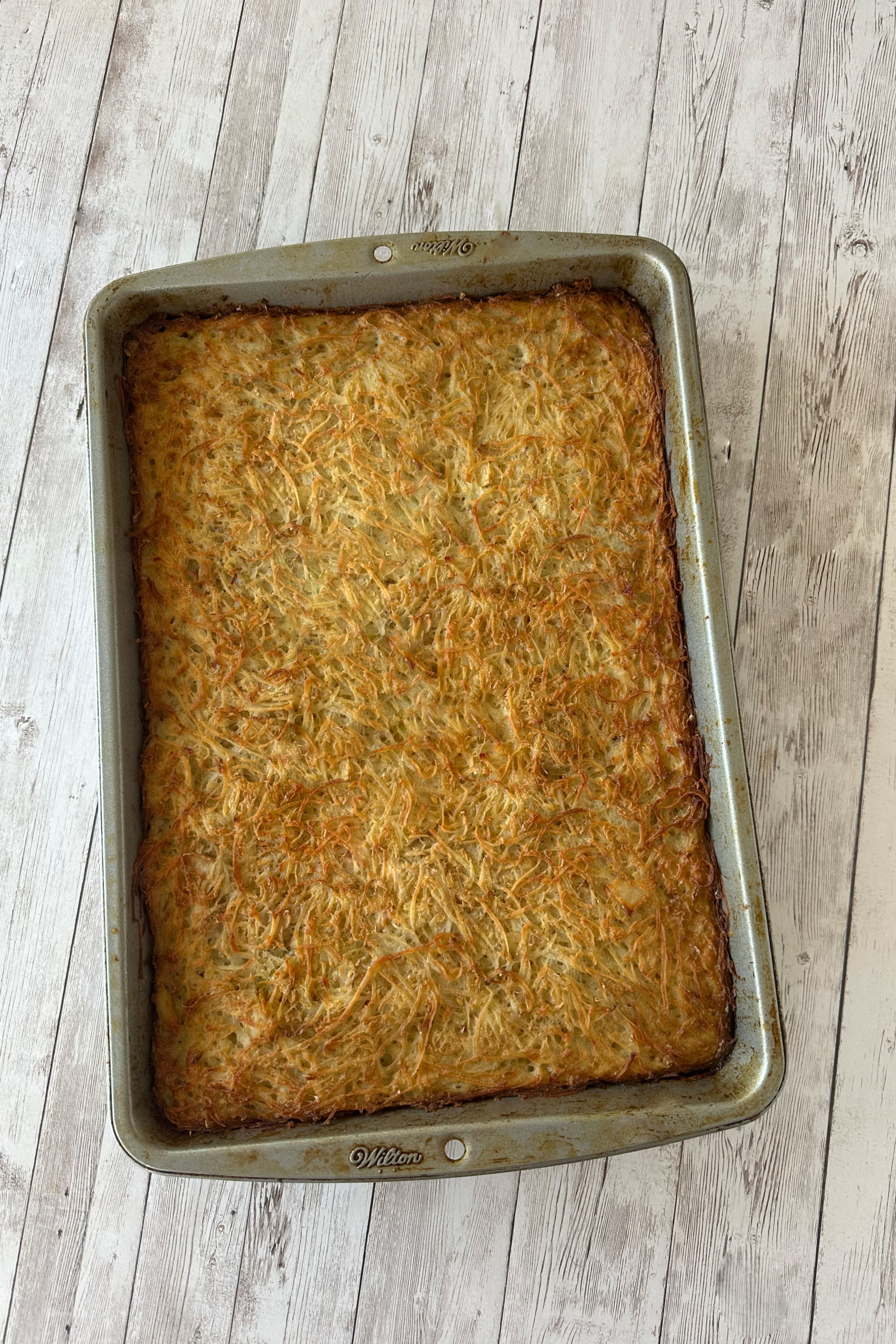
Easy Potato Kugel is a simple recipe for the traditional and classic savory Jewish potato casserole dish. Budget-friendly, vegetarian (pareve), and only 4 main ingredients.
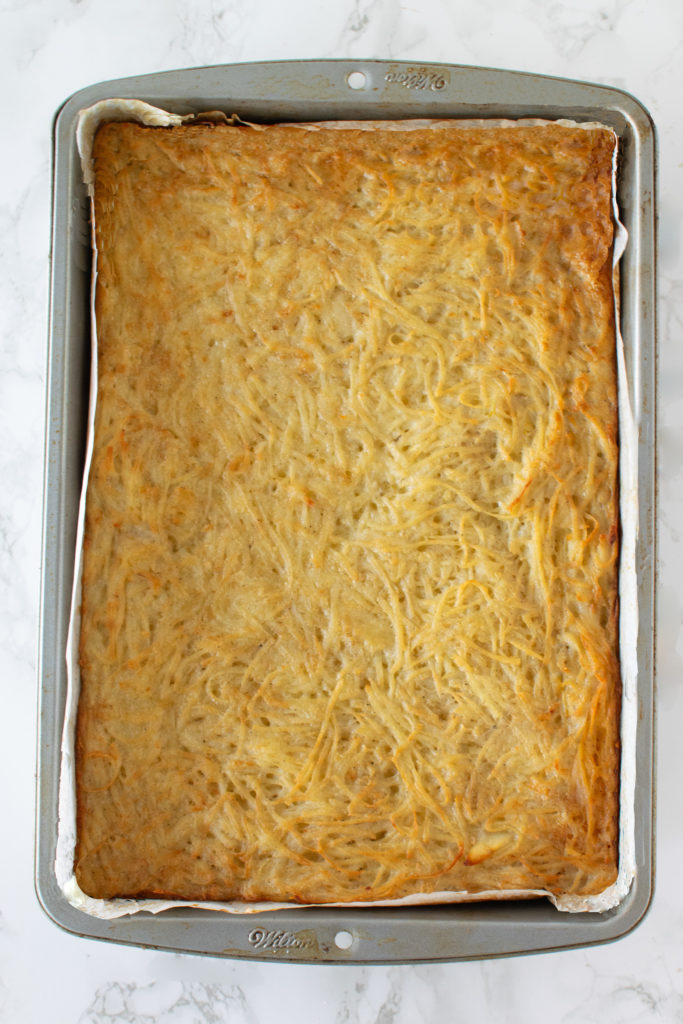
A kugel is a Jewish casserole, typically made vegetarian and dairy-free. They're also budget-friendly.
Traditionally, they're found at Ashkenazi Shabbat or holiday tables as part of lunch, and it likely will be served with cholent, and, in Israel, you maybe find Jerusalem kugel at the table as well.
Potato kugel is a delicious savory side dish. It's often made ahead and then left in an oven or on a hot plate over Friday night to be eaten at lunch on Shabbat or holidays.
This is a simple recipe with only 4 main ingredients. The potatoes can be shredded or grated, and each way will turn out a different texture, even if the flavor will be the same.
Jump to:
What is needed to make this potato kugel recipe?
I hardly ever meal plan, so I like to keep a cupboard full of seasonings, spices, veggies, and canned goods in my kitchen to use whenever the mood strikes.
But these 4 main ingredients are what you need to make this recipe!
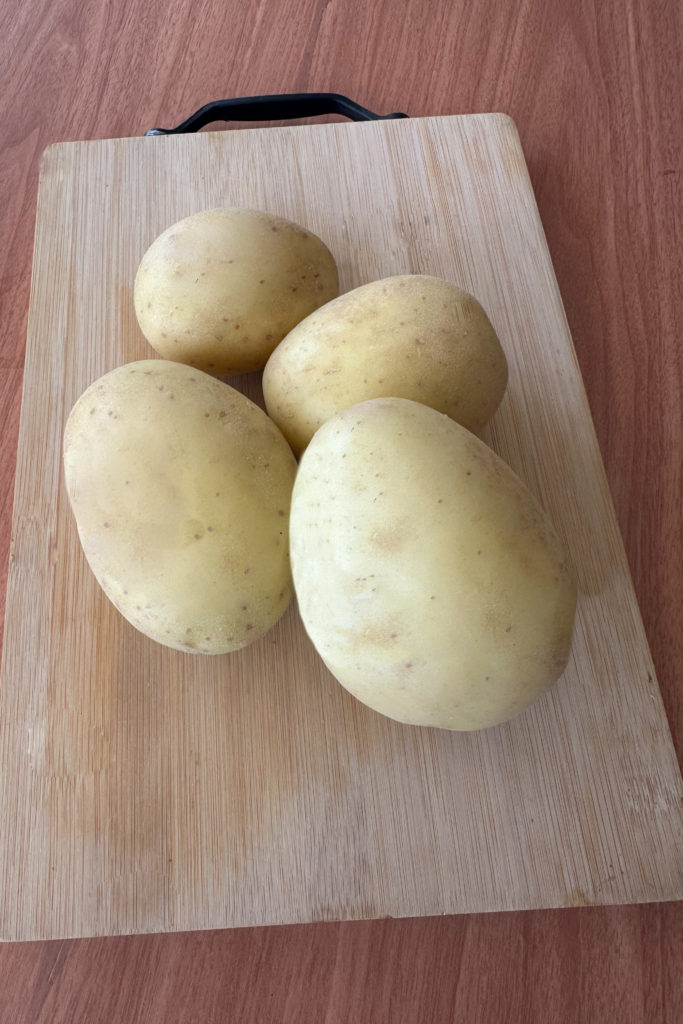
potatoes
onions
eggs
potato starch or corn starch
Also, salt and pepper to taste and oil for greasing your pan.
What's good about potatoes?
The potato is a perennial, starchy tuber, a root vegetable, that is native to the Americas.
Potatoes contain health benefits and are an excellent source of fiber, vitamins, and nutrients and provide fuel for the body.
Potatoes are gluten-free and very filling. In addition, they are a good source of antioxidants-some more than others-and they contain resistant starch. However, their nutritional content depends on the type of potato.
Much of a potato's nutrition is in the skin, and peeling them reduces it.
Adding fattening toppings, such as sour cream or butter, adds calories and fat.
Different potatoes are considered to work best with different recipes, but overall, they can be used in a variety of delicious meals for recipes from all over the world.
There may be over a couple hundred varieties of potatoes in the United States, but there are only 7 main categories. The most popular of these are the red, white, yellow, and russet.
Frequently Asked Questions (FAQs)
What is a potato kugel?
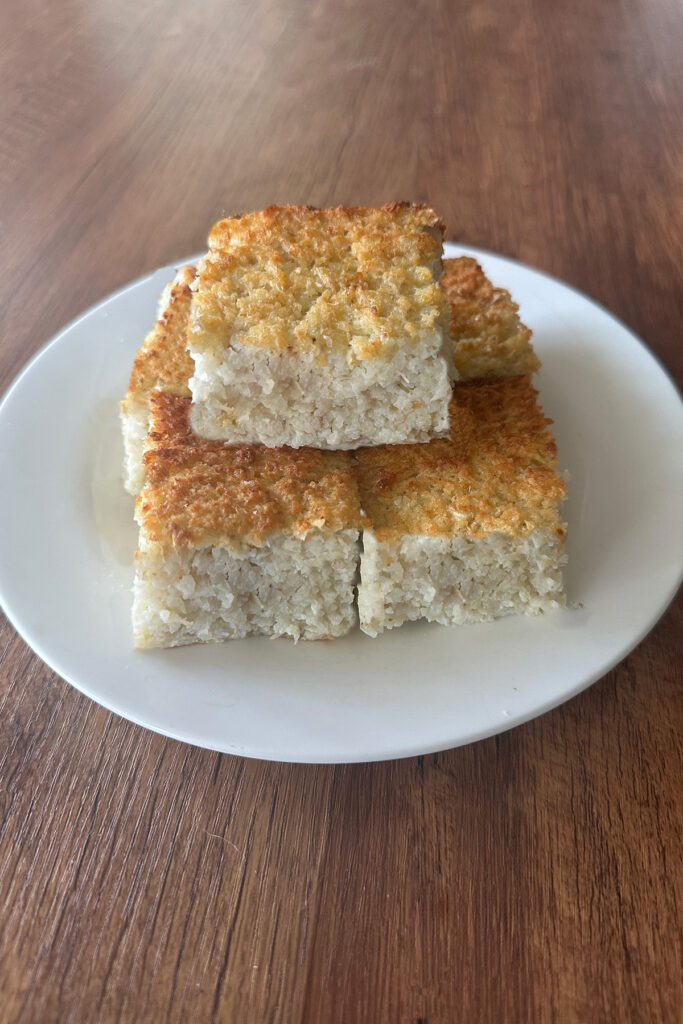
A potato kugel is a traditional Ashkenazi Jewish baked casserole made with grated or shredded potatoes, onions, eggs, oil, salt, and pepper, typically served as a side dish for Shabbat and Jewish holidays.
Can I make potato kugel ahead of time?
Yes. Potato kugel can be made ahead of time and reheated before serving. Store it covered in the refrigerator and reheat in the oven until warmed through.
Can I freeze potato kugel?
Yes, potato kugel can be frozen. Let it cool completely, wrap it well, and freeze for up to 2 months. Thaw it in the refrigerator before reheating.
How do I keep potato kugel from turning gray?
Potatoes can discolor after being grated and exposed to air. Work quickly and mix the grated potatoes with the other ingredients as soon as possible to help prevent discoloration.
Can I use a food processor to grate the potatoes?
Yes. A food processor makes grating the potatoes much faster and is especially useful when making a larger kugel.
What kind of potatoes are best for potato kugel?
Russet potatoes are a good choice because they're high in starch and help create a kugel with a crisp exterior and tender interior.
How do I get potato kugel crispy?
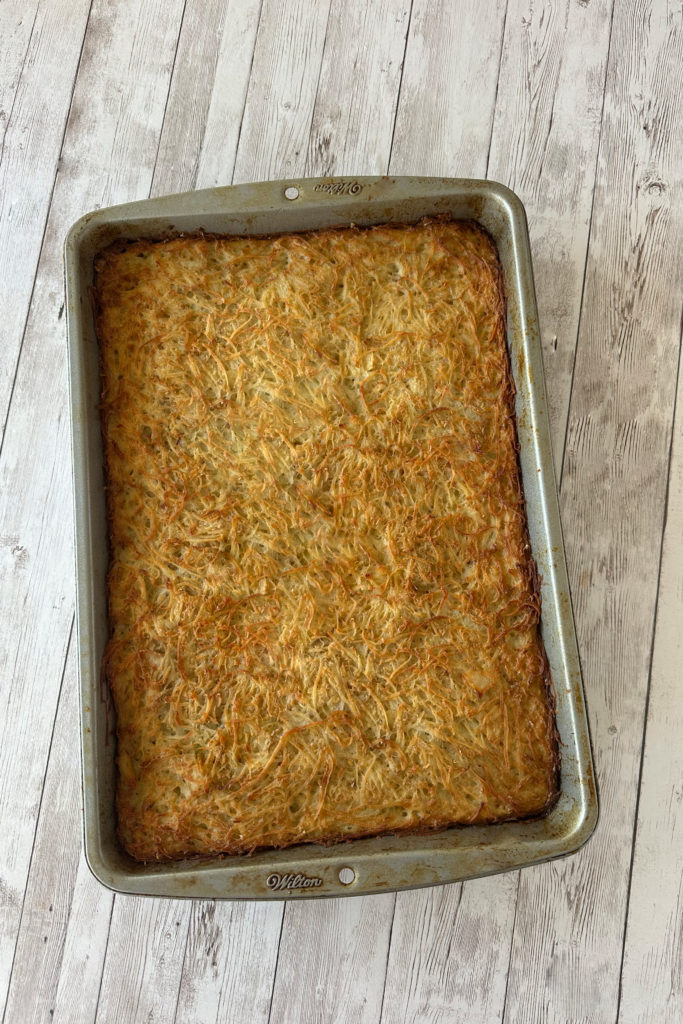
Bake the kugel until the top is deeply golden and crisp. Using a hot, well-greased baking dish also helps create those crispy edges.
Here's another delicious Jewish potato recipe!
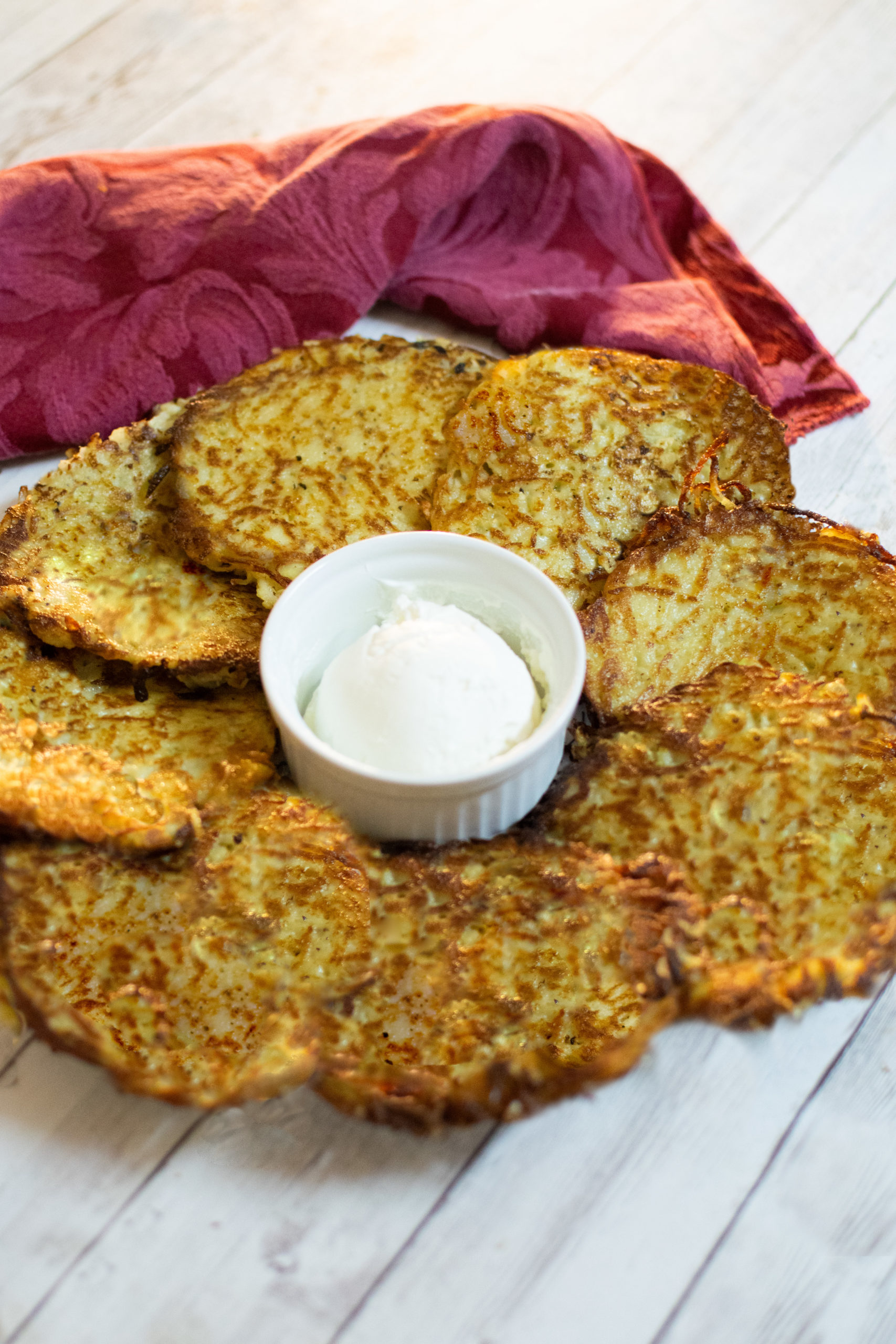
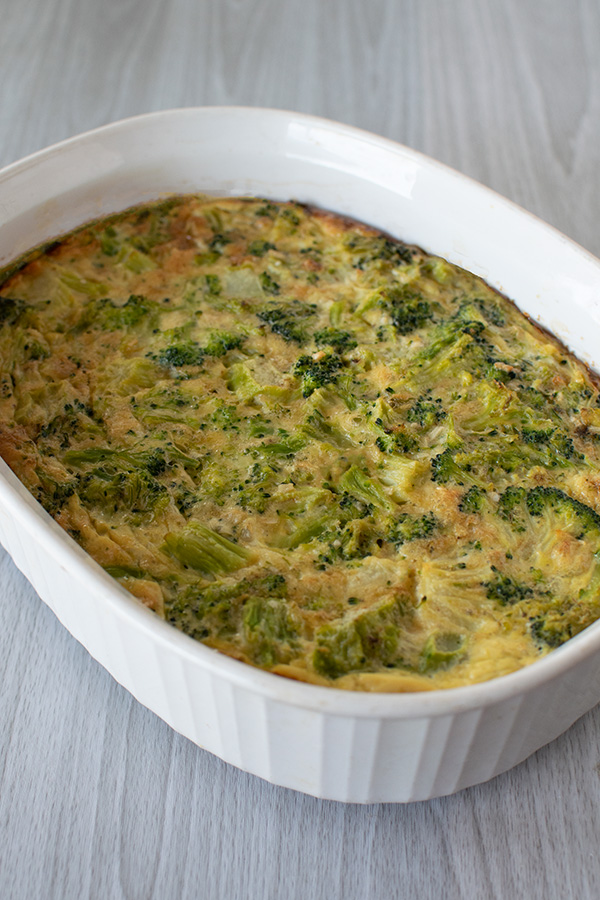
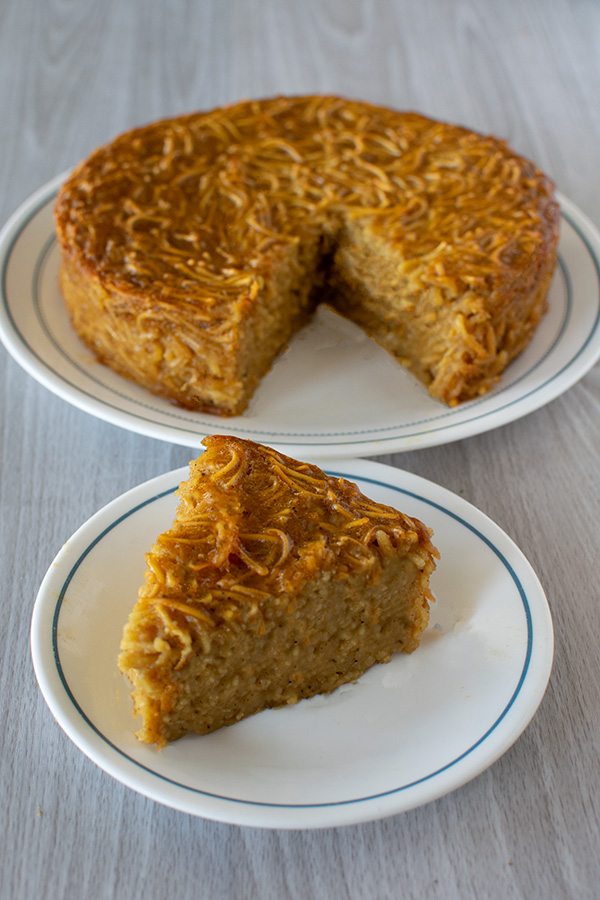
Like kugels? Try these!
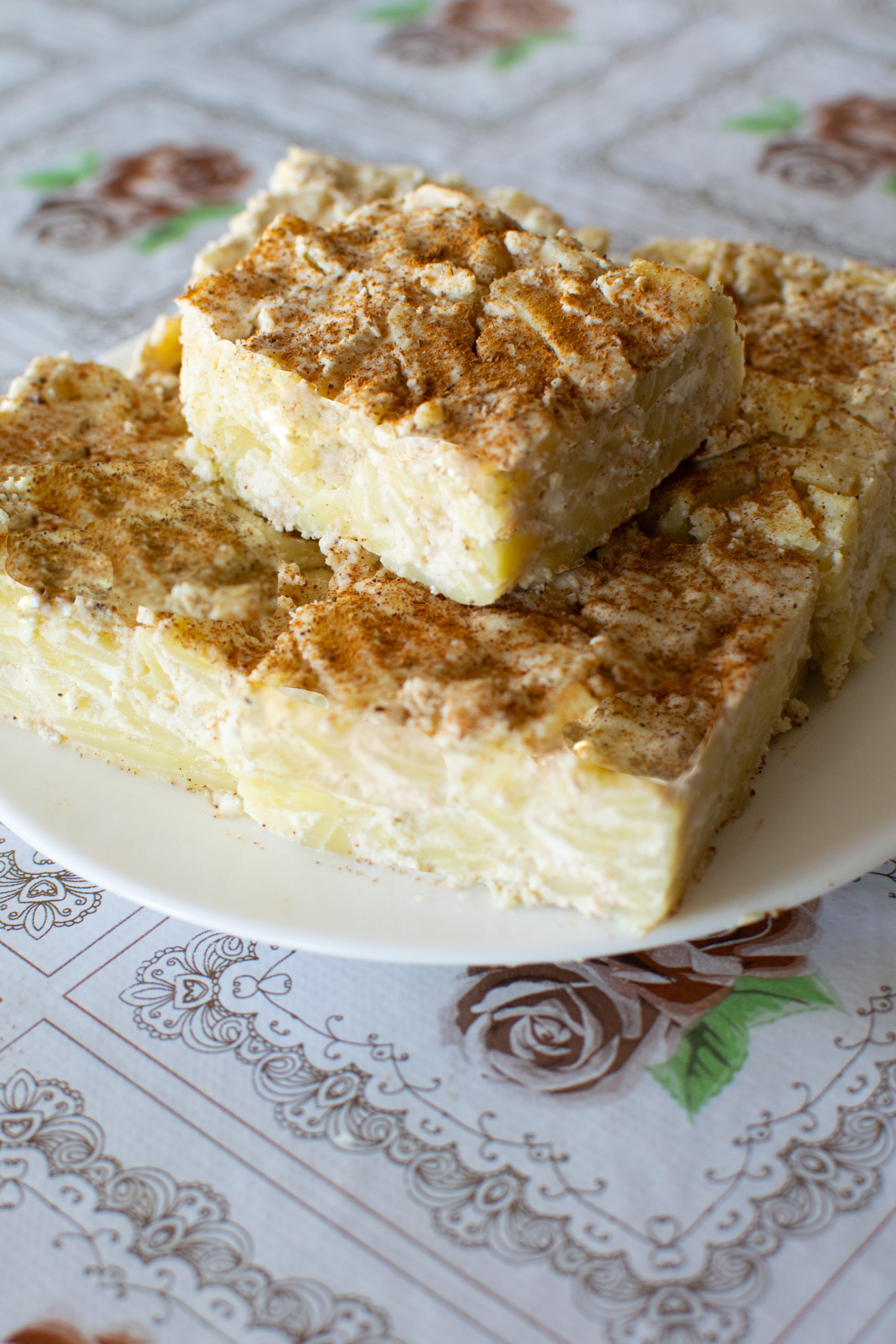
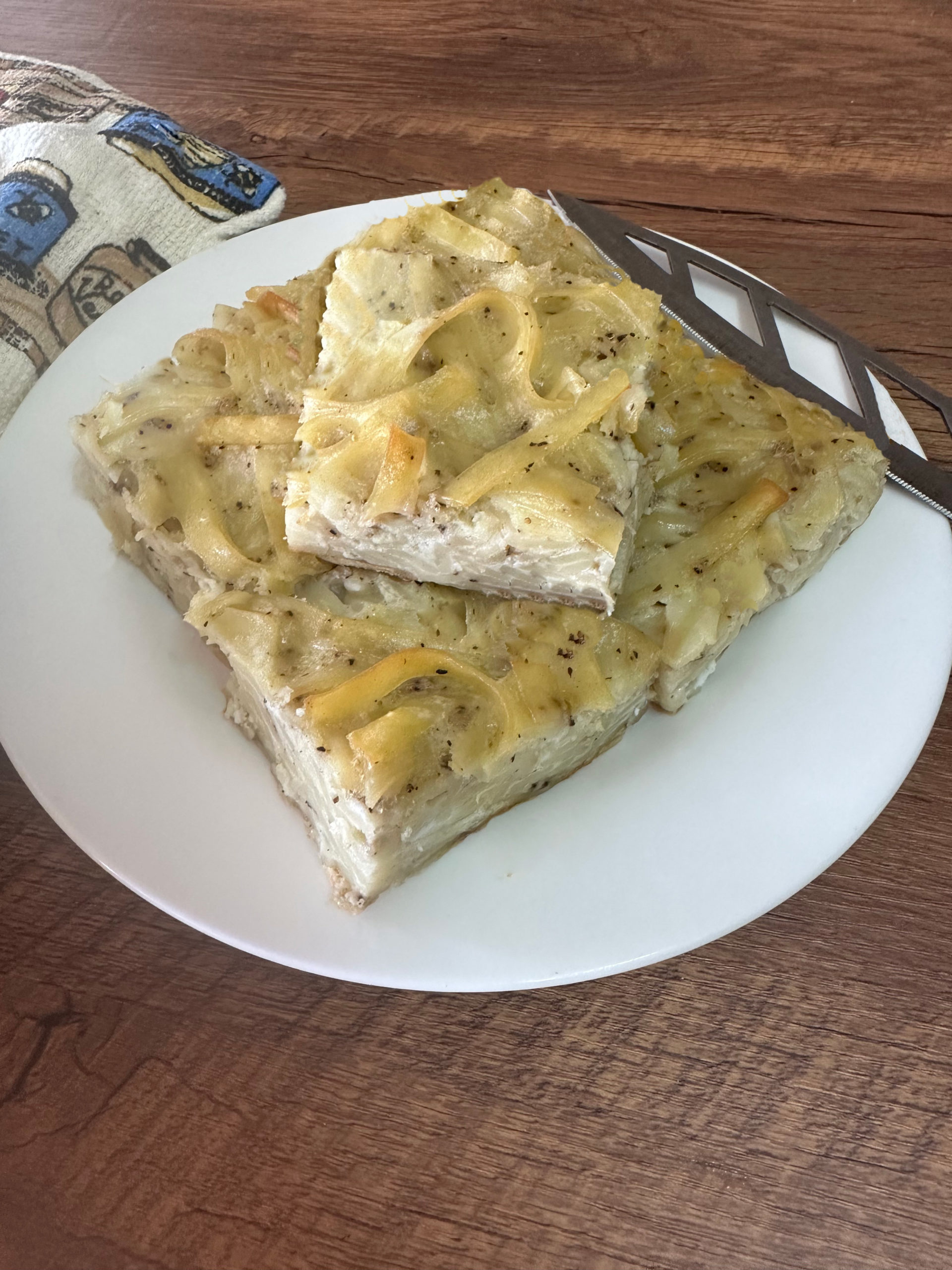
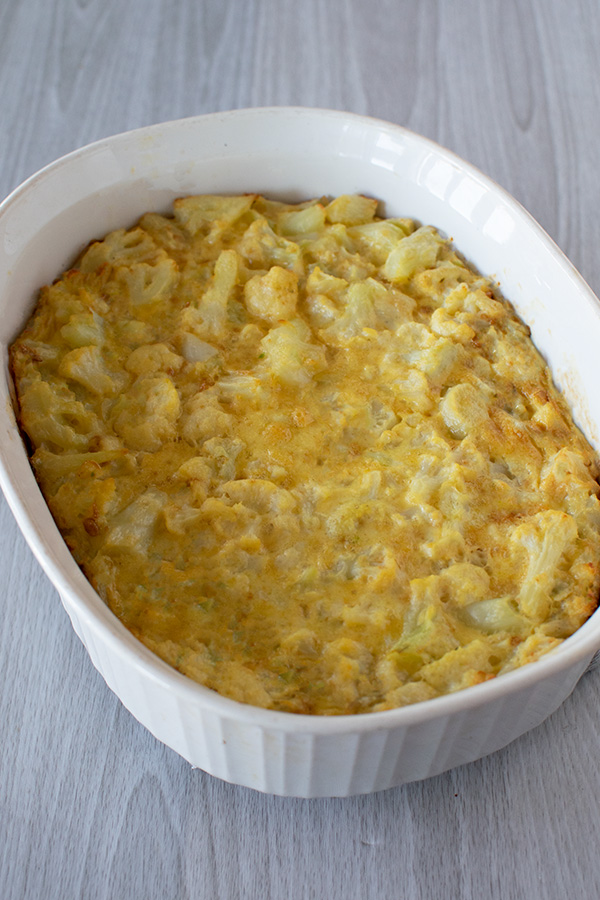
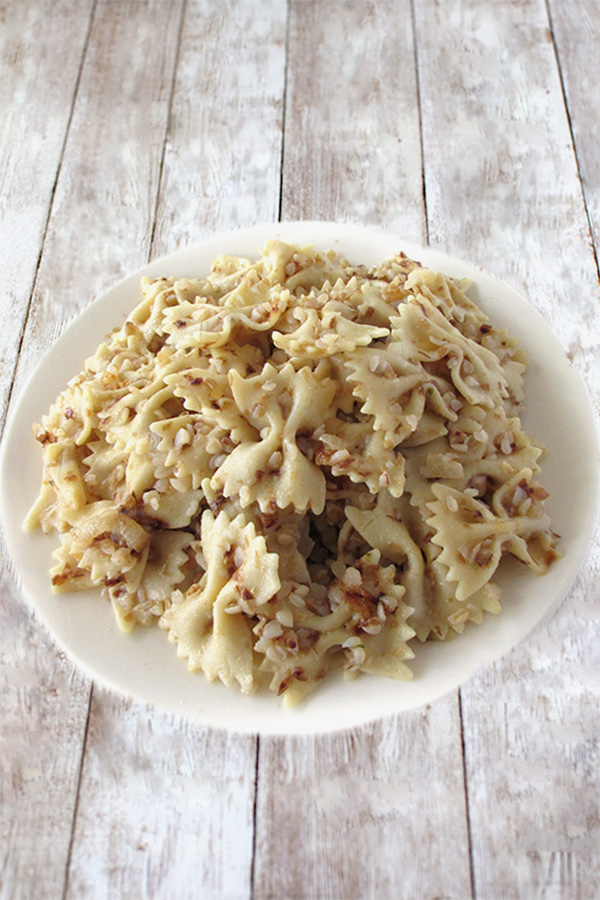
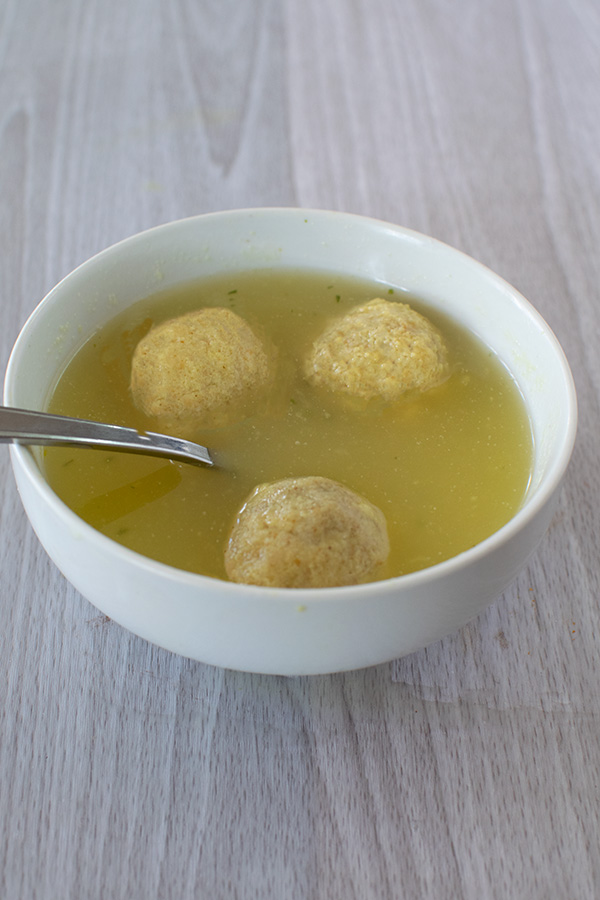
Here are more iconic Jewish recipes!
Want a Jewish dessert?
Easy Potato Kugel
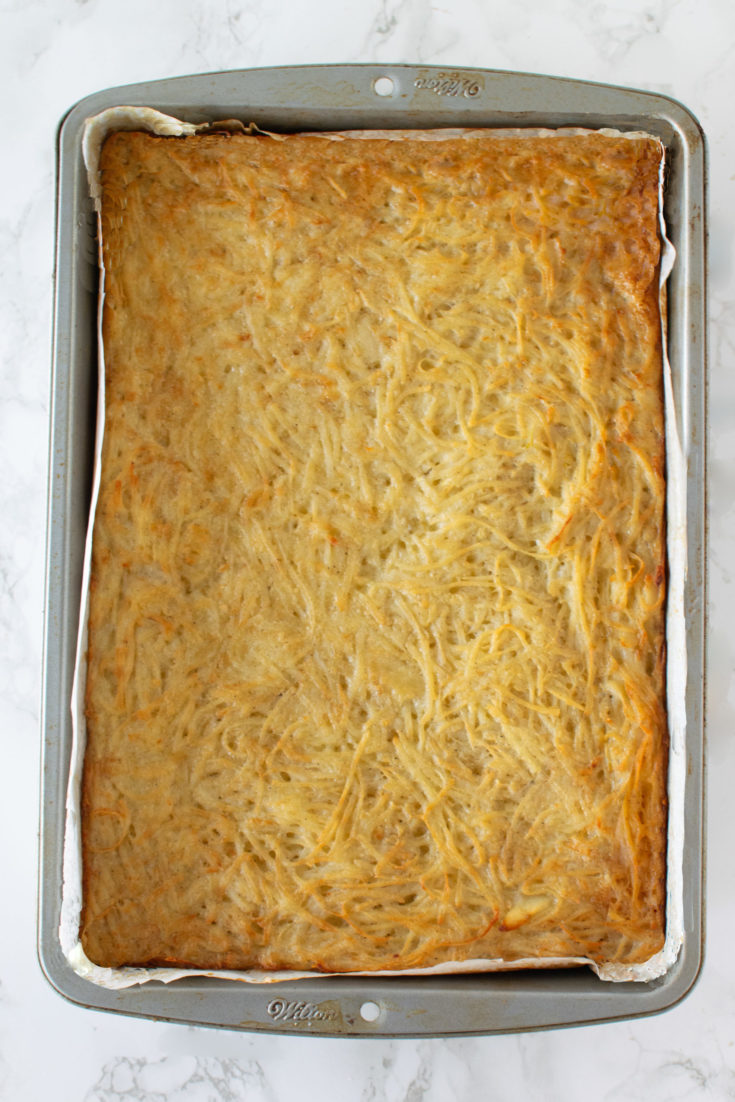
Vegetarian and dairy-free traditional savory Jewish potato casserole with only 4 ingredients.
Ingredients
- 5 pounds of potatoes (does not need to be exact)
- 2 large onions
- 6 eggs
- ⅓ cup of potato starch or corn starch
- 1 tablespoon salt or to taste
- 1 teaspoon ground black pepper or to taste
- cooking spray or cooking oil
Instructions
- Shred (small or large, your choice) or puree the potatoes (you can peel or not beforehand, your choice).*
- Peel and shred small or puree the onions.*
- Mix the potato, onion, eggs, starch, salt, and pepper together in a large mixing bowl.
- Line a 9"x13" baking pan or similar baking dish with baking paper, or coat well with cooking spray, or brush on oil.
- Pour in the potato and onion mixture and level.
- Spray the top with the cooking spray or brush on oil.
- Bake in an oven that was preheated to 400°F for approximately 1 hour or until the top is a golden brown.**
Notes
*The texture is different if you shred or puree. If you like to feel the pieces of potato or onion, shred. If not, then puree. Personally, I shred the potato small and puree the onion.
** This depends on your oven. If the top is golden brown and the middle of the kugel is not yet firm, then you can cover the top or lower the heat for it to finish. If it is done and the top still looks a bit raw, then you can put it on broil for a few minutes to brown the top (just keep an eye on it so it won't burn).
***The potato and onion will leak liquid, so if you can't put the baking pan in the oven right away, then drain the excess liquid before you do.
Nutrition Information:
Yield:
12Serving Size:
1Amount Per Serving: Calories: 227Total Fat: 3gSaturated Fat: 1gUnsaturated Fat: 2gCholesterol: 93mgSodium: 508mgCarbohydrates: 43gFiber: 5gSugar: 3gProtein: 8g