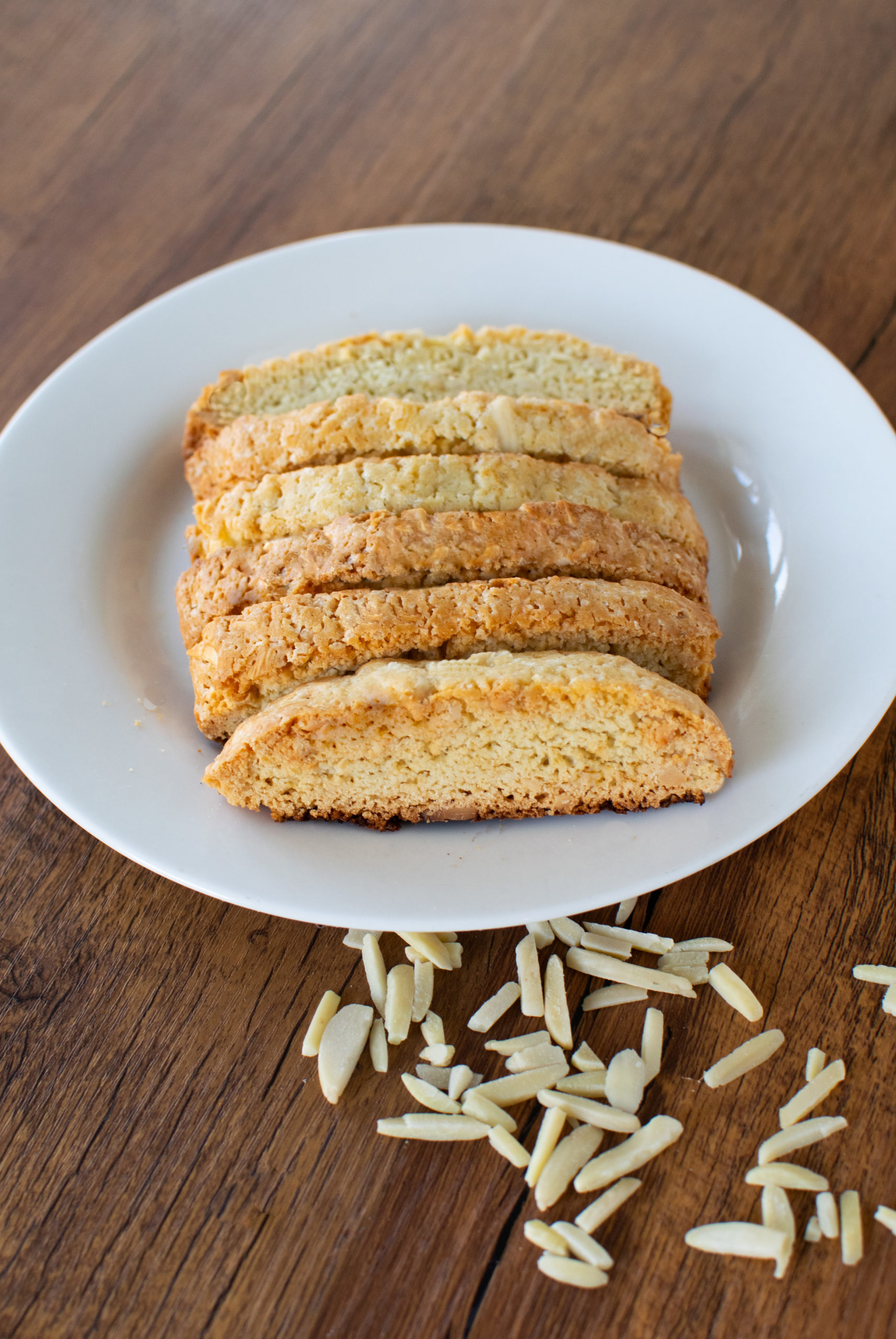
Mandel Bread (Mandelbrot) is a simple dairy-free recipe for delicious Jewish almond bread, and it's made without butter or margarine.
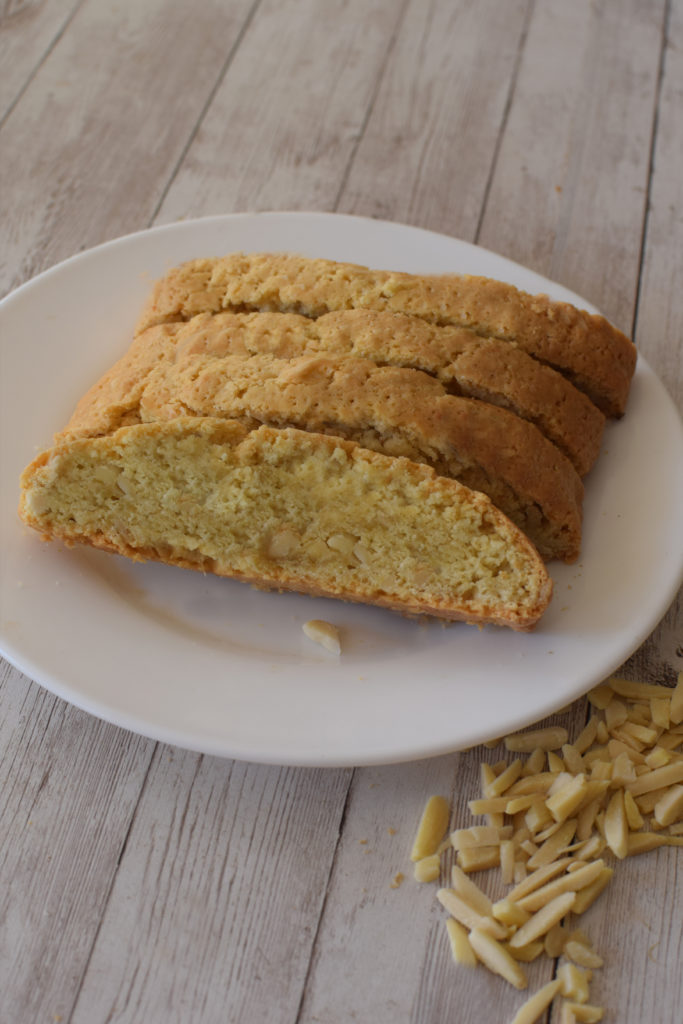
This dairy-free almond mandel bread is a perfect treat. And since this recipe uses oil and there is no butter, this mandel bread is pareve.
It's terrific for Shabbat, holidays, when you have guests, when you're being hosted, or when you're just spending time with family. It's also great with your morning coffee, afternoon tea, or as an evening snack.
The origins of mandel bread likely trace back to early medieval Italy, where Jewish communities adapted the Italian tradition of twice-baked biscotti.
As Jewish populations moved eastward into areas such as Germany, Ukraine, and Russia, the recipe traveled with them.
Many people don't know this, but mandel bread, or mandelbrot in Yiddish, literally means "almond bread" (mandel = almond, brot = bread). Traditional mandel bread is made with whole or sliced almonds, or at least almond flavoring.
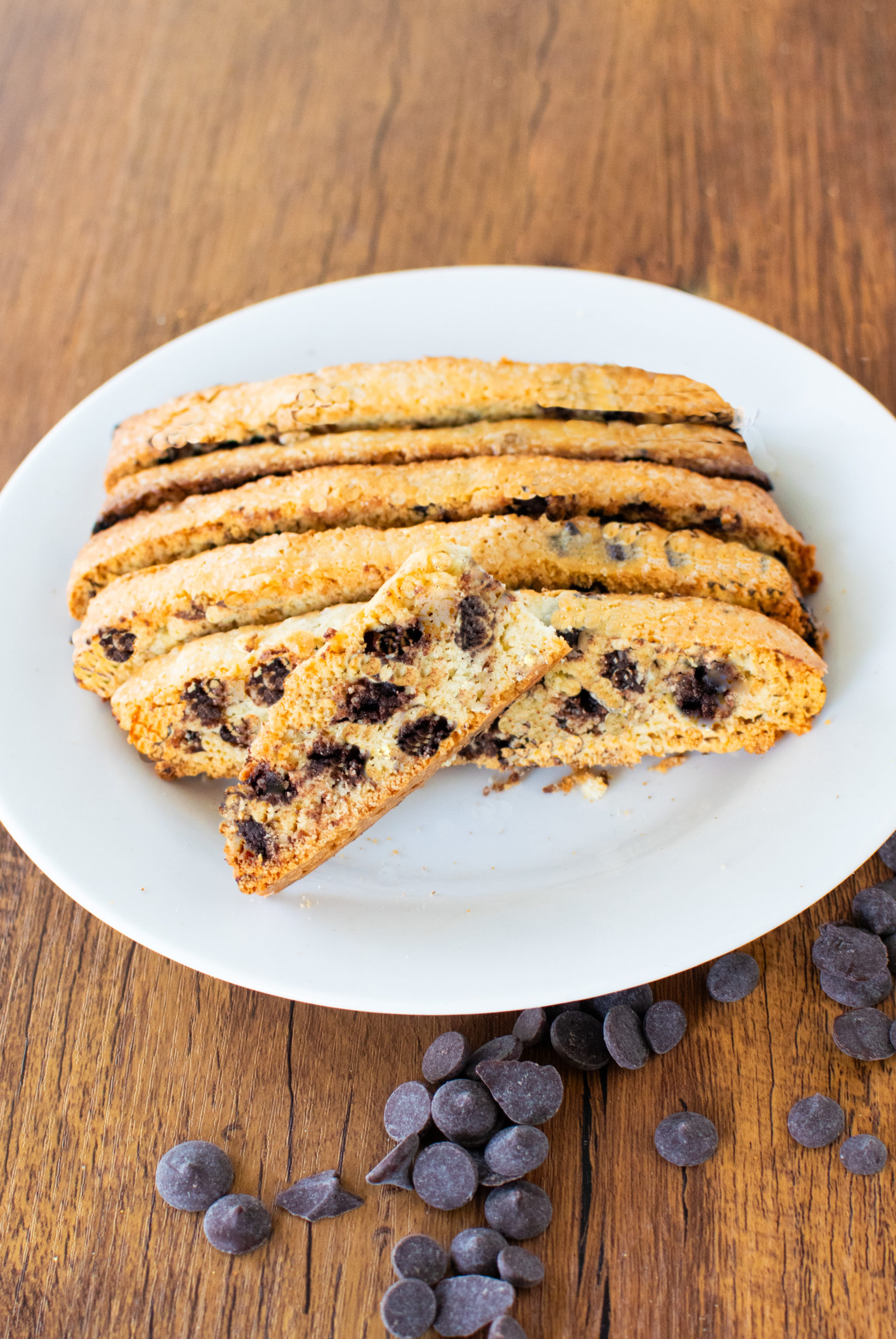
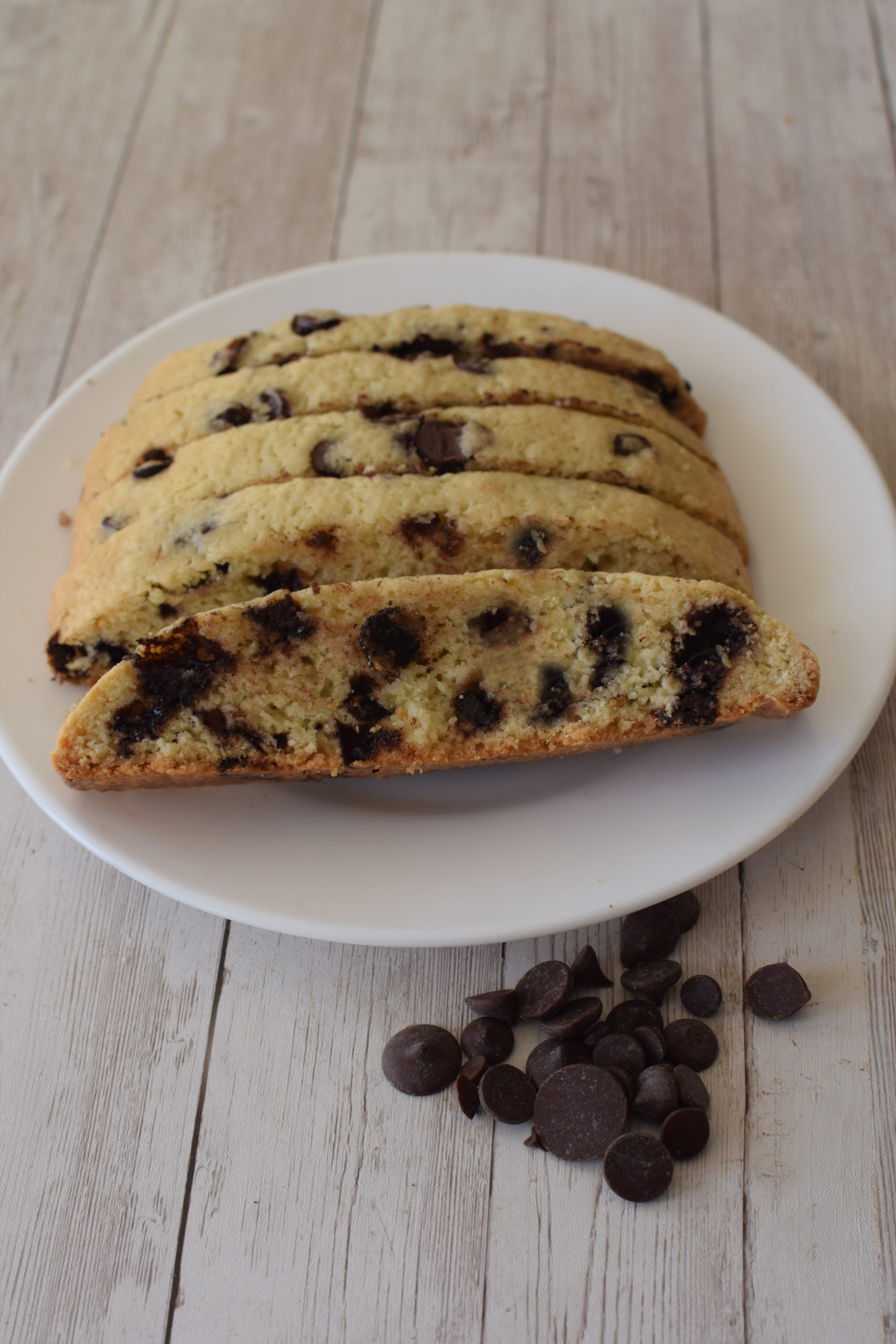
Of course, you can customize your mandel bread with different additions. Along with the almonds, you can add chocolate chips, raisins, or any other mix-ins you enjoy.
You can also slice your mandel bread as thick or thin as you like, so the number of pieces you get will depend on the size of your loaves and how wide you make your slices.
Mandel bread and biscotti are related, but they're not exactly the same. With biscotti, slices of the baked loaf are laid flat on a baking sheet and baked a second time until crisp. Mandel bread, however, isn't necessarily twice-baked and is typically softer rather than crisp.
If you prefer a crispier texture, simply bake it a little longer. You can also slice the loaf and return the pieces to the oven for about 15 minutes or until the tops are lightly browned.
Jump to:
What is needed to make this mandel bread?
all-purpose flour
1 ¼ cups white granulated sugar
baking powder
salt
eggs
oil
almond extract (or good imitation)
vanilla extract (or good imitation)
sliced almonds
Frequently Asked Questions
What is mandel bread?
Mandel bread, also called mandelbrot, is a Jewish cookie similar to biscotti. It's traditionally made into a loaf, sliced, and sometimes baked a second time until crisp.
What does mandelbrot mean?
Mandelbrot means "almond bread." Mandel means almond and brot means bread, referring to the traditional use of almonds or almond flavoring.
Is mandel bread the same as biscotti?
Mandel bread is often compared to Italian biscotti because both can be made by baking a loaf, slicing it, and baking the slices again. Mandel bread can be softer and doesn't necessarily require a second bake.
Can I make this mandel bread soft instead of crunchy?
Yes. Mandel bread can be baked once and left soft, or baked a second time for a crispier texture. A shorter bake time will generally produce a softer result.
Can I customize this dairy-free mandel bread?
Yes. As long as you include almonds or almond flavoring, you can customize your mandel bread by folding chocolate chips, raisins, or chopped nuts into the dough before baking.
How do I store leftover mandel bread to keep it fresh?
Store cooled mandel bread in an airtight container at room temperature for up to one week. If you live in a humid climate, it may lose some of its crispness. You can also freeze baked mandel bread in a freezer-safe bag for up to three months.
Where did mandel bread originate?
The origins of mandel bread are not entirely clear, but it is closely related to the tradition of twice-baked Italian biscotti. Jewish communities in Italy may have adapted this style of cookie, and similar recipes later spread with Jewish communities who migrated eastward into places such as Germany, Ukraine, and Russia.
Unlike traditional biscotti, mandel bread doesn't necessarily have to be twice-baked or crispy. It can be baked once and left soft, depending on how you like it.
For a crispier mandel bread, the loaves are removed from the oven, sliced, and then returned to the oven to bake again for a short time. This second bake dries and crisps the slices, similar to the traditional method used for biscotti.
If you like this recipe, then try these!
Like Jewish food?
Mandel Bread Recipe
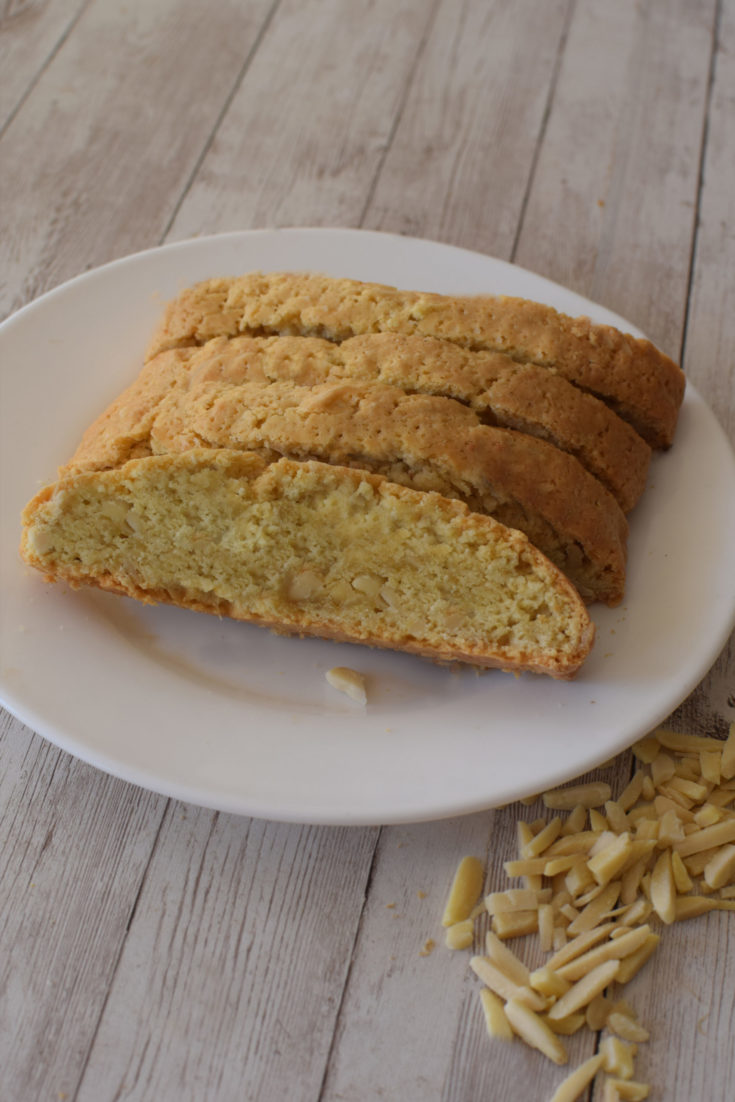
Delicious, dairy-free, and easy to make mandel bread (Mandelbrot).
Ingredients
- 3 cups all-purpose flour (plus 1 extra cup in case it's too sticky)
- 1 ¼ cups granulated white sugar
- 1 ½ teaspoons baking powder
- 1 teaspoon of salt
- 3 eggs
- ⅓ cup oil
- 1 tablespoon almond extract (or imitation)
- 1 teaspoon vanilla extract (or imitation)
- 1 cup sliced almonds (sliced any way you like them)
Instructions
- Whisk together flour, sugar, baking powder, and salt in a mixing bowl.
- Mix in eggs, vanilla, and almond extract.
- Add the oil and mix.*
- Mix in the almond slices.
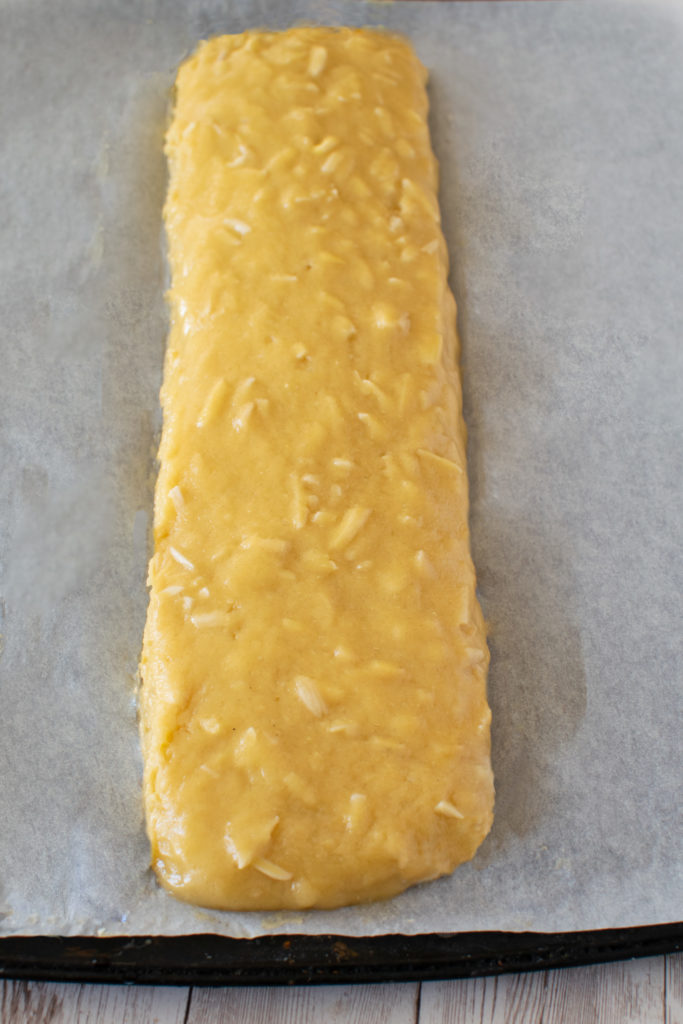
- On a baking sheet with parchment paper, shape loaves about 3-4 inches wide (wet your hands if the dough is a little sticky) and leave equal room between the sides of the baking sheet and between the loaves (the loaves will spread while baking, so they will need room so they don't stick together).
- Place in an oven that has been preheated to 350° F and bake for approximately 30-35 minutes or until a light golden brown.
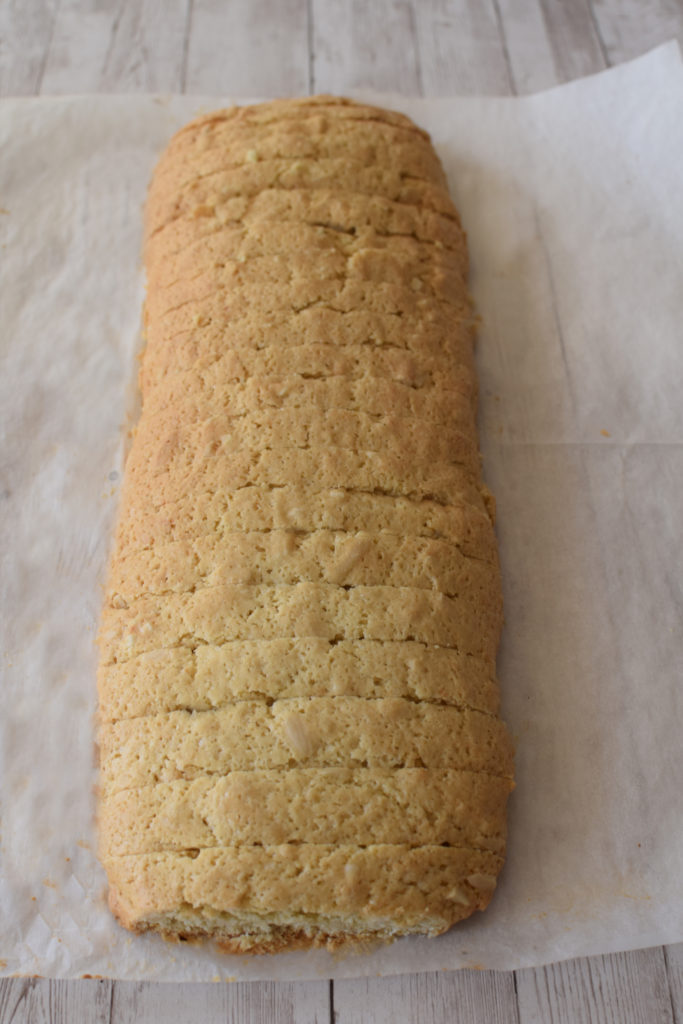
- Remove from oven and slice to desired width (usually around ¾" thick), either horizontally or diagonally across the loaves.
- If you prefer more cakey mandel bread, leave to cool. Otherwise, if you prefer them more crispy, separate the slices from one another and place them back in the oven and bake for another 15 minutes or until the loaves become slightly more golden brown.
- Remove from oven and let cool completely.
Notes
* The dough should be at most a little sticky. If you have a problem shaping it, wet your hands with water and then shape. If it is VERY sticky, add a little flour from the extra cup, before you add the almonds, and mix well.
Nutrition Information:
Yield:
24Serving Size:
1Amount Per Serving: Calories: 215Total Fat: 10gSaturated Fat: 1gUnsaturated Fat: 9gCholesterol: 23mgSodium: 121mgCarbohydrates: 27gFiber: 2gSugar: 1gProtein: 6g