Easy Dairy-Free Chinese-Style Almond Cookies Recipe

Sharing is caring!

Easy Dairy-Free Chinese-Style Almond Cookies (almond bisquits) are a homemade version of the classic bakery and takeout treat, made without lard, butter, or eggs, making this a vegan recipe.

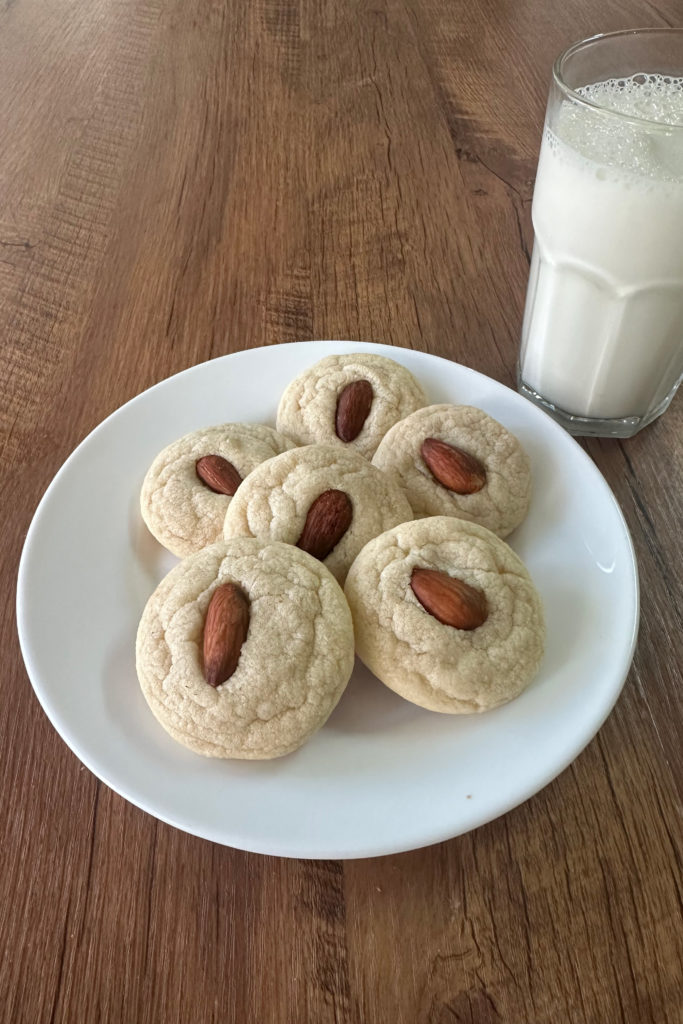
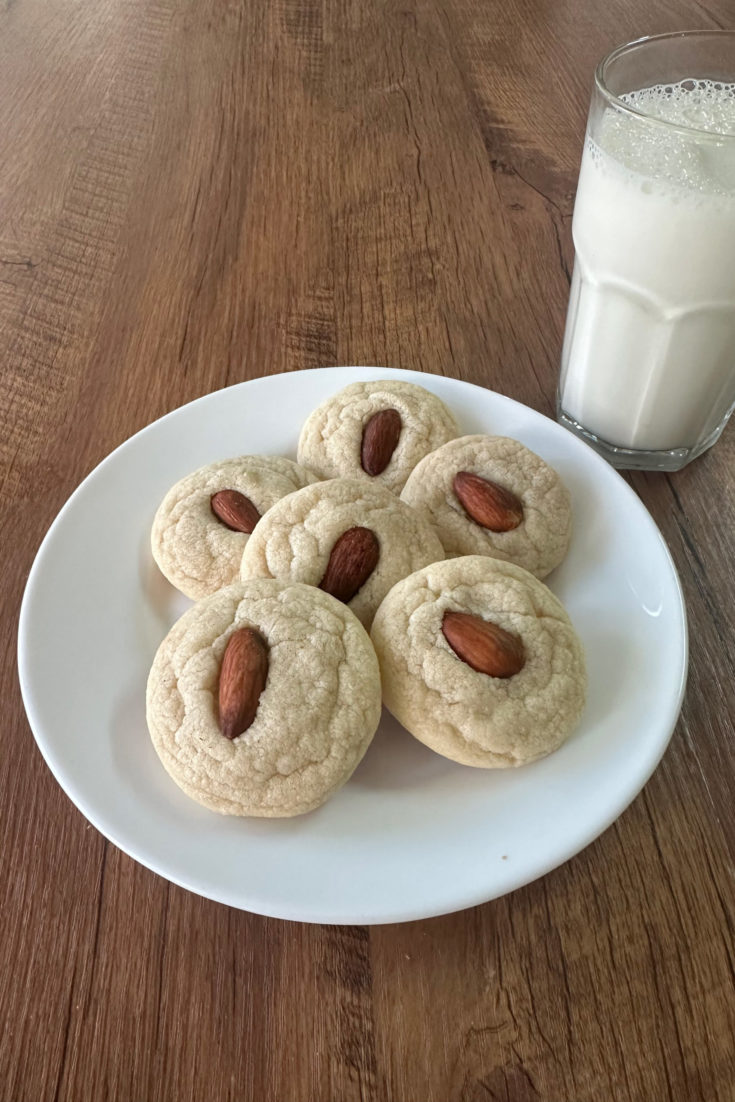
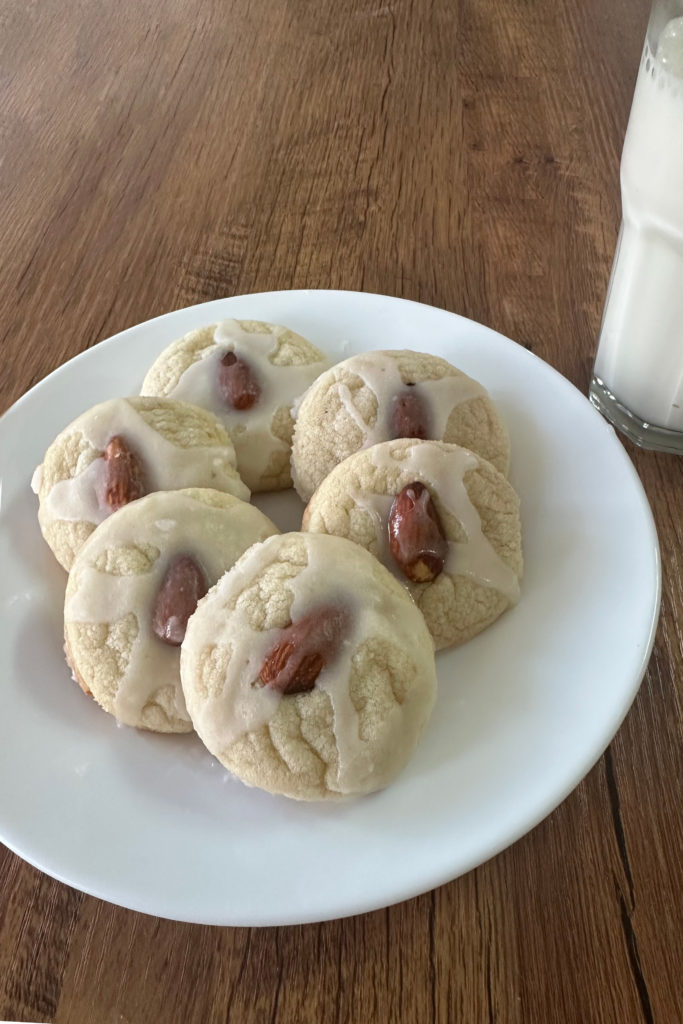
Easy Dairy-Free Chinese Almond Cookies (almond biscuits) with no lard, no dairy, no eggs on a white plate near a tall glass of milk on a white wood table.

A delicious dessert after your takeout meal!

Chinese almond cookies are a sweet item commonly sold at Chinese bakeries, served at Lunar New Year celebrations, and found on the dessert menu at traditional restaurants.

Not to mention that they may show up as dessert to complement your takeout meal!

While traditional almond cookies are often made with butter or lard, the recipe for this version of the cookie contains neither lard nor butter.

And since they're also made without eggs, they're also vegan!

You can leave them plain or add a delicious glaze for a little extra sweetness.
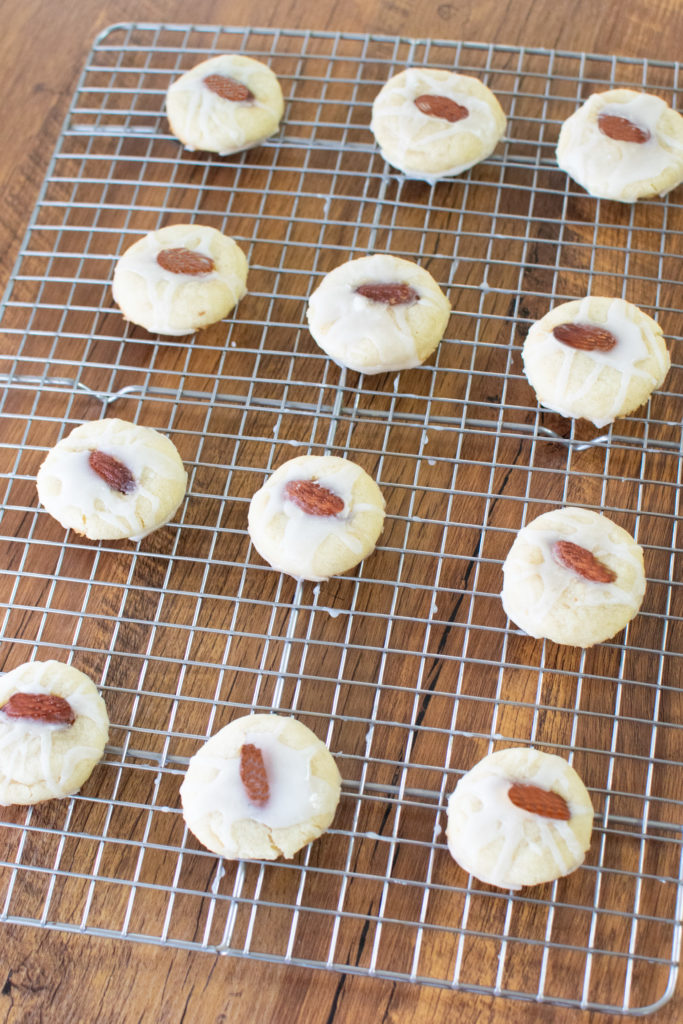
Easy Almond Flavored Cookies With Glaze

What is needed to make dairy-free Chinese almond cookies?

I hardly ever meal plan, so I like to keep a cupboard full of flour, seasonings, spices, veggies, and canned goods in my kitchen to use whenever the mood strikes.

But these are all you need to have on hand to make this recipe even last-minute!

all-purpose flour
confectioners' sugar (powdered sugar)*
cornstarch
salt
baking powder
dairy-free margarine or other dairy-free butter alternative
almond extract (a good imitation is fine)
whole almonds (half almonds is fine too-this is for the top)
Frequently Asked Questions about Chinese-Style Almond Cookies?

Can I make these almond cookies ahead of time?

Yes, you can bake these cookies in advance and store them in an airtight container at room temperature for up to 1 week, or freeze the baked cookies for up to 2 months.

Can I freeze the unbaked cookie dough?

Yes, you can shape the dough into balls, place them on a baking sheet to freeze solid, and then transfer them to a freezer-safe bag for up to 3 months. You can bake straight from frozen, but add a couple of extra minutes to the baking time.

Can I freeze these almond cookies after they're baked?

Yes, you can freeze these baked cookies for up to 2 months. Let them cool completely, store them in a freezer-safe airtight container with parchment paper between the layers, and thaw them at room temperature before serving.

What kind of almonds should I use for the top?

Whole, raw almonds are pressed into the center of each cookie before baking. You can also use half-almonds split down the middle if you want to. Avoid salted or heavily roasted almonds, as they can burn or alter the traditional flavor profile.

Why did my almond cookies spread too much?

If your cookies spread too much while baking, the dough may have been too warm, or the measurements for your dry ingredients might have been slightly off. Chilling the shaped dough balls in the refrigerator for 15 minutes before baking helps them hold their classic round shape.

What if I want wider, flatter cookies?

Using powdered sugar may produce a flatter cookie than if you would use white granulated sugar.

Frequently Asked Questions (FAQs) for baking:

Why do recipes have salt in the ingredients of baked goods?

Even though salt tends to make foods, well, salty, it actually plays other roles in baking as well.

For example, the right amount of salt balances flavors in baked goods; it can bring out the sweetness of sugar and, at the same time, prevent them from tasting overly sweet. It also can help dull the bitterness of cocoa.

Salt prevents baked goods from tasting bland, while it balances the richness of the fats. It also helps develop flavor in yeast breads and works with proteins to strengthen gluten and make it more elastic.

Salt also slows down yeast fermentation because it prevents the yeast from eating up the sugars too quickly, which otherwise would cause the dough to rise too fast and then ultimately collapse, causing bread to come out flat instead of fluffy.

Salt helps baked goods stay a little fresher for a little longer and helps delay mold from growing on them.

What is the difference between baking soda and baking powder?

Baking soda and baking powder are both synthetic leavens that help baked goods rise, but there is a difference between them.

Baking soda is pure sodium bicarbonate, which needs another ingredient that is acidic in order to be activated. When the baking soda touches the acid, it creates a carbon dioxide gas, which helps the baked good rise. Baking soda is between 3 and 4 times stronger than baking powder, and if too much baking soda is used, your baked good will end up with a metallic flavor.

Baking powder is baking soda that is already mixed with an acid and a stabilizer and will be activated by moisture and heat. Nowadays, baking powder is called double-acting because it activates twice-once when it gets wet (when you mix the ingredients together) and again when it heats in the oven.

Replacing one with the other can be tricky, and it's not recommended. However, if you have no choice, then do solid research for substituting one for the other for the baked good you are preparing so you don't ruin it.

What do eggs do in baking?

Eggs are made up of two parts: the whites and the yolks (the yellow). 

Egg whites are made up of protein that sets when heated and helps baked goods hold their structure. The yolks are made up of fats and vitamins and help ingredients bond.

Eggs also help baked goods rise as well as keep them moist.

It is important to have the right amount of eggs when baking, because if there are too many eggs in a recipe, this can cause a rubbery, dense texture, and if there are too few eggs, this can cause a crumbly, dry texture.

The different parts of the egg will provide different textures to baked goods; using the entire egg in baking will provide moisture and help the baked good rise evenly, using extra yolks will create richer, denser textures, and extra whites will add fluffiness but may create a drier texture.

Should I sift flour before I use it?

Unless you are concerned about bugs or clumps from moisture, the need to sift depends on your recipe.

For example, you don't need to sift for dense baking like muffins or quick breads, where lumps won't ruin the texture. But you should sift for recipes that rely on air bubbles, such as sponge or angel cakes or soufflés.

You also should sift your flour if you are making baked goods with a high fat content, such as brownies, because it is important that the fat be absorbed throughout all of the flour, and having flour clumps could prevent this.

Sifting the baking powder and/or baking soda together with the flour and salt before mixing in the other ingredients may be able to help prevent cakes from coming out lopsided, where one side may be somewhat higher than the other.

What is the difference between butter and margarine?

Butter is a dairy product that is made by churning heavy cream until the fats separate from the milk (i.e., buttermilk). Margarine, however, is made from vegetable oil. Butter generally has a lower melting point than margarine as well as a lower water content (and the soft tub margarines have a higher water content than bar margarines).

Using butter in baking cookies can create a crisper, more flaky cookie, while cookies will come out softer and more cakey when made with margarine. It is also generally believed to be better to "cream" using butter rather than margarine.

Using butter adds a kind of toasted nut flavor to baked goods, while margarine doesn't add flavor (however, sometimes with margarine, one might have a waxy feel on the roof of one's mouth after eating something with a high margarine content).

If one wants to make a dairy-free baked good that calls for butter, a dairy-free margarine is a good substitute.

What is the difference between dairy-free margarine and vegan butter?

Vegan butter and margarine have similarities. In fact, all vegan butter is a type of dairy-free margarine. The difference between them is in the content and the baking performance.

Vegan butter is made from fats such as coconut oil, shea butter, or cocoa butter and behaves like butter in that it creates more flaky and crisp textures and has a toasted nutty flavor, while margarine is typically made with the less expensive vegetable oils.

What is the difference in using oil vs. butter or margarine?

Both margarine and butter are solid fats at room temperature, and both contain more saturated fats than oil.

While margarine and butter will change from a solid to a liquid when heated, they will change back to solids when cooled again. Oil stays liquid at all temperatures. Oil also coats flour better in the preparation process before baking.

Butter "creams" better than margarine, but one cannot cream oil at all.

When converting a recipe from butter or margarine to oil, the general conversion rate is 1 to ¾ (although if you are doing more than one batch, you might need to reduce the oil because I have found that baked goods come out oily in this case).

And when converting from oil to margarine or butter, typically the ratio is 1 to 1¼.

What is the difference between real vanilla extract and imitation vanilla?

Real vanilla is made from soaking vanilla beans in alcohol, imitation vanilla is synthetic, and real vanilla costs quite a bit more than imitation. Whether or not there will be a taste difference in your baking depends on the baked good, so do some research before you decide.

I personally always use the imitation as long as I have a really good brand because it's not worth it to me to spend the extra money.

A little about Chinese-American Food

Chinese-American cuisine is a style of Chinese cuisine that was developed by Chinese immigrants. These dishes significantly differ from traditional Chinese dishes because Chinese-American dishes were adapted to suit American tastes.

Chinese immigrants arrived in the United States in large numbers in the mid-19th century in order to escape the economic difficulties in China, hoping to find work during the California Gold Rush and on the Central Pacific Railroad.

They mostly settled together in ghettos, individually known as Chinatown, and-since there were laws preventing them from owning their own land-they opened their own businesses, such as laundry services and restaurants.

Initially, the family-owned businesses catered to miners and railroad workers, and restaurants were set up in places where Chinese food was unknown. Food was based on the requests of the customers, and recipes were created to suit American tastes using whatever ingredients were available.

One major difference between traditional Chinese cuisine and Chinese-American cuisine is in the use of vegetables. Chinese-American recipes will use raw or uncooked ingredients and those not native to China. Traditional Chinese cuisine, on the other hand, rarely contains raw or uncooked ingredients and often uses Asian leaf vegetables.

While the new dishes were not traditional Chinese, these restaurants were responsible for the development of the ever-popular Chinese-American cuisine.

Make your takeout at home!

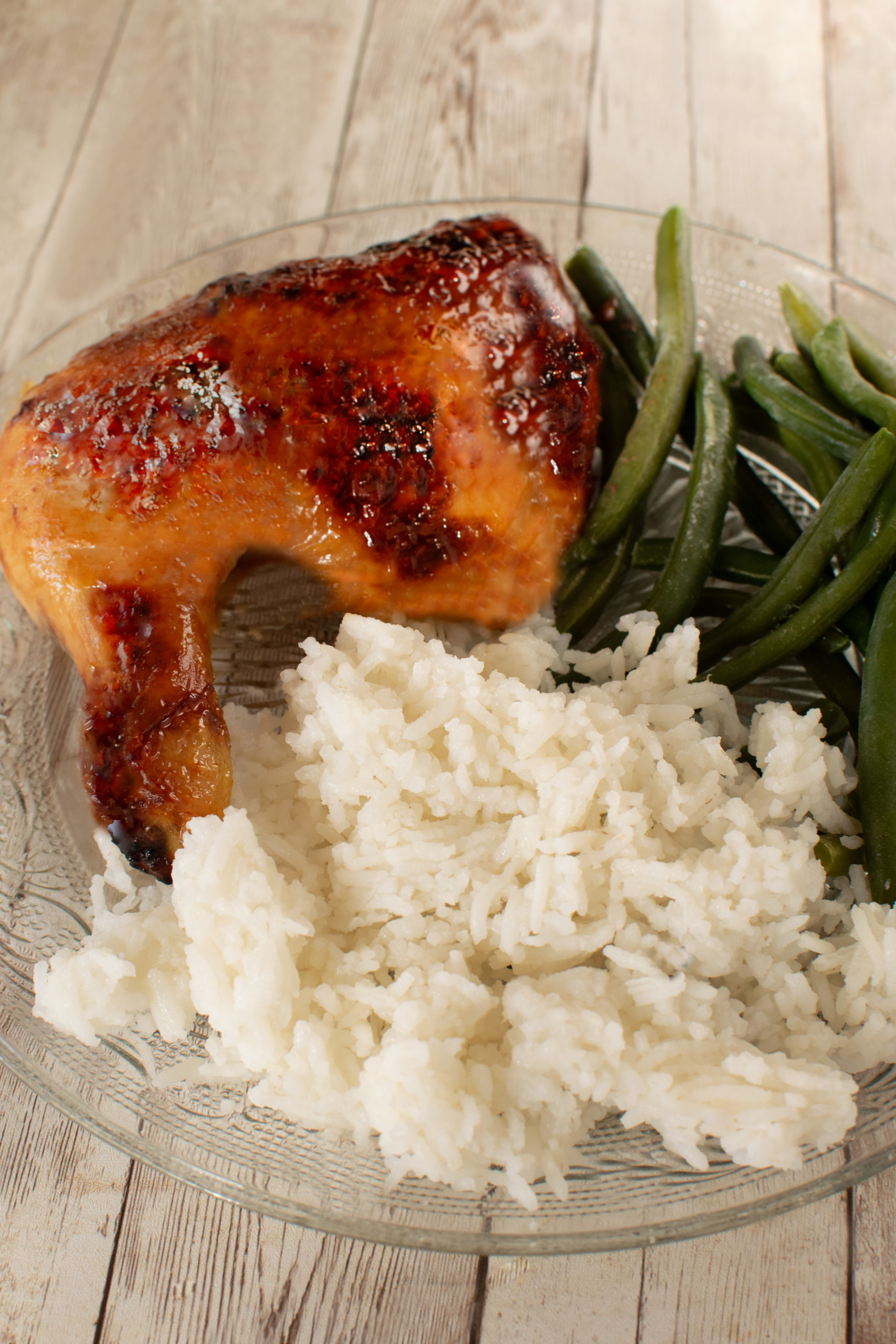
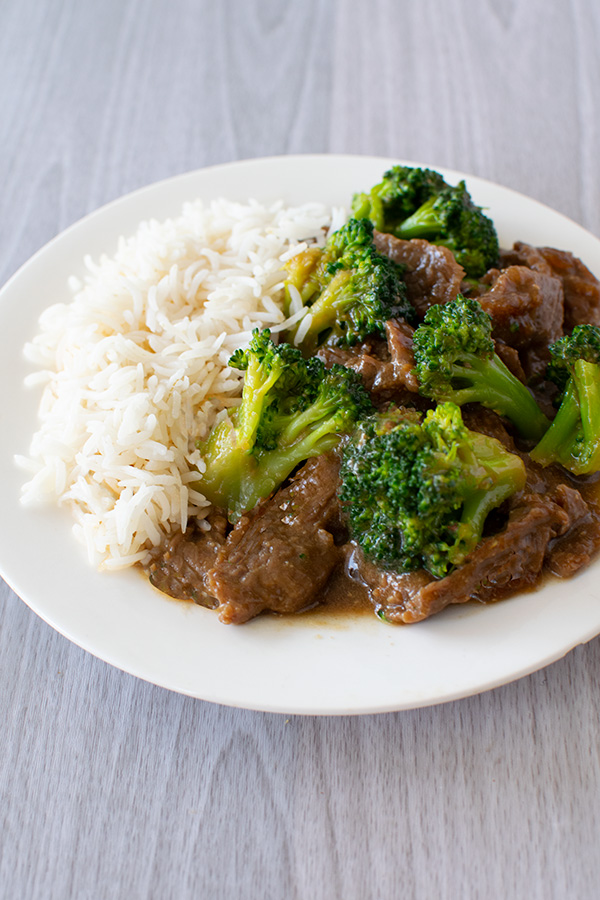
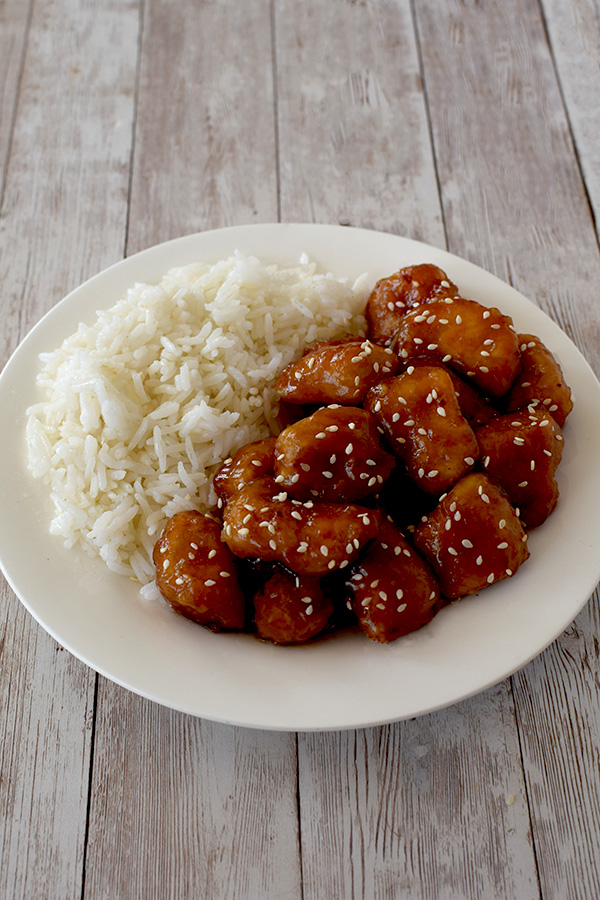
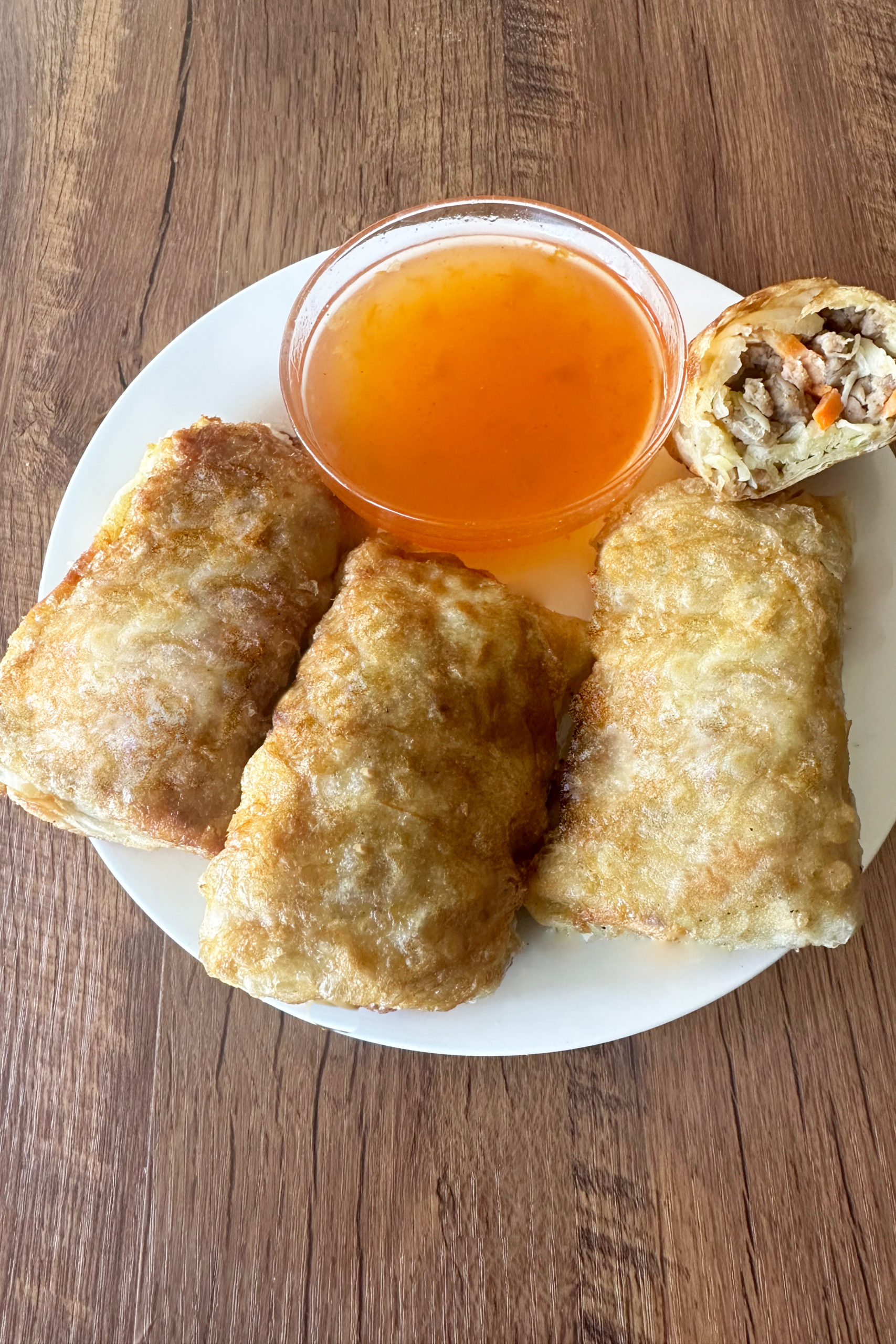
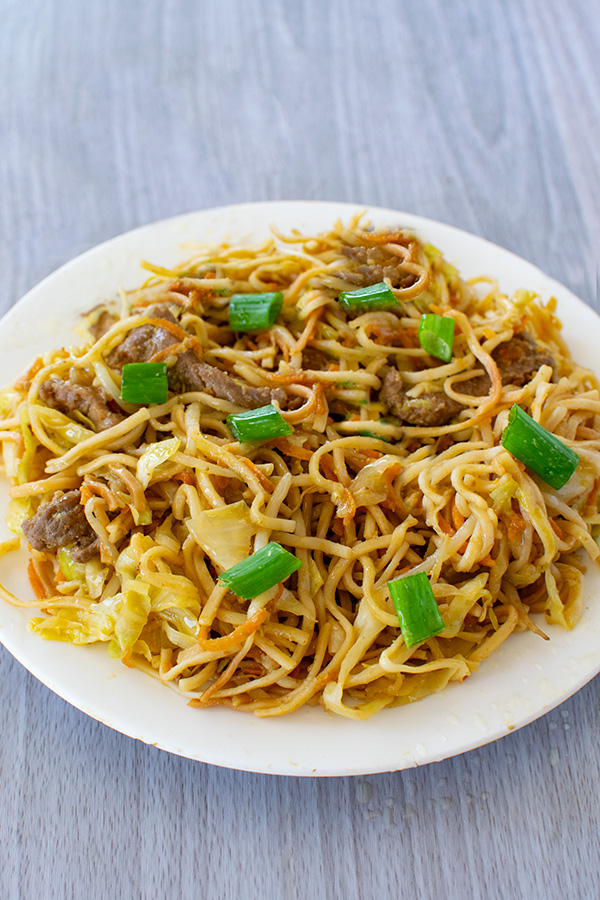
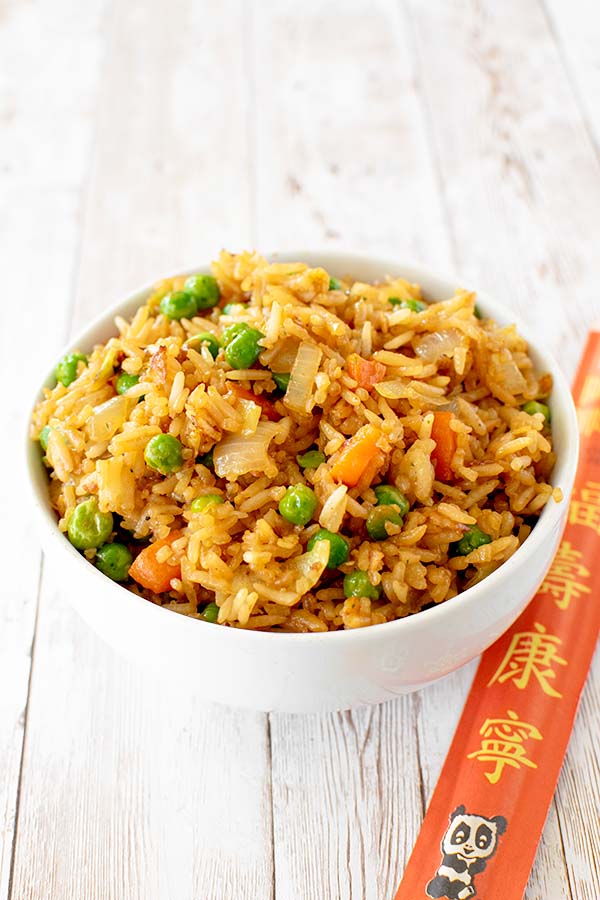
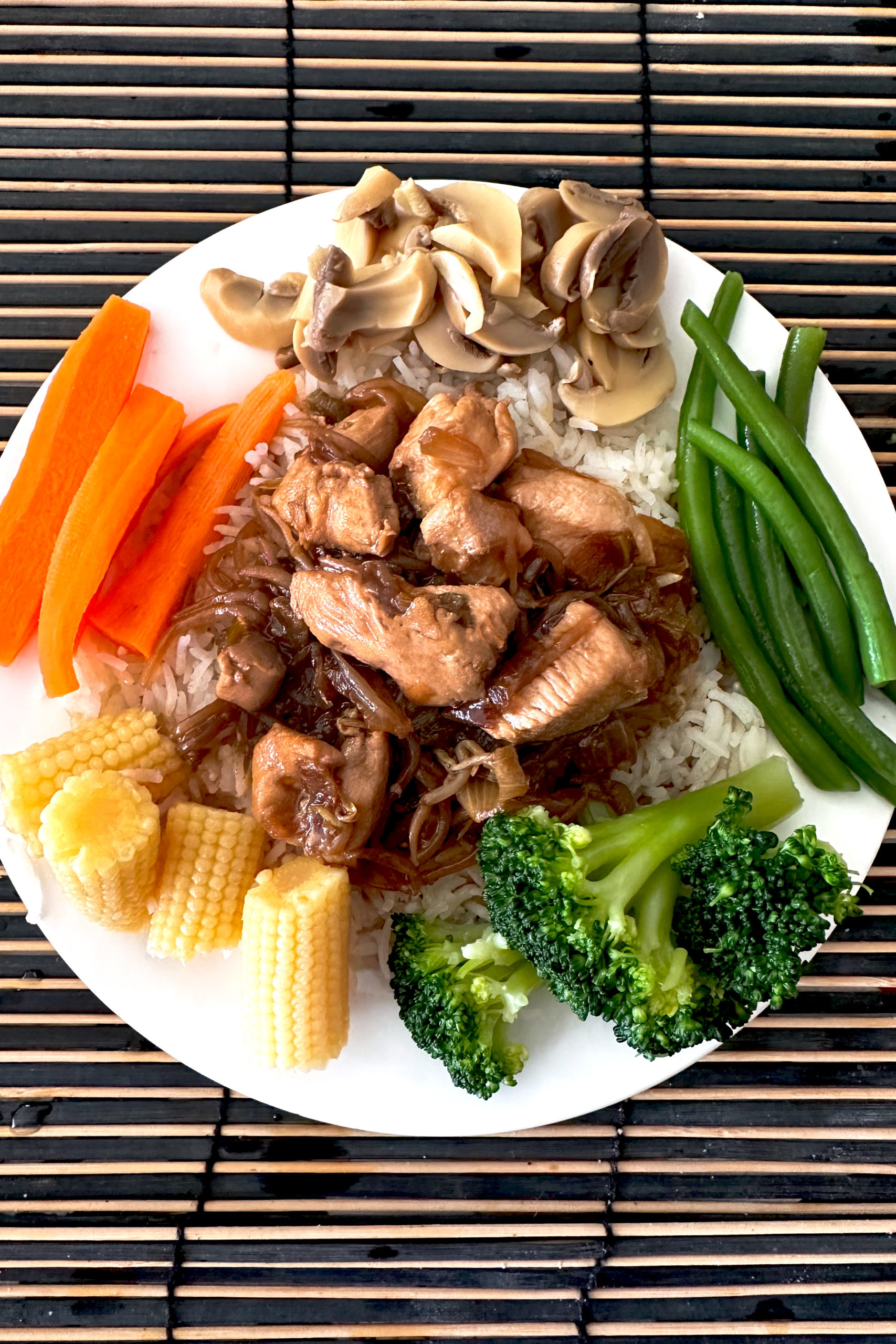
These cookies go well even with homemade takout, such as

Yield: 18 cookies

Easy Dairy-Free Chinese-Style Almond Cookies Recipe

Easy Almond Flavored Cookes on a white plate on a dark wood table with a glass nearby
5.0 Stars (2 Reviews)

Delicious almond cookies, made without butter, lard, or eggs, so they're dairy-free, and vegan!

Prep Time 10 minutes
Cook Time 30 minutes
Additional Time 5 minutes
Total Time 45 minutes

Ingredients

  • 1 ½ cups all-purpose flour, sifted
  • 1 cup confectioners' sugar (powdered sugar)*
  • 1 tablespoon cornstarch
  • ½ teaspoon salt
  • ¼ teaspoon baking powder
  • ⅔ cup dairy-free margarine or other dairy-free butter alternative
  • 1-2 teaspoons almond extract (a good imitation is fine too)
  • ¼ cup whole almonds (one per cookie)**

Instructions

  1. Whip the margarine or butter alternative and the almond extract together until creamy (scrape it down from the sides of the bowl if necessary).
  2. Add the flour, confectioners sugar, cornstarch, salt, and baking powder and mix well.
  3. Remove from bowl and wrap in plastic wrap and chill for around 30 minutes.
  4. Make balls of approximately 2 tablespoons of dough each and place on a lined baking sheet.
  5. Lightly press an almond in the middle of the ball.
  6. Place in an oven that has been preheated to 400°F and bake for approximately 8 minutes.
  7. Let cool.
  8. Add a drizzle of glaze if desired.

Notes

*Using powdered sugar seems to produce a flatter cookie than using white granulated sugar.

**You can also use half almonds—just face them downward.

**Optional glaze to drizzle on top if desired:
Combine 1 cup of powdered sugar with 2–3 tablespoons of water and ½ teaspoon of vanilla extract and mix until smooth. If you want a thinner glaze, add a little more liquid and if you want a thicker glaze, add a little less warer or a little more powdered sugar.


Nutrition Information:

Yield:

18

Serving Size:

1

Amount Per Serving: Calories: 220Total Fat: 10gSaturated Fat: 5gUnsaturated Fat: 5gCholesterol: 20mgSodium: 147mgCarbohydrates: 31gFiber: 1gSugar: 14gProtein: 3g
Sharing is caring!

Leave a Reply

Your email address will not be published. Required fields are marked *