Easy Lebanese Rice Pilaf (Riz bi Sha'rieh) is a classic Middle Eastern pilaf that's a budget-friendly, vegetarian, and dairy-free rice vermicelli recipe.
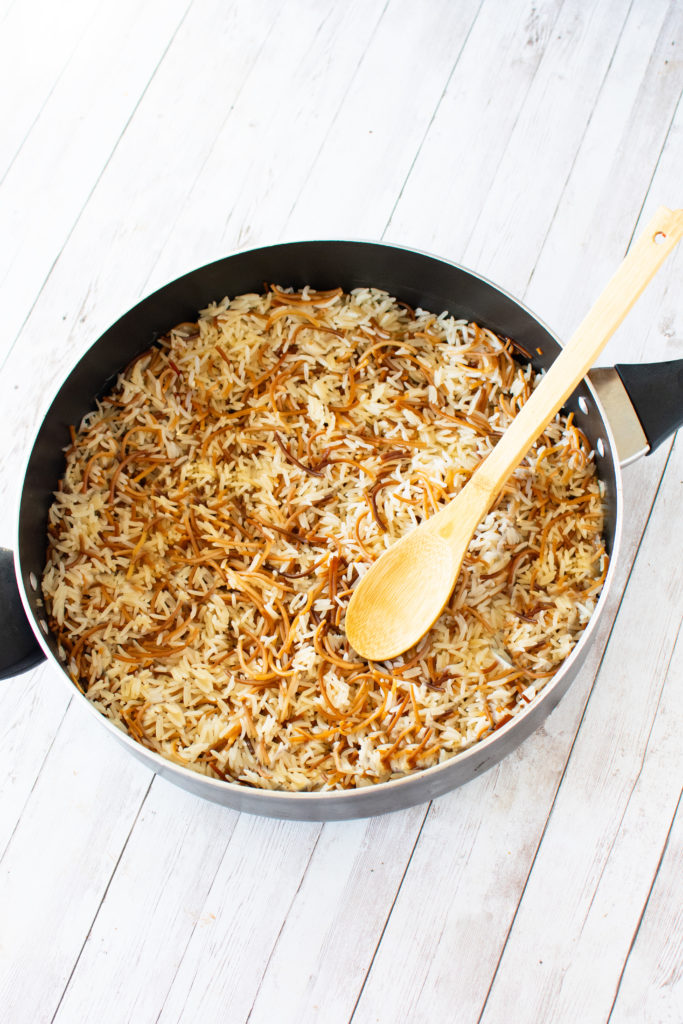
Golden-toasted vermicelli with sautéed onion, mixed with fluffy long-grain rice, gives you a delicious side dish that works perfectly with almost any meal.
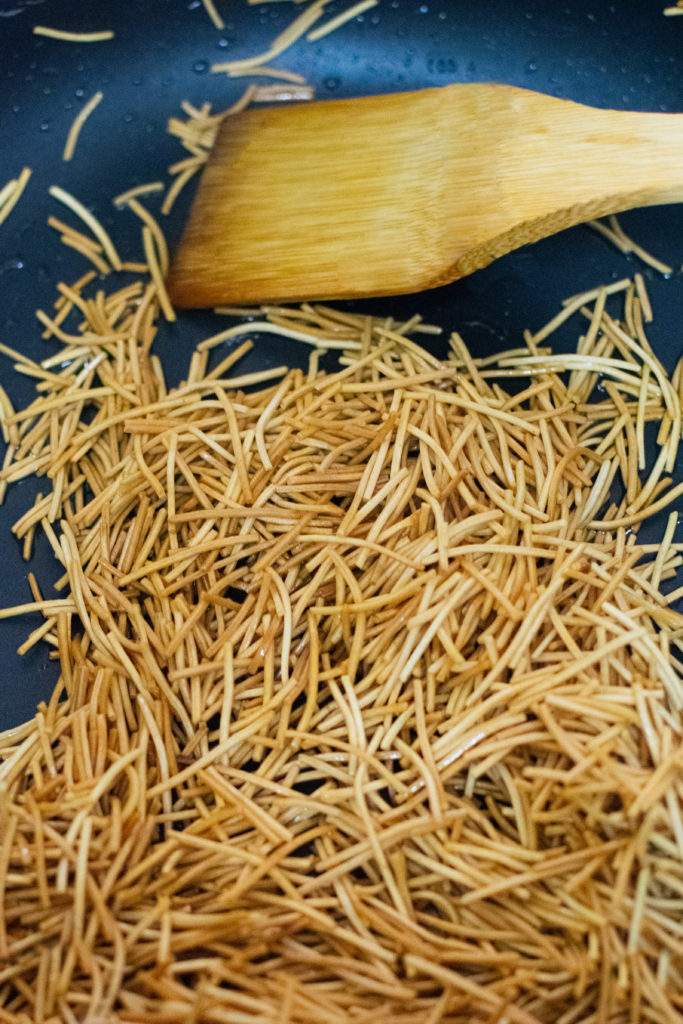
Lebanese rice pilaf is different from the Asian-style vermicelli and rice dish because this Middle Eastern version toasts the vermicelli until it is a golden brown instead of boiling or soaking the noodles in hot water before they are mixed with the other ingredients.
This is a budget-friendly dish with only three core ingredients, made in one pan.
It's a vegetarian recipe, and if you use noodles that don't contain egg, then it's vegan too.
And, if you make sure to use noodles that have no egg in the ingredients, this dish is vegan too!
It warms up well, so leftovers aren't a problem, and you can easily warm it up after a busy day at work or school. In fact, you can even bring it for lunches and save money.
Fun fact: The vermicelli noodle is used with rice in many countries and has different names in different languages, but in English it is just referred to by the Italian name, "vermicelli," which actually means "little worms!
Some useful cooking terms:
What are the different oils used in cooking?
"High-heat" oils have neutral flavors and have been processed in order to handle high temperatures and are good for sautéing, searing, and frying. These include canola oil, vegetable oil, avocado oil, and grapeseed oil, each with its own "best for" with chefs.
Some oils have their own flavor and are good for sautéing and roasting and add a little extra to the dish. These include extra virgin olive oil, coconut oil, and peanut oil. Extra virgin olive oil works well for roasting or sautéing but not for deep frying.
Coconut oil is good in dishes where a slightly coconut flavor enhances the dish, and peanut oil is good for deep frying and will add a subtle nutty taste and smell. Many Asian dishes call for peanut oil in the ingredients.
Then there are oils that are not used with heat but rather for dressing up foods, such as sesame oil, flaxseed oil, and walnut oil, among others.
What does it mean when recipes say "to taste" about an ingredient?
When recipes say "to taste," it means that you can put in as little or as much as you like to your own taste. Some recipes have many ingredients that a cook can adjust to their own taste when cooking (not so much when baking though).
The best way to calculate what your taste is with a recipe that you are not yet familiar with is to first taste the dish and then add the "to taste" ingredient GRADUALLY, a little at a time-a splash of this or a pinch of that-until the dish is just the way you like it.
Make sure to stir the ingredient after each time you add it so that the flavor will distribute evenly and become part of the dish. Then taste again. Repeat until you reach your personal preference.
Note: If you plan on using the recipe again, it is highly recommended to make a note of what and how much you added so that you can refer to it next time.
What does it mean when a recipe says that an ingredient is "optional"?
If an ingredient is "optional," it means that you can add it in or not based on your own preference. An optional ingredient can be flavor-related (i.e., salty, sweet, spicy, etc.), appearance-related (garnish), or even something like nuts or chocolate chips in baking.
What does "savory" mean?
"Savory" refers to foods that are not sweet, such as foods that taste salty, spicy, or herbal.
What does it mean to "sauté"?
To saute means to cook quickly in a small amount of oil or fat in a frying pan on a relatively high heat that causes a slight browning of the food.
What do those silly measurement expressions mean?
Drop - ¹/₆₄ teaspoon (or less-it's however a literal drop comes out)
Smidgen - ¹/₃₂ teaspoon
Pinch - ¹⁄₁₆ teaspoon (what you can grab between your finger and thumb)
Dash - ⅛ teaspoon (what comes out when you shake out of a shaker or bottle)
Tad - ¼ teaspoon
Dollop-a glob on a spoon (like with mayonnaise or ice cream)
Scant-a scant cup is almost a cup, just below the line.
Heaping-above the line of the spoon (teaspoon, tablespoon)
Frequently Asked Questions (FAQs)
Why are my vermicelli noodles burning before the rice is ready?
Vermicelli noodles toast very quickly in hot oil. Keep the heat medium-low and stir constantly until they turn golden brown before adding the rice and liquid to prevent them from burning.
Can I make Lebanese rice pilaf ahead of time?
Yes, this dish stores and reheats wonderfully. You can make a batch ahead of time and keep it in an airtight container in the refrigerator for up to 4 to 5 days.
Is this Lebanese rice pilaf recipe vegan?
If you use egg-free vermicelli noodles, then the dish will be vegan.
What kind of rice should I use for this recipe?
Long-grain white rice, such as Basmati or regular long-grain white rice, works best because it cooks up fluffy and separate without becoming sticky.
Can I freeze rice pilaf leftovers?
Yes, you can freeze rice pilaf in a freezer-safe container for up to 2 to 3 months. Thaw it and then you can reheat it on the stovetop or in the microwave with a splash of water to restore moisture.
Keeping pantry essentials in your kitchen
For someone who cooks frequently, whether you just like to cook or have a family or frequent guests, I find it very, very, VERY helpful to make sure that I keep a lot of ingredients in my kitchen to make sure I have them on hand to prepare a variety of dishes at a moment's notice.
I probably wouldn't have nearly the amount of items I keep if I lived alone, but my kids have regularly asked for different meals that would normally require advanced shopping or a quick trip to the grocery store.
I have a variety of utensils (including for baking, such as measuring cups for liquid and dry ingredients, spoons, bowls, pans, etc.), as well as seasonings, spices, dried herbs, baking ingredients (such as flour, baking powder, baking soda, etc.), substitutions for milk, pasta, eggs, and a whole lot of other things.
I'm not particularly great at advanced planning for meals, so I can't even tell you how many sudden trips to the store or times having to borrow from a neighbor (usually, they borrow from me!) this has saved me!
Of course, if you barely cook, you probably just want to keep the bare minimum.
So, what is needed to make easy Lebanese rice pilaf?
Even if you don't want to keep a pantry full of just-in-case ingredients, these are all you need to have on hand to make this recipe!
long-grain rice (Basmati is preferred)
vermicelli
onion
(salt or vegetarian chicken soup powder, optional, for flavor)
(oil for frying)
Like rice dishes?
Easy Lebanese Rice Pilaf Recipe
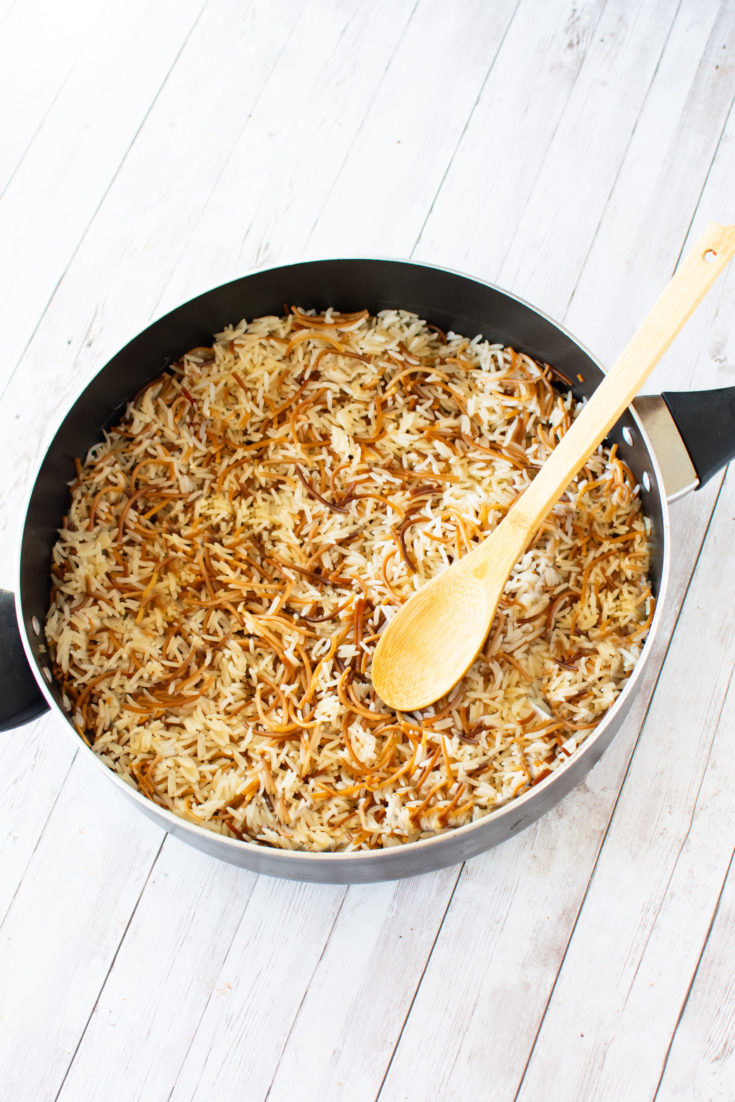
Rice Vermicelli is an easy, 3-ingredient ,vegetarian rice with noodles side dish.
Ingredients
- 2 cups long-grain rice (Basmati is preferred)
- ⅓ cup uncooked vermicelli
- 4 cups water *
- 1 small or medium onion, finely chopped (depending on how much you like onion)
- salt or vegetarian chicken soup powder to taste (optional)**
- oil for frying
Instructions
- Rinse off the rice a few times (to remove excess starches).
- Coat the bottom of a medium-size saucepan or a larger-sized pot with oil and fry the vermicelli on medium heat until it has a light brown color.
- Add the onion and lightly fry together with the vermicelli for a few minutes until the onion is soft and the vermicelli has reached a golden brown.
- Add the rice and salt to the vermicelli and mix.
- Add the water and turn the heat up to high.*
- Bring to a boil and let boil for around 5 minutes. Then turn off the heat, cover the saucepan or pot with a lid, and let sit for approximately 20 minutes or until the rice is cooked through and fluffy.
Notes
* Depending on the rice you use, you might need less water. So, use the cooking instructions on the package of your rice.
** If you don't care if this dish is not vegetarian, you can alternatively use regular chicken soup powder, also to taste
Note for vegans: Most dry vermicelli noodles are made of just wheat and water. Check your package ingredients to ensure no eggs are included to keep this dish 100% vegan.
Nutrition Information:
Yield:
8Serving Size:
1Amount Per Serving: Calories: 79Total Fat: 2gSaturated Fat: 0gTrans Fat: 0gUnsaturated Fat: 2gCholesterol: 0mgSodium: 78mgCarbohydrates: 14gFiber: 0gSugar: 0gProtein: 1g