Easy Dairy-Free Cornflake Fried Chicken is a unique way to make chicken other than the traditional breadcrumb or flour recipes.
Using only 4 ingredients and no buttermilk, this is a simple, delicious, family-friendly dish.
It makes the perfect Sunday chicken dinner or picnic lunch!
It’s cost-effective, and the leftovers are great too!
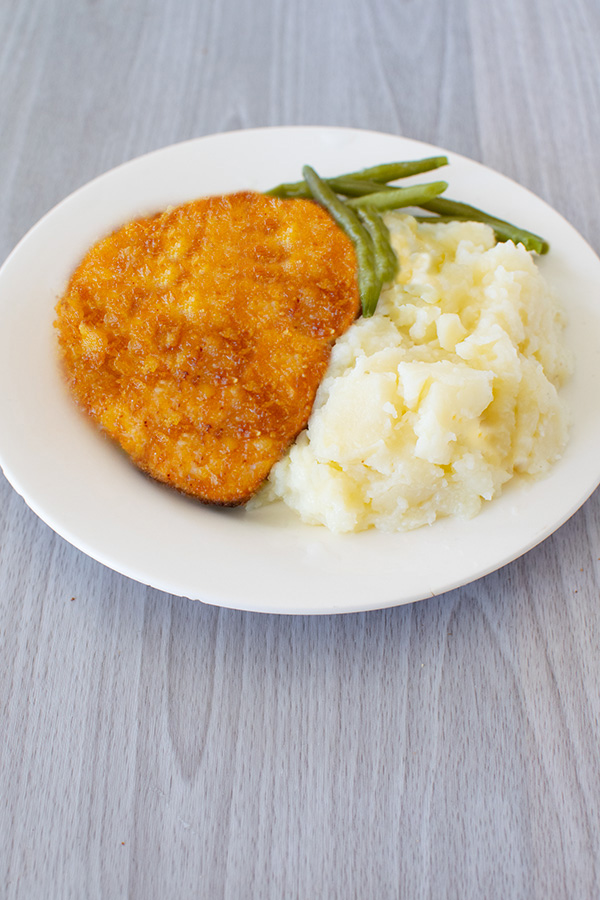
Dairy-free cornflake fried chicken is a delicious and crispy alternative to the less-interesting breadcrumb or flour chicken recipes.
With only 4 ingredients, the dish is budget-friendly, and the prep is simple.
Terrific with mashed potatoes, rice, French fries, or anything you like.
And it’s kid-friendly!
It’s great even when leftover and cold! So, it makes a terrific picnic lunch!
And chicken has health benefits.
A little background about fried chicken
While frying chicken has been around for thousands of years, the version of coated fried chicken that developed in the American South was a blend of the deep-fried technique that was brought by Scottish immigrants to America and the tradition of their African slaves to marinate and season their chicken.
The process of hand-preparing a chicken to be eaten was a lot of work and took a lot of time, so fried chicken became a meal for special events and Sunday dinners.
Some useful information in cooking:
What are the different oils used in cooking?
“High-heat” oils have neutral flavors and have been processed in order to handle high temperatures and are good for sautéing, searing, and frying. These include canola oil, vegetable oil, avocado oil, and grapeseed oil, each with its own “best for” among chefs.
Some oils have their own flavor and are good for sautéing and roasting and add a little extra to the dish. These include extra virgin olive oil, coconut oil, and peanut oil. Extra virgin olive oil works well with roasting or sautéing but not for deep frying.
Coconut oil is good in dishes where a slightly coconut flavor enhances the dish, and peanut oil is good for deep frying and will add a subtle nutty taste and smell. Many Asian dishes call for peanut oil in the ingredients.
Then there are oils that are not used with heat but rather for dressing up foods, such as sesame oil, flaxseed oil, and walnut oil, among others.
What does it mean when recipes say “to taste” about an ingredient?
When recipes say “to taste,” it means that you can put in as little or as much as you like to your own taste. Some recipes have many ingredients that a cook can adjust to their own taste when cooking (not so much when baking, though).
The best way to calculate what your taste is with a recipe that you are not yet familiar with is to first taste the dish and then add the “to taste” ingredient GRADUALLY, a little at a time—a splash of this or a pinch of that—until the dish is just the way you like it.
Make sure to stir the ingredient after each time you add it so that the flavor will distribute evenly and become part of the dish. Then taste again. Repeat until you reach your personal preference.
Note: If you plan on using the recipe again, it is highly recommended to make a note of what and how much you added so that you can refer to it next time.
What cooking measurement expressions mean:
Drop – ¹/₆₄ teaspoon (or less—it’s however a literal drop comes out)
Smidgen – ¹/₃₂ teaspoon
Pinch – ¹⁄₁₆ teaspoon (what you can grab between your finger and thumb)
Dash – ⅛ teaspoon (what comes out when you shake out of a shaker or bottle)
Tad – ¼ teaspoon
Dollop—a glob on a spoon (like with mayonnaise or ice cream)
Scant—a scant cup is almost a cup, just below the line.
Heaping—above the line of the spoon (teaspoon, tablespoon)*
Pantry essentials
I keep a large variety of ingredients in my kitchen in order to be able to make a large variety of dishes with little advance notice. These are based on recipes that I tend to make on a regular or semi-regular basis.
This is very helpful if you are anything like me and don’t tend to be a meal planner. I normally ask whoever is home what they would like to eat and make according to their taste.
My “essentials” include seasonings, spices, dried herbs, leaveners, coatings, etc. as well as potatoes, onions, and other veggies.
Also, I always have eggs.
In addition, I like to keep oat milk around for dairy-free recipes that require milk or cream when I can’t substitute water.
So, what is needed to make dairy-free cornflake fried chicken specifically?
chicken thighs or legs
flour
eggs
cornflakes
(oil for frying)
Check out the history of Kelloggs® Cornflakes!
Easy Dairy-Free Cornflake Fried Chicken
Delicious and easy, crispy chicken coated in ground cornflakes, made without buttermilk.
Ingredients
- 4 raw chicken thighs or equivalent
- 1 egg, beaten
- 1 cup flour (you might not need it all)
- 1 cup of ground cornflakes
- oil for frying
Instructions
- Place the flour and the cornflakes in two separate bowls. Then, place the beaten egg in another bowl (make sure both bowls are large enough to easily accommodate the raw chicken).
- Pour oil into a frying pan so it reaches 1/8 - 1/4 inch high and heat on medium. (You will know it's hot enough when you can toss a little bit of the ground Cornflakes in and it sizzles.)
- Take a piece of chicken, dip it in the flour, and then dip in the egg, coating well. Let the excess egg drip off a bit and then coat well with the ground cornflakes on both sides.
- Gently place in the hot oil.
- Repeat with the remaining strips. Make sure to leave a little room between the pieces.
- Fry on one side until golden brown, then gently turn and fry on the other.
- Remove from oil and place on paper towel lined plate too absorb excess oil and cool.
Notes
You may have some of the flour and egg left over.
Nutrition Information:
Yield:
4Serving Size:
1Amount Per Serving: Calories: 352Total Fat: 23gSaturated Fat: 6gTrans Fat: 0gUnsaturated Fat: 16gCholesterol: 213mgSodium: 295mgCarbohydrates: 6gFiber: 0gSugar: 1gProtein: 33g